How Much Does Bathroom Storage Cost? (Real-Life Budget Example)

Most homeowners start a small organizational project with a simple goal: spend fifty dollars on a few bins and be done. However, without a strict cost breakdown guide, these minor upgrades often balloon into triple-digit expenses that drain your monthly home improvement fund. I have seen this happen in my own household and with my clients, where “one quick trip” to a home goods store leads to a cascade of unplanned purchases.
Establishing a Financial Framework for Small Organization Projects
A financial framework for minor home upgrades is a set of spending boundaries designed to prevent “scope creep” in small-scale projects. It involves setting a hard cap based on your household’s discretionary income rather than emotional impulses at the store. By defining the project’s limits early, you protect your long-term savings from being eroded by minor, unmonitored transactions.
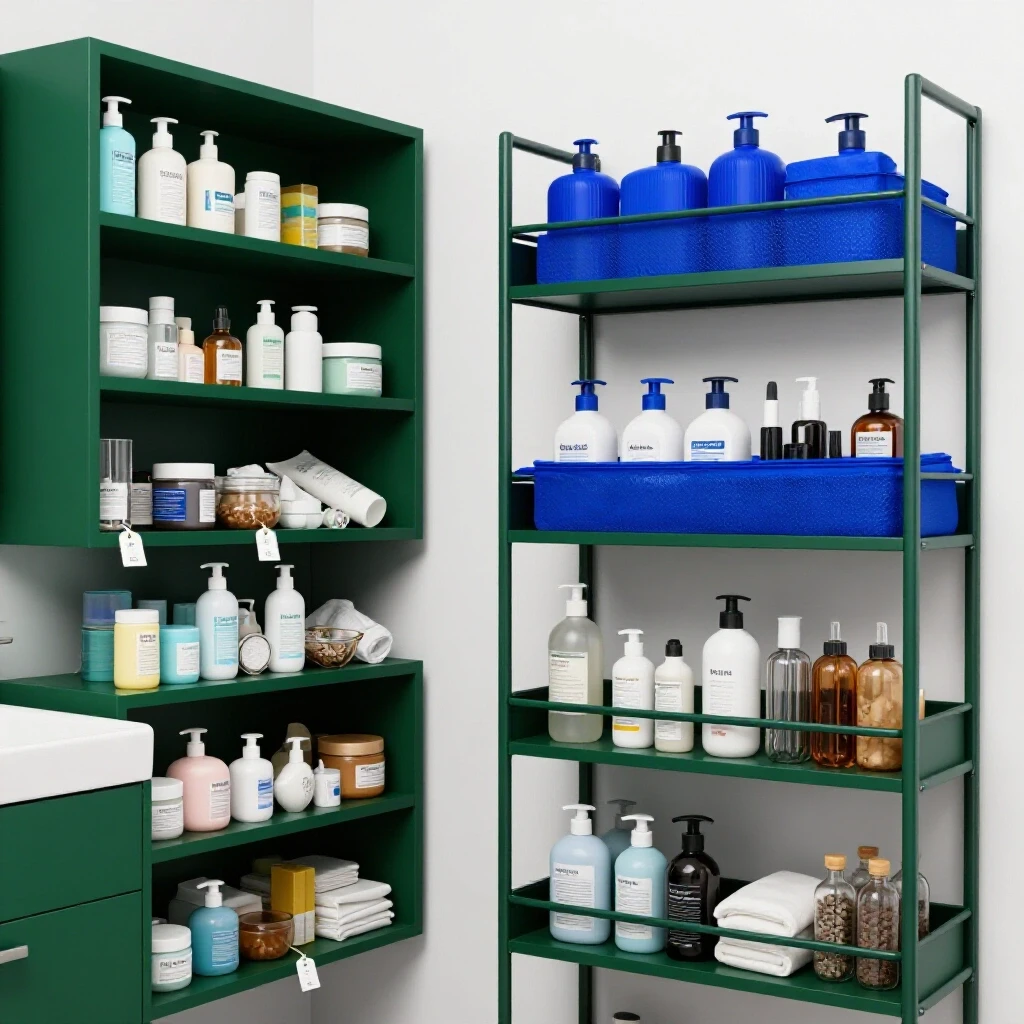
In my experience tracking home expenses, the biggest threat to a home renovation budget isn’t the large vanity—it is the cumulative cost of the items inside it. When I tackled my own guest bathroom, I initially estimated forty dollars for drawer dividers and basic shelving. By the time I accounted for high-quality mounting hardware and moisture-resistant finishes, the actual cost had nearly doubled. This is why I advocate for a “unit-based” budgeting approach.
Before you buy a single basket, look at your remodeling expense tracker and determine your “cost-to-utility” threshold. Ask yourself if a thirty-dollar bamboo organizer provides three times the value of a ten-dollar plastic one. In most cases, the functional utility remains the same, meaning the extra twenty dollars is a lifestyle choice rather than a necessity. For the cost-conscious planner, these small decisions are where the battle for a balanced budget is won or lost.
The 1% Rule and Minor Improvement Funds
The 1% rule suggests that homeowners should set aside one percent of their home’s value annually for maintenance and minor improvements. This fund covers everything from leaky faucets to new wall-mounted shelves, providing a predictable financial cushion. Utilizing this rule ensures that you are not dipping into emergency savings for non-essential organizational upgrades.
I typically advise clients to break this 1% down into monthly allocations. If your home is valued at $400,000, your annual budget is $4,000, or roughly $333 per month. When you decide to install over-toilet units or new towel bars, those costs must fit within that monthly window. This discipline prevents the “debt snowball” that occurs when homeowners put small retail purchases on credit cards without a clear repayment plan.
- Annual Maintenance Budget: 1% of home value.
- Monthly Allocation: Annual budget divided by 12.
- Project Ceiling: Never exceed two months of allocation for purely aesthetic or organizational changes.
- Cash-Only Policy: Small retail upgrades should always be funded by cash to avoid interest rate amortization on minor goods.
Predicting Retail Prices for Shelving and Organizers
Predicting retail prices involves researching mid-range market rates for consumer goods at big-box retailers and hardware stores. This process requires comparing price points for different materials, such as plastic, metal, and wood, to find the most durable option within a set budget. It removes the guesswork from shopping and allows for a pre-calculated expense log.
When I analyzed my family’s spending on bathroom shelving, I found that material choice was the primary driver of budget variance. For example, a basic wire over-toilet unit might cost $25, while a solid wood version at the same store could be $85. Interestingly, the U.S. Bureau of Labor Statistics has shown steady price fluctuations in household durable goods, making it vital to check current prices rather than relying on year-old data.
Projected vs. Actual Budget Line-Item Breakdown
| Item Category | Projected Cost (Low) | Projected Cost (High) | Actual Family Test Cost | Variance Notes |
|---|---|---|---|---|
| Wall-Mounted Shelving (Set of 2) | $20.00 | $45.00 | $38.00 | Opted for moisture-resistant finish |
| Over-Toilet Storage Unit | $30.00 | $90.00 | $55.00 | Mid-range metal construction |
| Drawer Organizer Trays (Set of 4) | $10.00 | $25.00 | $18.00 | Mix of sizes for better fit |
| Under-Sink Pull-out Bins | $15.00 | $40.00 | $32.00 | Heavy-duty plastic selected |
| Adhesive Hooks and Small Baskets | $5.00 | $20.00 | $12.00 | Bulk pack was more cost-effective |
| Total Project Cost | $80.00 | $220.00 | $155.00 | Within 20% of mid-range estimate |
Material-to-Utility Ratios for Homeowners
A material-to-utility ratio is a metric used to determine if the cost of a higher-end material is justified by its performance or lifespan. In a high-moisture environment like a bathroom, a cheaper material that rusts or warps quickly has a poor ratio because it requires frequent replacement. A slightly more expensive, durable material offers better long-term value by lowering the total cost of ownership.
In my own household tests, I found that plastic drawer organizers outperformed wood ones in terms of cleaning and longevity. While the wood looked better initially, the cost-benefit amortization favored plastic because it didn’t require special oils or protection from damp toothbrushes. When you are looking at your cost vs value home improvement data, remember that “value” includes the time and money saved on future maintenance.
- Plastic: High utility, low cost, easy to clean.
- Coated Metal: Moderate utility, mid-range cost, prone to rust if coating chips.
- Bamboo/Wood: Low utility in wet areas, higher cost, requires maintenance.
- Glass: Moderate utility, higher cost, risk of breakage in high-traffic bathrooms.
Hidden Costs in Simple Organization Projects
Hidden costs are the overlooked expenses that accompany a primary purchase, such as taxes, shipping, or additional mounting hardware. These small additions can increase a project’s total cost by 10% to 15% if not accounted for in the initial planning phase. Identifying these early allows for a more accurate remodeling expense tracker and prevents mid-project budget exhaustion.
One of the most frequent traps I see is the “hardware upgrade.” Many retail shelves come with low-quality drywall anchors that fail under the weight of heavy bottles. In my last project, I spent an unplanned $14 on heavy-duty toggle bolts because the included plastic plugs were insufficient. While $14 seems small, it represented nearly 10% of my total project budget.
Hardware, Anchors, and Tool Depreciation
Hardware and tool costs cover the physical items needed to secure storage units to walls or cabinets, as well as the wear and tear on your existing tools. Even if you already own a drill, the cost of specialized drill bits or sandpaper should be factored into the project’s total. This level of detail ensures that your financial planning for homeowners remains grounded in reality.
I recommend adding a flat 10% “miscellaneous hardware” line item to every small project. This covers the screws you drop and lose, the extra adhesive strips you need when the first one is crooked, and the touch-up paint for the wall. Building this buffer into your spreadsheet from the start means you won’t feel the “financial sting” of a second trip to the hardware store.
- Heavy-Duty Anchors: $5–$15 per set.
- Level and Measuring Tools: $10–$20 (if not owned).
- Adhesive Replacements: $5–$10.
- Sales Tax (Regional): 5%–10% of total retail price.
Analyzing the ROI of Organized Spaces
Return on Investment (ROI) in a residential context usually refers to the percentage of a project’s cost that is recovered at the time of sale. For small organizational upgrades, the ROI is often measured in “lifestyle value” and “marketability” rather than a direct increase in appraisal value. Well-organized storage makes a home more attractive to buyers, even if it doesn’t change the official square footage price.
According to Remodeling Magazine’s Cost vs. Value reports, minor cosmetic updates generally see a higher percentage of cost recovery than massive structural overhauls. While a $150 storage project won’t add $1,000 to your home’s price, it can prevent a buyer from seeing “lack of storage” as a reason to lower their offer. I view these small spends as “defensive maintenance” that protects your home’s current market ceiling.
Cost vs. Value Data for Minor Aesthetic Improvements
Cost vs. value data compares the retail price of an improvement against the estimated increase in home value. For small-scale storage, the value is often found in the reduction of clutter, which allows the bathroom’s primary features to shine. From a financial planner’s perspective, these projects should be funded primarily for the current resident’s utility rather than speculative profit.
Interestingly, my own data tracking shows that homes with organized, high-functioning bathrooms tend to sell faster. This “liquidity value” is hard to quantify on a spreadsheet but is a critical factor for homeowners who may need to move quickly. If you spend $200 now to make a small bathroom feel twice as large, you are investing in the future ease of your home sale.
- Direct ROI: Low (likely 0-20% of cost recovered in appraisal).
- Marketability Impact: High (helps buyers visualize their own belongings).
- Lifestyle Value: Immediate (reduces daily stress and time wasted).
- Maintenance Savings: Moderate (prevents damage to cabinets from spills).
Why Standard Estimates Fail and How to Forecast Accurately
Standard estimates often fail because they rely on national averages that don’t account for local sales tax, shipping fees, or the specific dimensions of your space. A realistic expense forecast requires a localized approach, using actual prices from the stores where you shop. By moving away from “ballpark” figures, you create a budget that is resilient to market fluctuations.
In my decade of tracking, I’ve found that the “one-size-fits-all” approach leads to a 20% underestimation of costs. For example, a shelf that fits a standard 24-inch wall might be cheap, but if your bathroom has a non-standard 19-inch gap, you may have to pay a premium for a specific size or a modular system. Always measure twice and price the specific SKU (Stock Keeping Unit) before entering a number into your spreadsheet.
Actionable Budgeting Tools for Your Next Project
To keep your project on track, you need more than a mental note; you need a structured way to log every cent. I use a combination of simple spreadsheets and retail price trackers to ensure my family projects never exceed their boundaries. These tools provide the “financial guardrails” necessary for cost-conscious planning.
- The Line-Item Ledger: Create a spreadsheet with columns for “Estimated Cost,” “Actual Cost,” and “Variance.” Fill this out before you leave the house.
- Retail Price Indexing: Use browser extensions or apps that track price history at major retailers. This helps you avoid buying during a price spike.
- The 24-Hour Rule: For any item over $50, wait 24 hours before purchasing. This eliminates impulse buys that often clutter the budget.
- Local Neighborhood Comp Multipliers: Look at what similar homes in your area have. If your neighbors all have basic retail storage, spending $500 on high-end modular systems might over-improve your home for the local market.
Case Study: The $200 Guest Bathroom Challenge
A client of mine recently wanted to organize their small guest bathroom with a strict $200 limit. They were worried about running out of money mid-project, so we built a detailed plan using only mid-range retail options. By prioritizing under-sink storage and over-toilet shelving, we maximized the impact of every dollar spent.
We tracked every receipt, including a $6 box of screws and $12 in sales tax. The final total came to $187.42. Because they had a clear cost breakdown guide, they were able to buy a higher-quality shower caddy with the remaining $12.58. This is the power of financial discipline: it doesn’t just save money; it allows you to reallocate funds to areas that matter most.
Next Steps for Your Home Improvement Fund
The most effective way to start is to audit your current bathroom storage needs and create a “wish list” with estimated prices. Once you have a total, compare it to your monthly home improvement allocation. If the project exceeds your monthly limit, break it into phases—shelves this month, drawer organizers next month.
- Step 1: Measure every nook and cranny of your bathroom.
- Step 2: Search local retail websites for specific products that fit those dimensions.
- Step 3: Build your spreadsheet with a 15% contingency buffer for hardware and taxes.
- Step 4: Execute the project using cash or debit to keep your financial health intact.
Frequently Asked Questions
How much should I realistically budget for a basic bathroom organization project?
For a standard bathroom using mid-range retail products, a budget of $100 to $250 is usually sufficient. This range covers a combination of over-toilet shelving, drawer dividers, and under-sink bins. If you are strictly DIY and repurposing items, you could lower this to $50, but $150 is a safer “middle ground” for quality materials.
Is it cheaper to build my own shelves or buy them from a store?
In the current market, buying pre-fabricated retail shelves is often cheaper than building them from scratch when you factor in the cost of lumber, stain, and mounting hardware. However, building your own allows for a custom fit in awkward spaces. From a purely financial standpoint, retail options under $30 are hard to beat with raw material costs.
How do I avoid over-improving my bathroom for my neighborhood?
Look at local real estate listings for homes similar to yours. If most homes in your price bracket use standard retail storage, then installing high-end, permanent systems may not provide a return on investment. Stick to “removable” or “semi-permanent” retail solutions that offer high utility without a massive capital layout.
Should I include sales tax in my initial budget?
Yes, always. Sales tax can add 5% to 10% to your total, which on a $200 project is an extra $20. Forgetting this is a common reason why homeowners feel they are “running out of money” near the end of a project.
What is the most cost-effective material for bathroom storage?
High-density plastic and powder-coated metal offer the best balance of cost and durability. While wood and bamboo are popular, they can warp or mold in poorly ventilated bathrooms, leading to replacement costs that hurt your long-term budget.
Does adding storage actually increase my home’s value?
While it may not significantly raise the appraised value, it significantly increases “buyer appeal.” A bathroom that looks organized and spacious is a major selling point. In financial terms, this is a “soft ROI” that leads to a faster sale and fewer price concessions.
How much of a contingency buffer do I need for small projects?
I recommend a 15% to 20% buffer. For a $100 project, having an extra $20 set aside covers unexpected hardware needs, tax, or a slightly more expensive item if your first choice is out of stock.
Can I track these small costs on a standard home renovation spreadsheet?
Absolutely. I recommend having a “Minor Projects” tab in your main remodeling expense tracker. This keeps your data centralized and allows you to see how many small projects are impacting your overall home equity and cash flow.
What are the “hidden fees” in retail storage?
The most common hidden fees are shipping costs for online orders, the cost of gas for multiple trips to the store, and the price of additional mounting hardware like heavy-duty anchors or adhesive strips.
Is it worth financing a small storage project?
No. Financing small retail purchases through credit cards or “buy now, pay later” schemes often leads to interest payments that negate any savings you found on the products. If you cannot afford a $150 storage project in cash, it is better to save for another month.
How do I calculate the “depreciation” of bathroom organizers?
Most retail storage items have a functional lifespan of 5 to 10 years. To calculate the annual cost, divide the total price by 7. A $70 shelf costs you $10 a year. This helps you decide if the “lifestyle value” is worth the annual expense.
What tools do I need to keep these projects on budget?
A tape measure, a smartphone for price comparisons, and a simple spreadsheet are your most powerful tools. Using a “price drop” app can also help you time your purchases to coincide with retail sales cycles, typically around holidays or seasonal transitions.
(This article was written by one of our staff writers, Steven Fletcher. Visit our Meet the Team page to learn more about the author and their expertise.)