How to Style Bookshelves on a Budget: No-Buy Cost Breakdown (Guide)

We all want a home that feels curated and intentional, but the financial reality of maintaining a property often stands in the way. Between saving for a new roof and managing monthly mortgage payments, spending hundreds of dollars on decorative objects for a single wall can feel like a breach of financial discipline. I have spent years tracking every cent of my own home improvements, and I have found that the most successful projects are often those that require zero capital outlay.
Why Zero-Cost Interior Updates Protect Your Long-Term Home Renovation Budget
A home renovation budget is a finite resource that must be guarded against small, unnecessary leaks that can drain your savings over time. By choosing to refresh your living space using only what you already own, you preserve your cash reserves for high-impact structural repairs or essential upgrades. This disciplined approach ensures that your financial planning for homeowners remains focused on long-term equity rather than short-term trends.
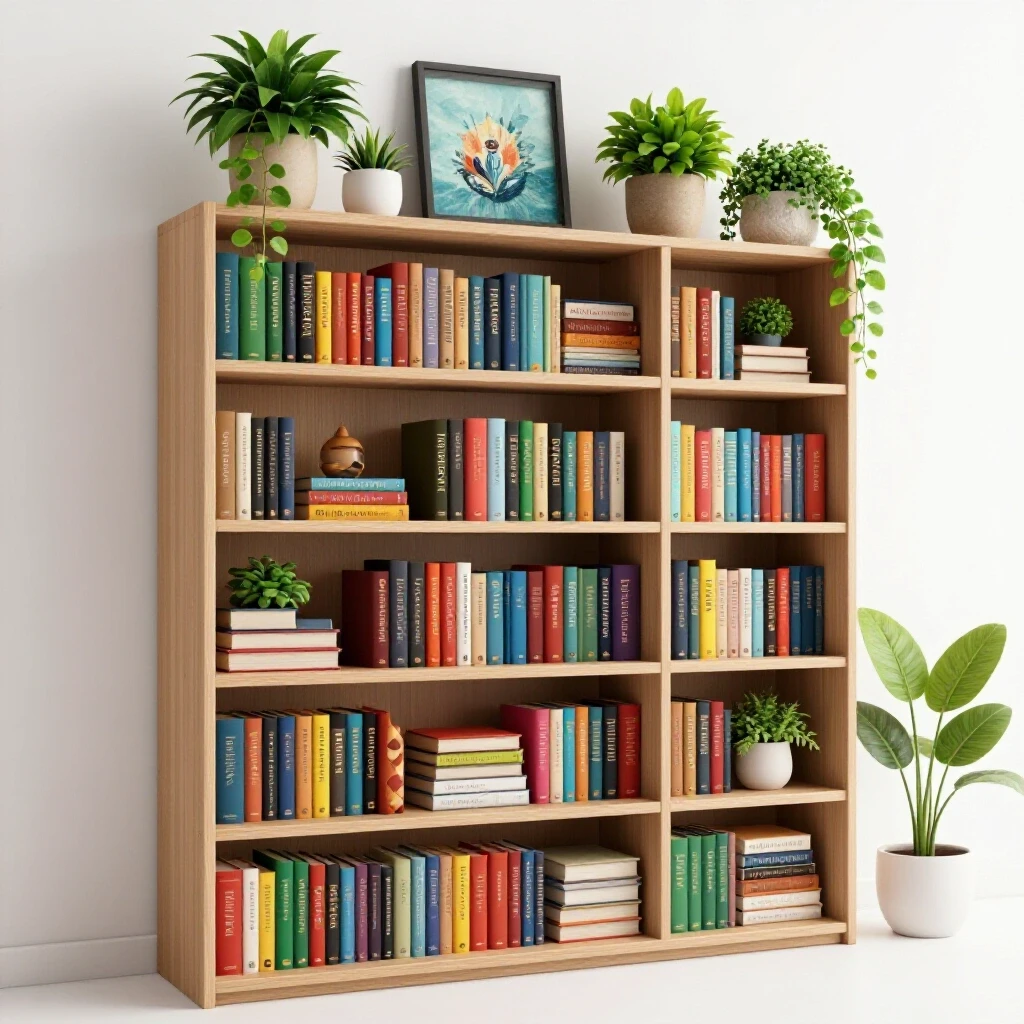
In my decade of managing personal remodeling ledgers, I have seen how “micro-spending” on small decor items can balloon into thousands of dollars over a year. This is what I call “budget erosion.” If you are planning a major kitchen remodel or a bathroom upgrade, every dollar saved on shelf decor is a dollar that can go toward a higher-quality countertop or a more efficient HVAC system. According to data from Remodeling Magazine’s Cost vs. Value reports, structural and functional upgrades consistently offer a higher return on investment than purely decorative changes.
By committing to a no-buy arrangement strategy, you are essentially performing a financial audit of your existing assets. You are looking at your books, vases, and heirlooms not just as “stuff,” but as inventory that has already been paid for. This mindset shift is the foundation of a prudent remodeling expense tracker, where the goal is to maximize the utility of every asset you own before considering a new purchase.
Inventory Auditing: The Financial Framework for Using Existing Assets
An inventory audit is the process of systematically cataloging your current household items to determine their potential for reuse in a new visual arrangement. This step is crucial because it prevents the “duplicate purchase trap,” where homeowners buy new items simply because they have forgotten what they already have in storage. By treating your home as a warehouse of decorative potential, you eliminate the need for new procurement costs.
When I work through my own home-related expenses, I use a simple spreadsheet to track my “decor inventory.” This isn’t about being obsessive; it’s about being aware of my assets. I categorize items by size, color, and texture. For example, a stack of vintage hardcovers in the attic might be the perfect foundation for a new display in the living room. This process mirrors construction accounting where you look for “salvage value” in existing materials before ordering new supplies.
- Step 1: Clear the entire area to create a “blank slate” for your project.
- Step 2: Gather all potential items from every room in the house into a central staging area.
- Step 3: Group items by visual weight and function (e.g., heavy books, tall vases, small trinkets).
- Step 4: Assess the “condition-to-value” ratio of each item to ensure it still fits your home’s aesthetic.
This methodical approach ensures that your home renovation budget remains untouched. Interestingly, most homeowners find that they have enough material to style three or four different areas just by shopping their own closets and cabinets. This is the ultimate way to avoid over-improving beyond your local market ceiling while still achieving a fresh look.
The Labor-to-Value Ratio of Personal Curation Projects
The labor-to-value ratio is a calculation used to determine if the time spent on a DIY project is worth the financial savings achieved by not hiring a professional. In the context of a zero-spend reorganization, your labor is the only “cost” involved, and its value is measured by the money saved on designer fees and new products. Understanding this ratio helps you allocate your weekend hours effectively without straining your mental or financial resources.
According to the U.S. Bureau of Labor Statistics, the median hourly wage for interior designers can range from $25 to over $60 depending on your region. By spending four hours on a Saturday afternoon rearranging your own shelves, you are essentially generating between $100 and $240 in “sweat equity.” For a cost-conscious home planner, this is a significant win. It allows you to achieve a professional-looking result without the professional-level invoice.
| Category | Professional Estimate | No-Buy DIY Strategy | Total Savings |
|---|---|---|---|
| Design Consultation | $150 – $300 | $0 | $150 – $300 |
| New Decorative Objects | $200 – $500 | $0 | $200 – $500 |
| Labor (4 Hours) | $100 – $240 | $0 | $100 – $240 |
| Total Project Cost | $450 – $1,040 | $0 | $450 – $1,040 |
Building on this, the “cost” of your time should always be weighed against the potential for project fatigue. Because a no-buy challenge has a hard financial ceiling of zero dollars, the risk of running out of money mid-project is non-existent. This provides a level of financial security that is rare in the world of home improvement. You are investing your time to increase your lifestyle value while keeping your liquid cash protected.
Mitigating Micro-Spending Leaks in Your Remodeling Expense Tracker
Micro-spending leaks are small, often unnoticed purchases that individually seem insignificant but collectively undermine your long-term financial goals. In home styling, these leaks usually take the form of “just one more” small candle, a cheap picture frame, or a trendy bookend. A strict no-buy policy acts as a pressure test for your financial discipline, forcing you to find creative solutions within your existing inventory.
I once consulted with a client who was frustrated that their “small” living room refresh had cost them $800. When we looked at their remodeling expense tracker, we found that $600 of that was spent on “bits and pieces” from discount home stores. None of these items added significant value to the home, and they certainly didn’t increase the property’s appraisal. By contrast, a zero-spend approach forces you to curate rather than accumulate.
- Establish a “Cooling-Off” Period: If you feel the urge to buy something new, wait 72 hours and try to find a substitute in your house first.
- Use the “One-In, One-Out” Rule: To maintain visual balance and avoid clutter, every “new” item brought to the shelves from another room must replace an old one.
- Track Your Avoided Costs: Keep a log of every item you didn’t buy. Seeing that “saved” number grow can be a powerful motivator.
As a result of this discipline, you will find that your cost breakdown guide for future, larger projects becomes much more accurate. You learn to distinguish between “needs” (a functioning roof) and “wants” (a new ceramic bird). This distinction is the hallmark of a financially prudent homeowner who avoids debt and unexpected financial strain.
Case Studies: High-Impact Visual Shifts with Zero Capital Outlay
Real-world examples provide the best data for understanding how zero-cost strategies perform in practice. In my own home, I recently tackled a large built-in unit that had become a “catch-all” for mail and random clutter. My goal was to create a balanced, aesthetic display without spending a single cent, documenting the process to ensure it aligned with my broader financial planning for homeowners.
I started by removing everything and cleaning the shelves—a “maintenance” task that costs nothing but adds immediate value. I then gathered books from three different rooms and sorted them by the color of their spines. By grouping all the white and cream books together, I created a high-end, cohesive look that typically costs hundreds of dollars in “staged” library sets. I added a few pieces of my grandmother’s old stoneware that had been hidden in a kitchen cabinet, providing texture and history.
- Case Study A: A homeowner used a “no-buy” weekend to style a home office. By repurposing old glass jars as pencil holders and using fabric scraps to cover mismatched binders, they saved an estimated $120.
- Case Study B: A family reorganized their fireplace mantle using only outdoor elements (dried branches and stones) and existing candles. They avoided a $250 “seasonal decor” spend.
These scenarios demonstrate that the “value” of a project isn’t always tied to the “cost” of the materials. Interestingly, both homeowners reported a higher level of satisfaction with their results because they had used items with personal meaning rather than generic store-bought goods. This “lifestyle value” is a critical part of the cost-benefit amortization of any home project.
Practical Frameworks for Managing Your Home Improvement Fund
Managing a home improvement fund requires a clear understanding of where your money is most effective. Financial macro-principles suggest that you should prioritize “envelope” repairs—things that keep the house dry and safe—over cosmetic ones. A zero-spend styling project is the perfect way to satisfy the urge for change without dipping into your emergency fund or renovation reserves.
When you are tracking your home finances, you should have a clear “contingency buffer” of 10–30% for any major project. By choosing zero-cost decorative updates, you are essentially protecting that buffer. If your water heater fails tomorrow, you won’t regret the $300 you didn’t spend on new shelf accessories. This is how you stay on track with your financial goals and avoid the stress of mid-project funding gaps.
- The 24-Hour Inventory Rule: Before starting any reorganization, spend 24 hours just “shopping” your own home. Look in the back of closets, the basement, and even the garage.
- The Geometric Balance Method: Instead of buying new items for height or scale, use what you have. Stack books horizontally to create pedestals for smaller objects you already own.
- The “Local Comp” Check: Look at high-end real estate listings in your area. You’ll notice that the styling is often simple and uncluttered. You can mimic this “luxury” look for free by removing items rather than adding them.
By following these frameworks, you ensure that your home remains a source of financial stability rather than a drain on your wealth. You are applying construction accounting principles—maximizing assets and minimizing liabilities—to the art of interior styling. This is the most effective way to keep your project budgets on track and your financial future secure.
Final Steps for the Cost-Conscious Planner
The most important step in any zero-spend project is the commitment to the “zero.” Once you allow even a five-dollar purchase, the psychological barrier is broken, and the potential for budget creep increases. Start by picking one small area of your home—perhaps a single shelf or a side table—and apply these principles. The success of that small project will give you the confidence to tackle larger areas without reaching for your wallet.
Remember that a home is a work in progress, and its value is not determined by the price tag of your decor. By using what you have, you are creating a space that is uniquely yours and financially sound. This approach not only keeps your spreadsheets looking healthy but also fosters a deeper connection to the items you’ve chosen to keep in your life. Stay disciplined, stay creative, and keep your renovation funds for the projects that truly matter.
Frequently Asked Questions
How can I make my shelves look professional without buying anything new?
Focus on “visual weight” and “negative space.” Group similar items together, such as all-white pottery or books of a similar size. Don’t feel the need to fill every inch of the shelf; leaving open space (negative space) makes the items you do have look more intentional and high-end.
What if I don’t have enough “decor” items at home?
Look for functional items that have aesthetic appeal. A beautiful wooden cutting board, a stack of vintage plates, or even a collection of interesting stones from your yard can serve as decor. Most people have plenty of items; they just haven’t looked at them through a “styling” lens before.
Does zero-spend styling actually increase my home’s value?
While it won’t increase your appraisal like a new kitchen will, it increases “marketability.” A well-styled, decluttered home shows better to potential buyers and can lead to faster sales. Since it costs $0, the return on investment is technically infinite.
How do I handle “empty” spots on my shelves during a no-buy challenge?
Embrace them. An over-stuffed shelf often looks messy rather than curated. If a spot feels too empty, try “spreading out” your existing items or changing the orientation of your books from vertical to horizontal to take up more visual real estate.
Can I use paint I already have for a zero-spend refresh?
Absolutely. Using “leftover” paint from previous projects to paint the back of a bookshelf or a few old picture frames is a classic zero-cost strategy. It utilizes existing inventory and adds a significant visual change without a trip to the hardware store.
How often should I reorganize my shelves?
There is no set rule, but many homeowners find that a seasonal refresh (every 3-4 months) keeps the home feeling new without the need for shopping. It’s a great way to “deep clean” areas that often collect dust.
What are the best items to “shop” for in my own home?
Look for books, vases, candles, small sculptures, framed photos, and even healthy houseplants. Don’t forget items from the kitchen or bedroom that might look great in a living area, like a decorative bowl or an interesting clock.
How do I stay motivated to not spend money during the project?
Track your “savings” in your financial planning spreadsheet. Every time you find a substitute for something you wanted to buy, log the price of the item you didn’t purchase. Watching that “saved” column grow is highly rewarding for any cost-conscious planner.
Is it okay to “borrow” items from other rooms permanently?
Yes, this is the core of the strategy. Moving items between rooms gives them a new life and changes the “vibe” of both spaces. It’s a zero-cost way to refresh your entire home’s interior design.
What if my existing items are “out of style”?
Trends are cyclical, and “classic” styling usually relies on timeless items like books and simple ceramics. Focus on the arrangement and the “story” the items tell together rather than whether each individual piece is currently “on trend.”
How do I deal with the urge to buy “just one thing” to finish the look?
Remind yourself of your larger financial goals. If you are saving for a $20,000 kitchen remodel, that $20 vase is a small step in the wrong direction. The challenge is to find a solution with what you have—that’s where the creativity (and the savings) happens.
Can I include “free” items from nature?
Definitely. Pinecones, interesting branches, driftwood, or even dried flowers from your garden are excellent, zero-cost styling tools. They add organic textures that professionals often pay high prices for in boutiques.
(This article was written by one of our staff writers, Steven Fletcher. Visit our Meet the Team page to learn more about the author and their expertise.)