Brick Cleaning Budget Guide: Cost Breakdown & Savings (Step-by-Step)

When I first started tracking my home expenses in a worn-out leather notebook, I realized that the smallest projects often caused the most significant financial stress. We tend to focus on the massive kitchen overhauls, but it is the cumulative effect of minor cosmetic updates that can quietly drain a savings account. I have spent over a decade refining a home renovation budget system that accounts for every cent, and I’ve found that restoring the original character of your home is one of the most cost-effective ways to build equity without taking on debt.
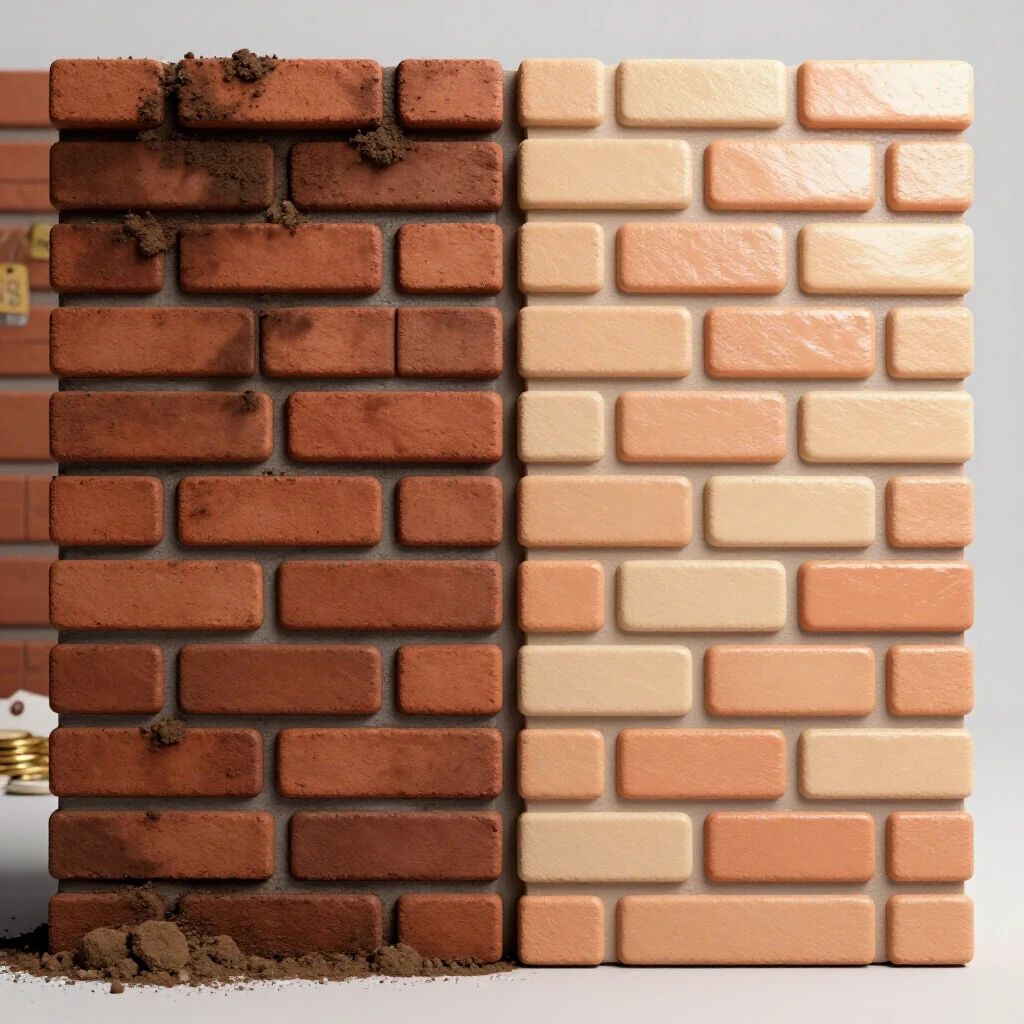
One of my early projects involved a soot-stained brick fireplace that hadn’t been touched since 1978. While a professional might have quoted me hundreds of dollars for a specialized service, I approached it like a financial planner. I built a remodeling expense tracker for a simple DIY deep-clean. By using basic household supplies and a few hardware store staples, I managed to transform the room’s focal point for less than the cost of a dinner out. This experience reinforced my belief that a disciplined financial planning for homeowners approach can yield professional results on a shoestring budget.
Why Surface Restoration Requires a Strict Financial Framework
A financial framework for home projects is a set of rules and limits that guide how you spend money to ensure you don’t over-improve a property. It involves setting a hard ceiling on costs based on the projected value the work adds to the home. This prevents the “scope creep” that often happens when a small cleaning task turns into an expensive renovation.
When I look at my personal remodeling spreadsheets, I categorize masonry surface refreshes as high-yield, low-risk investments. Unlike a full structural change, a cosmetic brick restoration has almost no chance of uncovering a massive structural failure, provided you stay within the realm of non-destructive cleaning. For cost-conscious home planners, this is the ideal project type because the variables are predictable. You aren’t dealing with fluctuating lumber prices or specialized labor rates. Instead, you are managing a small inventory of supplies and your own time.
I recommend a 10% contingency buffer even for these small projects. While it might seem overkill for a $50 supply list, that $5 acts as a psychological guardrail. It keeps you focused on the original plan. If you find you need an extra specialized scrub brush or a different type of mild detergent, that buffer absorbs the cost without you feeling like the project is “going over budget.”
Line-Item Breakdown: Tracking Every Cent of Your Masonry Project
A line-item breakdown is a detailed list where every individual expense is recorded and categorized to provide a clear picture of total spending. This accounting method ensures that small, “invisible” costs—like a $4 roll of painter’s tape—don’t get lost in the shuffle. It allows you to see exactly where your money is going compared to your initial estimate.
In my own restoration logs, I separate materials into “consumables” and “durable tools.” Consumables are things like vinegar, dish soap, or baking soda that you use up during the project. Durable tools are the brushes and buckets you will keep for years. This distinction is important for your long-term cost vs value home improvement calculations. The tools are a one-time investment that lowers the cost of future maintenance.
Below is a data-driven look at what a typical DIY masonry refresh looks like when tracked through a strict financial lens.
Projected vs. Actual Budget: DIY Brick Surface Refresh
| Expense Category | Estimated Cost | Actual Cost | Variance |
|---|---|---|---|
| Cleaning Agents (Vinegar/Dish Soap) | $12.00 | $10.50 | -$1.50 |
| Scrubbing Tools (Nylon Brushes) | $15.00 | $18.00 | +$3.00 |
| Protective Gear (Gloves/Drop Cloths) | $10.00 | $12.00 | +$2.00 |
| Application Tools (Spray Bottles/Buckets) | $8.00 | $7.00 | -$1.00 |
| Contingency Buffer (10%) | $4.50 | $0.00 | -$4.50 |
| TOTAL | $49.50 | $47.50 | -$2.00 |
Building on this data, you can see that the variance is minimal. This is the goal of a well-planned cost breakdown guide. By staying under $50, the financial risk is essentially zero, while the visual impact can significantly boost the “perceived value” of the home during a future appraisal.
Analyzing the Financial Impact of Sweat Equity
Sweat equity is the non-monetary contribution a homeowner makes to a project through their own physical labor. It is a way to increase a property’s value without increasing its debt load. In financial terms, it is the process of converting your free time into home equity, effectively “paying yourself” the hourly rate a professional would have charged.
When I talk to clients about financial planning for homeowners, I emphasize the “hourly rate” calculation. If a professional cleaning service would have charged $400 for a job that takes you four hours of work and $50 in supplies, your sweat equity is worth $87.50 per hour. This is a tax-free “return” on your time. For a cost-conscious homeowner, this is often the most efficient way to improve a home’s interior or exterior without tapping into emergency funds or high-interest credit.
- Labor-to-Material Ratio: In professional masonry cleaning, labor often accounts for 80-90% of the total bill. By doing it yourself, you flip the script, spending 100% of your budget on materials that you control.
- Time Allocation: I suggest breaking the project into two-hour blocks. This prevents burnout and ensures you don’t rush the process, which could lead to mistakes that cost money to fix later.
- Skill Acquisition: Learning how to safely clean your own brick surfaces is a skill that pays dividends over the life of your homeownership. It eliminates the need for recurring service calls.
Calculating the Return on Investment for Cosmetic Brick Updates
Return on Investment (ROI) in home improvement is the percentage of a project’s cost that you can expect to recover in increased home value upon sale. For minor cosmetic updates, the ROI is often much higher than for major renovations because the initial investment is so low. It is a measure of financial efficiency.
According to data from Remodeling Magazine’s Cost vs. Value reports, minor “curb appeal” or interior cosmetic projects often see a higher percentage of cost recovery than major kitchen or bath remodels. While they don’t track “brick cleaning” as a standalone category, it falls under the umbrella of maintenance and beautification. A clean, well-maintained fireplace or exterior wall signals to buyers that the home has been cared for, which can prevent “low-ball” offers.
Cost-to-Value Recovery Estimates
- Project Type: Minor Cosmetic Masonry Refresh
- Investment Range: $50 – $150 (DIY)
- Estimated Value Added: $500 – $1,500 (Perceived Value)
- ROI Percentage: 900% – 1,000%
Interestingly, the psychological impact of a clean home often outweighs the literal dollar amount spent. When a potential buyer sees stained or dirty brick, they don’t see a $50 cleaning project; they see a “problem” that might cost $2,000 to fix. By addressing this yourself, you are protecting your home’s market ceiling and ensuring you don’t over-improve in ways that the local market won’t support.
Avoiding Financial Pitfalls in Small-Scale Home Improvements
Financial pitfalls are common mistakes that lead to spending more money than a project is worth or failing to achieve the desired result. In the context of DIY cleaning, these usually involve buying unnecessary gadgets or using the wrong products that might require a more expensive fix later. Avoiding these traps is essential for keeping your home renovation budget on track.
One trap I often see is the “specialty product” lure. Hardware stores are filled with expensive, one-use chemicals that promise instant results. In my experience, and according to many restoration logs I’ve reviewed, simple solutions like white vinegar and water or a mild dish soap are often just as effective. Steering clear of premium, branded cleaners can save you 40% on your material costs immediately.
- The Over-Improvement Trap: Don’t spend $500 on high-end masonry sealants for a basement wall in a neighborhood where homes are selling at a lower price point. Stick to the cleaning.
- The “While I’m At It” Syndrome: Avoid the urge to buy new furniture or decor just because the brick looks better now. Stay focused on the line-item budget you created.
- Tool Over-Investment: Resist buying a $200 power tool for a job that a $5 scrub brush can do. Borrow or rent if you truly need heavy equipment, but for most cleaning, manual labor is the most cost-effective route.
Tools and Resources for Budget Tracking
To keep your finances disciplined, you need the right tools to monitor your spending. I have found that a combination of simple digital spreadsheets and a few reputable data sources provides the best framework for most homeowners. Using these resources helps you stay grounded in reality rather than relying on “guesstimates.”
- Google Sheets or Excel: Create a simple four-column sheet (Item, Estimated Cost, Actual Cost, Difference). This is the gold standard for a remodeling expense tracker.
- U.S. Bureau of Labor Statistics (BLS): Use this to look up general price indexes for household goods and tools to see if you are paying a fair market price at your local store.
- Local Real Estate Comps: Check sites like Zillow or Redfin to see the condition of homes in your price bracket. This helps you determine if your brick restoration is a necessary maintenance task or an over-improvement.
- Mobile Banking Apps: Use “buckets” or “vaults” in your savings account to set aside the specific $50 or $100 for the project so it doesn’t get mixed with your grocery money.
By following these steps, you are not just cleaning a wall; you are practicing sound financial management. You are ensuring that every dollar you put into your home is working for you, rather than against you. The goal is always to improve your living space while simultaneously strengthening your balance sheet.
Practical Next Steps for Your Restoration Project
If you are ready to start, the best move is to begin with a small, inconspicuous area. This allows you to test your cleaning solution without any financial risk. Start your spreadsheet today, even if it only has three items on it. The habit of tracking is more important than the size of the project.
- Step 1: Measure the square footage of the brick you plan to clean to estimate how much vinegar or soap you will need.
- Step 2: Audit your current cleaning supplies. You likely already own 50% of what you need.
- Step 3: Set a “Hard Cap” for the project. Decide that you will not spend more than $60, including the contingency.
- Step 4: Execute the cleaning in stages to manage your time and energy effectively.
Frequently Asked Questions
How do I determine a realistic budget for a DIY brick cleaning project?
A realistic budget is based on the square footage of the area and the current cost of basic supplies. For a standard fireplace, a budget of $40 to $60 is typical. This includes white vinegar, a sturdy nylon scrub brush, a bucket, and some protective drop cloths. Always check your cabinets first to see what you can “source” for free from your existing household inventory.
Can I really improve my home’s value with just a $50 cleaning?
Yes, because you are increasing the “perceived value.” In real estate, first impressions are vital. Dirty or soot-covered brick can make a room feel neglected. By spending $50 on a deep clean, you remove a visual “red flag” for future buyers, which can help maintain your home’s value at the top of its localized market range.
What is the most common hidden cost in this type of project?
The most common hidden cost is actually “re-work.” If you use a brush that is too stiff (like a wire brush) and damage the mortar, you might end up needing to pay for professional repointing. Staying with nylon brushes and mild cleaners protects you from this financial risk. Another hidden cost is the water usage, though this is usually negligible on a standard utility bill.
Is it better to buy or rent tools for masonry restoration?
For simple cleaning, buying is almost always better because the tools are inexpensive. A high-quality scrub brush costs less than $10 and will last for years. Renting is only cost-effective for large-scale exterior projects where you might need a pressure washer, but for interior or small exterior sections, manual tools are the most budget-friendly choice.
How does this project fit into a larger home renovation budget?
I treat cosmetic cleaning as a “maintenance” line item. It should be funded by your monthly home maintenance fund (typically 1% of your home’s value per year) rather than a renovation loan. Because the cost is so low, it is a great “filler” project to do while you are saving up for larger, more expensive upgrades.
What if the cleaning doesn’t work and I’ve already spent the money?
This is why we use a strict financial framework. If you spend $50 and the results are minimal, you have only lost a very small amount of capital. This is a much better outcome than hiring a professional for $500 and still being unhappy with the result. It is a “low-stakes” way to test the limits of your home’s materials.
How do I track “sweat equity” on my spreadsheet?
Create a column for “Hours Worked” and assign yourself a hypothetical hourly rate (e.g., $25/hour). While this isn’t “real” money leaving your bank account, it helps you understand the true cost of the project. If a project takes 40 hours to save $100, the financial logic might not hold up. For brick cleaning, the time-to-savings ratio is usually very favorable.
Should I worry about over-improving my home with this project?
It is almost impossible to over-improve a home through cleaning. Cleaning is a maintenance task that preserves the existing value. Over-improvement usually happens when you add features that the neighborhood doesn’t support, like a gold-plated faucet. A clean brick fireplace is a standard expectation in almost any market.
What is the best way to avoid debt for home maintenance?
The best way is to use a “sinking fund.” This is a separate savings account where you deposit a small amount each month specifically for home projects. By the time you are ready to clean your brick or paint a room, the cash is already there, and you don’t have to rely on credit cards or loans.
How do I know if my brick is “restored” enough?
From a financial perspective, “restored enough” means the surface is clean, the colors are natural, and there is no visible debris or soot. You don’t need it to look brand new; you just need it to look well-maintained. Once you reach that point, further spending usually yields diminishing returns on your investment.
(This article was written by one of our staff writers, Steven Fletcher. Visit our Meet the Team page to learn more about the author and their expertise.)