How to Build a Wall-Mounted Key and Mail Rack (Easy DIY Guide)

Three years ago, I spent twenty minutes hunting for my truck keys while my morning coffee went cold on the counter. My mail was scattered across the dining table, mixed with utility bills and various hardware store receipts. As a facilities manager, I oversee thousands of square feet of organized space, yet my own entryway was a chaotic bottleneck. This frustration led me to design a functional, wall-mounted solution that balances aesthetics with structural integrity.
In my twelve years of home maintenance, I have learned that the most successful projects are not the most expensive ones, but those that solve a specific daily friction point. Creating a dedicated station for your keys and correspondence is a classic weekend DIY project that offers a high return on investment. It requires basic woodworking skills and a few hours of focused labor. However, if you rush the mounting process or use the wrong fasteners, you risk damaging your drywall or having the unit pull away from the wall under the weight of heavy catalogs.
Project Feasibility and Planning Metrics
Before you pick up a saw, you must understand the time and financial commitment required for this type of home upgrade. Many online tutorials suggest you can finish this in an hour, but that often ignores the time needed for sanding, finishing, and proper wall installation.
| Phase | Active Labor Time | Waiting/Curing Time | Difficulty (1-10) |
|---|---|---|---|
| Material Prep & Cutting | 1.5 Hours | N/A | 3 |
| Assembly & Joinery | 2 Hours | 1 Hour (Glue set) | 5 |
| Sanding & Finishing | 1 Hour | 12-24 Hours | 2 |
| Wall Mounting | 1 Hour | N/A | 4 |
| Total | 5.5 Hours | 13-25 Hours | Overall: 4 |
In terms of cost, a professional-grade custom organizer can run upwards of $150. By executing this yourself, you can expect to spend between $30 and $50 on materials, depending on your choice of wood and hardware. The biggest variable is usually the wood species; select pine is affordable and easy to work with, while hardwoods like oak or walnut will increase both the cost and the required tool sharpness.
Essential Equipment and Safety Gear
This project serves as an excellent introduction to basic power tools and precision measurement. Having the right inventory prevents mid-project trips to the hardware store, which are the primary killers of weekend productivity.
- Miter Saw or Circular Saw: Used for making clean, square cross-cuts in your lumber.
- Cordless Drill and Driver: Essential for pre-drilling pilot holes and driving wood screws or wall anchors.
- Random Orbit Sander: This tool uses a circular motion to remove saw marks and smooth the grain without leaving swirl patterns.
- Stud Finder: A diagnostic tool used to locate the vertical framing members behind your drywall.
- Torpedo Level: A small leveling tool (usually 9 to 12 inches) to ensure your organizer is perfectly horizontal.
- Kreg Jig (Optional but Recommended): A specialized tool for drilling pocket holes, which allow for strong, hidden joints.
- Personal Protective Equipment (PPE): This includes ANSI Z87.1 rated safety glasses, N95 dust masks for sanding, and hearing protection for saw use.
Safety is paramount in any facility-grade project. When sanding, you generate fine particulate matter that can irritate the respiratory system. In my early years, I skipped the mask and paid for it with a persistent cough for days. Now, I always use a vacuum attachment on my sander to collect dust at the source.
Selecting Materials for Longevity and Weight Capacity
The foundation of a reliable wall-mounted organizer is the quality of the timber and the strength of the hooks. For a project that will hold keys, wallets, and heavy envelopes, I recommend using 3/4-inch thick lumber.
- Lumber: 1×6 select pine is a standard choice. It measures 0.75 inches thick and 5.5 inches wide. Ensure the boards are straight by “sighting” down the edge at the lumber yard to check for bows or twists.
- Fasteners: 1-1/4 inch pocket hole screws or trim screws.
- Hooks: Heavy-duty zinc or brass hooks. Avoid thin, decorative hooks that can bend if a heavy set of work keys is tossed onto them.
- Wood Glue: A high-quality PVA (polyvinyl acetate) glue provides a bond that is actually stronger than the wood fibers themselves.
Designing the Layout for Maximum Utility
A common mistake in DIY home improvement is failing to account for the physical size of the items being stored. If your mail slot is too narrow, a standard 9×12 inch catalog will flop over or fall out.
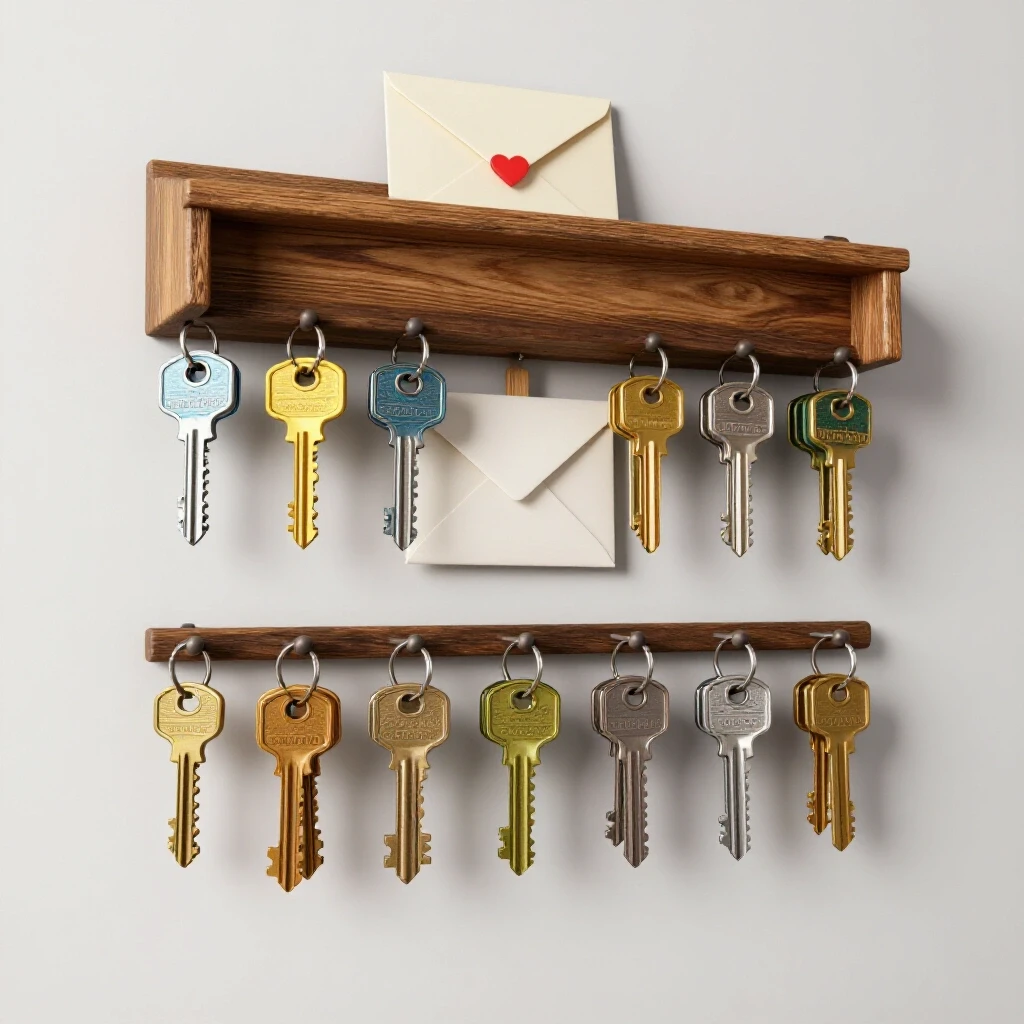
I suggest a backplate height of at least 10 inches. This provides enough vertical surface area to mount hooks at the bottom while leaving room for a mail pocket that is roughly 3 inches deep. The width is flexible, but 12 to 16 inches is the “sweet spot” for most entryways. This width allows for three to four key hooks spaced at 3-inch intervals, which prevents keyrings from tangling.
Step-by-Step Construction Phases
Once your plan is set, the execution begins with the “dry-fit” process. Dry-fitting means assembling the pieces without glue or permanent fasteners to verify that every joint is tight and every measurement is accurate.
Phase 1: Precision Cutting and Pre-Sanding
Measure twice and cut once is a cliché because it is true. Use your miter saw to cut the backplate, the bottom shelf, and the front face of the mail pocket.
Interestingly, sanding your pieces before assembly is much easier than trying to get into tight corners once the unit is built. Start with 80-grit sandpaper to remove rough mill marks, then progress to 120-grit, and finish with 220-grit for a smooth surface. This progression is standard in facility maintenance for any wood surface that will be touched daily.
Phase 2: Joinery and Assembly
Apply a thin, even bead of wood glue to the edges where the shelf meets the backplate. If you are using pocket holes, drive your screws through the bottom shelf into the backplate. The screws act as internal clamps while the glue cures.
If you don’t have a pocket hole jig, you can use “countersinking.” This involves drilling a hole slightly wider than the screw head so the fastener sits below the wood surface. You can then fill the hole with wood putty for a seamless look. Wipe away any glue “squeeze-out” immediately with a damp cloth; dried glue will repel stain and leave unsightly splotches.
Phase 3: Hardware Installation
Mark the locations for your hooks using a centering ruler. Pre-drilling pilot holes for hook screws is non-negotiable. Without pilot holes, the small screws used for hardware often snap off in the wood, or worse, they split the grain. Use a drill bit that is slightly smaller than the shank of the screw.
Finishing and Curing Timelines
The finish you choose protects the wood from the oils on your hands and the moisture from wet mail. For a durable, daily-use item, a polyurethane topcoat is the industry standard.
| Finish Type | Application Method | Dry Time (Touch) | Full Cure Time |
|---|---|---|---|
| Water-Based Poly | Synthetic Brush | 2 Hours | 24 Hours |
| Oil-Based Stain | Lint-free Rag | 6-8 Hours | 48 Hours |
| Spray Paint | Aerosol Can | 30 Minutes | 24 Hours |
I prefer water-based polyurethane for indoor projects because it has low VOCs (volatile organic compounds) and cleans up with soap and water. Apply at least two coats, lightly sanding with 320-grit paper between them to knock down any “raised grain.”
Secure Mounting and Wall Attachment Protocols
This is the phase where most DIY projects fail. A wall organizer that falls off the wall is a safety hazard and can cause significant drywall damage. You must understand the difference between a stud-mounted installation and an anchor-mounted one.
Locating Studs
Residential walls in North America are typically framed with 2×4 studs spaced 16 inches apart on center. Using a stud finder, mark the center of the stud. Driving a screw directly into a stud provides the highest load tolerance—often exceeding 50 pounds per screw.
Using Wall Anchors
If your organizer’s placement doesn’t align with a stud, you must use hollow-wall anchors. I recommend “toggle bolts” or “self-drilling threaded anchors” rated for at least 50 pounds. Never use the cheap plastic “expansion plugs” that come in a variety pack for something that will be handled daily. The repeated motion of pulling keys off a hook will eventually loosen a weak anchor.
Leveling and Final Attachment
Hold the unit against the wall and place your torpedo level on the top edge. Once the bubble is centered, mark your mounting holes. If you are mounting through the backplate, you can hide the screws by placing them behind where the mail will sit. Ensure your fasteners are long enough to pass through the 3/4-inch backplate and penetrate at least 1 inch into the wall stud.
Troubleshooting Common Challenges
Even with careful planning, issues can arise. Here is how to handle the most frequent setbacks:
- Split Wood: If the wood splits during assembly, it’s usually because the pilot hole was too small or too close to the edge. Use wood glue and a clamp to repair the split, let it dry for two hours, and then re-drill a larger pilot hole.
- Uneven Gaps: If your joints have a gap, your cuts might not be perfectly square. You can use a mixture of wood glue and fine sawdust from your sander to create a matching “filler” that hides the gap.
- Stripped Screws: If a screw head strips, use a pair of locking pliers to grip the head and back it out. Replace it with a new screw and ensure your driver bit is the correct size (e.g., Phillips #2 vs #3).
Integrating Code Compliance and Safety
While a small shelf doesn’t typically fall under strict building codes like electrical or plumbing work, the National Fire Protection Association (NFPA) and local codes do have rules regarding “means of egress.” Your organizer should not protrude so far into a hallway that it restricts movement or creates a snag hazard during an emergency.
In my professional capacity, I follow the ADA (Americans with Disabilities Act) guidelines for mounting heights in public spaces, which suggest a height of 48 inches for reachability. For a home setting, mounting the unit so the hooks are at eye level (roughly 60 inches) is usually most comfortable for adults.
Final Maintenance and Care
To keep your entryway station looking new, wipe it down once a month with a microfiber cloth. Avoid harsh chemical cleaners that can break down the polyurethane finish. If a hook becomes loose over time due to the “lever effect” of heavy keys, remove the screw, insert a wooden toothpick with a drop of glue into the hole, and re-drive the screw once dry. This “old-school” facility trick creates new wood fibers for the screw to bite into.
Conclusion and Next Steps
Taking control of your entryway clutter is a rewarding project that demonstrates how small-scale DIY home improvement can improve your daily quality of life. By following a structured approach—from selecting straight lumber to using the correct wall anchors—you ensure that your work is both functional and safe.
If you have completed this project, your next step might be tackling a larger shelving unit or a basic mudroom bench. The skills you practiced here—measuring, cutting, sanding, and secure mounting—are the building blocks for almost every interior woodworking task.
Frequently Asked Questions
What is the best wood for a beginner to use for this project? I recommend select pine. It is inexpensive, widely available at big-box stores, and soft enough to be easily sanded and cut. Avoid “common” pine, which often has large knots that can fall out or bleed sap through your paint.
How do I prevent the wood from warping after I build it? Warping is caused by moisture changes. To prevent this, seal all sides of the wood—including the back that faces the wall—with your finish. This creates a consistent barrier against humidity.
Can I use nails instead of screws for assembly? While you can use finish nails and glue, screws provide much better mechanical strength. For a unit that will be pulled on daily (when grabbing keys), the “clamping force” of a screw is superior to the friction hold of a nail.
What should I do if I hit a metal plate while drilling into the wall? Stop immediately. A metal plate behind drywall is a “nail plate,” installed to protect electrical wiring or plumbing pipes from being punctured. Move your mounting hole at least two inches to the left or right to avoid a dangerous situation.
How much weight can a typical wall-mounted organizer hold? If mounted into two wall studs with 2.5-inch screws, a unit like this can easily hold 50 pounds. If using high-quality toggle anchors in drywall, I would limit the load to 15-20 pounds to avoid stressing the gypsum board.
Do I really need to sand between coats of finish? Yes. When you apply a liquid finish, the wood fibers “stand up,” creating a rough texture. Lightly sanding with 320-grit paper flattens these fibers, resulting in a professional-grade, smooth-to-the-touch surface.
How do I choose the right size drill bit for a pilot hole? Hold the screw up behind the drill bit. You should be able to see the screw threads sticking out past the bit, but the solid center “shank” of the screw should be hidden by the bit.
What is the “lever effect” in wall mounting? The lever effect occurs when weight is placed on the end of a hook or shelf. This multiplies the force pulling on the top of the organizer. This is why the top fasteners are the most critical for preventing the unit from tipping away from the wall.
Is it better to paint or stain the wood? This is a personal preference. Paint hides the wood grain and allows for bold colors, while stain highlights the natural beauty of the timber. Note that paint usually requires a primer, while stain requires a topcoat like polyurethane.
How can I make the mail slot easier to clean? Design the bottom of the mail slot with a slight gap (about 1/8 inch) or use a removable front panel. This prevents dust and paper scraps from being trapped in the corners over time.
(This article was written by one of our staff writers, Robert Callahan. Visit our Meet the Team page to learn more about the author and their expertise.)