Ceiling Fan vs AC: Cost, Efficiency & Durability Compared (Guide)

Opening a utility bill in July can feel like a punch to the gut. I remember sitting at my kitchen table ten years ago, staring at a three-digit number that had nearly doubled since May. At the time, I was managing three different properties, each with a different cooling setup. One had a high-end central system, another relied on window units, and the third used a combination of high-efficiency overhead fans. That summer was a turning point in how I viewed home materials and appliances. I realized that the most expensive system wasn’t always the smartest investment if I didn’t understand the technical trade-offs of how they actually worked.
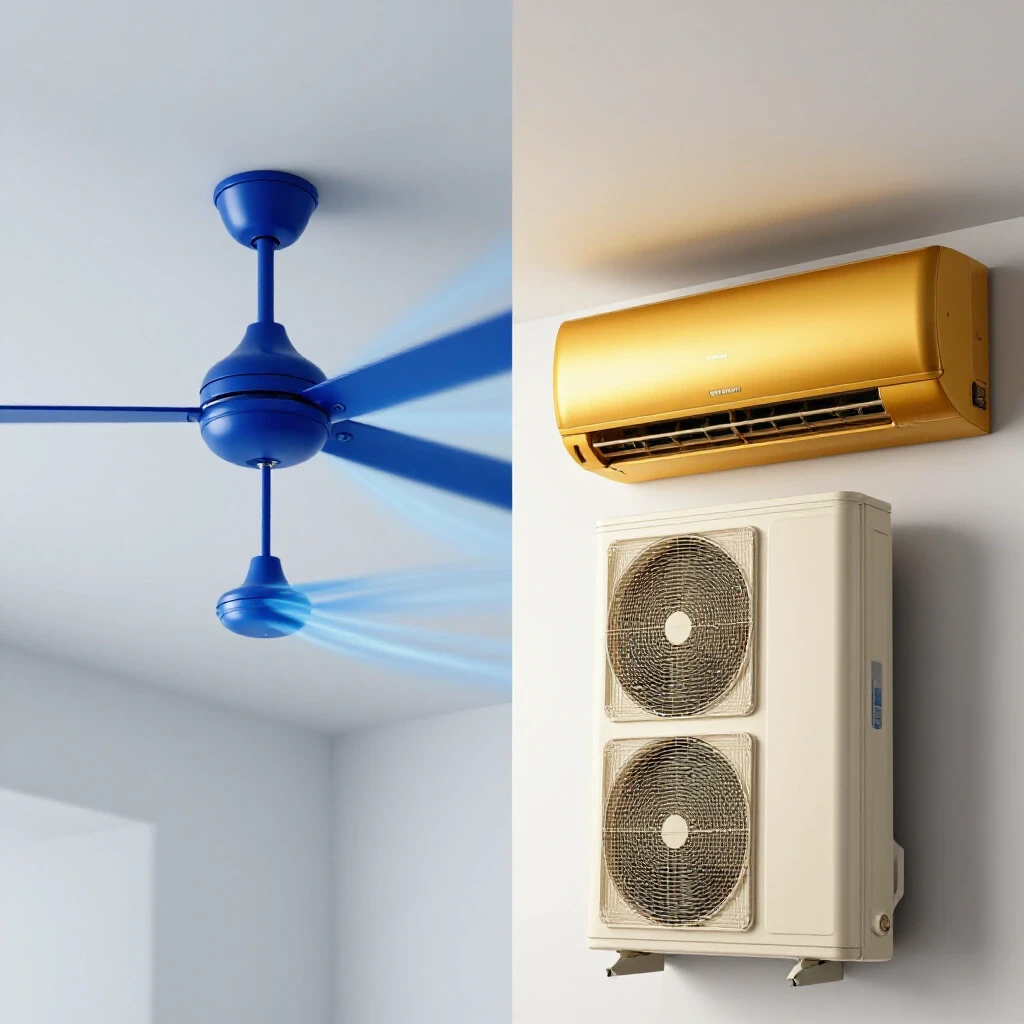
As a supply chain analyst, I look at home goods through the lens of data. I want to know if the extra $200 for a specific motor or the $3,000 for a higher efficiency rating actually pays for itself. Over 13 years, I have tracked the performance of various materials, from the pitch of a fan blade to the SEER rating of a compressor. Making a confident decision requires moving past the marketing hype and looking at the raw specifications. This guide will help you weigh the precise trade-offs between mechanical air circulation and refrigerated cooling systems to manage your seasonal expenses effectively.
Understanding Technical Standards and Cooling Mechanics
Technical standards provide a universal language for comparing how different appliances perform under stress. For cooling systems, we primarily look at how much energy is required to move a specific volume of air or remove a specific amount of heat. Understanding these metrics prevents you from overpaying for capacity you do not actually need for your specific floor plan.
In the world of refrigerated cooling, the Seasonal Energy Efficiency Ratio (SEER) is the gold standard. It measures the cooling output of a system divided by the total electric energy input during the same period. A higher SEER rating indicates a more efficient unit. On the other hand, mechanical fans are measured by Cubic Feet per Minute (CFM). This tells you how much air the blades move. When I evaluate these for a property, I look at the CFM per watt. This metric reveals the true efficiency of the motor, much like miles per gallon for a car.
The National Association of Home Builders (NAHB) often notes that while central systems have a shorter lifespan—usually 12 to 15 years—overhead fans can easily last 20 years if they feature high-quality bearings and motors. This difference in longevity is a critical factor in your long-term home material comparison.
Analyzing the Life-Cycle Costs of Air Circulation vs. Refrigerated Cooling
A life-cycle cost analysis looks at the total expense of owning an appliance from the day you buy it to the day you scrap it. This includes the purchase price, energy consumption, and any parts that wear out over time. For many homeowners, the struggle is deciding if a high upfront cost translates into a lower total cost over a decade.
When I compared the costs across my properties, the data was clear. A standard central cooling unit might cost $0.40 to $0.70 per hour to operate, depending on local energy rates. In contrast, a high-efficiency overhead fan costs approximately $0.01 per hour. Even if you run five fans simultaneously, the cost is still a fraction of the central system. However, fans do not lower the actual temperature of the room; they move air to create a cooling effect on the skin.
This is where the trade-off analysis becomes vital. If you live in a region with high humidity, a fan alone might not be enough to protect your interior materials, like hardwood flooring or leather furniture, from moisture damage. In my experience, the most cost-effective strategy is a hybrid approach. By using fans to supplement the central system, you can often raise the thermostat by four degrees without losing comfort. This small adjustment can reduce your monthly energy bill by nearly 10 percent.
Material Durability and Maintenance Over a 15-Year Horizon
The materials used in your cooling appliances dictate how much time and money you will spend on maintenance. For fans, the blade material and motor type are the most important factors. For refrigerated systems, the quality of the coils and the compressor housing determines how well the unit stands up to the elements.
- Motor Types: DC motors in fans are 70% more efficient than standard AC motors. They are smaller, lighter, and offer more speed settings. In my testing, DC motors also run cooler, which extends the life of the internal lubricants.
- Blade Materials: Solid wood blades are beautiful but can warp in high humidity. ABS plastic or high-density composites are often better for long-term durability in kitchens or covered patios. They do not droop or lose their aerodynamic pitch over time.
- Coil Coatings: For central units, look for “Blue Fin” or “Gold Fin” epoxy coatings. These prevent corrosion from salt air or acid rain, which is a common cause of premature system failure.
- Housing Materials: Powder-coated galvanized steel is the industry standard for outdoor units. It resists rust and protects the sensitive internal electronics from debris.
I once chose a cheaper fan with plywood blades for a rental property. Within three years, the blades had begun to sag due to the local humidity, causing the motor to wobble and eventually burn out. Replacing it with a unit featuring weather-resistant composite blades saved me from a second replacement five years later.
Strategic Integration: Balancing Aesthetics and Performance
Choosing between different cooling methods often involves a compromise between how a room looks and how it feels. High-end home materials should serve both functions. A sleek, minimalist fan can be a design centerpiece, but if its blades are too short for the room’s square footage, it becomes an expensive piece of ceiling art rather than a functional tool.
The “sweep” or diameter of a fan must match the room size to be effective. For a room larger than 400 square feet, a 60-inch or 72-inch sweep is necessary. If you choose a smaller fan because it looks better, you will likely end up cranking the AC to compensate, defeating the purpose of the investment. Similarly, the placement of AC vents can impact the durability of other materials. If cold air blows directly onto a natural stone countertop or a wooden dining table, the constant thermal shock can lead to micro-cracking or finish degradation over several years.
Interestingly, the finish on fan blades also affects maintenance. Matte finishes tend to hide dust better than high-gloss or metallic finishes. If you are someone who dislikes cleaning every two weeks, choosing a material with a neutral, non-reflective surface will save you significant labor over the life of the product.
Practical Evaluation: A Side-by-Side Comparison of Technical Specs
To make an objective decision, you need to see how these systems stack up against each other across several key performance indicators. This table represents the data I have gathered from manufacturer spec sheets and real-world performance tracking over the last decade.
| Performance Metric | Overhead Circulation Fan (DC Motor) | Central Refrigerated System (16 SEER) |
|---|---|---|
| Upfront Hardware Cost | $300 – $800 | $3,500 – $7,000 |
| Energy Usage (Watts) | 15W – 35W | 2,000W – 5,000W |
| Daily Operating Cost (8 hrs) | ~$0.04 | ~$4.80 |
| Maintenance Needs | Dusting, occasional balancing | Annual coil cleaning, filter changes |
| Average Lifespan | 15 – 20 Years | 12 – 15 Years |
| Primary Material | Aluminum, ABS Plastic, Wood | Copper, Steel, Aluminum |
| Noise Level (Decibels) | 30 – 45 dB | 50 – 70 dB (Outdoor Unit) |
This comparison highlights why the “cheaper” option upfront is almost always the cheaper option long-term for air circulation. However, the central system provides a level of climate control that fans cannot match. The goal is to use the technical material specifications of each to maximize your comfort while minimizing the drain on your bank account.
Why Higher Upfront Costs Don’t Always Guarantee Durability
In my 13 years of evaluating home goods, I have seen many homeowners fall into the trap of thinking that a higher price tag automatically means a product will last longer. This is not always true in the cooling industry. Sometimes, you are paying for brand prestige or smart home features that don’t actually contribute to the mechanical longevity of the device.
For example, a fan that costs $1,200 might have the same motor as a $400 model but features hand-carved exotic wood blades. While the wood is a premium material, it doesn’t make the fan move more air or last longer. In fact, it might make the fan harder to balance. When evaluating high-end home materials, I look for “over-engineered” internal components rather than just surface-level aesthetics.
- Check the Bearing Type: Sealed ball bearings are superior to sleeve bearings. They require no lubrication and run much quieter for a longer period.
- Verify the Warranty Limits: A “limited lifetime warranty” on a motor is great, but check the warranty on the electronics and the finish. Often, the parts most likely to fail are only covered for one or two years.
- Evaluate the Sourcing: Parts sourced from manufacturers with ISO 9001 certification generally have tighter tolerances, meaning they fit together better and vibrate less.
- Test the Weight: In many cases, a heavier fan indicates a larger motor with more copper windings. This usually translates to better heat dissipation and a longer lifespan.
Decision-Making Framework: How to Score Your Cooling Needs
Before you swipe your credit card, it is helpful to use a scoring matrix to determine which investment makes the most sense for your lifestyle. This systematic approach removes the emotion from the purchase and focuses on the trade-off analysis.
- Climate Factor (1-5): If you live in a desert or high-humidity area, give this a 5 (AC is a priority). If your climate is mild, give it a 1 (Fans are a priority).
- Usage Frequency (1-5): Will the room be used 24/7 or just for a few hours a day? High usage suggests investing in higher efficiency (DC motors/High SEER).
- Maintenance Tolerance (1-5): Do you mind annual professional service calls? If not, a 1. If you want “set it and forget it,” score it a 5.
- Budget Flexibility (1-5): Is the upfront cost your main concern (1) or is the 10-year total cost more important (5)?
By totaling these scores, you can see where to allocate your funds. When I renovated my current home, my score for the primary bedroom was high on “Usage Frequency” and “Maintenance Tolerance.” As a result, I invested in the highest-rated DC motor fan available and a mid-range central unit. This combination has kept my summer bills significantly lower than my neighbors who rely solely on their AC.
Final Recommendations for Supply-Chain and Cost Management
Managing summer expenses is a marathon, not a sprint. The decisions you make during a renovation or an appliance upgrade will echo through your bank statements for the next decade. Based on my procurement logs and performance data, the smartest move is to prioritize the “envelope” of your home first—insulation and sealing—and then choose cooling hardware that matches your specific volume requirements.
Avoid the mistake of buying “contractor grade” units if you plan to stay in your home for more than five years. These units often use thinner gauge metals and lower-quality plastics that degrade under UV exposure. Instead, look for mid-to-high-range models from reputable manufacturers who provide detailed technical spec sheets. This transparency is usually a sign that the company stands behind their engineering.
Lastly, remember that maintenance is a form of cost-saving. Cleaning the dust off fan blades every month prevents the motor from working harder than it needs to. Similarly, changing your AC filters every 90 days can prevent a $500 service call. These small, low-cost actions protect your expensive materials and ensure that your cooling systems operate at peak efficiency for their entire intended lifespan.
Frequently Asked Questions
Does a fan actually lower the temperature in a room?
No, a fan does not lower the ambient temperature. It creates a “wind chill” effect by accelerating the evaporation of moisture from your skin. This makes you feel 6 to 8 degrees cooler. Because it doesn’t change the room temperature, you should turn fans off when you leave the room to save energy.
Is a DC motor worth the higher upfront price?
In most cases, yes. DC motors are significantly quieter and use about 70% less electricity than traditional AC motors. They also offer more speed control, which allows you to fine-tune your comfort level. If you plan to use the fan frequently, the energy savings will typically cover the price difference within two to three years.
How do I know if a fan is the right size for my room?
The industry standard is based on square footage. For rooms up to 75 square feet, a 29-36 inch fan is sufficient. For rooms 144-225 square feet, look for a 44-50 inch fan. For large great rooms over 400 square feet, you will need a fan that is 60 inches or larger to move enough air to be effective.
What is the most durable material for outdoor fan blades?
For outdoor or high-humidity areas, ABS plastic with a UV-resistant coating is the most durable choice. It will not warp, rot, or peel like natural wood or cheap plywood. Some high-end models also use marine-grade aluminum, which is excellent for coastal environments where salt air is a concern.
How much can I really save by using a fan with my AC?
By using a fan to move air, you can comfortably set your air conditioner about 4 degrees higher than usual. According to energy department data, this can reduce your cooling costs by approximately 7% to 10% per month. Over a long summer, this adds up to significant savings.
Does the number of blades on a fan matter for cooling?
The number of blades is more about aesthetics than performance. A fan with three blades can move just as much air as one with five, provided the motor is powerful and the blade pitch is correct. However, fans with more blades tend to be quieter because they are more balanced and move air with less turbulence.
What should I look for in a central AC warranty?
Look for a 10-year parts warranty as the baseline. Be sure to check if the compressor has a separate, longer warranty, as it is the most expensive part to replace. Also, verify if the warranty requires you to register the product within a certain timeframe after installation, as many homeowners miss this step.
How often should I replace my cooling appliances?
If your central AC unit is more than 15 years old or requires frequent repairs, it is likely more cost-effective to replace it with a high-efficiency model. Fans should be replaced when the motor begins to hum loudly, the blades sag, or they no longer move air efficiently, which usually happens between 15 and 20 years for high-quality models.
(This article was written by one of our staff writers, Andrew Morrison. Visit our Meet the Team page to learn more about the author and their expertise.)