How to Repair a Ceiling After a Leak: Step-by-Step Guide (Timeline)

The smallest yellow circle on a white ceiling is often the most expensive piece of art you will ever own. It sits there, seemingly harmless, yet it represents a complex puzzle of structural integrity, moisture control, and aesthetic blending. In my 18 years as a project coordinator, I have seen these small spots turn into full-scale room gutting because the homeowner waited too long or skipped a critical drying phase.
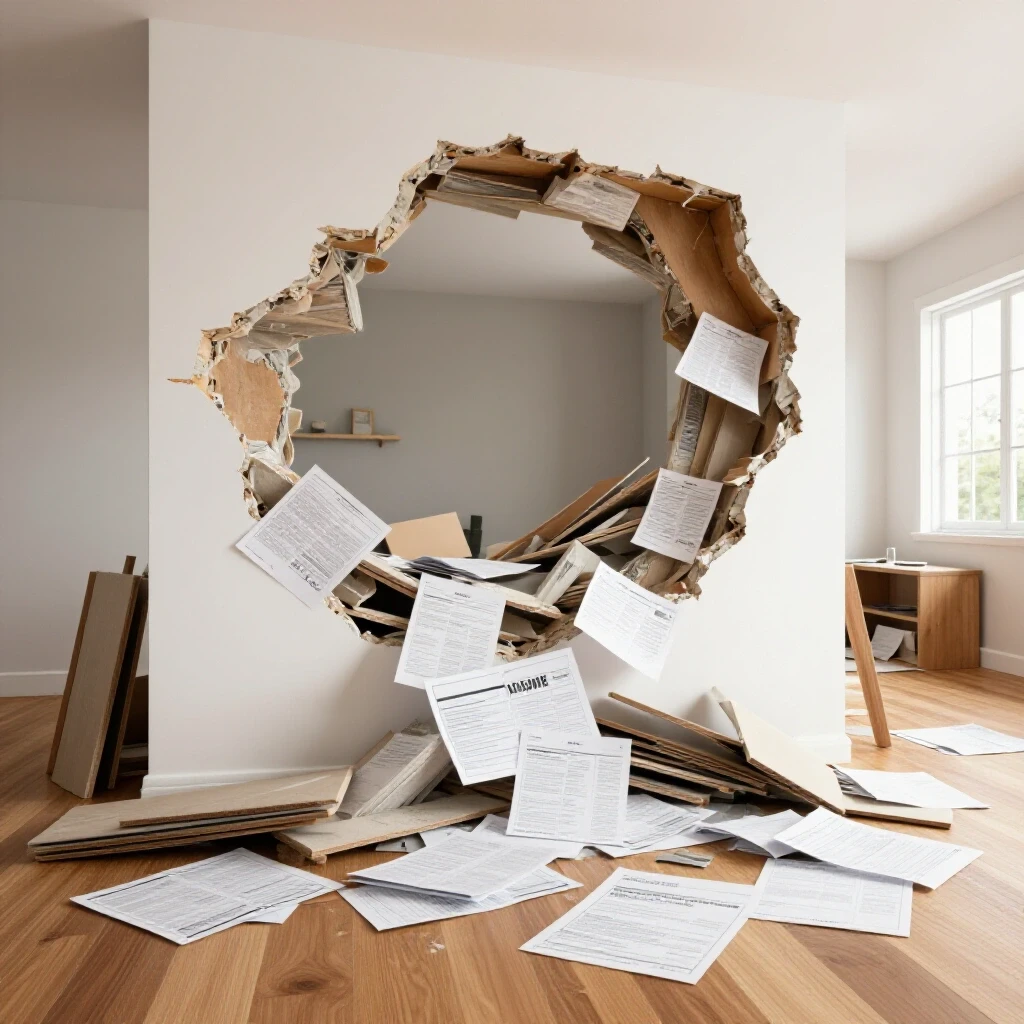
When water breaches your overhead surfaces, the clock starts ticking. It is not just about the unsightly stain; it is about the hidden weight of saturated gypsum and the risk of the material collapsing. I remember a project in a 1940s colonial where a slow drip from an upstairs radiator turned the living room ceiling into a literal sponge. The homeowner thought a bit of Kilz and a fresh coat of paint would fix it. Three weeks later, a four-foot section of plaster crashed onto their mahogany dining table. This guide walks you through the reality of restoring your home after moisture intrusion, using the same systematic approach I use on professional job sites.
Defining the Scope of Water Damage Restoration
Restoring a ceiling involves identifying the exact boundaries of moisture migration and determining how much material must be removed to ensure a stable repair. This process moves beyond the visible stain to find where water has traveled along joists or pooled behind the drywall.
Before you pick up a hammer, you must understand the “why” and “where.” In construction, we call this defining the scope of work. For an overhead repair, this means using a moisture meter to find the edges of the damage. Drywall is porous; it wicks water far beyond the initial drip point. If you only cut out the yellow spot, you leave behind weakened material that will eventually sag or crack your new finish.
I always recommend a “square-off” approach. Even if the damage is a jagged circle, we cut out a neat rectangle back to the center of the nearest ceiling joists. This provides a solid wooden frame to screw the new drywall into. During one of my own home renovations, I found that taking an extra ten minutes to map out the joists saved me three hours of frustrating “floating” patches that refused to stay level.
Identifying the Magnitude of the Ceiling Failure
Structural assessment is the process of checking if the wood framing or the drywall fasteners have been compromised by weight or rot. This step ensures that the foundation of your repair is strong enough to hold the weight of new materials.
When water hits drywall, the “core” (the gypsum) loses its bond with the paper facing. This is why you see sagging. In my professional experience, if a ceiling has sagged more than half an inch, the entire sheet usually needs to go. You cannot “un-sag” drywall. I use a simple six-foot level held against the ceiling to see how far the dip extends.
- Visual Check: Look for “nail pops” where the drywall has pulled away from the joist.
- Touch Test: Press firmly on the area. If it feels soft or “mushy,” the structural integrity is gone.
- Measurement: Anything larger than a 12-inch diameter usually requires a full patch rather than a simple surface fill.
Budgeting for Overhead Surface Repairs
Accurate financial planning for a repair involves calculating material costs, tool rentals, and a healthy contingency for hidden surprises found behind the drywall. Using industry standards like RSMeans helps ground these estimates in reality.
Residential renovation planning often fails because homeowners forget the “small” items. A sheet of drywall is cheap, but the specialized textures, high-quality primers, and professional-grade sanding sponges add up. I tell my clients to look at the “cost per square foot” of the entire room, not just the patch. Why? Because you rarely paint just the patch; you usually have to paint the entire ceiling to ensure visual harmony.
| Item | RSMeans Estimated Cost (Material Only) | Real-World DIY Cost (Small Batch) |
|---|---|---|
| 1/2″ Drywall (4×8 Sheet) | $15.00 – $18.00 | $20.00 |
| Joint Compound (5 Gallon) | $18.00 – $22.00 | $25.00 |
| Mesh/Paper Tape (Roll) | $5.00 – $7.00 | $8.00 |
| Stain-Blocking Primer (Gallon) | $35.00 – $50.00 | $55.00 |
| Ceiling Paint (Gallon) | $30.00 – $45.00 | $50.00 |
Real-World Cost Estimation Using Construction Standards
Construction sequencing and cost estimation require looking at the project as a series of phases, each with its own resource needs. Using a data-driven approach prevents the mid-project “hardware store run” that kills your schedule.
In my years of coordinating, I have found that a 20% contingency fund is the minimum for any water-related repair. When you open a ceiling, you might find outdated wiring that needs securing or insulation that is completely saturated. These are “hidden structural surprises” that can blow a kitchen remodel budget if not accounted for early.
- Direct Materials: Drywall, screws, tape, and mud.
- Finishing Materials: Sandpaper (various grits), texture spray, and paint.
- Protection Gear: Plastic sheeting, painter’s tape, and floor protection (Ram Board).
- Disposal Fees: Many municipalities charge for construction debris at the local dump.
The Sequence of Restoring Damaged Drywall
The critical path of a repair is the specific order of operations that must be followed to prevent project failure. In ceiling work, skipping the drying phase or rushing the mudding process leads to visible seams and peeling paint.
Every home remodeling tips list should emphasize that you cannot rush physics. Joint compound needs time to evaporate its moisture. If you apply a second coat before the first is dry, you trap moisture inside, which leads to cracking. I use a “Critical Path” schedule for my repairs, even the small ones. This ensures that I am not trying to sand while the mud is still “green” (wet).
- Day 1: Demolition and initial drying.
- Day 2: Structural framing (adding “cleats” if needed) and hanging new drywall.
- Day 3: First coat of mud and taping.
- Day 4: Second coat (feathering).
- Day 5: Third coat (skimming) and final sanding.
- Day 6: Priming and texture matching.
- Day 7: Final paint application.
Demolition and Moisture Removal Strategies
Demolition is the controlled removal of damaged materials to create a clean slate for repair. Moisture removal involves using airflow and time to ensure the hidden cavities behind the ceiling are completely dry.
The biggest mistake I see is “patching over dampness.” If the wooden joists are still wet, they will eventually shrink as they dry, causing your new patch to crack. I use high-velocity fans and, in humid basements, a dehumidifier for at least 24 to 48 hours after the wet drywall is removed.
Interestingly, the “feel” of the wood isn’t enough. I rely on a pin-style moisture meter. You want the wood moisture content (MC) to be below 12% before you seal it back up. This is a non-negotiable step in my contractor management guide for any homeowner overseeing their own work.
Mastering the Art of Seamless Patching
Seamless patching is the technique of blending a new piece of drywall into an existing surface so that the repair is invisible to the eye. This requires “feathering,” which is the process of thinning out the joint compound as you move away from the seam.
When I was managing a whole-house remodel in Seattle, we had a plumber drop a tool through a finished ceiling. The repair had to be perfect because the room had massive windows that let in “raking light”—the kind of light that hits a surface at a low angle and reveals every bump. To hide a patch, you must extend your mud work at least 12 inches past the seam on all sides.
The “why” behind this is simple: humans notice changes in depth. By spreading the joint compound over a wide area, you create a slope so gradual that the eye cannot detect it. I call this “tricking the light.”
Taping, Mudding, and Structural Blending
Taping is the application of a reinforcing material over a joint, while mudding is the application of joint compound to smooth the surface. Structural blending ensures the new patch mimics the density and height of the surrounding ceiling.
There are two main types of tape: paper and mesh. For ceiling repairs, I prefer paper tape embedded in a layer of “setting-type” compound (often called “hot mud” because it hardens via a chemical reaction rather than evaporation).
- Setting Compound: Use this for the first coat because it doesn’t shrink and provides a rock-hard foundation.
- Drying Compound: Use “lightweight” premixed mud for the final coats because it is much easier to sand to a smooth finish.
- The “V” Groove: When joining new drywall to old, I often cut a slight bevel or “V” into the edges. This allows more mud to sit in the joint, creating a stronger bond.
Final Surface Preparation and Painting
Final preparation includes the last round of sanding, dust removal, and the application of a high-quality primer. This phase transitions the project from a structural repair to a finished architectural element.
Never skip the primer. Drywall mud and the paper on the drywall have different absorption rates. If you paint directly over them, the paint will look “flashing”—meaning some spots look shiny and others look dull. A dedicated stain-blocking primer seals the surface so the paint sits evenly.
In my 18 years of experience, I have found that “ceiling white” paint is not a universal color. Every brand has a slightly different tint. If you want a perfect match, you will likely need to paint the entire ceiling from corner to corner. This is why construction sequencing is so important; you need to clear the room of furniture once, not twice.
Achieving Visual Harmony Across the Room
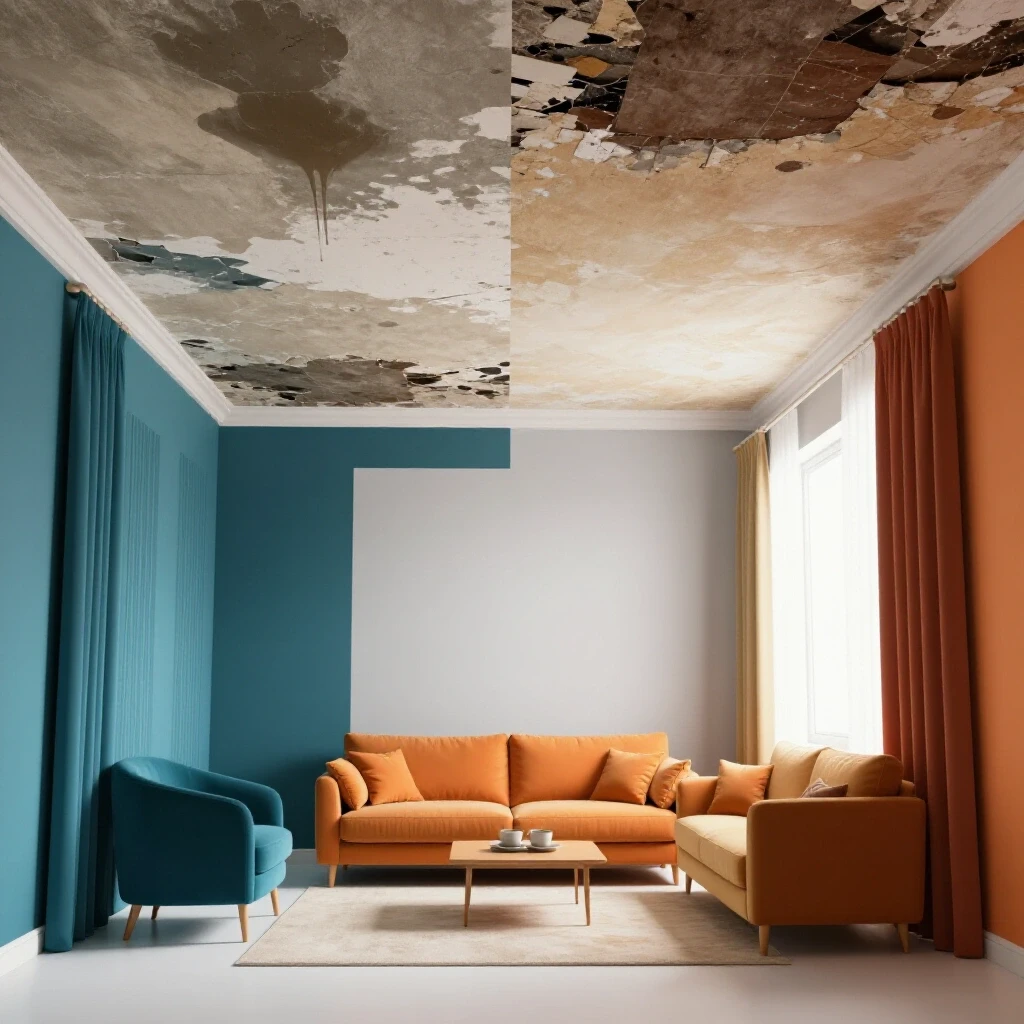
Visual harmony is the state where the repaired area is indistinguishable from the original surface in terms of color, texture, and sheen. This is the ultimate goal of any residential renovation.
If your ceiling has a texture—like “orange peel” or “knockdown”—matching it is the hardest part of the job. I suggest practicing on a scrap piece of cardboard first. The distance you hold the spray can or the pressure of your hopper gun completely changes the look.
- Orange Peel: A light, bumpy texture that looks like the skin of an orange.
- Knockdown: A heavier texture that is flattened with a wide knife after a few minutes of drying.
- Smooth Finish: The most difficult to achieve, requiring a “Level 5” finish where the entire surface is skim-coated with a thin layer of mud.
Contractor Management and Quality Control
Even if you are doing the work yourself, you must act as your own project manager. This means setting benchmarks for quality and not moving to the next step until those benchmarks are met.
If you decide to hire out portions of this—perhaps the sanding or texturing—ensure you have a clear “Scope of Work” document. This prevents the “I thought you were going to paint it” disputes that happen at the end of many projects. Use a structural inspection checklist to verify that the contractor (or you) has addressed the root cause of the moisture before closing the ceiling.
| Phase | Quality Control Benchmark |
|---|---|
| Demolition | No wet insulation or debris remaining in the cavity. |
| Framing | New “cleats” are level with existing joists within 1/8 inch. |
| Taping | No air bubbles or “tape wrinkles” visible in the first coat. |
| Sanding | Surface is smooth to the touch with no “ridges” at the edges. |
| Priming | No yellow stains bleeding through the white primer coat. |
Why Hidden Structural Surprises Blow Budgets
Behind every ceiling is a network of systems. When you open a ceiling after a leak, you are essentially opening a “time capsule” of your home’s construction history. You might find “bootleg” wiring, rusted pipes, or even old structural repairs that were never finished correctly.
During a kitchen remodel budget review for a client, we discovered that a previous owner had cut through a load-bearing joist to run a drain line. The water leak was actually a blessing because it allowed us to find and fix a major structural flaw before the house sagged further. This is why I advocate for a “look twice, cut once” philosophy.
Always allocate “schedule float” time. If you think the repair will take three days, plan for five. This extra time allows for unexpected drying needs or the discovery of materials that need to be special-ordered.
Project Management Tools for Homeowners
Managing a repair requires more than just a hammer; it requires organization. I recommend using a few simple digital tools to keep your project on track and your budget in check.
- Home Inventory Apps: Use these to photograph the “before,” “during,” and “after” for your own records and future home sale disclosures.
- Digital Blueprints/Sketches: Even a hand-drawn sketch uploaded to your phone helps when you are at the hardware store trying to remember the dimensions of the joist spacing.
- Construction Estimating Calculators: Many websites offer free drywall calculators that tell you exactly how many bags of mud and rolls of tape you need based on square footage.
- Scheduling Apps: Use a simple Gantt chart tool to visualize how the drying time affects your final paint day.
Actionable Benchmarks for Your Repair
To ensure you are on the right track, follow these industry-standard metrics for a typical 4×4 foot ceiling repair.
- Contingency Fund: 15–25% of the total estimated cost.
- Drying Time: 24–48 hours with active airflow.
- Screw Spacing: Every 12 inches along the joists for ceilings.
- Mud Drying: 12–24 hours per coat (unless using “hot mud”).
- Paint Coverage: One gallon per 350–400 square feet.
By following this chronological path, you move from the anxiety of a water stain to the satisfaction of a restored home. It requires patience, a respect for the drying process, and a systematic approach to finishing. In my 18 years of oversight, the most successful projects weren’t the fastest ones—they were the ones where the homeowner took the time to do the invisible work correctly.
FAQ: Navigating Ceiling Restoration and Repairs
How do I know if I need to replace the drywall or just paint it? If the drywall is soft to the touch, sagging, or showing signs of the paper backing peeling away, it must be replaced. A simple stain can often be sealed with a high-quality oil-based primer, but structural deformation requires removal.
What is the best way to find the ceiling joists without a stud finder? You can use a small drill bit to poke holes in a line until you hit solid wood, or look for the lines of existing drywall screws using a strong magnet. In older homes, you can often “tap” the ceiling; a hollow sound means no joist, while a dull thud indicates a solid member.
Why does my patch keep cracking at the edges? Cracking usually happens because the patch is “floating”—meaning it isn’t screwed into a solid wood joist—or because the joint compound was applied too thick in a single coat. Always ensure the edges of your patch are supported by wood.
Can I use regular wall paint on my ceiling? You can, but “ceiling paint” is specifically formulated to be “dead flat.” This lack of sheen helps hide imperfections and prevents light from reflecting in a way that shows every bump in your mud work.
How long should I wait after the leak stops before starting the repair? You should wait at least 24 to 48 hours with fans running. The wood must be dry to the touch and register below 12% on a moisture meter. If you seal moisture inside, you are inviting future issues.
What is “feathering” and why is it important? Feathering is the technique of applying less pressure to the outer edge of your drywall knife so the joint compound tapers off to nothing. This creates a gradual transition that is invisible once painted.
Should I use mesh tape or paper tape for a ceiling? For ceilings, paper tape is generally preferred because it is stronger and less likely to crack under the stress of gravity. However, it requires more skill to embed without air bubbles.
How do I match a popcorn or textured ceiling? You can buy “texture in a can” at most hardware stores. The key is to practice on a piece of cardboard first to match the “heaviness” of the existing texture. It rarely matches perfectly on the first try.
Is it necessary to paint the whole ceiling if the patch is small? Almost always, yes. Even if you have the original paint can, the paint on the ceiling has likely faded or changed color due to light exposure. Painting corner-to-corner is the only way to ensure a seamless look.
What should I do if I find black spots behind the drywall? If you find discoloration, it means moisture was trapped for a long time. You must remove all affected porous materials (drywall and insulation) and ensure the wood framing is cleaned and completely dried before proceeding with the repair.
(This article was written by one of our staff writers, David Langford. Visit our Meet the Team page to learn more about the author and their expertise.)