How to Build a DIY Bathroom Towel Shelf for Small Spaces (Guide)

Morning routines in a cramped bathroom can feel like a logistical puzzle. Between the steam from the shower and the limited floor space, finding a dry, accessible spot for fresh linens is a constant struggle. Most of us living in older homes or modern condos face the same issue: plenty of wall space but nowhere to put a folded towel.
In my twelve years as a facilities manager, I have overseen large-scale building maintenance, yet the most rewarding projects often happen in my own home. I remember a specific Saturday when I realized our master bath had become a “wet zone” because we lacked vertical storage. My wife and I were both working 50-hour weeks, and the last thing we wanted was a project that dragged into Monday. I needed a solution that was functional, safe, and could be completed between a cup of coffee and Sunday dinner.
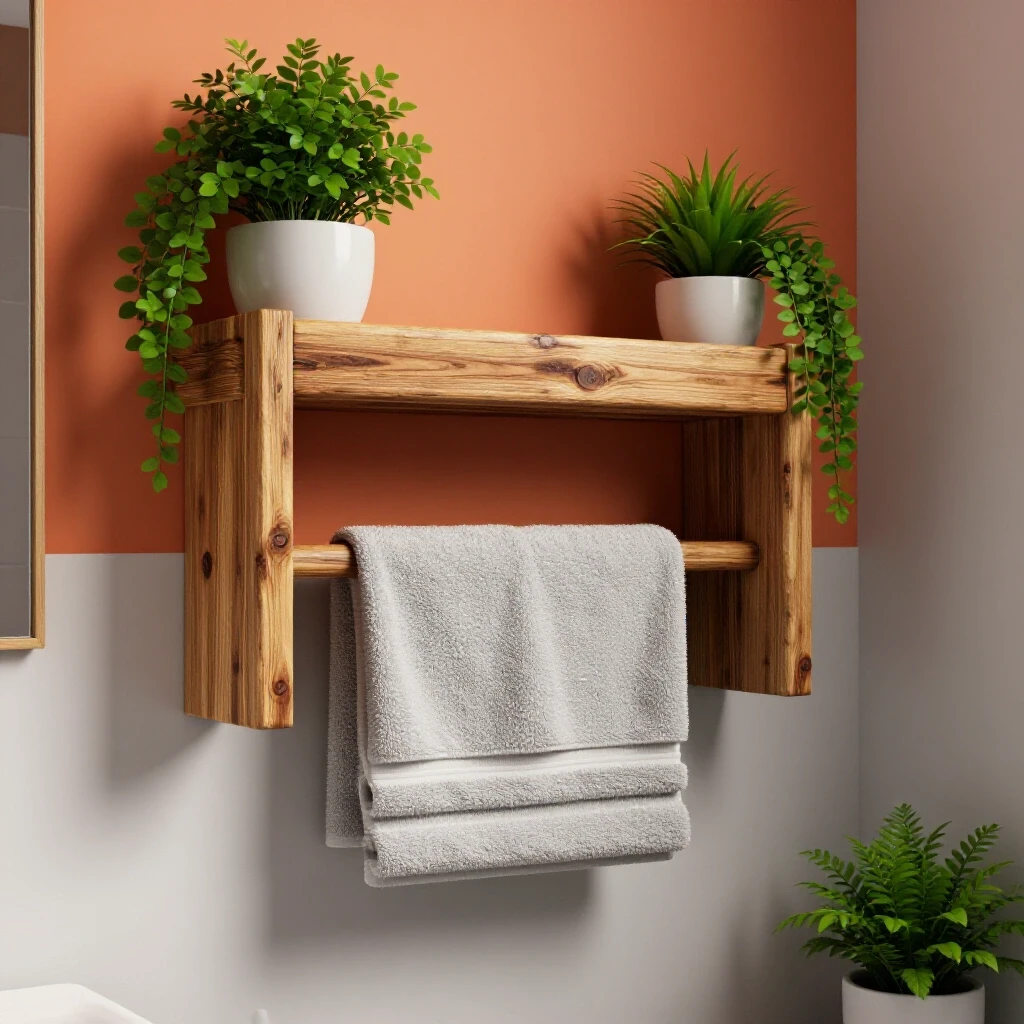
This guide focuses on creating a custom wall-mounted linen storage unit. We will look at how to build a sturdy, moisture-resistant structure that maximizes small spaces. By the end of this article, you will have a clear roadmap for a weekend DIY project that adds value to your home without the risk of a structural failure.
Evaluating Your Bathroom Wall for Vertical Storage
This phase involves inspecting the installation site for hidden hazards and structural integrity. You must identify what is behind the drywall before any drilling begins to avoid costly repairs.
Before you pick up a saw, you need to understand the “bones” of your bathroom. Most residential walls use 2×4 studs spaced 16 inches apart from center to center. In some older homes, this might be 24 inches. In a bathroom, the complexity increases because water lines, vent pipes, and electrical conduits for vanity lights often hide behind the surface.
I once made the mistake of assuming a clear path on a wall shared with a shower. Halfway through drilling a pilot hole, I felt the drill bit “give” in a way that didn’t feel like wood. I had nearly punctured a copper supply line. Now, I always use a deep-scan stud finder that features wire-sensing technology. It is a small investment that prevents a multi-thousand-dollar plumbing emergency.
Understanding Load-Bearing Requirements and Fasteners
This section defines the physical forces at play when hanging a heavy wooden unit on a vertical surface. We focus on shear strength and the difference between stud mounting and hollow-wall anchors.
When you load a shelf with four or five plush, damp bath towels, you are adding significant weight. A standard large towel can weigh 1.5 to 2 pounds when dry, and nearly double that when damp. You are not just fighting gravity; you are managing “shear force,” which is the downward pressure trying to slide the fastener out of the wall.
- Stud Mounting: Always the gold standard. A #8 or #10 wood screw driven 1.5 inches into a solid wood stud can support over 50 pounds.
- Toggle Bolts: If a stud isn’t available, use metal toggle bolts. Avoid plastic “plug” anchors for shelving; they are designed for light pictures, not functional storage units.
- Clearance Margins: Ensure your shelf is at least 18 inches away from any open flame (like a decorative candle) and high enough to avoid head-impacts near the toilet or tub.
| Feature | Stud Mounting | Toggle Bolts | Plastic Anchors |
|---|---|---|---|
| Weight Capacity | High (50+ lbs) | Medium (30-50 lbs) | Low (<10 lbs) |
| Reliability | Excellent | Good | Poor for shelving |
| Effort Level | Moderate | Moderate | Easy |
| Risk of Failure | Very Low | Low | High |
Essential Inventory for Your Weekend Build
This section lists the specific tools and materials required to complete a professional-grade wall unit. We prioritize tools that offer the best return on investment for a home improver.
You don’t need a professional woodshop to build a functional wall unit. However, you do need precision. A “close enough” measurement in a small bathroom looks crooked every time you brush your teeth. I prefer cordless systems for bathrooms because dragging an extension cord across a wet floor is a safety hazard.
The Required Tool Matrix
This list covers the primary equipment needed for measuring, cutting, and securing your project.
- Digital Stud Finder: Look for one with AC wire detection.
- 24-inch Level: A shorter torpedo level is okay, but a 24-inch level ensures the entire width of the shelf is true.
- Cordless Drill/Driver: A 12V or 18V model with adjustable clutch settings to prevent over-driving screws.
- Kreg Jig (Pocket Hole System): This allows for “blind” joints, hiding the screws for a cleaner look.
- Miter Saw or Circular Saw: For making square, clean cuts on your lumber.
- Random Orbital Sander: Essential for removing factory stamps and smoothing wood grain before finishing.
- Speed Square: To ensure your shelf corners are exactly 90 degrees.
Material Selection for High-Humidity Environments
This part explains why certain wood species and finishes fail in bathrooms and how to choose the right ones.
Bathrooms are brutal on wood. The constant cycle of high humidity and drying causes wood to expand and contract. If you use cheap, untreated pine without a proper seal, it will warp or grow mold within a year. I recommend using “Select Pine” for a budget-friendly option, but you must seal all six sides of every board.
- Lumber: 1×10 or 1×12 boards (actual thickness is 0.75 inches).
- Fasteners: 1.25-inch pocket hole screws and 2.5-inch cabinet screws for wall mounting.
- Wood Glue: Must be rated for exterior or moisture-prone use (e.g., Titebond II or III).
- Finish: Water-based Polyurethane or Spar Urethane. Spar Urethane is designed for boats and is excellent for bathrooms.
Step-by-Step Execution: Building the Storage Unit
This section provides the chronological workflow for the project, from the first cut to the final mounting.
Phase 1: The “Dry-Fit” and Cutting
Dry-fitting is the process of assembling the project without glue or permanent fasteners to check for errors. This is the most critical step for a busy professional because it catches mistakes while they are still easy to fix.
Start by cutting your side supports and your horizontal shelves. For a standard bathroom, a unit 24 inches wide and 30 inches tall works well. Once the pieces are cut, lay them out on a flat floor. Use your speed square to check the joints. If a board is slightly bowed, now is the time to decide if you can hide that edge against the wall or if you need a new piece of lumber.
Phase 2: Drilling and Assembly
Building on the dry-fit, we move to permanent assembly using pocket holes and moisture-resistant glue.
Set your pocket hole jig for 3/4-inch material. Drill two holes at each end of your horizontal shelves. Apply a thin bead of wood glue to the end grain. The glue provides the structural bond, while the screws act as internal clamps while the glue cures. Wipe away any “squeeze-out” with a damp cloth immediately. Dried glue blocks wood stain and looks messy under a clear coat.
Phase 3: Surface Preparation and Finishing
This stage details the sanding and sealing process required to protect the wood from steam and splashing.
Sanding is the most tedious part of any DIY project, but it determines the final quality. Start with 80-grit sandpaper to remove imperfections, move to 120-grit, and finish with 220-grit.
When applying your finish, do not rush. I’ve seen many projects ruined by “bubbles” in the polyurethane caused by shaking the can. Always stir, never shake. Apply three thin coats rather than one thick one. Lightly sand with 320-grit paper between coats to ensure a smooth surface.
| Finish Type | Drying Time (Touch) | Recoat Window | Full Cure Time |
|---|---|---|---|
| Water-Based Poly | 1 Hour | 2-3 Hours | 24 Hours |
| Oil-Based Poly | 4-6 Hours | 24 Hours | 72 Hours |
| Spar Urethane | 2 Hours | 4-6 Hours | 24 Hours |
Safe Installation and Wall Mounting
This section covers the final attachment to the home’s structure, ensuring the unit remains level and secure over time.
Once your unit is finished and the smell of the sealant has dissipated, it is time to mount. This is a two-person job. One person holds the unit against the wall while the other checks the level and marks the stud locations through the back of the unit.
Interestingly, walls are rarely perfectly flat. You might notice a small gap between the back of your shelf and the drywall. Do not try to “force” the shelf flush by over-tightening the screws, as this can crack the wood or strip the wall stud. If the gap is larger than 1/8 inch, you can use thin wooden shims to fill the space.
Final Safety Check and Load Testing
Before you stack your heaviest towels, perform a “static load test.” Gradually add weight to the shelves and watch for any bowing or pulling away from the wall. If you hear “creaking,” your fasteners might not be fully seated in the studs.
Troubleshooting Common DIY Hurdles
This section provides solutions for the most frequent issues encountered during small-scale carpentry and wall mounting.
What if the Studs Aren’t Where I Need Them?
If your bathroom layout forces the shelf to be in a spot where there is only one stud, you must use a “cleat” system or heavy-duty toggle bolts for the side that lacks a stud. A cleat is a horizontal strip of wood screwed into two studs, which you then mount your shelf onto. It is a common technique in facilities management for hanging heavy cabinets.
Recovering from a Stripped Screw
We have all been there: the drill slips, and suddenly the screw head is a smooth circle. To fix this, use a pair of locking pliers (Vise-Grips) to grab the head and back it out manually. If the screw is flush, you may need a screw extractor bit. To prevent this, always ensure your drill bit is the correct size for the screw and apply firm downward pressure.
Project Summary and Time Estimates
For a busy professional, time is the most valuable resource. This project is designed to be completed over a single weekend without interfering with your Monday morning commitments.
- Planning and Shopping: 2 hours.
- Cutting and Assembly: 3 hours.
- Sanding and First Coat: 2 hours.
- Final Coats and Drying: 4 hours (mostly passive time).
- Installation: 1 hour.
- Total Active Labor: 8 to 10 hours.
By doing this yourself, you save the $300 to $500 a handyman would charge for a custom build and installation. More importantly, you gain the peace of mind knowing that the unit is anchored correctly and finished with materials that will last.
Conclusion
Creating a custom organizational unit for your bathroom is more than just a home upgrade; it is an exercise in precision and preventative maintenance. By prioritizing stud-finding, moisture-resistant finishes, and proper fastener selection, you turn a cluttered wall into a functional asset. The key to success lies in the preparation—measuring twice, dry-fitting your components, and respecting the drying times of your sealants. Now that you have the plan, the next step is to clear your workbench and check your drill batteries.
FAQ: Custom Bathroom Wall Storage
How do I know if I’m hitting a stud or a pipe?
A stud finder is your first line of defense, but “calibrated tapping” also works. A stud sounds solid and dull, while a cavity sounds hollow. If you feel the drill hit something hard that isn’t wood, stop immediately. Metal plates are often installed over pipes to prevent nail punctures; if your bit won’t go in, you likely hit one.
Can I use a regular interior paint for the shelf?
You can, but it won’t last. Standard latex paint softens in high humidity and can cause towels to “stick” to the shelf. If you want a colored finish, use an enamel-based paint or a high-quality cabinet paint that cures to a hard, moisture-resistant shell.
What is the ideal height for a towel unit?
For accessibility, the bottom shelf should be roughly 48 to 54 inches from the floor. This keeps towels within reach for most adults while staying clear of the “splash zone” of the sink or toilet.
Should I use wood glue if I’m using screws?
Yes. Screws are mechanical fasteners that can loosen over time due to wood movement. Glue creates a chemical bond that turns two pieces of wood into one solid unit. In a bathroom, the glue also helps seal the joint against moisture.
How do I hide the screw heads?
Using a pocket hole jig is the best way to hide screws on the underside of shelves. For the screws going into the wall, you can use decorative “screw caps” or countersink the screws and fill the holes with wood plugs that match your lumber.
Is cedar a better choice than pine?
Cedar is naturally rot-resistant and handles moisture better than pine. However, it is softer and more expensive. If you use pine, ensure you are diligent with your sealant. If you use cedar, you can often leave it unsealed for a natural scent, though it may gray over time.
My bathroom wall is tile. Can I still mount a shelf?
Yes, but you need a diamond-tipped masonry bit to drill through the tile without cracking it. Once you pass through the tile and the backer board, you can use standard fasteners into the studs. Never use a “hammer” setting on your drill when working with tile.
How much weight can a 24-inch shelf hold?
If anchored into two studs with four #10 screws, a well-built wooden shelf can easily hold 50 to 75 pounds. This is more than enough for a full set of bath towels, which typically weigh about 10 to 15 pounds total.
What if my walls are plaster instead of drywall?
Plaster is more brittle than drywall. Use a masonry bit to create a pilot hole to prevent cracking the surrounding plaster. Toggle bolts are usually the safest bet for plaster walls if you cannot find a stud.
Do I need to worry about the shelf warping?
Warping is caused by uneven moisture absorption. This is why you must seal the back of the shelf (the side facing the wall) just as well as the front. If one side is sealed and the other isn’t, the wood will pull and curve.
(This article was written by one of our staff writers, Robert Callahan. Visit our Meet the Team page to learn more about the author and their expertise.)