How Much Does Garden Tool Storage Cost? (Budget Breakdown)

Imagine walking into your garage on a crisp Saturday morning, ready to prune the hedges or transplant your seedlings. Instead of grabbing your shears and getting to work, you spend twenty minutes digging through a tangled pile of long-handled shovels, rusted rakes, and loose bags of potting soil. This isn’t just a source of frustration; it is a sign of an unmanaged household asset. As a financial planner, I view every square foot of your home as real estate that should be working for you. When your yard equipment is scattered and unorganized, you are essentially paying “rent” on wasted space while risking the depreciation of the tools themselves due to poor care.
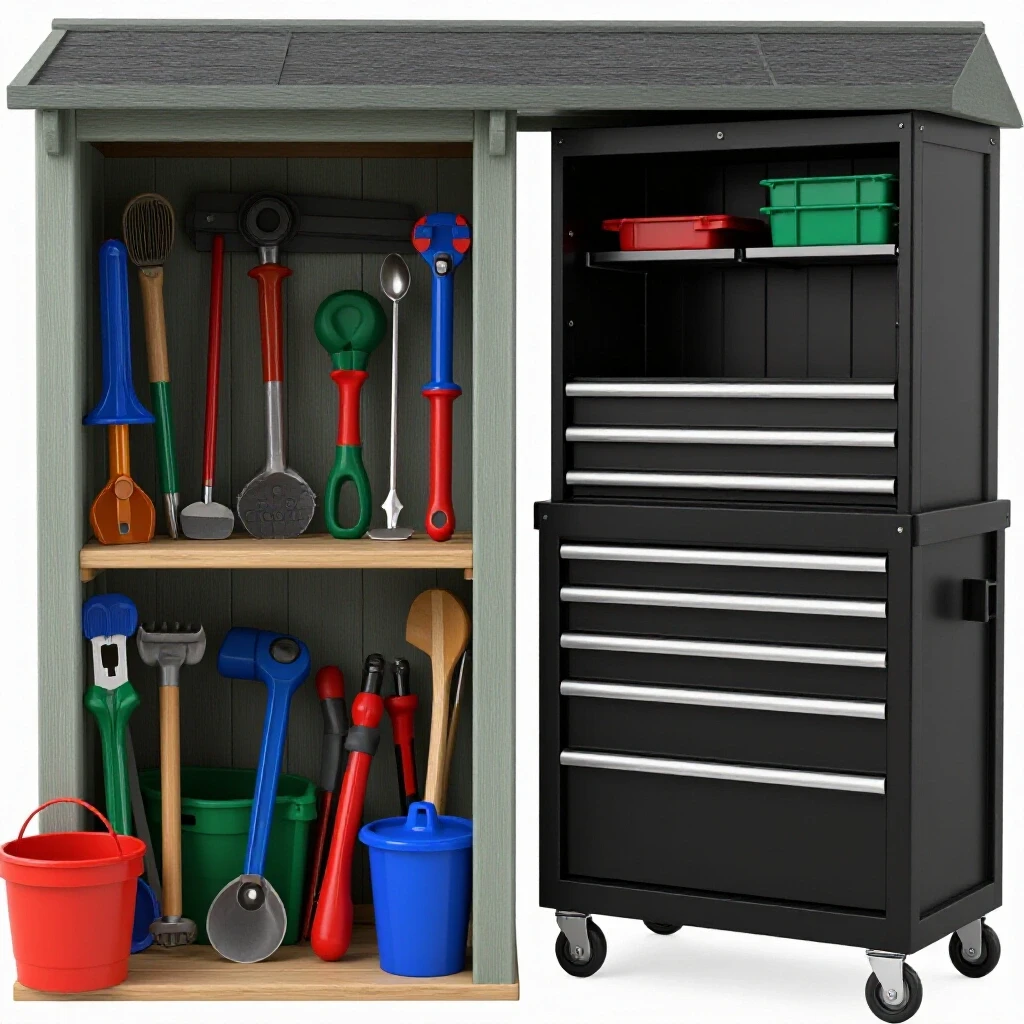
Over the last decade, I have tracked every nail and board in my own home improvement spreadsheets. I have learned that even small-scale organization projects can spiral out of control if you don’t apply the same rigor you would to a kitchen remodel. By treating the organization of your yard implements as a capital expenditure, you can create a functional system that protects your investment without draining your emergency fund. This guide will walk you through the financial mechanics of building a storage system that fits your budget and your lifestyle.
Establishing a Financial Framework for Outdoor Equipment Organization
A financial framework for home projects is a structured plan that aligns your organizational goals with your available liquid assets. It prevents “scope creep” by setting hard limits on spending before the first piece of lumber is purchased. This framework ensures that your project remains a value-add rather than a financial burden.
Before you buy a single pegboard, you must conduct a financial health check. I recommend a “sinking fund” approach for these types of home maintenance tasks. Instead of putting materials on a high-interest credit card, look at your monthly surplus. If you can set aside $50 a month, you will have a robust budget for a DIY rack system in just ninety days.
In my own experience, I use a 15% contingency buffer for all home projects. If my spreadsheet says the wood and hooks will cost $200, I don’t start until I have $230. This protects me from the “hardware store tax”—those inevitable extra trips for a box of screws or a different drill bit that can quietly erode your savings.
- Review your current debt-to-income ratio before committing to new projects.
- Allocate a specific “home improvement” line item in your monthly budget.
- Establish a hard “stop-spend” limit to avoid over-improving for your neighborhood.
Detailed Line-Item Audits for Storage Materials
A line-item audit involves listing every single screw, bracket, and board needed for a project to determine the true cost. This level of detail prevents the “death by a thousand cuts” where small, unplanned purchases ruin a budget. It allows you to see exactly where your money is going.
When I organized my own shed last spring, I realized that people often forget the “consumables.” You might budget for the plywood and the heavy-duty hooks, but you forget the sandpaper, the wood stain, and the specialized masonry anchors if you are mounting to a garage wall. Below is a breakdown of how I categorized my expenses versus what I actually spent.
Projected vs. Actual Budget Breakdown
| Category | Item Description | Projected Cost | Actual Cost | Variance |
|---|---|---|---|---|
| Lumber | 2×4 Studs and Plywood | $65.00 | $72.00 | +$7.00 |
| Hardware | Heavy-duty Tool Hooks | $45.00 | $58.00 | +$13.00 |
| Fasteners | Wood Screws & Wall Anchors | $12.00 | $15.00 | +$3.00 |
| Finishing | Sandpaper & Protective Sealant | $20.00 | $18.00 | -$2.00 |
| Total | $142.00 | $163.00 | +$21.00 |
This 14.7% variance is typical for small DIY tasks. Interestingly, the price of lumber can fluctuate weekly based on regional supply chains. I always suggest checking local big-box store apps the morning you plan to buy to ensure your spreadsheet reflects real-time data.
Calculating the Value of Sweat Equity in Home Organization
Sweat equity is the non-monetary contribution a homeowner makes to a project through their own labor. In financial planning, we value this by comparing the DIY time spent against the local market rate for a professional. Understanding this helps you decide if a project is worth your time.
According to the U.S. Bureau of Labor Statistics, the mean hourly wage for general maintenance and repair workers is approximately $23.00 to $30.00, depending on your region. If a professional handyman takes four hours to install a custom wall rack, the labor cost alone is roughly $100 to $120.
If you spend your Saturday doing it yourself, you “earn” that money back. However, you must be honest about your skill level. If it takes you twelve hours to do what a pro does in four, your effective “hourly rate” drops significantly. I use a simple formula: (Professional Labor Rate x Estimated Pro Hours) / Your Estimated Hours = Your Sweat Equity Value. If that number is lower than your actual career hourly wage, you might consider if your time is better spent elsewhere.
- High-skill tasks (electrical, plumbing) often have a higher ROI for professionals.
- Low-skill tasks (painting, basic shelving) offer the best sweat equity returns for homeowners.
- Always factor in the “opportunity cost” of your weekend time.
Recognizing and Mitigating Hidden Expenses in Small-Scale Projects
Hidden expenses include overlooked costs like delivery fees, specialized tools you don’t own, or the disposal of old, broken shelving. Identifying these early ensures your home renovation budget remains intact and predictable. These costs are the most common reason for mid-project financial strain.
During a client consultation last year, a homeowner wanted to install a heavy-duty slatwall system for their garden gear. They budgeted for the panels but forgot they needed a specific trim saw to cut the PVC material. They ended up spending an extra $80 on a tool they only used once.
To avoid this, I recommend a “tool audit” before you start. Lay out every tool required by the project instructions. If you don’t own it, check if you can rent it from a local hardware store or borrow it from a neighbor. This keeps your “capital investment” in tools low while allowing you to complete the project correctly.
- Delivery Fees: Can you fit 8-foot boards in your vehicle, or do you need to pay a $70 delivery charge?
- Permit Costs: While rare for interior shelving, some municipalities require permits for outdoor structures over a certain size.
- Waste Disposal: Will your local trash service take your old, rusted metal racks, or do you need to pay a dump fee?
Long-Term ROI and Impact on Local Market Value
Return on Investment (ROI) measures the financial gain relative to the cost of the project. For organization projects, the value is often found in “functional appeal” rather than a direct dollar-for-dollar increase in appraisal. A well-organized home suggests to buyers that the property has been meticulously maintained.
While a new kitchen might recoup 60-70% of its cost according to Remodeling Magazine’s Cost vs. Value reports, a garage or shed organization project doesn’t have a standardized recovery rate. However, real estate experts often note that “curb appeal” and “storage capacity” are top priorities for buyers in the 28–55 age bracket.
Think of it as a “liquidity feature.” An organized space might not raise your home’s price by $5,000, but it might help your home sell two weeks faster. In a fluctuating market, speed of sale is a financial victory. I categorize these costs as “lifestyle maintenance” with a secondary benefit of protecting the home’s marketability.
Regional Labor Rate Indexing for Home Improvements
Regional labor rate indexing is the practice of adjusting standard cost estimates based on your specific geographic location. Labor and material costs in San Francisco will differ wildly from those in Indianapolis. Using a multiplier ensures your budget is localized and realistic.
When I look at national averages, I always apply a regional coefficient. If the national average for a small home project is $500, I use data from local construction indexes to adjust. For example, the Northeast and West Coast often have a 1.15x to 1.30x multiplier compared to the national average.
- Midwest/South: 0.90x – 1.00x (Generally lower labor costs).
- Northeast/West Coast: 1.15x – 1.40x (Higher cost of living and specialized labor).
- Urban vs. Rural: Expect a 10-15% premium for projects in major metropolitan hubs due to parking, transport, and higher overhead for contractors.
Financial Tracking Tools for the Prudent Homeowner
Financial tracking tools are software or manual systems used to monitor every penny spent on a home project. These tools provide the data necessary to analyze spending patterns and improve future budgeting accuracy. They are the backbone of a successful, debt-free home improvement strategy.
I am a firm believer in the power of a simple spreadsheet, but modern technology has made this even easier. For those who want to avoid the “where did that receipt go?” panic, I recommend three specific approaches:
- Dedicated Project Spreadsheets: Use columns for “Budgeted,” “Actual,” and “Payment Method.” This helps you see if you are over-relying on credit.
- Mobile Receipt Scanners: Use apps like Expensify or even a dedicated folder in your phone’s notes app to photograph every hardware store receipt immediately.
- Home Value Trackers: Tools like HomeZada or even detailed entries in your own records can help you track the “basis” of your home for future tax considerations.
Strategic Allocation of Home Improvement Funds
Strategic allocation is the process of deciding which projects get funded first based on urgency, ROI, and lifestyle impact. It involves prioritizing “needs” like a leaking roof over “wants” like a custom-built potting bench. This discipline ensures your home remains a stable financial asset.
When deciding how to spend your limited home improvement dollars, I suggest the “Rule of Three.” A project should either save you money (by preventing tool rust), save you time (by making tools easy to find), or increase your home’s safety (by removing trip hazards).
Organizing your yard equipment usually hits all three. By spending $200 today, you might avoid spending $400 over the next five years replacing shovels that were left out in the rain or rakes that snapped because they were stepped on in a cluttered garage. This is a “preventative” financial move that pays dividends in the long run.
Conclusion: Taking the First Step Toward a Balanced Budget
Achieving a high level of organization for your yard tools does not require a massive financial outlay or a complex construction plan. It requires a commitment to the data. By starting with a clear spreadsheet, accounting for every screw, and valuing your own labor, you can transform a chaotic space into a functional asset.
Your next step is simple: walk into your storage area with a measuring tape and a notepad. List every tool you own. Then, research the cost of basic materials like 2x4s and heavy-duty hooks at your local supplier. Once you have your “Projected” column filled out, add your 15% contingency, and you are ready to begin. This disciplined approach is how you build a home that is both beautiful and financially sound.
Frequently Asked Questions
How much should I realistically budget for a basic DIY wall-mounted tool rack?
For a standard 8-foot wall section using a wooden French cleat system or heavy-duty hooks, a realistic budget is between $150 and $250. This includes lumber, high-quality fasteners, and a variety of hooks for different tool shapes. If you already own the tools for construction, your costs will be strictly material-based.
Does organizing my garage or shed actually increase my home’s appraisal value?
Usually, no. Appraisers focus on square footage, bedroom count, and major finishes. However, it significantly impacts “marketability.” A clean, organized storage space can lead to a faster sale and may prevent a buyer from asking for credits for “general clutter and maintenance” issues.
Should I use a credit card or a personal loan for home organization projects?
For small projects under $1,000, I strongly advise against debt. These are “lifestyle” improvements. It is financially healthier to save the cash over two or three months. If you must use a card for the points, ensure you have the cash in the bank to pay the balance in full the same day.
How do I calculate the “depreciation” of my garden tools if they aren’t stored properly?
Most high-quality garden tools should last 10-15 years. If left in damp, cluttered conditions, their lifespan can drop to 3-5 years due to rust and handle rot. If you own $500 worth of tools, losing them 10 years early costs you $50 per year in “forced replacement” costs.
What is the most cost-effective material for tool organization?
For the budget-conscious, 2×4 lumber and scrap plywood are the most versatile and cost-effective. You can create custom “slots” for shovels and rakes for a fraction of the cost of pre-made metal systems. Repurposing old pallets is another option, though you must factor in the time spent cleaning and sanding the wood.
How much should I set aside for “hidden” costs in a small project?
I always recommend a 15% to 20% contingency fund. For a $200 project, having an extra $40 set aside covers the small items like a specific drill bit, extra wood glue, or the gas used for multiple trips to the hardware store.
Is it cheaper to build a storage system or buy a pre-made plastic one?
DIY wood systems are almost always cheaper and more durable. While a plastic “all-in-one” rack might cost $50, it often lacks the weight capacity for heavy items like post-hole diggers. A custom-built wooden rack can be tailored to your specific tool inventory for a similar or lower price point.
How do I track these small expenses for tax purposes?
Keep a digital folder of all receipts. While organization projects aren’t usually tax-deductible, they can be added to your “cost basis” when you sell your home. This can help reduce capital gains taxes if your home has appreciated significantly over the years.
(This article was written by one of our staff writers, Steven Fletcher. Visit our Meet the Team page to learn more about the author and their expertise.)