How to Fix Hallway Lighting for Better Visibility (Step-by-Step)

Imagine walking through your front door after a long day. You step into a hallway that feels like a dark tunnel, where shadows cling to the corners and the walls seem to press inward. Now, imagine that same space transformed by a warm, welcoming glow that leads you naturally into the heart of your home. This shift in atmosphere does not always require a massive structural overhaul; often, the most significant improvements come from how we choose to illuminate these transitional spaces.
Planning the Visual Flow of Your Residential Renovation
Residential renovation planning involves defining how each room connects to the next to create a cohesive living environment. In a major remodel, the hallway is often the “connective tissue” that homeowners overlook until the very end of the project.
When I coordinated my first full-home renovation, I focused entirely on the kitchen and bathrooms. I spent weeks obsessing over tile patterns and cabinet hardware. However, once the dust settled, the hallways felt like an afterthought—dim, uninviting, and disconnected from the beautiful new rooms they served. I realized that a successful renovation requires a holistic view where the light in the corridors matches the quality of the light in the main living areas.
Establishing a clear scope of work for these transitional areas early in the planning phase prevents them from becoming “dead zones.” A scope of work is a detailed document that describes every task to be performed. For a hallway, this includes the number of fixtures to be swapped, the type of bulbs to be used, and any changes to the shades or covers. By including these details in your initial home remodeling tips checklist, you ensure that the finishes in your hallways are as polished as those in your new kitchen.
Budget Forecasting for Corridor Brightness Upgrades
A kitchen remodel budget often swallows the lion’s share of a renovation fund, leaving little for the “small” details that actually finish a home. Budget forecasting is the process of predicting the total cost of a project phase before work begins.
Using data from RSMeans, a primary resource for construction costs, we can see that the price of interior finishes varies significantly based on material quality. For a standard hallway upgrade focusing on fixture swaps and bulb replacements, you should categorize your costs to avoid surprises. I recommend a contingency fund of 15–25% for older homes, where you might find that existing mounting brackets are incompatible with modern fixtures.
| Item Category | Estimated Cost (Basic) | Estimated Cost (Mid-Range) | Estimated Cost (High-End) |
|---|---|---|---|
| Flush Mount Fixture | $45 – $75 | $120 – $250 | $400+ |
| LED Bulb Sets (High CRI) | $15 – $25 | $30 – $50 | $60+ |
| Replacement Shades | $20 – $40 | $50 – $100 | $150+ |
| Wall Sconce (Accent) | $60 – $90 | $150 – $300 | $500+ |
Building a realistic budget means looking beyond the sticker price of a lamp. It involves accounting for the “soft costs,” such as shipping, taxes, and the potential need for basic hand tools if you are handling the swaps yourself. In my second personal renovation, I saved $400 by sourcing high-quality vintage shades that fit standard modern bases, proving that a thoughtful approach can stretch a budget.
The Science of Light: Kelvin, Lumens, and CRI
Before you buy a single bulb, you must understand the technical metrics that determine how a space feels. Lumens measure the total amount of visible light emitted by a source, while the Kelvin scale describes the color temperature of that light.
In a hallway, the goal is usually to find a balance between “warm” and “cool.” A bulb with a Kelvin rating of 2700K produces a cozy, yellowish light similar to traditional incandescent bulbs. A rating of 4000K or higher produces a “daylight” effect that can feel sterile or blue in a narrow corridor. I typically recommend 3000K for hallways; it provides a clean, white light that feels welcoming without being clinical.
Another critical metric is the Color Rendering Index (CRI). CRI measures how accurately a light source reveals the true colors of objects, on a scale of 0 to 100. For a hallway where you might have family photos or colorful paint, aim for a CRI of 90 or higher. Low CRI bulbs can make vibrant walls look muddy or grey, which is a common design error that can undermine an expensive paint job.
Strategic Placement and Layering for Spatial Flow
Layering is the practice of using multiple types of light sources—ambient, task, and accent—to create depth and interest in a room. In a hallway, relying on a single overhead “boob light” often creates harsh shadows and a “closed-in” feeling.
- Ambient Lighting: This is your general overhead light. Instead of one central fixture, consider a series of smaller flush mounts spaced evenly along the ceiling. This prevents “hot spots” of bright light followed by dark gaps.
- Accent Lighting: If your hallway is wide enough, wall-mounted sconces can add architectural interest. They draw the eye upward and outward, making a narrow passage feel wider.
- Task Lighting: While less common in hallways, task lighting can be useful near a hall closet or a basement door where you need to see clearly to navigate stairs or find a coat.
During a project I coordinated for a 1940s colonial, the hallway was exceptionally narrow. We replaced the heavy, dark hanging pendants with slim, frosted glass semi-flush mounts. This simple change in the “layering” of the space significantly improved the visual flow and made the ceiling appear higher than it actually was.
Construction Sequencing and the Finish Phase
Construction sequencing is the logical order in which tasks must be completed to ensure efficiency and quality. Lighting upgrades usually fall into the “finish phase,” which occurs after painting is complete but before the final deep clean.
If you are managing a larger remodel, you must coordinate the timing of these upgrades carefully. You don’t want to install brand-new fixtures and delicate glass shades while contractors are still moving heavy furniture or drywall through the halls. Dust from sanding or paint overspray can ruin a new fixture in minutes.
- Rough-In Review: Ensure any mounting boxes are secure and level.
- Painting: Complete all ceiling and wall painting.
- Fixture Installation: Swap out old fixtures for new ones once the paint is fully cured (usually 24-48 hours).
- Bulb Selection: Test different Kelvin ratings in the actual space at different times of day.
- Final Adjustment: Ensure shades are level and bulbs are tightened.
By following this sequence, you protect your investment. I once saw a homeowner install $300 crystal sconces before the floors were sanded. The fine sawdust coated the crystals so thoroughly they had to be individually hand-washed, adding hours of unnecessary labor to the project.
Identifying Hidden Structural Surprises in Older Corridors
When you remove an old light fixture, you are essentially opening a small window into the “guts” of your home. This is often where you find the structural surprises that can impact your budget.
One of the most common issues in older homes is outdated wiring, such as knob-and-tube or frayed cloth insulation. While we aren’t discussing electrical repairs here, a structural inspection checklist should include a visual check of the mounting area. If you see signs of moisture, mold, or crumbling plaster around the fixture base, stop and investigate.
In my own 1920s bungalow, removing a hallway globe revealed a slow leak from an upstairs bathroom that had been rotting the ceiling joist for years. Because I caught it during a simple fixture swap, I was able to address the leak before it caused a ceiling collapse. This is why a 20% contingency is vital; it transforms a “disaster” into a manageable “change order.”
Contractor Management and Quality Control Benchmarks
Even if you are doing the fixture swaps yourself, you may be managing a general contractor for the larger remodel. A contractor management guide approach helps you maintain quality control over the small details.
When vetting contractors, ask how they handle the protection of finished surfaces. A good contractor will suggest covering new hallway fixtures with plastic if work is still ongoing nearby. You should also establish clear “milestone payments.” For example, the final 10% of a contract shouldn’t be paid until the “punch list”—a list of small remaining tasks—is complete.
Quality control benchmarks for hallway lighting include: – Fixtures are perfectly centered in the hallway width. – No visible gaps between the fixture canopy (the plate against the ceiling) and the ceiling surface. – Uniform bulb color throughout the entire corridor. – No flickering or humming when the light is turned on.
Managing Scope Creep During the Finish Phase
Scope creep occurs when a project’s requirements increase during execution, often leading to budget overruns. In the context of lighting, this might happen when you realize that a new fixture makes the old, yellowed outlet covers look terrible, leading you to replace every outlet in the hall.
To manage this, stick to your original plan unless a change is necessary for safety or basic functionality. If you decide to add more fixtures than originally planned, document it as a formal change order. A change order is a written amendment to your original scope of work that outlines the new task and its cost.
I’ve found that homeowners who track every $50 change are much more likely to stay within their overall kitchen remodel budget. It is the “small” $100 additions that eventually lead to a $5,000 surprise at the end of a project.
Essential Tools and Resources for Homeowner Oversight
Managing a renovation requires the right tools to track progress and costs. Whether you are overseeing a crew or handling finish tasks yourself, these resources are invaluable.
- Digital Level: Essential for ensuring wall sconces are perfectly straight.
- Construction Estimating Software: Apps like Houzz Pro or simple Excel templates using RSMeans data.
- Kelvin/Lumen Calculator: Online tools that help you determine how many lumens you need based on the square footage of your hallway.
- Project Management Apps: Tools like Trello or Asana to track the construction sequencing and lead times for materials.
- High-Quality Screwdriver Set: Often, the screws provided with budget fixtures are soft and strip easily; having your own hardened steel drivers is a lifesaver.
Post-Occupancy Evaluation: Did the Fix Work?
A post-occupancy evaluation is a systematic process of evaluating a building after it has been occupied. In your case, this means living with your new hallway lighting for a few weeks and asking yourself if it achieved your goals.
Does the hallway feel wider? Can you see clearly into the closets? Does the light transition smoothly from the kitchen into the hall? I once realized after a week that the 3500K bulbs I chose were too “cool” and made the hallway feel like a hospital wing. I spent $40 to swap them for 2700K bulbs, and the difference in comfort was immediate.
Don’t be afraid to make these small adjustments. The goal of residential renovation planning isn’t just to finish the job—it’s to create a home that feels right every time you walk through it.
FAQ: Mastering Hallway Lighting Upgrades
How many lumens do I need for a standard 10-foot hallway? For a hallway, you generally want about 10 to 20 lumens per square foot. If your hallway is 3 feet wide and 10 feet long (30 square feet), you need between 300 and 600 total lumens. This can be achieved with one bright fixture or two softer ones.
What is the best color temperature for a windowless hallway? A windowless hallway benefits from a “warm white” light, typically around 3000K. This mimics natural sunlight better than the very yellow 2700K or the very blue 4000K, making the space feel less claustrophobic.
Can I use LED bulbs in old fixtures? Usually, yes. However, ensure the bulb’s base matches the fixture (most use an E26 medium base). Also, check the “maximum wattage” label on the fixture. LEDs use much less power, so you can often get more light (lumens) without exceeding the wattage limit.
Why does my hallway still feel dark even with new lights? This is often due to low CRI or poor light distribution. If your fixture has a thick, dark shade, it might be trapping the light. Swapping for a frosted or clear glass shade, or a light-colored fabric shade, can significantly increase the “throw” of the light.
How high should I hang a hallway pendant? The bottom of the fixture should be at least 7 feet (84 inches) from the floor. This provides enough clearance for tall people and for moving furniture. In homes with 8-foot ceilings, flush or semi-flush mounts are usually a better choice than pendants.
What is a “flush mount” versus a “semi-flush mount”? A flush mount sits directly against the ceiling with no gap. A semi-flush mount has a small stem that leaves a gap between the ceiling and the fixture. Semi-flush mounts often provide better light because some light reflects off the ceiling itself.
Should I match my hallway fixtures to my kitchen fixtures? They don’t need to be identical, but they should share a “design language.” For example, if your kitchen has matte black hardware, using matte black fixtures in the hallway creates a sense of continuity and professional design.
How do I know if my existing fixture base is standard? Most modern and mid-century American homes use a standard 4-inch circular or octagonal junction box. If you remove your fixture and see a metal box with two screw holes spaced about 3.5 inches apart, you can fit almost any standard fixture sold today.
What is the most common mistake in hallway lighting? Using a single, underpowered light source. This creates a “cave effect” where the middle of the hall is bright but the ends are in shadow. Using multiple lower-wattage sources creates a much more even and pleasant environment.
How can I make a narrow hallway feel wider using light? Use wall sconces that cast light both upward and downward. The upward light reflects off the ceiling, making it feel higher, while the light on the walls breaks up the long, narrow vertical surfaces.
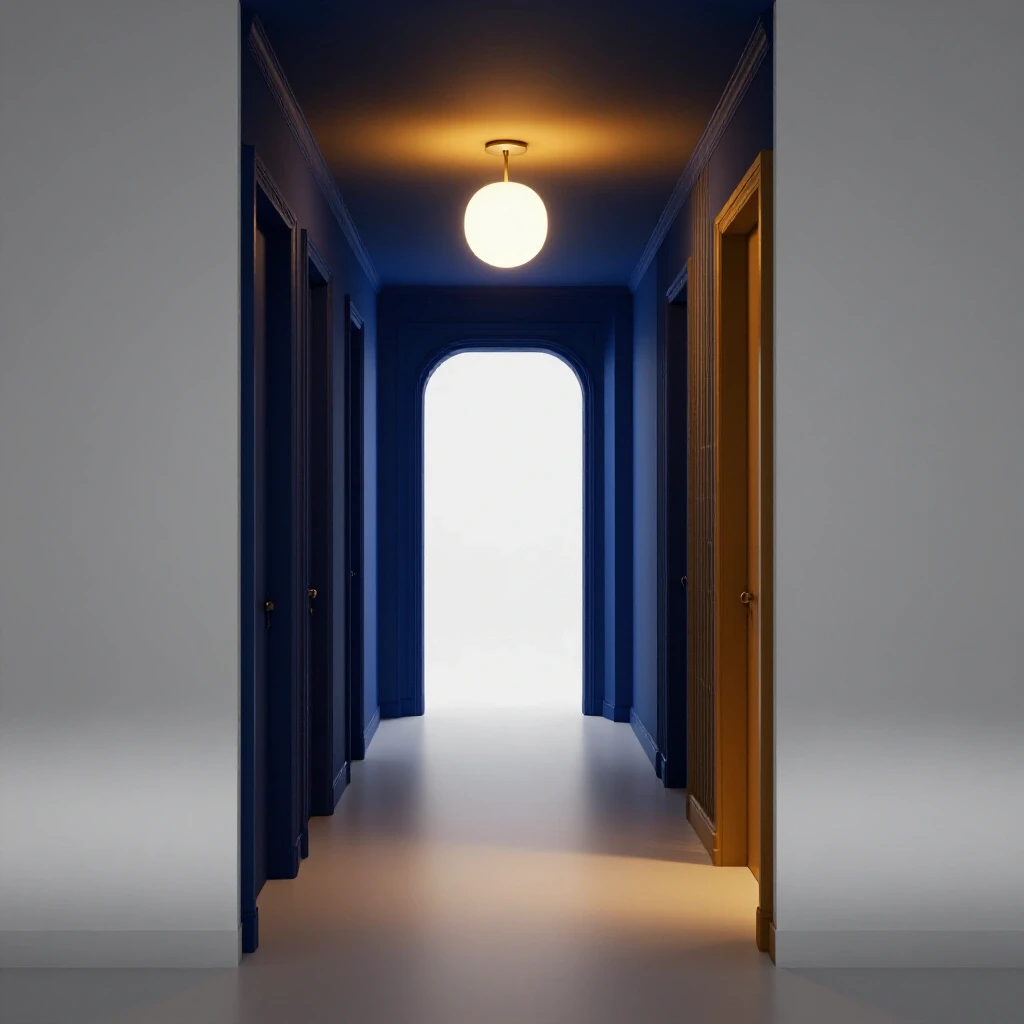
Does paint color affect lighting choices? Absolutely. Darker paint absorbs light, meaning you will need more lumens to achieve the same brightness. If you have dark navy or charcoal walls in a hallway, aim for the higher end of the lumen recommendation (20+ lumens per square foot).
What is the “Critical Path” in a lighting upgrade? The critical path is the sequence of stages that must happen on time for the project to finish. In lighting, the critical path is: Order Fixtures -> Receive Fixtures -> Complete Painting -> Install Fixtures. If your fixtures are backordered, it can stall the entire finish phase of your remodel.
(This article was written by one of our staff writers, David Langford. Visit our Meet the Team page to learn more about the author and their expertise.)