Home Gym Setup Cost Breakdown and Budget Guide (Save Money)

When I first started tracking my home expenses, I realized that my dog, Buster, was the ultimate floor-space auditor. Every time I tried to carve out a spot for a workout, he would claim the middle of the rug. This forced me to look at my home renovation budget through a new lens: how do I create a functional fitness zone that respects both my living space and my wallet? For many of us, the hurdle isn’t just the physical activity; it is the friction caused by a cluttered, uninspiring environment.
Building a dedicated area for health shouldn’t require a second mortgage or a massive addition. In my decade of analyzing cost vs. value reports, I have found that small, intentional changes often yield the highest personal return. By focusing on space efficiency and DIY solutions, you can build a zone that encourages movement without the financial strain of a major remodel.
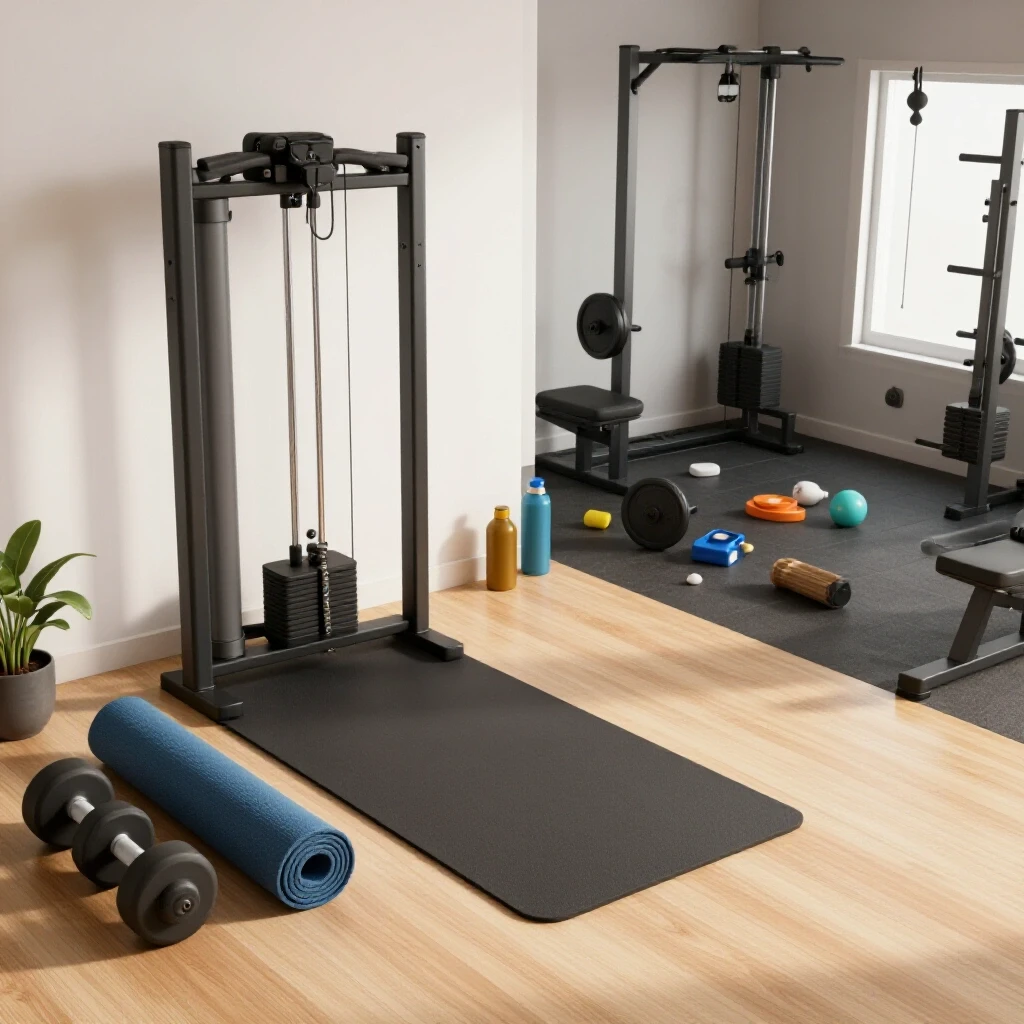
Establishing a Financial Framework for Small-Scale Fitness Zones
A financial framework is a set of rules that governs how you spend money on a project to ensure it stays within your means. It involves setting a hard ceiling on costs and identifying which items are essential versus optional. This approach prevents the “scope creep” that often ruins a home renovation budget.
When I look at my personal remodeling spreadsheets, I categorize every fitness-related expense into three buckets: structural, equipment, and aesthetic. For a compact zone, the total investment usually falls between $150 and $800. This range allows for quality materials while keeping the project below the threshold where it might negatively impact your home’s localized market value.
- The 20% Contingency Rule: Always add 20% to your initial estimate for hidden fees, such as shipping or unexpected hardware needs.
- The Utility-to-Cost Ratio: If a piece of equipment costs $200 but only serves one purpose, its value is lower than a $50 set of bands that can be used for fifty different movements.
- Localized Value Ceiling: Do not spend more on a specialized room than what the local market would pay for a standard bedroom or office.
Why Standard Remodeling Estimates Fail and How to Forecast Better
Standard estimates often fail because they rely on national averages that do not account for local labor rates or specific site conditions. A realistic expense forecast requires looking at your specific square footage and the current price of materials in your zip code. This prevents the common fear of running out of money mid-project.
In my experience, homeowners often overlook the “soft costs” like lighting upgrades or specialized flooring. When I built my own fitness corner, I projected a cost of $300 but ended up at $425 because I forgot to account for high-density foam tiles and a sturdy wall mirror. Using a remodeling expense tracker helps you catch these items before you swipe your card.
Table 1: Projected vs. Actual Budget Line-Item Breakdown
| Category | Projected Cost | Actual Cost | Variance | Reason for Shift |
|---|---|---|---|---|
| Floor Protection | $60 | $85 | +$25 | Needed higher density for subfloor protection |
| DIY Storage | $40 | $35 | -$5 | Repurposed an old bookshelf with $10 paint |
| Lighting | $30 | $55 | +$25 | Added a dimmable LED strip for better ambiance |
| Basic Equipment | $200 | $180 | -$20 | Purchased used weights from a local marketplace |
| Total | $330 | $355 | +$25 | 7.5% Over-budget |
Analyzing Labor and Material Splits for DIY Fitness Areas
The labor-material split is the ratio of what you pay for physical goods versus what you pay someone to install them. In small home projects, labor can often cost as much as the materials themselves. Understanding this ratio helps you decide where to use “sweat equity” to save money.
For most compact fitness setups, the labor should be near zero. These projects are prime candidates for DIY work. If you are painting a wall or laying interlocking mats, doing it yourself keeps the cost breakdown guide focused on quality materials. According to the U.S. Bureau of Labor Statistics, general labor costs can vary significantly by region, so doing the work yourself eliminates a major variable.
- Regional Labor Multipliers: In high-cost areas like San Francisco, labor can be 1.5x the national average.
- Sweat Equity Valuation: Value your own time at a reasonable hourly rate to see if a DIY project is truly “saving” you money.
- Material Sourcing: Use local hardware stores to avoid the high shipping fees associated with heavy rubber flooring or wooden mounting boards.
Integrating Visual Harmony to Solve the Consistency Problem
Visual harmony refers to the design practice of making a functional area blend seamlessly with the rest of your home’s decor. When a space looks like it belongs in the house, you are more likely to spend time there. This design choice reduces the “motivation friction” that occurs when a workout area feels like a cluttered garage.
I often tell clients that a fitness zone shouldn’t look like a construction site. By using repurposed furniture—like an old armoire to hide weights—you maintain the aesthetic of the room. This approach is a key part of financial planning for homeowners because it ensures the project adds lifestyle value without requiring a dedicated, permanent room that could hurt resale.
Strategies for Habit-Forming Decor
- Concealed Storage: Use decorative baskets or bins to store yoga mats and blocks.
- Strategic Mirror Placement: A well-placed mirror makes a small space feel larger and allows for form checks.
- Color Coordination: Match the color of your equipment or storage units to the existing room trim.
Accounting for Hidden Fees and Municipal Requirements
Hidden fees are costs that aren’t immediately obvious, such as delivery surcharges, assembly hardware, or small-scale permits. Municipal requirements are local laws that might dictate how you can use certain spaces in your home. Even for small interior changes, it is wise to check local codes to avoid future fines.
While most small fitness corners don’t require a building permit, any electrical work (like adding new outlets) might. In my years of tracking remodeling ledgers, I’ve seen $500 projects double in price because a homeowner hit a pipe while mounting a pull-up bar. Always use a stud finder and consult a professional if you are unsure about wall stability.
- Permit & Inspection Fee Estimates: Generally $0 for cosmetic changes, but $50-$150 for minor electrical.
- Structural Integrity: Ensure your floor can handle the “dead load” of heavy weights to avoid ceiling cracks in the room below.
- Insurance Adjustments: Inform your insurance provider if you are making significant changes, though small zones rarely impact premiums.
Calculating Long-Term Home Value and ROI
Return on Investment (ROI) in home improvement measures how much of the project cost you recover when you sell the house. Lifestyle value is the non-monetary benefit you get from using the space. For small fitness areas, the ROI is usually found in the “versatility” of the room rather than the specific equipment.
Data from Remodeling Magazine’s Cost vs. Value reports suggests that highly specialized rooms often have lower recovery rates than flexible spaces. This is why I advocate for “non-permanent” fitness zones. If you can revert the space back to a home office or guest room in an afternoon, you protect your home’s marketability while enjoying the benefits of a workout spot today.
Table 2: Cost-to-Value Recovery Rates by Project Type
| Project Type | Average Cost | Estimated ROI | Flexibility Rating |
|---|---|---|---|
| Dedicated Gym Room | $5,000+ | 40-50% | Low |
| Compact DIY Zone | $150-$800 | 80-90% | High |
| Basement Conversion | $10,000+ | 60-70% | Medium |
Tools and Resources for Tracking Your Project
To keep your project on track, you need a system for recording every cent spent. Using a dedicated spreadsheet or software prevents the “death by a thousand cuts” where small $20 purchases add up to a $200 overage. I recommend these five tools for any cost-conscious planner:
- Google Sheets or Excel: Build a simple row-by-row ledger for materials and tools.
- HomeZada or Mint: These apps help track overall home value and project spending.
- MagicPlan: A mobile app that lets you create floor plans of your room to ensure equipment fits.
- Used Marketplaces (Facebook/Nextdoor): Excellent for sourcing high-quality weights at 50% of retail.
- Local Building Department Websites: Check these for any “minor work” permit exemptions.
A Case Study in Financial Discipline: The $450 Fitness Corner
A client of mine, let’s call her Sarah, wanted a place to do yoga and light strength training in her 100-square-foot spare bedroom. She was worried about over-improving the home, as she planned to sell in three years. We set a hard budget of $500 and used a cost vs value home improvement mindset.
Sarah bought a high-quality rubber mat ($80), a set of adjustable dumbbells ($150), and repurposed an old wooden crate for storage ($0). She spent $70 on a large floor mirror and $50 on a gallon of premium paint to define the “zone.” By the end, she spent $350. The remaining $150 stayed in her savings, and the room remained a functional guest bedroom. This is the definition of a successful, data-driven home project.
- Initial Fear: Running out of money or making the room look “cluttered.”
- The Solution: A strict line-item budget and focus on multi-use items.
- The Result: A 100% functional space that added zero “permanent” debt to the home.
Final Steps for the Cost-Conscious Planner
Your next step is to open a blank spreadsheet and label it “Fitness Zone Project.” Measure your available floor space and subtract the “Buster Factor”—the areas your pets or family members need for daily movement. Once you have your net square footage, you can begin your cost breakdown guide.
Start with the floor. It is the foundation of your workout and the part of your home most likely to suffer damage. Allocate your budget there first, then move to lighting and storage. By following this structured path, you avoid the common financial traps of home improvement and create a space that actually gets used.
FAQ: Managing Costs for Your Home Fitness Area
How do I prevent a small fitness project from exceeding my budget? The best way is to use a 20% contingency buffer. If you think a mat will cost $50, budget $60. This covers taxes, shipping, or the need for a better-quality version once you see it in person. Always track every receipt in a spreadsheet immediately after purchase.
Will adding a workout area increase my home’s property taxes? Generally, no. Property tax assessments usually only increase with “permitted” square footage additions or major structural overhauls. A compact zone using existing space and non-permanent equipment typically has no impact on your tax bill.
What is the most cost-effective flooring for a home workout spot? Interlocking EVA foam tiles are the most affordable, but they can compress over time. For a better long-term value, look for 1/4-inch or 3/8-inch recycled rubber mats. They protect your subfloor better and have a higher “cost-to-life” ratio.
Should I buy new or used equipment for my budget setup? For “dumb” equipment like plates, dumbbells, and kettlebells, used is almost always better. Iron doesn’t expire. You can often find these items for $0.50 to $1.00 per pound on local marketplaces, compared to $2.00 or more at retail stores.
How much space do I actually need for a functional zone? A standard yoga mat is about 2 feet by 6 feet. To move comfortably, aim for an 8-foot by 8-foot area (64 square feet). This allows for lateral movement without hitting walls or furniture, which prevents costly repairs to drywall.
Is it worth hiring a contractor for a small fitness area? For projects under $800, hiring a contractor usually isn’t cost-effective due to “minimum call-out” fees. Most contractors have a base rate of $150-$300 just to show up. Use DIY methods for painting, flooring, and assembly to keep your labor-to-material ratio healthy.
How do I choose equipment that won’t lose its value? Focus on “staple” items like adjustable dumbbells or resistance bands. These have high resale value on the secondary market. Avoid niche “as-seen-on-TV” gadgets, which often have a 0% recovery rate and end up in landfills.
Can I deduct these costs from my taxes if I work out for health reasons? In most cases, home improvement costs for fitness are considered personal expenses and are not tax-deductible. However, if the improvements are medically necessary and prescribed by a doctor, consult a tax professional about potential “medical capital expenses” under IRS Publication 502.
What is a “change-order” and does it apply here? A change-order is a formal amendment to a construction contract. While you likely won’t have a contract for a DIY project, you should treat your own “mind-changes” as change-orders. If you decide mid-project to change the paint color, record the extra cost as a budget variance.
How do I ensure my DIY storage is safe? Always anchor any shelving or storage units over 30 inches tall to the wall studs. A “tip-over” accident can cause injury and damage your walls, leading to unexpected repair costs that blow your budget. A simple $5 wall anchor kit is a mandatory safety investment.
(This article was written by one of our staff writers, Steven Fletcher. Visit our Meet the Team page to learn more about the author and their expertise.)