House Number Sign Cost Breakdown: Budget DIY Guide (Step-by-Step)

A home’s exterior is like a handshake. It tells guests and neighbors what to expect before they ever walk through the front door. Just as a firm grip suggests confidence, a clear and attractive address display suggests a well-maintained property. In my ten years of tracking home renovation budget data, I have found that small, high-visibility wins often provide the best psychological return on investment. While I usually manage five-figure kitchen overhauls, I recently turned my analytical eye toward the smallest project in my remodeling expense tracker: a custom DIY address plate.
Establishing a Financial Framework for Small Home Improvements
A financial framework is a set of rules that helps you decide how much to spend on a project based on your home’s total value. It prevents you from spending $200 on a project that only adds $50 in value. For small tasks, this means setting a hard cap on materials to ensure the project remains a “win” for your savings account.
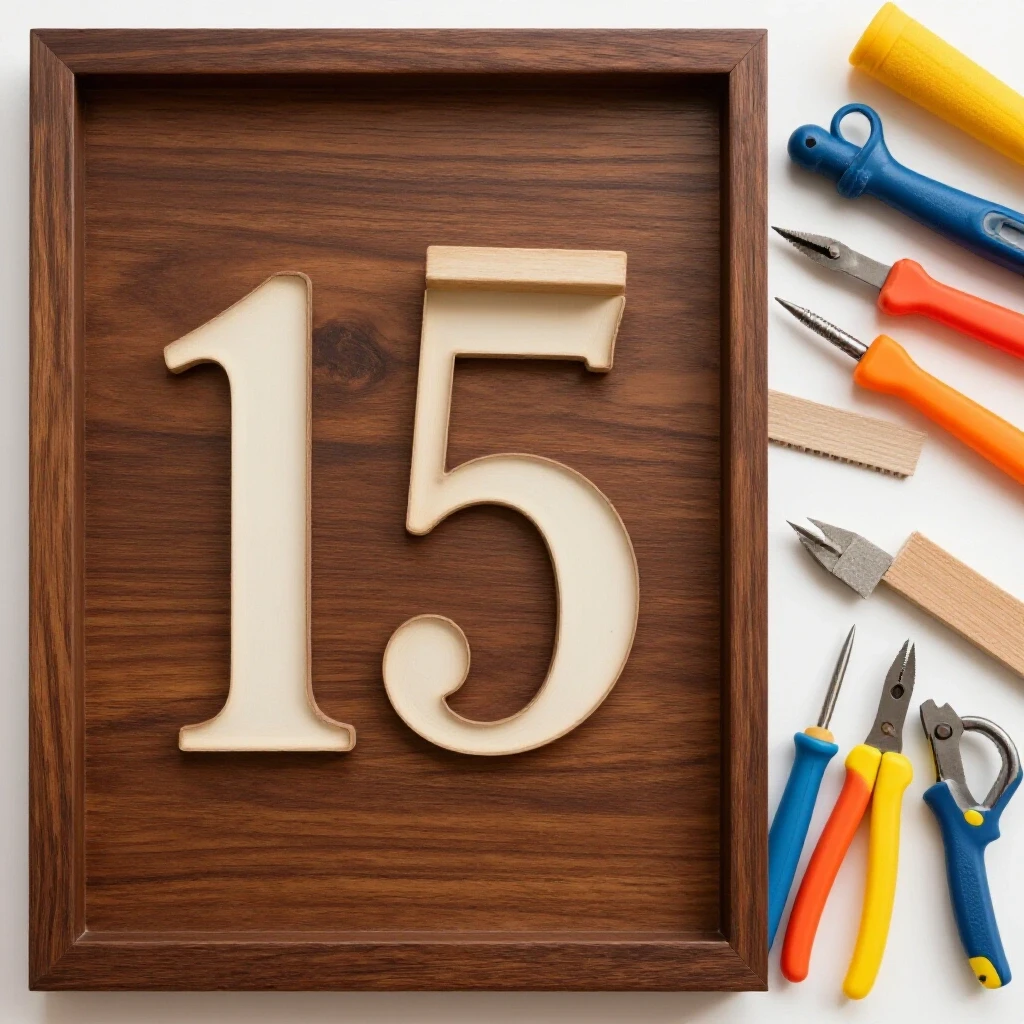
When I look at my own remodeling expense tracker, I categorize projects by their impact and cost. A house numbering project falls into the “micro-maintenance” category. For a cost-conscious home planner, the goal is to keep the total spend under $40. If you exceed this, you are often better off buying a mass-produced version. I once consulted with a client who spent $120 on specialized craft paints and exotic wood for a simple numbering board. By the time they finished, they had over-improved the item past its localized market value.
To avoid this, I use a simple 1% rule for exterior aesthetics. Your total annual maintenance and curb appeal budget should be about 1% of your home’s value. A small numbering project should only take up a tiny fraction of that 1%. This keeps your financial planning for homeowners realistic and grounded.
The Micro-Project Budgeting Model
A micro-project budgeting model is a simplified version of a full construction ledger used for tasks that cost less than $100. It focuses on immediate cash flow rather than long-term financing or interest rates. This model helps you track small leaks in your wallet that occur during trips to the hardware store.
In my experience, “quick” projects are the ones that most often suffer from budget creep. You go to the store for three metal numbers and come home with a new drill bit set and a gallon of premium stain. My personal remodeling spreadsheets show that these “incidental” purchases can inflate a small project’s cost by 50% or more.
- Set a strict cash-only limit for craft supplies.
- Check your garage for “sunk cost” materials like leftover exterior paint.
- Limit your shopping to one trip to reduce fuel costs and impulse buys.
Analyzing Line-Item Costs for Exterior Numbering
A line-item cost breakdown is a detailed list of every single material and tool needed for a project, along with its price. This level of detail is the best way to avoid hidden fees and unexpected spending. For a small DIY task, it ensures that a $20 project does not accidentally become a $60 project.
When I built my most recent address display, I used a cost breakdown guide to compare different materials. I found that individual metal digits vary wildly in price. At a local big-box store, a standard four-inch black house number costs about $5.00. However, a “modern” font in the same size can cost $12.00 per digit. For a four-digit address, that is a $28 difference before you even buy a mounting board.
The table below shows a typical budget-to-actual variance from my own records.
| Item | Projected Cost | Actual Cost | Variance |
|---|---|---|---|
| Wood Plaque (Pine) | $7.00 | $0.00 (Scrap) | -$7.00 |
| Metal Numbers (4) | $20.00 | $22.40 | +$2.40 |
| Exterior Wood Stain | $9.00 | $10.50 | +$1.50 |
| Outdoor Adhesive | $6.00 | $5.50 | -$0.50 |
| Total | $42.00 | $38.40 | -$3.60 |
Material Sourcing and Price Variance
Material sourcing is the process of finding the best price for the items you need by comparing different sellers. Price variance is the difference between what you expected to pay and what the store actually charges. Tracking these helps you find the most cost-effective path for your home renovation budget.
I have found that craft stores often have better prices for decorative wood plaques than hardware stores. According to recent retail price indexes, craft store wood shapes are often 20% cheaper. However, you must ensure the wood is rated for outdoor use or sealed properly. If you use indoor-grade wood without a sealant, the project will fail in six months, wasting your initial investment.
- Use scrap wood from previous projects to bring the cost to zero.
- Compare “per-digit” costs across at least three different retailers.
- Look for “multipack” numbers if you have a repeating digit in your address.
Labor Valuation and the Sweat-Equity Calculation
Sweat equity is the value you add to your home through your own physical labor instead of paying a professional. Labor valuation is the process of putting a dollar amount on your time to see if a DIY project is actually worth it. If a project takes ten hours to save $10, your labor valuation is only $1 per hour.
For a rapid numbering project, the goal is to finish in under 60 minutes. As a financial planner, I tell my clients to value their DIY time at roughly $25 to $50 per hour. If this project takes you four hours, you have “spent” $100 to $200 of your time. This is why simplicity is key.
The U.S. Bureau of Labor Statistics shows that general maintenance labor costs have risen significantly. By doing this project yourself in under an hour, you are essentially “earning” the $75 a handyman might charge for a minimum service call. This is a high-return use of your time.
- Limit assembly time to 45 minutes to maximize your hourly “savings.”
- Use fast-drying adhesives to avoid waiting hours between steps.
- Prepare your workspace with all tools ready to avoid time-wasting searches.
Avoiding Hidden Expenses in Rapid DIY Tasks
Hidden expenses are small costs that are easy to forget, such as sandpaper, screws, or protective finishes. While they seem small, they can add 20% to 30% to a small project’s total cost. Identifying these early keeps your remodeling expense tracker accurate and prevents mid-project store runs.
One hidden cost I often see is weatherproofing. Because these signs live outdoors, they face rain, sun, and snow. A small tin of outdoor-grade polyurethane can cost $12. If you don’t already have some in your workshop, that single item could represent 30% of your total budget.
In my own household, I keep a “shop stock” of common fasteners and sealants. This is a great tip for financial planning for homeowners. By buying these in bulk or keeping leftovers, you avoid the high “unit cost” of buying a small package for a single project.
- Check if the numbers come with their own mounting screws.
- Use a leftover sample-sized paint pot for a pop of color.
- Factor in the cost of a small brush or sponge for application.
Long-Term Value and ROI of Curb-Side Identification
Return on Investment (ROI) is the amount of value a project adds to your home compared to what it cost. Long-term value refers to how well the project holds up over time and whether it helps or hurts your home’s resale potential. Even a $30 project should be evaluated for its impact on your home’s total worth.
According to Remodeling Magazine’s Cost vs. Value reports, “curb appeal” projects consistently rank among the highest for value recovery. While a house number sign is too small to be its own category in these reports, it contributes to the overall “first impression” of the home. A clear, stylish sign makes the home look cared for, which can subconsciously increase a buyer’s valuation.
However, avoid over-customizing. If you use a font that is too “trendy,” it may look dated in three years. For the best cost vs value home improvement, stick to classic, high-contrast designs like black numbers on a light wood or white background. This ensures the sign remains an asset for years to come.
- Stick to high-contrast colors (Black/White or Dark/Light).
- Ensure the font is legible from at least 30 feet away.
- Avoid “fads” to ensure the sign doesn’t need to be replaced in two years.
Practical Tools for Tracking Small Project Finances
To keep your home renovation budget on track, you need the right tools to record your spending. These tools help you see where your money is going in real-time, which is vital for staying within your limits. Even for a project that takes less than an hour, recording the data helps you plan future, larger renovations.
I recommend using a simple spreadsheet or a dedicated mobile app to track every receipt. This creates a historical record of what materials cost in your specific region. Over time, this data becomes your most valuable asset when planning larger projects.
- Simple Spreadsheet: Use columns for Item, Store, Estimated Cost, and Actual Cost.
- Mobile Receipt Scanners: Apps like Expensify or even a dedicated folder in your phone’s photos can track small purchases.
- Local Price Index: Keep a small note of the price of common items like 2x4s or spray paint at your local stores.
- Project Timers: Use your phone to track exactly how long the project takes to calculate your true labor value.
Next Steps for the Cost-Conscious Homeowner
Now that you have a framework for managing a rapid, low-cost project, it is time to take action. Start by looking at your current house numbers. Are they faded, small, or hard to read? If so, you have a perfect opportunity to practice your budgeting skills on a small scale.
First, set your budget cap. I suggest $35 as a starting point. Next, audit your garage for any wood scraps or leftover exterior sealant. Finally, visit a local craft or hardware store with a specific list to avoid impulse buys. By following this disciplined approach, you ensure that even your smallest home projects contribute to your overall financial health.
FAQ
How much should I realistically spend on a DIY address sign? For a standard DIY project using craft materials, a budget of $25 to $40 is realistic. This covers four numbers and a basic mounting board. If you spend more than $50, you are likely buying premium materials that may not offer a higher return on investment for a project of this size.
Does a new house number sign actually increase home value? While it won’t add thousands to your appraisal, it significantly impacts curb appeal. Real estate data suggests that homes with high curb appeal sell faster and often for 1% to 5% more than similar homes with poor exteriors. A clear address sign is a key part of that “first impression” package.
What is the best material for a low-cost outdoor sign? Cedar and redwood are excellent for outdoor use because they naturally resist rot, but they can be expensive. For a budget-conscious project, use a piece of pine or plywood and seal it thoroughly with at least two coats of exterior-grade polyurethane or paint.
How do I calculate my “sweat equity” for a 60-minute project? Determine what you would pay a local handyman for one hour of work (usually $50-$75). If you complete the project yourself for $30 in materials, and a pre-made or professionally installed version would cost $100, you have created $70 of sweat equity in just one hour.
What are the most common hidden costs in small DIY projects? The most frequent “budget killers” are adhesives, specialized drill bits, and weatherproofing sealants. Often, these items cost $8 to $12 each. If you have to buy all of them new, they can easily double your project’s cost.
Should I use glue or screws to attach numbers? Outdoor-rated construction adhesive is fast and inexpensive, but screws are more permanent. Many budget metal numbers come with matching screws. If yours do not, a small tube of exterior clear adhesive is usually the most cost-effective choice for a quick project.
Is it cheaper to buy numbers individually or in a set? Individual digits allow for more customization, but they are often more expensive per unit. If your address uses common numbers, check for “contractor packs” or sets, which can sometimes save you 10% to 15% over buying them separately.
How can I track this project in my remodeling expense tracker? Create a “Micro-Project” tab in your spreadsheet. Record the date, the total cost, and the time spent. This helps you see how much of your annual maintenance budget is being used by small aesthetic upgrades versus major repairs.
Can I use indoor craft paint for an outdoor sign? You can, but only if you protect it with a high-quality outdoor clear coat. Indoor paint will fade and peel quickly when exposed to UV rays and moisture. To save money, check for “oops” paint cans at hardware stores, which are often sold for $2 to $5.
What is the most important metric for a successful DIY budget? The most important metric is the “Variance.” This is the difference between your estimated cost and your actual cost. Staying under your estimate, even by just a few dollars, proves that your financial planning process is working and repeatable for larger projects.
(This article was written by one of our staff writers, Steven Fletcher. Visit our Meet the Team page to learn more about the author and their expertise.)