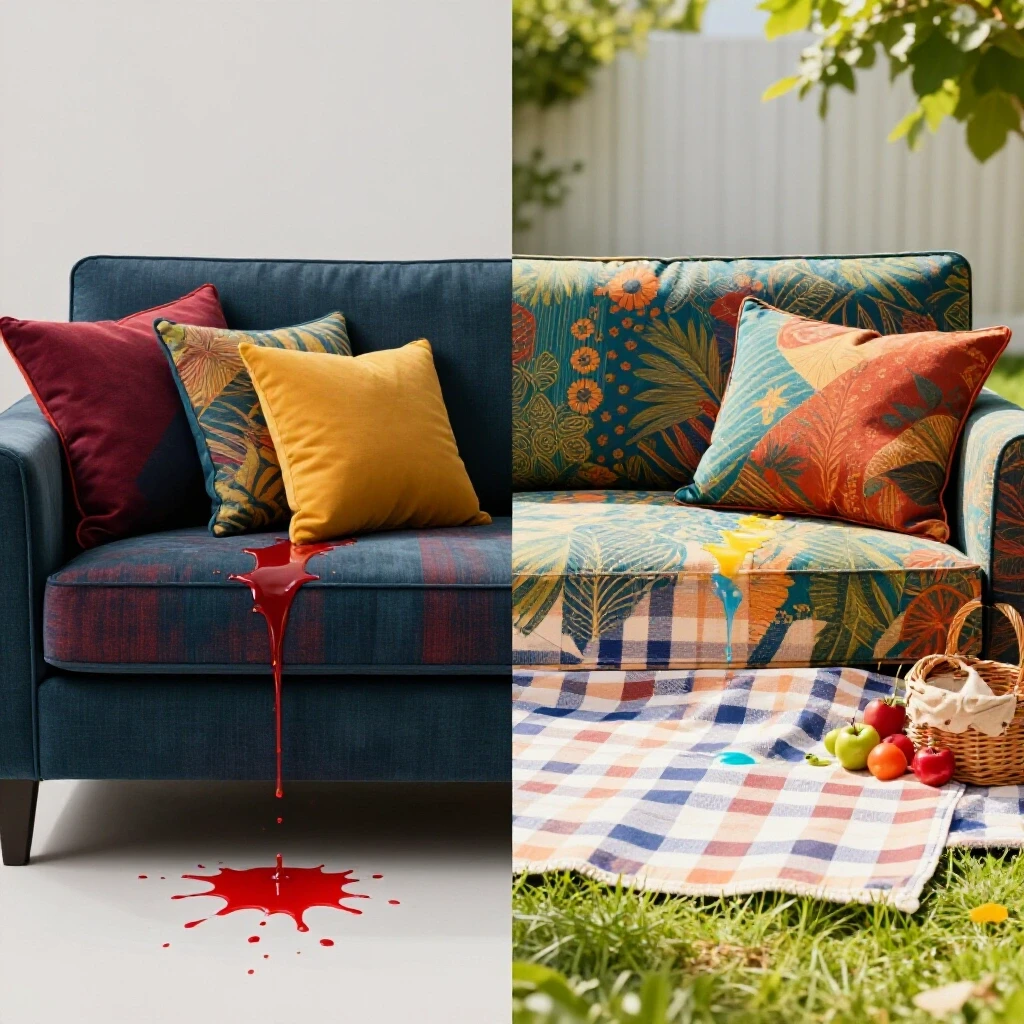
Indoor-Outdoor Fabric Spill Resistance Comparison (Test Results)

For years, I have advised clients that the most durable materials in a home are often the ones people overlook because they seem misplaced. One of the best-kept secrets in high-end home design is the strategic use of all-weather performance textiles inside the main living areas. While most homeowners reserve these rugged materials for the patio, bringing them into the living room or dining area offers a level of protection against daily life that standard upholstery simply cannot match.
Throughout my 13 years as a supply chain analyst, I have seen how technical material specifications translate into real-world performance. When you are choosing materials for a high-traffic home, you are essentially managing a long-term asset. You want to know if paying 30% more today will save you thousands in professional cleaning or replacement costs five years from now. By applying the same rigorous testing we use for outdoor environments to our indoor furniture, we can create a home that is both beautiful and functionally resilient.
Understanding Technical Standards for Performance Textiles
Technical standards are the measurable benchmarks that define how a material will behave under stress, such as friction, sunlight, or moisture. In the textile industry, these standards help us move past marketing claims and look at the actual engineering of the fiber.
When evaluating durable textiles, the “what” is the fiber composition and the “why” is the physical resistance it provides. For instance, the Wyzenbeek test (ASTM D4157) measures abrasion resistance by rubbing a piece of cotton duck or wire mesh back and forth over the material. For residential use, 15,000 double rubs is considered heavy-duty, but many all-weather materials exceed 50,000 or even 100,000 double rubs. This means the material can withstand years of pets, children, and constant movement without thinning or pilling.
Another critical metric is colorfastness to light, often measured by AATCC 16 standards. This determines how many hours of direct sunlight a material can handle before the color begins to fade. While standard indoor cotton might fade after 40 hours, solution-dyed acrylics—where the pigment is added while the fiber is still in a liquid state—can often withstand over 1,500 hours of UV exposure. This makes them ideal for sun-drenched living rooms where traditional fabrics would bleach out within a single season.
Designing a Systematic Liquid Exposure Trial
A liquid exposure trial is a hands-on method to determine how a material reacts to common household accidents before they become permanent stains. This evaluation allows you to see the “beading” effect in real-time and measure the window of opportunity you have to clean a mess.
In my own home, I conducted a series of trials on various textile samples before committing to a custom sectional. I used three primary “offenders”: red wine, black coffee, and olive oil. I placed five-milliliter droplets of each on the samples and timed how long it took for the liquid to penetrate the surface. This is a practical application of the AATCC 22 Water Repellency test, which rates how well a fabric resists wetting.
I found that high-performance synthetics allowed the liquids to sit on the surface for over 30 minutes without any absorption. In contrast, a high-end linen-cotton blend absorbed the wine in less than 60 seconds. For a homeowner, those 29 minutes represent the difference between a quick paper towel blot and a $400 professional steam cleaning bill.
Comparing Material Longevity and Maintenance Costs
Choosing a material is a trade-off analysis between the initial purchase price and the total cost of ownership over a 10- or 15-year period. While a premium performance textile might cost $80 per yard compared to $40 for a standard polyester, the maintenance profile is significantly lower.
| Performance Metric | Standard Indoor Polyester | Solution-Dyed Acrylic | High-Performance Olefin |
|---|---|---|---|
| Abrasion Resistance | 15,000 – 30,000 rubs | 50,000 – 100,000 rubs | 60,000 – 90,000 rubs |
| UV Resistance (Hours) | 40 – 100 | 1,500+ | 1,000+ |
| Absorption Rate | High (Porous) | Very Low (Hydrophobic) | Extremely Low |
| Cleaning Method | Water-based cleaners only | Bleach-cleanable | Mild soap and water |
| Average Lifespan | 5 – 7 Years | 12 – 15 Years | 10 – 12 Years |
Building on this data, we can see that the solution-dyed acrylic offers the best return on investment for sunny rooms. Interestingly, olefin is a fantastic mid-range option that provides excellent moisture resistance, though it can be sensitive to heat. As a result, homeowners must decide if their primary threat is sunlight or high-volume spills.
Real-World Scenarios: From the Patio to the Playroom
In my professional experience, I have seen that the most expensive choice is not always the best fit for every lifestyle. I once evaluated two different materials for a family with three young children and two large dogs. They were torn between a luxury velvet and a high-performance weave designed for exterior use.
We ran a simulation of their daily life. We dragged a metal toy across the samples to check for snags and applied a mixture of mud and water. The luxury velvet showed immediate crushing of the pile and held onto the dirt. The all-weather weave, however, allowed the mud to dry and then simply be brushed away with a stiff bristle brush.
This case study highlights that “durability” is relative to the environment. If your home is a low-traffic sanctuary, the technical specs of an all-weather textile might be overkill. But if your living room doubles as a playroom, the higher upfront cost of these materials acts as an insurance policy against the inevitable wear and tear of a busy household.
Life-Cycle Analysis: Is the Premium Worth It?
When we talk about life-cycle costing, we are looking at the total amount spent on a material from the day it is installed until the day it is replaced. This includes the purchase price, installation, routine cleaning, and any necessary repairs.
- Initial Purchase: Performance textiles generally command a 20% to 50% premium over standard options.
- Maintenance Cycles: Standard fabrics typically require professional cleaning every 12 to 18 months in high-traffic homes. Performance materials can often be maintained with simple spot cleaning and an annual hose-down or light scrub.
- Replacement Frequency: Because performance fibers are resistant to UV degradation and abrasion, they often last twice as long as traditional materials.
If a standard sofa costs $2,000 and lasts 6 years with $600 in cleaning costs, your total cost is $2,600, or $433 per year. If a performance-fabric sofa costs $3,000 and lasts 12 years with $200 in cleaning costs, your total cost is $3,200, or $266 per year. Over a decade, the “more expensive” option actually saves you nearly $1,700.
Practical Steps for Evaluating Textile Samples
Before you make a final decision, I recommend obtaining large samples (at least 6 inches by 6 inches) to conduct your own technical evaluation. Do not rely solely on the small swatches found in a showroom.
- The Scratch Test: Use a coin or a key to aggressively rub the surface of the fabric. Watch for any threads pulling loose or the surface becoming fuzzy.
- The Blot Test: Pour a small amount of water on the sample. It should form a tight bead that rolls around the surface rather than soaking in.
- The Light Test: Tape a portion of the sample to a south-facing window for two weeks, leaving the other half covered. Compare the two sides to check for early-stage fading.
- The Smell Test: Some performance coatings can have a distinct chemical odor. Ensure the material has been aired out and meets indoor air quality standards like GREENGUARD Gold.
Installation and Structural Requirements
It is important to note that performance textiles can be thicker and less flexible than standard fabrics. This affects how they drape over furniture and how they are sewn. When working with an upholsterer, ensure they have experience with heavier-weight materials.
The thickness of these materials is often measured in grams per square meter (GSM). A standard upholstery fabric might be 300 GSM, while a heavy-duty all-weather textile can be 450 GSM or higher. This extra weight requires heavy-duty needles and specific thread types, such as bonded polyester, to ensure the seams do not fail under tension. If you are DIY-ing a project, check if your sewing machine can handle the increased thickness before you buy the yardage.
Summary of Key Takeaways
Choosing the right material for your home involves looking past the price tag and focusing on the technical specifications that match your lifestyle. By opting for textiles designed to withstand the elements, you gain a level of durability and ease of maintenance that is difficult to find in traditional indoor materials.
- Prioritize Solution-Dyed Fibers: These offer the highest resistance to fading and allow for the use of stronger cleaning agents.
- Check the Rub Count: Aim for at least 30,000 double rubs for any piece of furniture used daily.
- Verify Liquid Resistance: Conduct your own trials with common spills to ensure the material provides the “beading” effect you need.
- Calculate Long-Term Value: Remember that a higher upfront cost often results in a lower annual cost over the life of the product.
Frequently Asked Questions
Does a high “double rub” count mean the fabric is stain-resistant? No, these are two different metrics. The double rub count (Wyzenbeek) measures physical wear and abrasion—essentially how long it takes for the fabric to develop a hole or thin spot. Stain resistance is a function of the fiber’s porosity and any hydrophobic treatments applied to it. A fabric can be incredibly tough but still soak up wine instantly if it is not engineered for liquid resistance.
Can I use bleach on all performance textiles? Only if the fabric is solution-dyed. In solution-dyed materials, the color is part of the fiber itself, not just a coating on the outside. This allows the color to remain intact even when exposed to harsh cleaners like diluted bleach. Always check the manufacturer’s specifications before using bleach, as it can ruin the color of piece-dyed or printed fabrics.
Why do some liquids still soak into “water-resistant” materials? Liquid resistance is often a matter of surface tension and time. If a spill is left for a long period, or if the liquid is hot (like coffee), it can eventually break through the protective barrier or soak through the weave. Additionally, some materials are “water-repellent” but not “waterproof,” meaning they can handle a splash but not a standing pool of liquid.
Are these materials breathable enough for indoor use? Yes, most high-quality performance weaves are engineered to allow air to pass through. This prevents the “sticky” feeling often associated with vinyl or plastic-coated fabrics. Because they are woven rather than solid sheets, they remain comfortable for seating in both summer and winter.
Will the fabric feel “crunchy” or stiff like a tent? Modern textile engineering has come a long way. While early all-weather materials were stiff, current versions use sophisticated spinning techniques to mimic the feel of cotton, linen, or even wool. Always request a “hand sample” to feel the texture against your skin before purchasing.
Is it worth the extra cost for a guest room that is rarely used? Probably not. If a room sees little traffic and the curtains are usually drawn, a standard textile will perform perfectly well for many years. The value of high-performance materials is realized in high-traffic, high-sunlight, or high-spill areas like the kitchen, living room, or sunroom.
How do I know if a fabric is truly solution-dyed? Check the technical spec sheet for terms like “100% Solution-Dyed Acrylic” or “Solution-Dyed Polyolefin.” If the description simply says “polyester blend” or “printed,” it likely is not solution-dyed. You can also look at the back of the fabric; solution-dyed materials usually have the same color intensity on both sides.
Do these materials require special tools for cleaning? Usually, no. Most can be cleaned with a simple solution of mild soap and lukewarm water. For stubborn spots, a soft-bristle brush is helpful. The main advantage is that you don’t need expensive, specialized chemicals to maintain the appearance of the material.
Can I apply a spray-on protector to a regular fabric to get the same results? Spray-on protectors provide a temporary barrier, but they are not a substitute for the inherent properties of performance fibers. These coatings can wear off with use and cleaning, requiring frequent re-application. A truly performance-engineered textile has these properties built into the fibers, providing consistent protection for the life of the material.
What is the difference between “water-repellent” and “water-resistant”? Water-resistant means the material can resist water penetration to a certain degree, but it will eventually soak through. Water-repellent means the surface is treated to shed water, causing it to bead up and roll off. For the best protection against spills, you want a material that is both repellent and has a low absorption rate.
(This article was written by one of our staff writers, Andrew Morrison. Visit our Meet the Team page to learn more about the author and their expertise.)