How to Install a Bathroom Towel Ring on a Stud (Easy DIY Guide)

Focusing on fast solutions often leads to long-term headaches in the world of home maintenance. Over my 12 years as a facilities manager and a dedicated DIY enthusiast, I have seen many quick fixes fail because they lacked structural integrity. One of my earliest projects involved mounting a circular hand-towel holder in my first home. I followed the instructions on the back of the box, which suggested using plastic expansion anchors. Within three weeks, the constant tugging from my family caused the anchors to pull through the drywall, leaving a gaping, jagged hole that required a messy patch job.
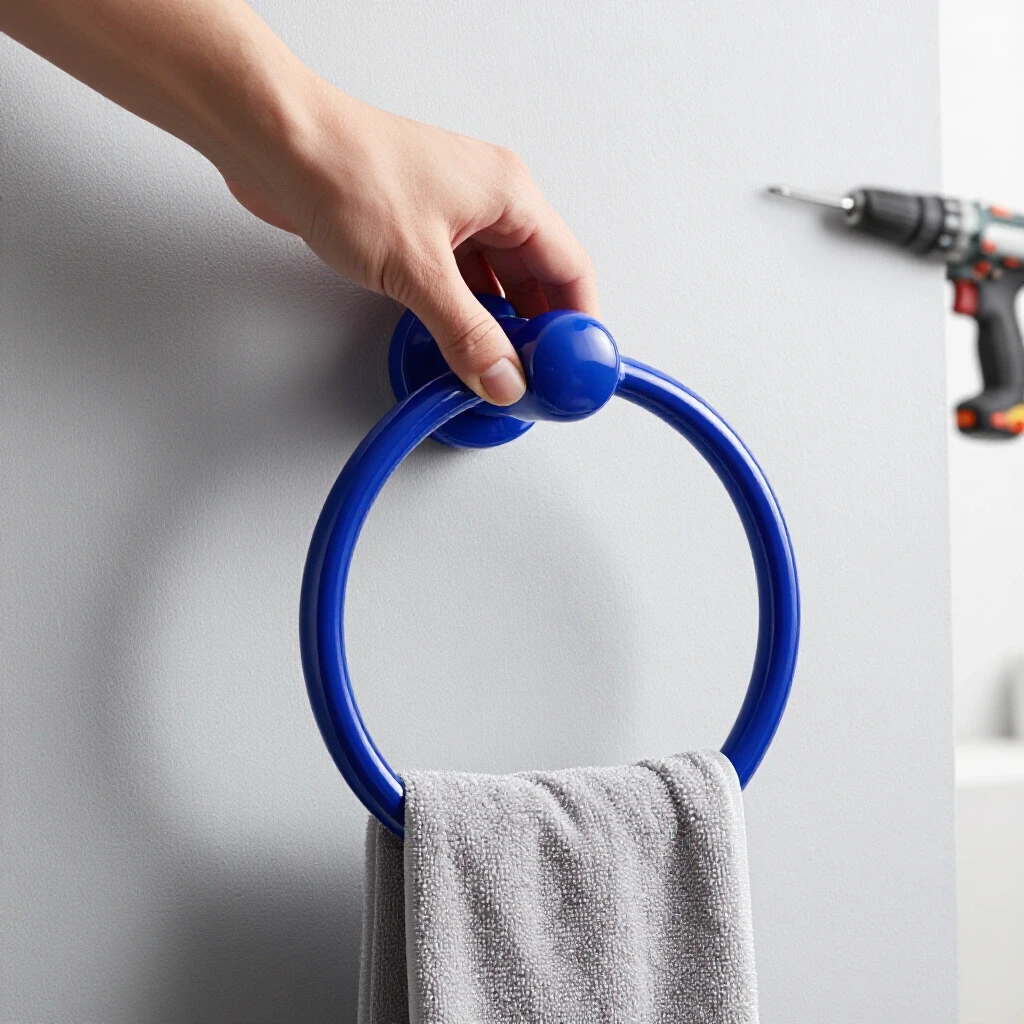
That failure taught me a vital lesson about the physics of bathroom hardware. A towel ring acts as a lever; every time you dry your hands, you apply downward pressure that multiplies the stress on the wall. To ensure a safe home repair that lasts for years, you must secure the mounting bracket directly into a wall stud. This guide details how to execute this weekend DIY project with professional precision, focusing on structural stability and code-compliant techniques.
Planning Your Weekend Hardware Upgrade
Proper planning involves assessing your bathroom layout to find the most functional and structurally sound location for your new fixture. You must consider the swing of the door, the location of the vanity, and the proximity to the sink to ensure the ring is easy to reach. This phase prevents unnecessary holes in your wall and ensures the installation meets your daily needs.
When I plan these upgrades, I look at the “flow” of the room. In my professional life managing commercial facilities, we use standardized heights for accessibility. For a residential bathroom, the standard height for a hand-towel fixture is typically 48 inches from the finished floor. However, you should adjust this based on the height of your backsplash or the primary users of the bathroom. If you have children, you might drop it to 36 or 40 inches.
Essential Tool Inventory for Secure Mounting
Having the right tools on hand prevents mid-project trips to the hardware store and ensures a higher quality of work. For this specific task, you need tools that help you see “through” the wall and provide the torque necessary to drive fasteners into solid wood. This inventory focuses on precision and safety.
- Electronic Stud Finder: A tool that detects changes in wall density to locate the edges and center of wooden studs.
- Power Drill/Driver: A cordless or corded tool used to create pilot holes and drive screws.
- 1/8-inch Twist Drill Bit: The standard size for creating a path for a #8 wood screw, preventing the stud from splitting.
- Torpedo Level: A small, 6-to-9-inch level used to ensure the mounting bracket is perfectly horizontal or vertical.
- Measuring Tape: Essential for consistent height placement across different fixtures.
- Non-Contact Voltage Tester: A safety device that detects live electrical wires behind the drywall before you start drilling.
- Pencil: For marking drill points and stud edges clearly.
Understanding Load Requirements and Building Codes
While residential building codes like the International Residential Code (IRC) do not strictly dictate the placement of a towel ring, they do emphasize structural attachment. A fixture that pulls out of a wall creates a safety hazard and property damage. Understanding the load-bearing capacity of your wall materials is key to a professional-grade result.
Drywall alone is not a structural material. A standard 1/2-inch sheet of drywall can crumble under the repeated “pull-and-release” motion of drying hands. By anchoring into a 2×4 wooden stud, you are tapping into the skeleton of your home. This provides a pull-out resistance that is significantly higher than any hollow-wall anchor can offer.
| Feature | DIY Installation | Professional Installation |
|---|---|---|
| Direct Cost | $15 – $40 (Fixture only) | $100 – $250 (Labor + Fixture) |
| Time Investment | 1 – 2 Hours | 30 Minutes (plus scheduling) |
| Tool Requirement | Basic Power Tools | Specialized Trade Tools |
| Risk Level | Low (if stud-mounted) | Minimal |
Locating Wall Studs for Maximum Stability
Finding the internal framing of your bathroom is the most critical step in ensuring your hardware stays put. Most modern homes use “16-inch on-center” spacing, meaning the center of one stud is 16 inches away from the next. However, in bathrooms, plumbing pipes and vent stacks often force builders to use irregular spacing, making a stud finder indispensable.
I always recommend a “triple-check” method. First, use the stud finder to mark the edges of the wood. Second, knock on the wall; a hollow sound indicates a cavity, while a “thud” indicates wood. Third, look for “dimples” in the baseboard or crown molding where the builder nailed into the studs. This verification process reduces the chance of drilling into a “false positive,” like a plastic plumbing pipe.
Why Stud-Mounting Beats Drywall Anchors
Drywall anchors rely on friction or a small “butterfly” toggle to hold onto the back of the gypsum board. Over time, moisture from the shower softens the drywall, and the repeated leverage of the ring causes the anchor to wobble. This creates a “lathe effect” that slowly enlarges the hole until the fixture falls off.
Stud-mounting uses a wood screw to bite into the cellulose fibers of the lumber. This creates a mechanical bond that can easily support 50 pounds or more of downward force. Since a wet hand towel rarely weighs more than two pounds, the safety margin is enormous. Building code compliant DIY practices always favor structural attachment over decorative attachment.
Executing the Mount: A Step-by-Step Home Upgrade Guide
The execution phase is where your preparation pays off. This stage involves transitioning from measurements to physical changes in your home. By following a systematic approach, you minimize errors and ensure the hardware is level, centered, and immovable. I always treat this like a facility maintenance task: precision matters more than speed.
Before you drill, perform a “dry-fit.” Hold the towel ring against the wall at your marked height. Check the clearance—can you comfortably loop a towel through it without hitting the vanity or a light switch? This is the moment to adjust your plan before you make a permanent mark on the substrate.
Marking and Leveling the Mounting Bracket
Most towel rings use a small metal bracket that hides behind the decorative escutcheon. This bracket usually has two holes for screws. It is a common mistake to think that if the bracket is slightly crooked, the ring will still look fine. Because the ring hangs freely, any tilt in the bracket will be magnified, causing the ring to rest unevenly against the wall.
- Place the bracket against the wall over the center of the stud you located.
- Use your torpedo level to ensure the screw holes are vertically or horizontally aligned, depending on the bracket design.
- Use a sharp pencil to mark the exact center of the screw holes.
- Remove the bracket and use your voltage tester over the marks to ensure no wires are hidden directly behind the drill site.
Drilling Pilot Holes and Fastening Hardware
Drilling a pilot hole is a non-negotiable step when working with studs. If you drive a screw directly into old, dry lumber without a pilot hole, the wood can split. A split stud loses its gripping power and can weaken the wall’s integrity. The pilot hole should be slightly smaller than the shank of the screw.
For a standard #8 wood screw, a 1/8-inch drill bit is ideal. Drill to a depth that matches the length of the screw, usually about 1.5 to 2 inches. Once the holes are drilled, hold the bracket back in place and drive the screws by hand for the last few turns. This prevents “over-torquing,” which can strip the screw head or the wood fibers.
- Pro Tip: If you feel the drill bit “jump” or hit something hard and metallic, stop immediately. You may have hit a “nail plate,” which is a steel shield installed to protect electrical wires or plumbing from accidental punctures.
Troubleshooting Common Installation Hiccups
Even with careful planning, DIY home improvement projects can hit snags. You might find that the stud is slightly off-center from where you want the ring to be. Or, you might discover that your bathroom walls are plaster and lath rather than modern drywall. Knowing how to pivot is what separates a seasoned DIYer from a frustrated one.
If you absolutely cannot hit a stud in the desired location, you must use a heavy-duty toggle bolt. Unlike plastic anchors, a toggle bolt has metal wings that expand behind the wall. However, for a towel ring, I always suggest trying to “sister” the location—moving the ring an inch or two to hit the wood is always better than relying on a toggle.
Repairing Misaligned Holes or Surface Damage
If you make a mistake and drill in the wrong spot, don’t panic. This is a common part of the learning curve. Repairing a small hole in drywall is a simple task that requires a bit of spackle and touch-up paint. As a facilities manager, I keep “painter’s putty” on hand for quick fills that don’t shrink as much as traditional spackle.
- Clean the hole of any loose debris or paper.
- Apply a small amount of spackle with a putty knife, pressing it firmly into the hole.
- Let it dry for the manufacturer-recommended time (usually 30-60 minutes).
- Lightly sand the area with 220-grit sandpaper until flush.
- Apply a dab of matching paint with a small foam brush.
| Material | Cure/Dry Time | Best Use |
|---|---|---|
| Spackle | 30 – 60 Minutes | Small nail or screw holes |
| Joint Compound | 24 Hours | Large patches or deep holes |
| Silicone Caulk | 12 – 24 Hours | Sealing gaps behind the fixture |
| Touch-up Paint | 2 – 4 Hours | Final aesthetic finish |
Final Inspection and Long-Term Maintenance
Once the bracket is secure, attach the decorative ring fixture. Most models use a small “set screw” on the bottom of the escutcheon. Use the provided hex key (Allen wrench) to tighten this screw until the fixture is snug against the wall. If the ring wobbles, the set screw is likely loose or the bracket is not flush against the wall.
Long-term maintenance for bathroom hardware involves checking for moisture-related issues. Bathrooms are high-humidity environments. Over time, the screws can undergo galvanic corrosion if they are not made of stainless steel or zinc-plated brass. If you notice rust staining around the base of the ring, it is time to replace the fasteners with moisture-resistant options.
- Check the set screw every six months to ensure it hasn’t vibrated loose.
- Wipe the fixture down with a microfiber cloth to prevent mineral buildup from wet towels.
- Avoid hanging heavy items like wet bath robes on a ring designed for hand towels.
Conclusion
Completing these step-by-step home upgrades provides a sense of accomplishment that goes beyond the functional benefit of the fixture. By choosing to anchor into a stud, you have ensured that your work is code-compliant and structurally sound. You have moved past the “fast solution” and embraced a facility-grade standard of home care.
Your next steps are simple: gather your tools, locate your studs, and execute the mount with confidence. If you find yourself enjoying the process, consider looking at other hardware in your home that might be loose or poorly anchored. The “stud lesson” applies to everything from heavy mirrors to curtain rods. Taking the time to do it right the first time is the hallmark of a true hands-on DIYer.
Frequently Asked Questions
What is the ideal height for a hand-towel ring?
The standard height is 48 inches from the floor. This aligns with most vanity heights and provides enough clearance for a standard hand towel to hang without touching the countertop. If you have a vessel sink, you may need to go higher to maintain a 4-to-6-inch gap between the bottom of the towel and the sink rim.
What if my stud finder gives me a false reading?
Stud finders can be tricked by “fire blocks” (horizontal wood between studs) or thick layers of plaster. To verify, use a strong magnet to find the screws or nails used to attach the drywall to the studs. These fasteners will be in a vertical line, marking the exact center of the wood.
Should I use the screws that came in the box?
Often, the screws included with consumer-grade hardware are made of soft metal that strips easily. I recommend buying a small pack of #8 x 2-inch stainless steel wood screws. They are stronger and will not rust in the humid bathroom environment.
Can I install a towel ring on a tiled wall?
Yes, but you must use a diamond-tipped or carbide-tipped masonry bit to drill through the tile first. Do not use the “hammer” setting on your drill, as this will crack the tile. Once you pass through the tile and backer board, you can drive your screw into the stud as usual.
How do I know if I hit a pipe?
If the drill suddenly becomes very easy to push, or if you feel a “soft” resistance followed by water, you have hit a pipe. However, most pipes are protected by steel nail plates. If you hit something hard that isn’t wood, stop drilling. A non-contact voltage tester can also help you identify if you are near electrical lines.
Why is my towel ring still loose after tightening the screws?
This usually happens because the set screw (the tiny screw on the bottom of the ring) isn’t catching the bracket correctly. Loosen the set screw, ensure the ring is fully seated over the bracket’s “hook,” and then tighten it firmly.
Is it okay to use a power screwdriver for the final tightening?
I advise against it. Power tools can easily over-tighten and strip the small set screw. Always use a manual screwdriver or the provided hex key for the final steps to ensure you don’t damage the decorative finish or the threads.
What should I do if my walls are plaster and lath?
Plaster is brittle and can crack easily. Use a masonry bit for the initial hole through the plaster, then a wood bit for the lath and stud. Avoid using heavy pressure; let the drill bit do the work to prevent large chunks of plaster from falling away behind the wall.
(This article was written by one of our staff writers, Robert Callahan. Visit our Meet the Team page to learn more about the author and their expertise.)