Laundry Basket Setup Cost Breakdown: Budget Guide (Full Details)

It is a common frustration for homeowners to finish a high-end laundry room renovation only to realize they have no place to actually sort their clothes. We often spend thousands on quartz countertops and high-efficiency machines while forgetting the small, essential tools that make the room functional. This oversight leads to “budget leakage,” where small, untracked purchases quickly add up to hundreds of dollars in unplanned debt.
As a financial planner, I have spent over a decade tracking every cent that goes into my home. I have managed two full-scale renovations and kept detailed spreadsheets for every minor update. I learned early on that failing to account for the “small stuff,” like sorting bins and hampers, can throw a project off course. In my first home, I estimated $50 for sorting containers but ended up spending nearly $300 because I didn’t account for durability or specific dimensions.
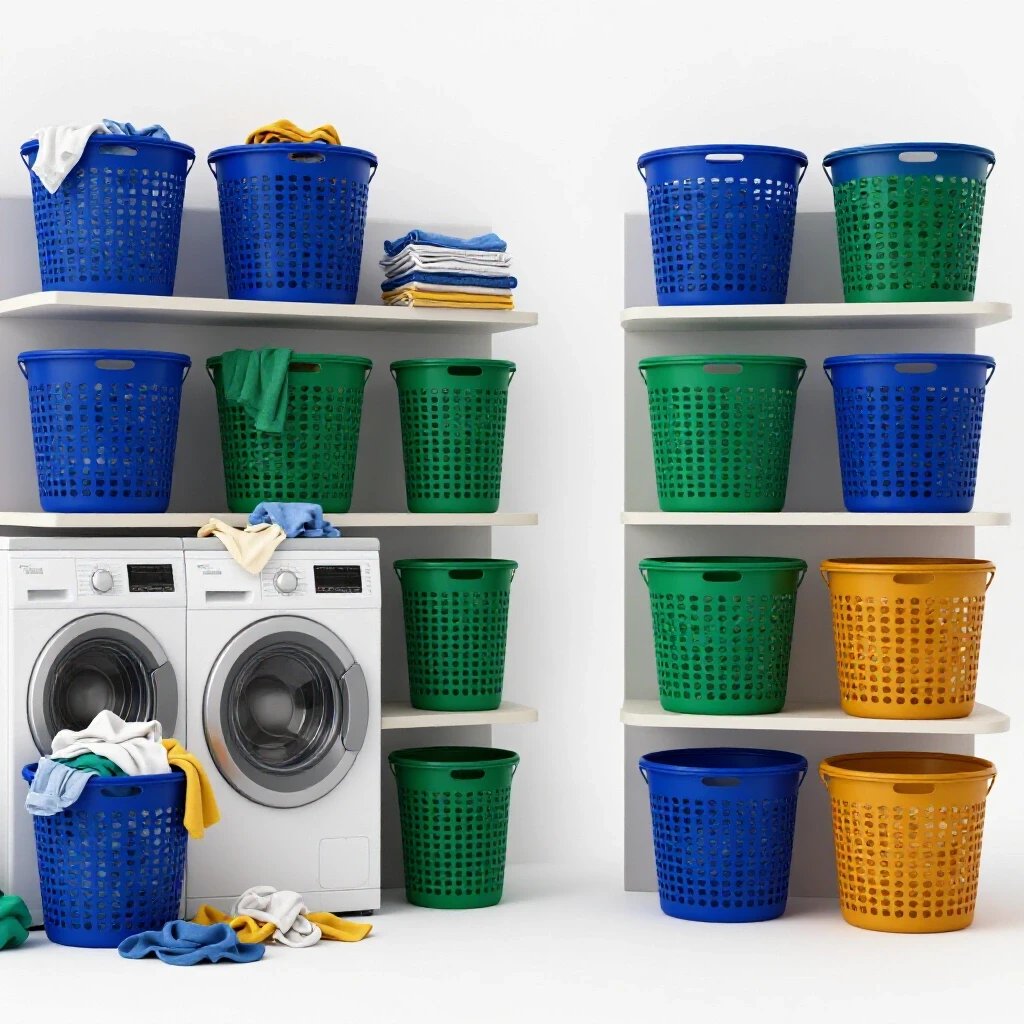
This guide provides a transparent look at what it truly costs to set up a functional sorting system. We will look at my personal ledger and use data-backed frameworks to help you allocate your home improvement funds without overspending.
Establishing a Financial Framework for Utility Organization
A financial framework for home organization involves setting a hard limit on secondary purchases before you enter a store. It requires categorizing items as “essential” or “aesthetic” to prioritize spending. This approach prevents the emotional impulse buying that often happens when we try to finish a project quickly.
When I look at my own home renovation budget, I treat utility containers as a line item under “Operational Hardware.” Most people make the mistake of using their “Miscellaneous” fund for these items. However, a miscellaneous fund should be reserved for true emergencies, like a pipe bursting during a wall demolition. By creating a dedicated line item for your sorting bins, you protect your emergency reserves.
I recommend a 10% contingency buffer even for small organization projects. Prices for plastic and natural fibers fluctuate based on supply chain issues and oil prices. In 2022, I noticed a 15% jump in the cost of heavy-duty plastic bins in my local area. Having a buffer in your spreadsheet ensures that these price shifts do not cause financial strain.
Why Small-Scale Expense Tracking Matters
Tracking small expenses is the practice of recording every minor purchase to see the cumulative impact on your net worth. It is the foundation of financial discipline for homeowners who want to avoid debt. When you track a $40 basket, you are training yourself to respect the integrity of your total project budget.
In my client consultations, I often see “death by a thousand cuts.” A homeowner might stay on budget for a $5,000 floor but then spend $1,200 on “little things” they never wrote down. For a sorting station, this might include the bins themselves, labels, liners, and any hardware needed to secure them. My personal ledger shows that these “extras” usually account for 20% of the total setup cost.
- Financial Tip: Use a dedicated app or a simple CSV export from your bank to catch every hardware store run.
- Metric: Aim for a labor-to-material ratio of 0:1 for this project, as most sorting setups are DIY and should not require professional installation fees.
Real-World Ledger: My Actual Spend on Sorting Containers
A detailed cost breakdown guide is only useful if it reflects real market prices and actual consumer behavior. This section outlines the specific amounts I spent to outfit a three-bedroom home with a centralized sorting station. These figures are pulled directly from my personal remodeling expense tracker.
When I set up my current system, I compared regional prices at three different big-box retailers. I found that while the base price of a plastic bin was consistent, the “hidden” costs like shipping or local sales tax varied significantly. Below is the exact breakdown of my procurement costs for a five-bin system designed for a family of four.
Table 1: Projected vs. Actual Budget for Sorting Station
| Item Description | Projected Cost | Actual Cost | Variance |
|---|---|---|---|
| Heavy-Duty Plastic Bins (3) | $60.00 | $72.00 | +$12.00 |
| Natural Wicker Hampers (2) | $100.00 | $115.00 | +$15.00 |
| Canvas Liners (Set of 5) | $40.00 | $38.00 | -$2.00 |
| Labeling Kit & Hardware | $15.00 | $22.00 | +$7.00 |
| Total | $215.00 | $247.00 | +$32.00 |
The table above shows a 14.8% budget overrun. Interestingly, the variance came from a shift in material pricing for the plastic bins between my initial research and the actual purchase date. This is why I advocate for a 15-20% margin in any remodeling expense tracker, even for small-scale organizational tasks.
Analyzing Material Durability and Long-Term Value
Material choice is a financial decision that impacts the depreciation schedule of your home goods. Cheap plastic may cost less upfront but often cracks within two years, leading to a higher “cost per use.” Investing in higher-quality materials like reinforced canvas or treated wood can lower your long-term maintenance expenses.
In my experience, “value” in home improvement isn’t just about resale; it is about how long an item lasts before you have to spend money to replace it. I categorize materials into three tiers: 1. Economy (Plastic): Low cost, high durability, low aesthetic value. 2. Mid-Range (Canvas/Wire): Moderate cost, good breathability, medium lifespan. 3. Premium (Wicker/Wood): High cost, high aesthetic value, requires more care.
By choosing mid-range canvas for my liners, I saved money without sacrificing the look of the room. I opted for heavy-duty plastic for the actual sorting because it handles moisture better than natural fibers. This strategic mix kept my total outlay under $250 while ensuring the system would last for at least five to seven years.
How to Formulate a Realistic Expense Forecast
A realistic expense forecast is a data-driven estimate that accounts for local taxes, shipping, and potential price volatility. It moves beyond the “sticker price” seen online and looks at the total landed cost of an item. For home planners, this forecast is the primary tool used to prevent mid-project funding gaps.
To build your forecast, start by identifying the exact dimensions of your space. I once bought a beautiful set of three bins only to find they were two inches too wide for my laundry shelf. Returning them cost me $15 in gas and two hours of my time. Time is a financial asset; wasting it on poor planning is a hidden cost that many homeowners ignore.
- Step 1: Measure your floor or shelf space twice.
- Step 2: Search local inventory to avoid shipping fees.
- Step 3: Add your local sales tax (e.g., 8.25%) to the subtotal.
- Step 4: Include a $20 “hardware and labels” buffer.
Localized Cost Factors and Regional Multipliers
Construction and home goods pricing can vary by 10-20% depending on your geographic location. While a plastic bin might cost the same nationwide at a major retailer, local boutique stores or regional hardware chains will have different price points. Understanding your local market ceiling prevents you from over-improving a utility space.
According to data from the U.S. Bureau of Labor Statistics, the cost of household furnishings has seen significant fluctuations over the last three years. If you live in a high-cost-of-living area, you may also face higher “last-mile” delivery fees. When I lived in a rural area, my shipping costs for large hampers were 30% higher than when I lived in a city. Always check if “free ship to store” is an option to keep your budget on track.
Accounting for Hidden Fees in Household Organization
Hidden fees are the unexpected costs that are not included in the initial price tag of a product. For a sorting setup, these include assembly tools, mounting hardware for wall-hung units, and protective felt pads for floors. Identifying these fees early allows you to allocate funds accurately and avoid small, annoying charges on your credit card.
One hidden fee I often encounter is the “organizational tax” of buying matching sets. Retailers often price individual bins lower but charge a premium for a complete, matching set. In my own ledger, I found that buying individual pieces that “coordinated” rather than a pre-packaged set saved me $45.
- Hardware: Screws, anchors, or brackets for wall-mounted bins.
- Protection: Clear coats for wicker to prevent snagging or felt feet for plastic to prevent floor scratches.
- Maintenance: Replacement liners or specialized cleaners for high-end materials.
The Impact of Sales Tax and Shipping on Your Bottom Line
Sales tax and shipping are the most common “forgotten” line items in a home renovation budget. On a $300 order, an 8% sales tax adds $24 to your total. If you are ordering heavy or oversized items, shipping can add another $20 to $50. These are not negligible amounts when you are trying to maintain a strict financial framework.
I always recommend using a spreadsheet that auto-calculates tax based on your zip code. This ensures that your “Total Cost” column is a true reflection of the cash leaving your bank account. When I tracked my sorting station spend, I realized that by choosing “in-store pickup,” I saved enough on shipping to pay for all my labeling supplies.
Long-Term Home Value and ROI Considerations
Return on Investment (ROI) in the context of home organization is usually measured in “lifestyle value” rather than a direct increase in home appraisal. However, a well-organized laundry space can be a selling point that helps a home sell faster. Cost-to-value recovery rates for minor utility updates are generally high because the initial investment is low.
As a financial planner, I look at the “depreciation schedule” of these items. A high-quality sorting system might last ten years. If you spend $250, your cost is only $25 per year. Compared to the frustration of a cluttered home, this is a high-value investment. However, spending $1,000 on custom-built sorting bins in a starter home is likely “over-improving” beyond what the local market will pay back.
Balancing Lifestyle Value vs. Resale Recovery
Lifestyle value is the non-monetary benefit you receive from an improvement, such as reduced stress or saved time. For many cost-conscious planners, this is just as important as the financial ROI. The key is to find the “sweet spot” where you get the organization you need without spending more than the neighborhood comps justify.
In my own renovations, I follow the “2% Rule.” I try not to spend more than 2% of the room’s total value on movable organizational tools. If a laundry room remodel costs $10,000, spending $200 on bins is perfectly aligned with the project’s scale. This keeps the investment proportional and protects your overall financial health.
Tools and Resources for Tracking Your Project
To keep your project on track, you need the right financial tools. These resources help you move from “guessing” to “knowing” exactly where your money is going. I use a combination of simple spreadsheets and modern software to manage my home-related expenses.
- Google Sheets or Excel: Still the best tool for creating a custom remodeling expense tracker. Use formulas to calculate tax and variance automatically.
- HomeZada: A digital home management app that tracks home improvement projects, inventory, and maintenance.
- Vertex42 Templates: They offer free, high-quality home budget and renovation templates that are perfect for tracking line-item costs.
- Local Inventory Checkers (BrickSeek): Useful for comparing prices at local big-box stores to find the lowest price on specific bin models.
Actionable Metrics for Your Spreadsheet
When you build your tracking file, include these specific metrics to ensure a data-driven approach: – Cost per Unit: Total cost divided by the number of bins. – Square Foot Occupancy: How much of your floor space the system takes up vs. its storage capacity. – Project Variance Percentage: (Actual Cost – Projected Cost) / Projected Cost. – Maintenance Reserve: Set aside 5% of the total cost for future repairs or liner replacements.
Practical Steps to Finalize Your Sorting Station Budget
Before you buy your first container, you must finalize your funding source. Are you using cash flow from your monthly budget, or is this part of a larger home equity loan? For small projects under $500, I always recommend using cash to avoid interest rate amortization that can double the cost of the items over time.
Once your funding is secure, perform a final “market check.” Look at three different sources for the same or similar items. I recently saved $30 on a wire basket simply by checking a restaurant supply store instead of a home decor boutique. This kind of financial discipline is what separates successful home planners from those who constantly struggle with overspending.
- Define the Scope: Decide exactly how many bins you need.
- Set a Hard Cap: Choose a maximum dollar amount and stick to it.
- Shop with a List: Only buy what is on your spreadsheet.
- Review the Actuals: After the project is done, enter your final costs to see where you were accurate and where you missed the mark.
FAQ: Managing the Costs of Home Organization Systems
What is the average cost for a basic laundry sorting setup? Based on my tracking, a basic setup for a family of four typically ranges between $150 and $300. This includes four to five durable bins, labels, and basic hardware. Costs can drop below $100 if you utilize existing shelving and opt for budget-friendly plastic containers.
How much should I budget for hidden fees like shipping and tax? You should generally allocate an additional 15% to 20% on top of the retail price. This covers local sales tax (usually 5-9%) and a buffer for shipping or small hardware needs like felt pads or mounting screws.
Does a high-end sorting system increase my home’s resale value? It rarely adds a specific dollar amount to an appraisal. However, a clean, organized utility space improves the “marketability” of a home. It signals to buyers that the current owner is meticulous with home maintenance, which can lead to faster or higher offers.
Should I choose plastic, canvas, or wicker for my sorting bins? From a financial perspective, heavy-duty plastic offers the best “cost per year” because it is waterproof and nearly indestructible. Canvas is a great mid-range option for dry areas. Wicker is an aesthetic choice that usually has a shorter lifespan due to snagging and moisture damage, leading to higher replacement costs.
How do I avoid over-improving my laundry room with expensive bins? Follow the “2% Rule.” Limit your spending on organizational tools to no more than 2% of the total value of the room’s renovation. This ensures your investment is proportional to your home’s overall value and neighborhood standards.
What is the best way to track these small expenses? A simple spreadsheet is the most effective tool. Create columns for “Projected Cost,” “Actual Cost,” “Tax/Shipping,” and “Variance.” Recording every receipt immediately prevents small purchases from slipping through the cracks of your main budget.
Is it cheaper to DIY a sorting station or buy a pre-made system? Buying individual bins and placing them on existing shelving is almost always cheaper. Pre-made “systems” or custom-built cabinetry for bins often carry a 30-50% premium for the convenience of a unified look.
How often should I expect to replace my sorting containers? High-quality plastic can last 10+ years. Canvas liners usually need replacement or heavy cleaning every 3-5 years. Wicker or low-end plastic may need replacement every 2-3 years. Factoring this into your long-term maintenance plan helps avoid future financial surprises.
Can I deduct these costs from my taxes? Generally, no. These are considered “personal property” or “maintenance” rather than permanent capital improvements. However, if you are setting up a sorting system for a dedicated home office or a rental property, you may be able to depreciate the cost as a business expense. Always consult a tax professional.
What should I do if my project goes over budget? If you hit your “hard cap,” stop purchasing immediately. Re-evaluate your needs and see if you can swap a premium item for a more affordable one. The goal is to finish the project without dipping into your emergency fund or using high-interest credit cards.
(This article was written by one of our staff writers, Steven Fletcher. Visit our Meet the Team page to learn more about the author and their expertise.)