Why Organizing Systems Fail and How to Fix Them (Expert Tips)

In my eleven years working in operations and logistics, I have learned that a system is only as good as its weakest link. In a warehouse, if a pallet takes too long to reach the dock, the whole chain breaks. I applied this same logic to my own home when my wife and I found ourselves constantly tidying the same rooms every weekend. We realized that our ability to maintain a tidy home was not about our willpower, but about the ease of cleaning we had built into our environment.
When a home is designed for easy maintenance, cleaning up after a long day feels like a quick reset rather than a grueling chore. For years, I approached our home like a professional puzzle, trying to fit as much as possible into every corner. I soon discovered that the more complex I made our storage, the faster it fell apart. By studying how items move through our house, I began to see why our previous attempts at order were failing so quickly.
Why Traditional Home Organization Systems Often Break Down
This refers to the analysis of the gap between aesthetic storage and the actual movement of items within a busy household. It focuses on identifying where physical layouts clash with daily human habits.
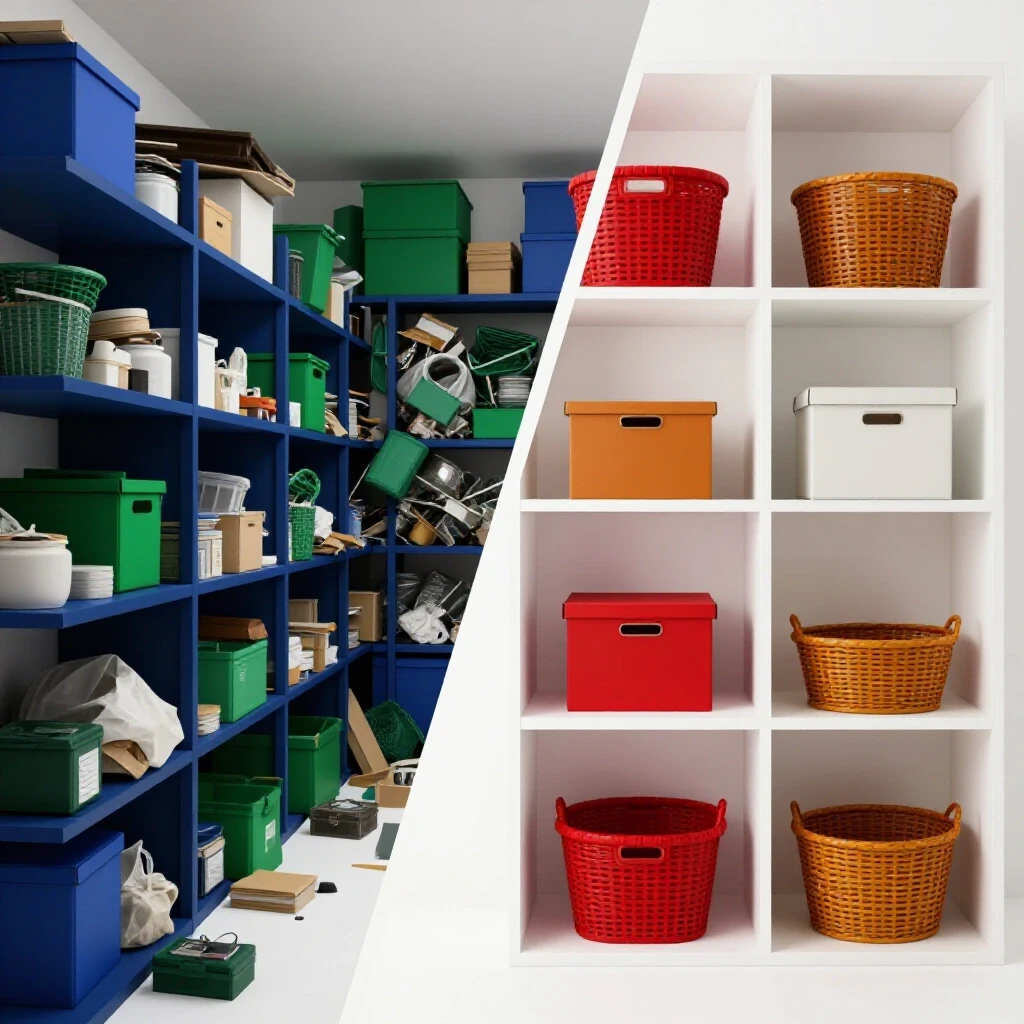
Many of us start our decluttering journey by buying matching bins and elaborate labeling kits. We see a beautiful pantry online and try to copy it exactly. However, these setups often fail because they focus on how things look rather than how they are used. In logistics, we call this “form over function,” and it is the primary reason why spaces revert to chaos within days.
When a system is too rigid, it cannot handle the unpredictability of family life. If a child has to unlatch three different bins to find a toy, they likely won’t put it back. Interestingly, research in environmental psychology suggests that visual complexity in our surroundings can lead to increased cortisol levels. This means that if our storage systems are hard to use, they actually contribute to our stress rather than fixing it.
The Hidden Impact of Retrieval Friction
Retrieval friction is the measurable physical and mental effort required to access or put away an item in its designated spot. It is calculated by the number of steps, movements, and decisions needed to complete a task.
In my own house, I tracked how long it took to put away clean laundry. I realized that my system required me to open a closet, pull out a heavy bin, remove a lid, and then place the clothes inside. That is four distinct steps for one item. Building on this observation, I found that the higher the “friction,” the more likely an item is to end up on a “temporary” pile on a chair or counter.
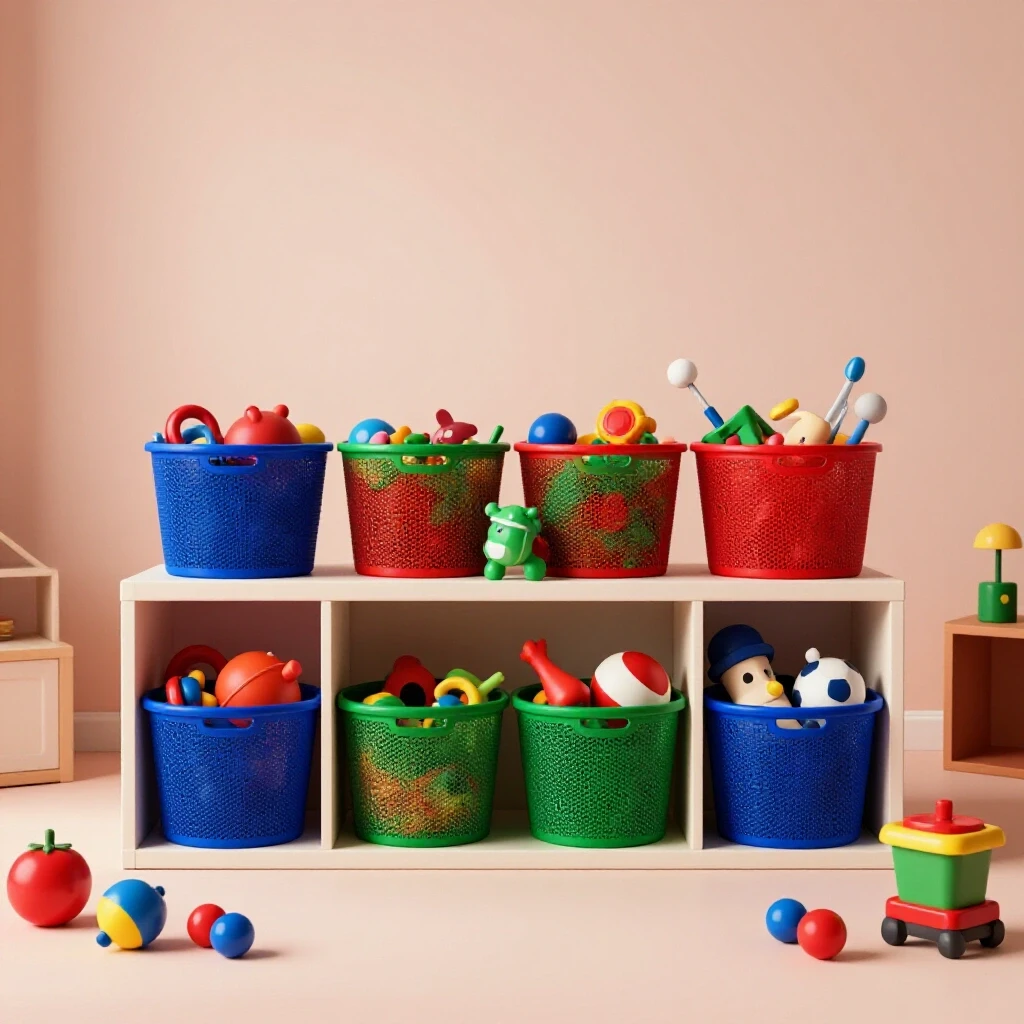
Reducing household clutter requires us to lower this friction. If we can make putting something away as easy as dropping it on the floor, the system will last. As a result, we moved toward open-topped bins for frequently used items. This simple change cut our sorting time in half and stopped the “reversion” cycle in our mudroom.
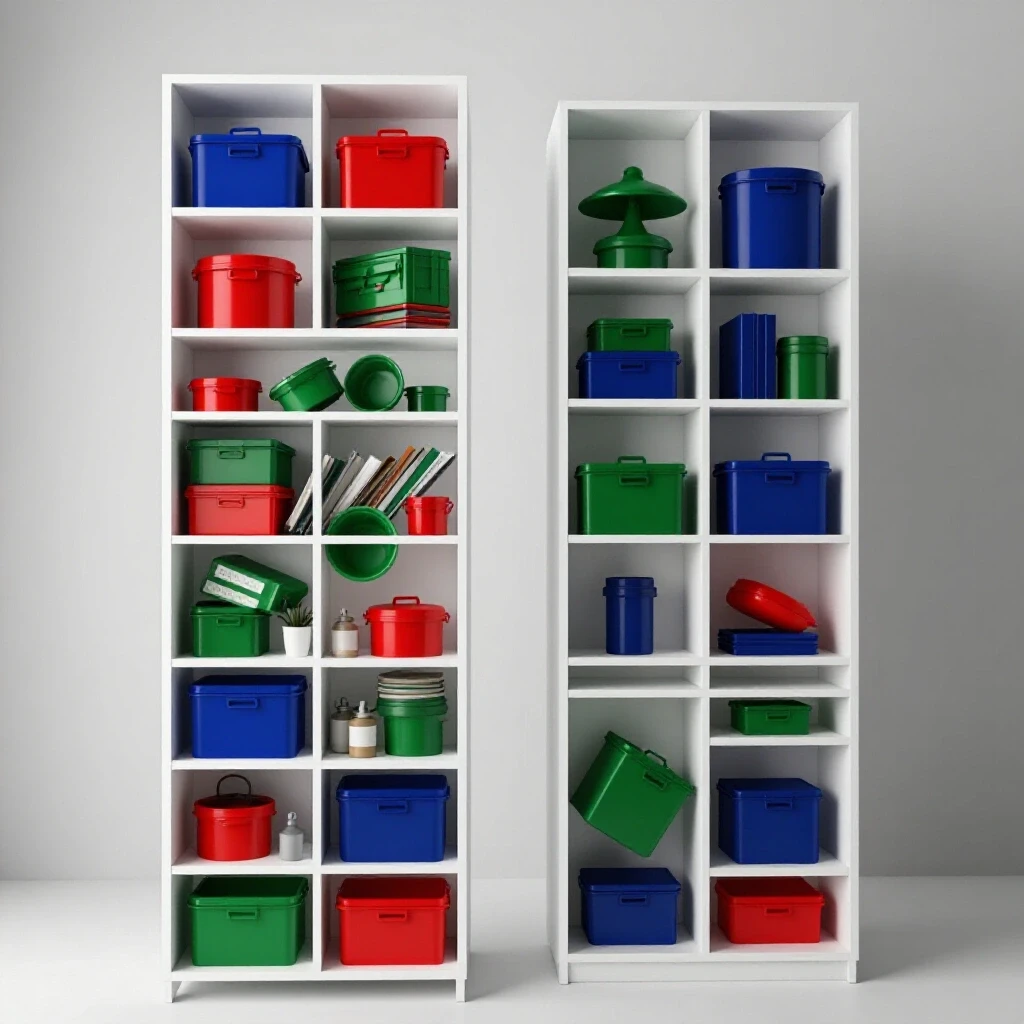
| Bin Type | Friction Level | Steps to Store | Best Use Case |
|---|---|---|---|
| Open Basket | Low | 1 | Toys, daily shoes, mail |
| Labeled Drawer | Medium | 2 | Office supplies, kitchen tools |
| Lidded Latch Bin | High | 4+ | Seasonal decor, long-term archives |
| Stacked Tubs | Very High | 5+ | Items used once a year |
The Psychological Toll of Visual Processing Overload
Visual processing overload occurs when a cluttered environment forces the brain to constantly filter information. This leads to mental exhaustion and decision fatigue as the mind struggles to focus on one task.
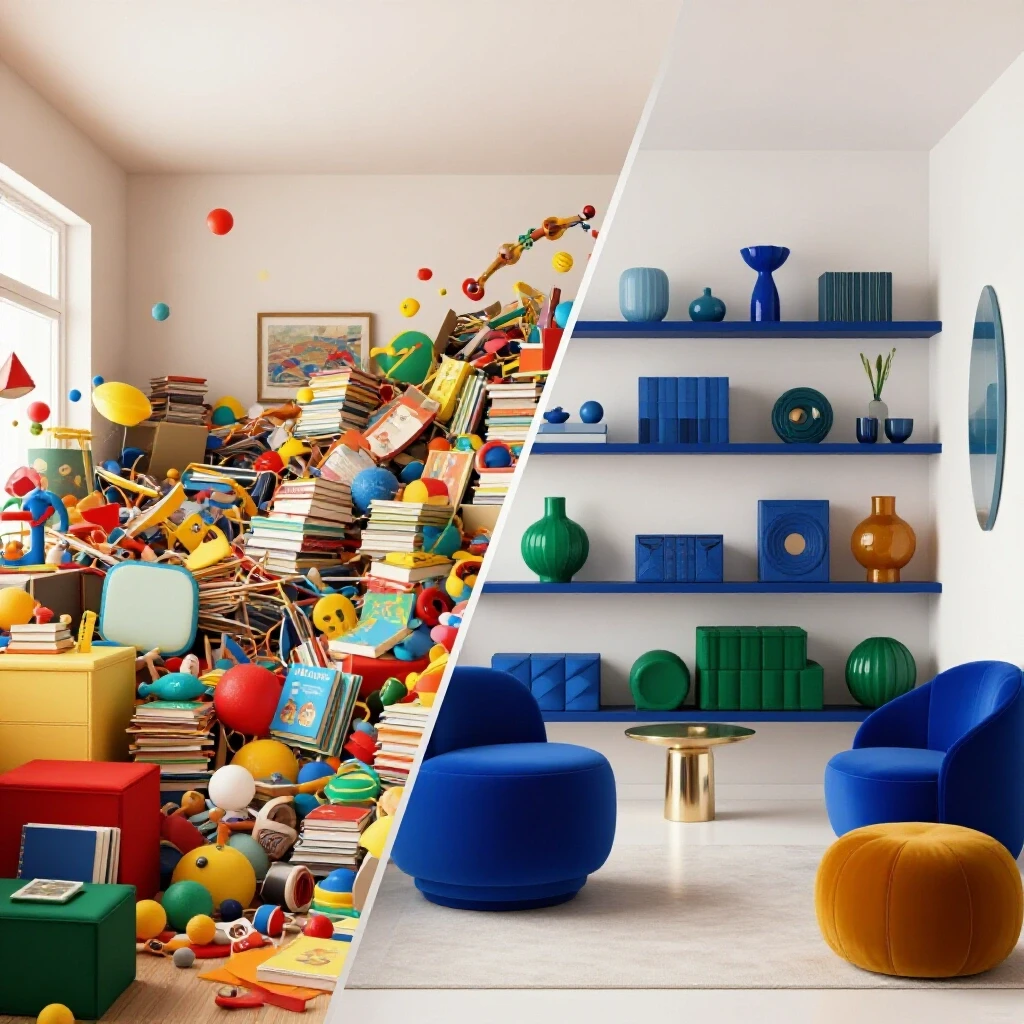
When you walk into a room filled with mismatched piles and overflowing shelves, your brain tries to categorize everything at once. This is why many parents feel “touched out” or mentally drained by the end of the day. It is not just the noise of the kids; it is the visual noise of the house. Studies in organizational behavior show that people in disorganized environments are more likely to procrastinate on simple tasks.
I noticed this in my own home office. Every time I sat down to work, my eyes would wander to the stacks of papers and unorganized cords. This visual distraction created a heavy cognitive load. To fix this, I stopped trying to organize the clutter and started removing the visual triggers. By using opaque bins for miscellaneous items, I gave my brain a “rest” from the constant data processing of the mess.
Reevaluating Sorting Frameworks for Busy Families
A sorting framework is a method of moving away from complex categories to high-speed sorting. It prioritizes the speed of item removal and placement over granular classification.
Most people fail at sustainable decluttering because their categories are too specific. For example, having separate bins for “Action Figures,” “Building Blocks,” and “Toy Cars” is great in theory. In practice, a five-year-old will rarely maintain that level of detail. Instead, a “Toy Bin” for everything is much more sustainable.
In logistics, we use a “velocity-based” sorting system. We keep the most frequently moved items in the easiest locations. I applied this by creating a “Daily Flow” zone. This is a single spot where everything that enters the house—keys, bags, mail—is dropped. By narrowing our focus to just these high-traffic items, we prevented the “clutter creep” that usually takes over the kitchen island.
- Sorting Time-Box Intervals: 15 minutes of rapid sorting is more effective than a 4-hour marathon.
- Item-Density Guidelines: Shelves should never be more than 80% full to allow for easy item retrieval.
- Decision Speed: If you can’t decide where it goes in 5 seconds, it needs a broader category.
Creating Functional Home Storage Through Zoning
Zoning involves dividing a living space into specific activity areas. This minimizes the distance items travel from their point of use to their storage spot, reducing daily sorting friction.
A common mistake is storing items based on where they “should” go rather than where they are used. For instance, I used to keep all our batteries in a central utility drawer in the kitchen. However, we used most of our batteries in the playroom for toys. By moving a small battery organizer to the playroom, I eliminated the trip across the house. This is a basic principle of spatial ergonomics: keep the tools near the task.
I recommend creating a “Zoning Map” for your home. Identify the primary activities in each room. If you find yourself frequently carrying items from one room to another just to put them away, your zones are misaligned. Adjusting these zones can reduce the daily cleanup duration by up to 30%.
- Identify Hot Spots: Note where piles naturally form (usually near entryways or flat surfaces).
- Trace the Path: Follow the movement of a single item, like a pair of scissors, for a week.
- Relocate Storage: Move the storage bin to the point of highest usage.
- Test the Flow: Observe if the piles stop forming after the move.
Selecting Low-Maintenance Storage Gear to Prevent Reversion
This involves choosing containers and shelving based on the ease of daily interaction rather than purely visual appeal. It prioritizes durability and accessibility over trends.
When we first started our home organization journey, I bought beautiful woven baskets. They looked great, but they were scratchy, hard to clean, and the lids were heavy. Within months, we stopped using them. Now, I look for “low-friction” gear. This means clear containers where you can see the contents or open-front bins that don’t require unstacking.
Modern organizing technologies, like smart-label tracking systems, can also help. These allow you to scan a QR code on a bin to see what is inside without opening it. This is especially useful for “Deep Storage” items in garages or attics. By using these tools, we ensure that we don’t buy duplicates of things we already own but can’t find.
- Standard Space Utilization: Aim for 70% utilization of a bin’s volume to prevent overflow.
- Retrieval Step Count: Aim for 2 steps or fewer for items used daily.
- Durability Metric: Choose materials that can be wiped down in under 30 seconds.
Establishing Sustainable Decluttering Routines
Sustainable routines are small, repeatable habits that manage the daily inflow and outflow of household goods. They prevent the build-up of clutter before it becomes overwhelming.
The biggest lesson from my logistics background is that “inventory management” is a daily task, not a yearly event. In our house, we established a “1-in, 1-out” rule. If a new toy comes in, an old one must be donated or recycled. This keeps our total volume of items stable. Without this outflow control, even the best storage system will eventually fail.
We also implemented a “Closing Shift” routine. Every night at 8:00 PM, the whole family spends 10 minutes putting items back in their zones. Because we reduced the friction of our bins and simplified our categories, this 10-minute sprint is enough to reset the house. It prevents the mental fatigue of waking up to a mess, which is a major pain point for busy parents.
| Family Size | Daily Cleanup Goal | Recommended Habit |
|---|---|---|
| 2 Adults | 5 Minutes | Clear all flat surfaces before bed |
| 2 Adults + 1 Child | 10 Minutes | Reset the “Toy Zone” after dinner |
| 2 Adults + 2+ Children | 15 Minutes | Full “Closing Shift” for common areas |
Case Study: The Failed Pantry Redesign
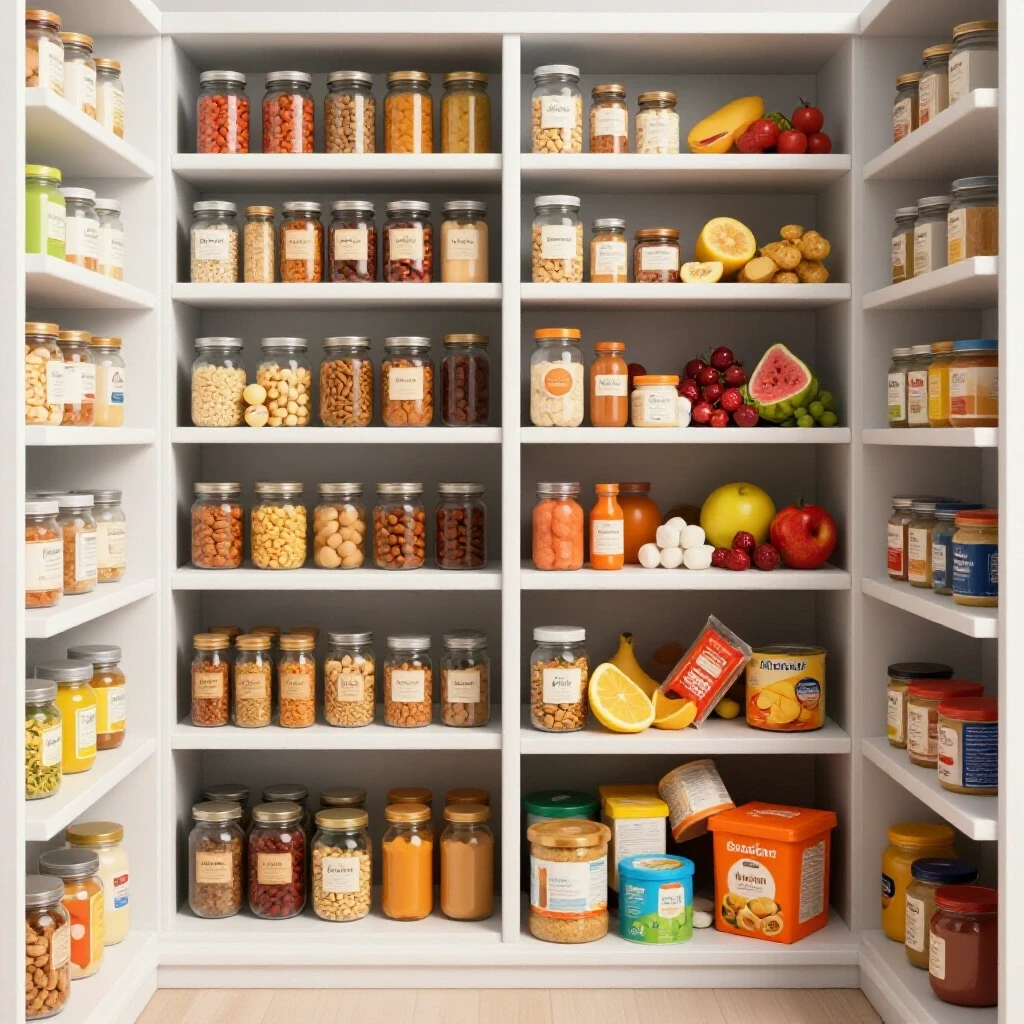
In my own home, I once spent an entire weekend decanting every cereal, pasta, and snack into matching glass jars. It looked like a magazine cover. However, after two weeks, the system collapsed. Why? Because the “refill friction” was too high. When I came home from a busy grocery trip, I didn’t want to spend 30 minutes pouring food into jars. I wanted to put the groceries away and sit down.
We learned that for a family of four, decanting was a high-maintenance system that we couldn’t sustain. We pivoted to large, open wire bins labeled by category (e.g., “Snacks,” “Baking,” “Breakfast”). This allowed us to simply toss the store packaging into the correct bin. The house stayed tidy because the system matched our actual energy levels on a Tuesday night.
Practical Steps for Long-Lasting Order
To build a system that sticks, you must be honest about your family’s habits. If you are not a person who labels every folder, do not build a filing system that requires it. Start with the most basic version of a system and only add complexity if the basic version isn’t working.
- Audit Your Friction: Walk through your house and count how many steps it takes to put away your most common items.
- Broaden Your Categories: Replace specific labels with general ones to make sorting faster.
- Limit Your Volume: Use the physical size of your shelf as a “hard limit” for how much you can own.
- Schedule the Outflow: Set a recurring calendar invite once a month to take donations to a local center.
By focusing on the logistics of how your home actually functions, you can create a space that supports your life instead of draining your energy. Sustainable decluttering isn’t about being perfect; it’s about making it easy to be organized. When you reduce the friction of your daily routines, you regain the mental space to enjoy your home and your family.
FAQ: Common Questions on Sustainable Home Systems
Why does my house get messy again so quickly after I clean it? This usually happens because the storage systems have too much “retrieval friction.” If it is difficult to put an item away, it will be left out. Your system likely requires too many steps or has categories that are too specific for daily life.
How can I get my kids to follow an organization system? The key is to make the system “drop-and-go.” Use open-top baskets at their height. Avoid lids, latches, or complex sorting. If a child can throw a toy into a bin from two feet away, they are much more likely to help tidy up.
What is the “80% rule” in home organization? The 80% rule states that you should never fill a shelf or bin more than 80% of its capacity. This extra 20% of “white space” allows you to move items around and put things away without having to cram them in, which significantly reduces frustration.
Are expensive clear bins worth the investment? Clear bins are helpful because they reduce “visual search time.” When you can see what is inside, you don’t have to rummage. However, they are only worth it if they are easy to access. If you have to move three other bins to get to a clear one, the benefit is lost.
How do I handle “sentimental clutter” that I can’t seem to get rid of? Sentimental items should be moved out of “Active Zones” and into “Deep Storage.” Since you don’t need to access them daily, they can go in high-friction lidded bins in a garage or attic. This keeps your daily living space functional.
What is the best way to manage paper clutter? The best way is to stop it at the door. Set up a “recycling station” near your entryway. Sort your mail immediately and never let “junk” paper touch your kitchen counters. If a paper requires action, put it in a single “Action Folder.”
How often should I declutter to maintain my system? Instead of one big decluttering event, aim for “continuous flow.” Spend 10-15 minutes a day on a “Closing Shift” to reset your zones. Then, do a quick 30-minute audit of one drawer or cabinet every weekend to keep the volume under control.
What should I do if my spouse doesn’t follow the system? Focus on reducing the friction for them. If they always leave their shoes by the door, put a large, attractive basket exactly where the shoes land. A system should adapt to the person, not the other way around.
(This article was written by one of our staff writers, Christopher Bennett. Visit our Meet the Team page to learn more about the author and their expertise.)