How Much Does a Mattress Upgrade Cost? (Budget Breakdown)

It has been a particularly humid summer here, the kind of weather that makes you realize how much your home environment impacts your daily recovery. As the seasons shift, I often find myself reviewing my own household spreadsheets to see where our maintenance dollars are going. For many cost-conscious homeowners, the bedroom is a frequent target for improvement, yet it is often the most under-budgeted area of the house.
When I managed my second full-home renovation, I learned that the smallest line items often caused the biggest headaches. We focus so much on the kitchen and the bath that we forget the assets we use for eight hours every single day. Applying a rigorous financial planning for homeowners approach to your bedroom setup ensures you don’t overspend on luxury features that offer diminishing returns.
Establishing a Financial Framework for Bedroom Improvements
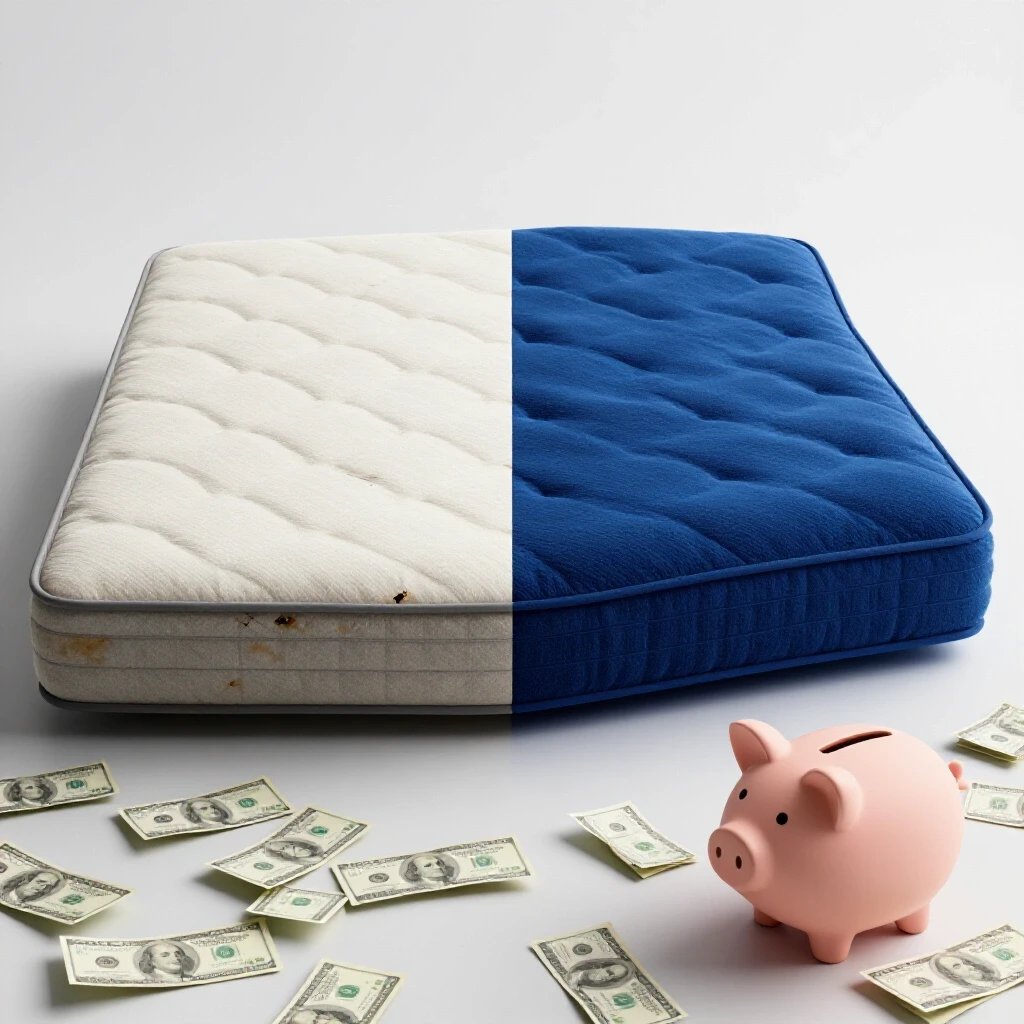
Financial planning for homeowners involves calculating the total cost of ownership for every asset within the property. For bedroom updates, this means amortizing the purchase price over its expected lifespan while accounting for delivery, setup, and the disposal of old materials.
Before you look at a single showroom, you must define your funding boundaries. I recommend a “sinking fund” approach where you set aside a small monthly amount specifically for home goods. This prevents you from dipping into your emergency fund or using high-interest credit when a replacement becomes necessary.
- Determine the Replacement Cycle: Most mid-range sleep surfaces have a functional life of 7 to 10 years.
- Set a Hard Ceiling: Based on my analysis of regional cost data, a mid-tier upgrade for a queen-sized setup should range between $800 and $1,500.
- Calculate Cost-Per-Night: A $1,000 investment over 10 years costs roughly $0.27 per night. This metric helps justify the expense without over-improving.
Analyzing the Line-Item Costs of a New Sleep System
A cost breakdown guide separates the core asset price from peripheral expenses. This includes the surface itself, structural supports, and protective layers needed to maintain the warranty and longevity of the investment. Many homeowners fail because they only budget for the sticker price.
In my personal remodeling ledger, I track “landed costs”—the price of the item once it is sitting in the room and ready for use. This includes taxes, shipping, and any specialized tools needed for assembly. Below is a comparison of what homeowners expect to pay versus the actual financial reality.
Table 1: Projected vs. Actual Budget Line-Item Breakdown
| Expense Category | Projected Budget | Actual Expenditure | Variance % |
|---|---|---|---|
| Core Sleep Surface | $900 | $950 | +5.5% |
| Frame/Foundation | $150 | $210 | +40% |
| Protective Encasement | $40 | $65 | +62.5% |
| Delivery & Setup | $0 (Free) | $50 | N/A |
| Disposal of Old Unit | $0 | $45 | N/A |
| Total | $1,090 | $1,320 | +21.1% |
As shown, the “hidden” costs like disposal and frame compatibility can inflate a budget by over 20%. I always advise my clients to maintain a 15% contingency buffer for these specific items.
Navigating Hidden Fees and Preparation Costs
Hidden fees in home maintenance include delivery surcharges, old item removal, and the cost of upgrading existing frames to meet warranty standards. These often represent a significant portion of the total project expenditure and can derail a tight renovation budget.
Interestingly, many modern warranties are voided if the surface is placed on an improper foundation. I once worked with a client who spent $1,200 on a new setup only to have it sag within two years because they kept their 20-year-old box spring. They ended up spending an additional $300 on a new foundation, a cost that wasn’t in their initial spreadsheet.
- Disposal Fees: Check municipal rules; some cities charge $30–$60 for “bulk item” pickup.
- Frame Compatibility: Verify if your current slats are more than 3 inches apart, as this may require a $50 “bunkie board” or a new frame.
- Protection Plans: While often a high-margin upsell, a basic waterproof protector is a non-negotiable $40–$70 expense to prevent stains that void warranties.
Localized Market Value and ROI for Bedroom Upgrades
Cost vs value home improvement data shows that interior updates often yield higher lifestyle value than resale ROI. Understanding local neighborhood multipliers helps prevent over-improving a space beyond its market ceiling, ensuring your home remains competitive without being “over-built.”
According to Remodeling Magazine’s reports, major bedroom suite additions rarely recoup 100% of their cost. However, maintaining the quality of the primary bedroom is essential for “appraisal readiness.” If a potential buyer sees a worn-out, poorly maintained bedroom environment, they may wonder what else in the home has been neglected.
- Lifestyle Value vs. Resale: Focus on comfort and durability rather than “smart” features that will be obsolete in three years.
- Depreciation Schedules: Unlike a kitchen remodel which might hold value for 15 years, soft goods in a bedroom depreciate to zero value almost immediately upon purchase.
- Market Ceilings: If your home is valued at $300,000, spending $5,000 on a specialized sleep system is a poor financial move. Stick to the 0.5% to 1% rule of the home’s total value for bedroom furniture.
My Personal Sleep Surface Financial Audit
A remodeling expense tracker provides a historical record of spending to refine future estimates. My personal ledger compares a mid-tier surface upgrade against a low-tier option to find the financial “sweet spot” that balances upfront costs with long-term durability.
During my last refresh, I conducted a personal “sleep test” of my finances. I tracked every penny spent over a six-month period related to our bedroom environment. I discovered that we were spending $15 a month on various “fixes”—pillows, toppers, and sprays—to compensate for an aging surface.
By investing $1,100 into a quality mid-range replacement, we eliminated those recurring costs. Building on this, the “payback period” for the new purchase was less than four years. This is a classic example of how a higher upfront cost can actually save money over a decade-long horizon.
- Analyze current recurring costs: Are you buying “band-aid” solutions for your current setup?
- Verify material specs: Look for high-density foams (1.8 lb or higher) or high coil counts (800+ for a queen) to ensure the 10-year lifespan is realistic.
- Audit the warranty: Read the fine print on “indentation depth.” If a warranty only kicks in at 1.5 inches of sag, it may be practically useless.
Why Standard Remodeling Estimates Fail
Standard estimates often fail because they rely on national averages rather than local labor rate indexing. If you are hiring a professional to assemble furniture or haul away old items, your local labor multiplier will drastically change the final bill.
In high-cost-of-living areas, a simple delivery and haul-away service can cost double the national average. I use a regional labor coefficient to adjust my spreadsheets. For example, if the national average for a service is $100, but I live in a city with a 1.25 multiplier, I budget $125.
- Labor-to-Material Ratios: For bedroom setups, labor should ideally be less than 10% of the total cost.
- Sweat-Equity Valuation: If you choose to DIY the setup, value your time at $25/hour to see if “free” delivery is actually a better deal.
- Regional Pricing Shifts: Material costs are currently volatile; always get a quote in writing that is valid for at least 30 days.
Practical Tools for Managing Your Bedroom Budget
To keep your project on track, you need more than just a vague idea of what things cost. You need a structured way to compare options and track every dollar that leaves your bank account.
I recommend using a simple spreadsheet with the following columns: Item, Estimated Cost, Actual Cost, Tax/Shipping, and Warranty Terms. This allows you to see the “all-in” price before you click “buy.”
- Cost-Estimating Indices: Use sites like the Bureau of Labor Statistics (BLS) to track inflation in the “household furnishings” category.
- Bidding Templates: If buying from a local store, use a template to ask for a “bundle price” that includes the surface, protector, and delivery.
- Financing Reserve Guidelines: If you must use financing, never exceed a 6-month “same as cash” window. Interest rates on furniture store cards often exceed 25%, which destroys any value you found in a sale.
Actionable Metrics for the Prudent Planner
When evaluating your options, use these three metrics to ensure you are making a data-backed decision. These are the same frameworks I use when consulting with clients on larger home renovation projects.
- The 10% Contingency Rule: Always add 10% to the final quote for “incidentals” like new sheets or a slightly different bed frame height.
- The Durability Multiplier: If Option A is $800 and lasts 7 years ($114/year) and Option B is $1,100 and lasts 10 years ($110/year), Option B is the better financial choice despite the higher price.
- The Neighborhood Comp Multiplier: Ensure your bedroom quality matches the rest of your home’s finishes to maintain a consistent valuation for future appraisals.
By following these steps, you avoid the common trap of running out of money mid-project. You aren’t just buying a place to sleep; you are managing a household asset with the same discipline you would apply to a kitchen remodel or a roof replacement.
Frequently Asked Questions
How much should I realistically budget for a quality mid-range sleep surface? For a cost-conscious but durable queen-sized setup, a realistic budget is between $900 and $1,300. This range typically covers a high-density foam or hybrid unit, a basic protector, and delivery fees. Prices below $600 often indicate lower-density materials that may fail within 3–5 years, leading to a higher long-term cost.
Does a new bed actually increase the value of my home? Directly, no. Soft goods like mattresses are personal property, not real property. However, from a financial planning perspective, maintaining a high-quality bedroom prevents “lifestyle creep” costs and ensures your home is always in “show-ready” condition. This can indirectly help with a faster sale and better offers when you decide to move.
What is the most common hidden cost people forget? The “foundation mismatch” is the most frequent budget-buster. Many homeowners assume their old box spring or slatted frame will work with a new modern surface. If the slats are too far apart, the new unit will sag, voiding the warranty. Budgeting an extra $100–$200 for a compatible foundation is a smart protective move.
Is it better to buy online or in a local showroom? From a cost-analysis standpoint, online “bed-in-a-box” companies often have lower overhead, which translates to a better price-to-material ratio. However, local showrooms may offer better “haul-away” services for your old unit. Always calculate the “landed cost”—price + shipping + disposal—to see which is actually cheaper.
How do I know if I am over-improving my bedroom? Follow the 1% rule. The total cost of your bedroom furnishings should generally not exceed 1% of your home’s total market value. If your home is worth $400,000, spending more than $4,000 on the entire bedroom setup (bed, frame, nightstands) may be over-improving for your specific market.
Should I pay for an extended warranty or protection plan? In most cases, no. Financial planners generally view extended warranties as low-value. Instead, spend $50 on a high-quality waterproof protector. This prevents the most common cause of warranty denial—stains—without the high markup of a third-party protection plan.
What is the “sinking fund” method for home maintenance? A sinking fund is a strategic way to save for a known future expense. If you know you need a $1,200 replacement in five years, you set aside $20 a month in a dedicated high-yield savings account. This ensures the money is there when you need it, avoiding the need for high-interest debt.
How does regional labor impact my bedroom upgrade? If you require professional assembly or specialized delivery (like “white glove” service), your costs will vary by 20–30% based on your location. Use a regional labor multiplier (e.g., 1.1 for Chicago, 1.3 for NYC) against national averages to create a more accurate local budget.
What material specs should I look for to ensure longevity? To get a full 10-year lifespan, look for foam density of at least 1.8 lbs per cubic foot or a pocketed coil count of at least 800 in a queen size. Lower specs usually lead to premature softening, which means you’ll be back in the market in half the time, doubling your long-term expense.
Can I deduct bedroom improvements from my taxes? Generally, no. These are considered personal expenses or home maintenance, not capital improvements. However, if you have a dedicated home office in the bedroom (though not recommended for sleep hygiene), a portion of the room’s maintenance might be relevant, but the sleep surface itself is never deductible. Always consult a tax professional.
(This article was written by one of our staff writers, Steven Fletcher. Visit our Meet the Team page to learn more about the author and their expertise.)