Best Mudroom Flooring Options Compared (My Entryway Test Results)

When my two children run through the back door after a rainy afternoon, they don’t think about the technical specifications of the surface beneath their feet. They are focused on getting to the kitchen for a snack, leaving a trail of wet soil, grit, and standing water in their wake. As a supply chain analyst who has spent over a decade evaluating home materials, I look at those footprints and see a high-stakes stress test. The transition zone between the outdoors and the rest of the home is the most abused area of any property. Over 13 years, I have sourced and tested various materials across several homes, seeking the balance between a high-end look and the reality of a busy family life. Choosing the right surface for these high-traffic areas requires more than just picking a pretty color; it demands a deep dive into material science to ensure your investment doesn’t degrade within the first five years.
Understanding Technical Standards for High-Traffic Entry Surfaces
Technical standards are the measurable benchmarks used by engineers and manufacturers to define how a material will perform under specific stresses. These ratings, often provided by organizations like ASTM International, tell you how well a floor resists water, scratches, and heavy impacts over time.
In my professional experience, homeowners often overlook the “why” behind a material’s price tag. To make an informed choice, you must first understand the physics of the materials you are comparing. For example, the National Association of Home Builders (NAHB) provides data on the expected lifespan of materials, but those numbers assume proper selection for the environment. If you place a material with high porosity in a zone where kids drop wet umbrellas, the lifespan drops significantly regardless of the upfront cost.
Porosity and Water Absorption Rates
Porosity refers to the volume of open spaces within a material, while the water absorption rate measures how much moisture a material soaks up when exposed. In entry zones, a low absorption rate is critical to prevent staining and structural damage from trapped moisture.
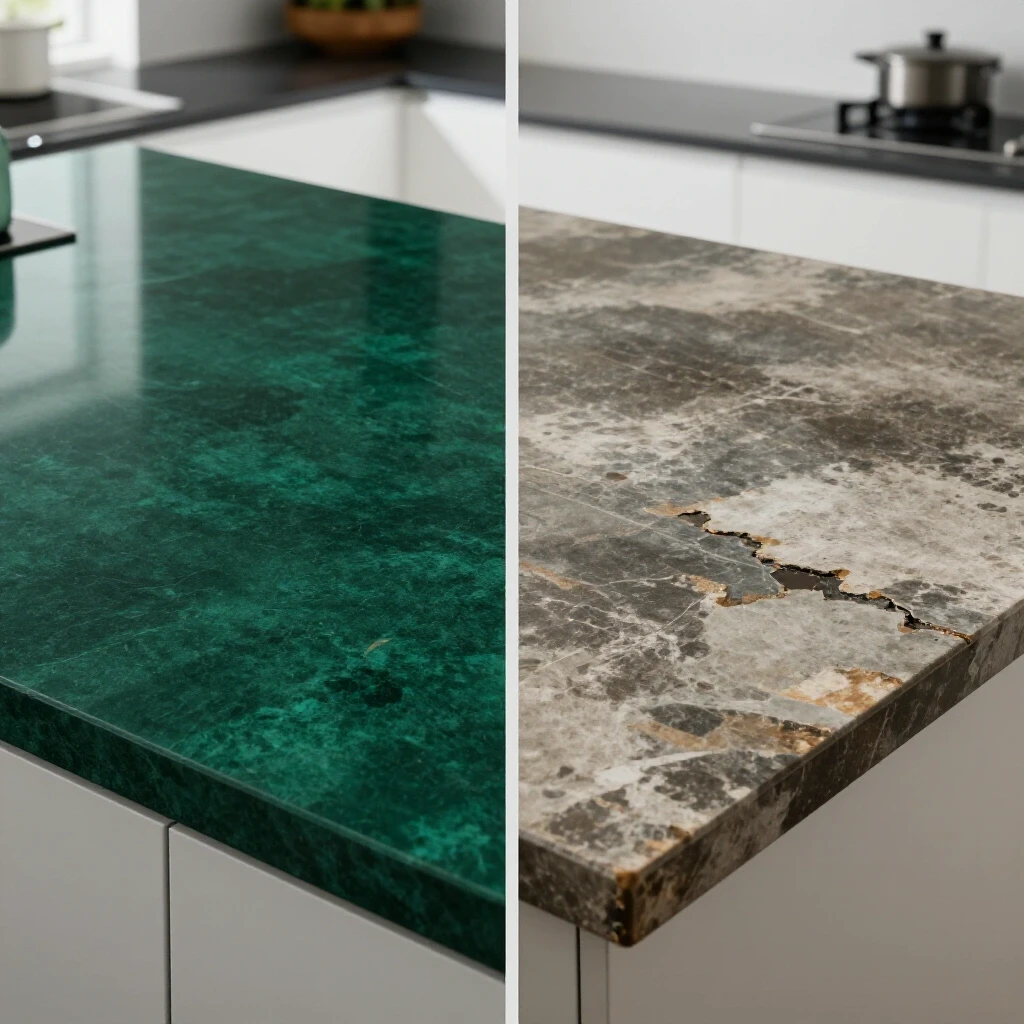
According to ASTM C373, materials are classified by their absorption levels. For a transition zone that sees frequent rain or snow, you should look for “impervious” materials, which have an absorption rate of 0.5% or less. In my second home renovation, I mistakenly chose a beautiful natural slate with a higher absorption rate. Within two winters, the salt from our boots had penetrated the stone, causing it to flake and pit—a process known as spalling.
Hardness and Wear Resistance
Hardness measures a material’s resistance to permanent indentation, while wear resistance tracks how well a surface stands up to friction and abrasion. These metrics help you predict if your floor will show “traffic paths” where the finish has worn away.
We use two primary scales for this: the Mohs scale for minerals and the Janka scale for wood. For synthetic materials like luxury vinyl, we look at the wear layer thickness, measured in mils (one-thousandth of an inch). I generally recommend a minimum of 20 mils for high-traffic home entries. If you are looking at tile, the PEI (Porcelain Enamel Institute) rating is your guide. A PEI rating of 4 or 5 is necessary for areas where grit and dirt are tracked in daily.
Side-by-Side Performance Comparison of Entryway Materials
A side-by-side comparison allows you to evaluate different material categories against the same rigorous criteria. By looking at technical specs like slip resistance and maintenance needs, you can see where a higher price actually buys more durability.
When I evaluate materials for my own properties, I create a matrix. I have found that while some materials like high-end porcelain have a higher upfront cost, their maintenance profile is much lower than natural stone or wood. Below is a breakdown of how common materials perform in a high-moisture, high-dirt environment.
| Material Type | ASTM Absorption Rate | Hardness Rating | Expected Lifespan | Maintenance Level |
|---|---|---|---|---|
| Porcelain Tile | < 0.5% (Impervious) | 7-9 (Mohs) | 50+ Years | Very Low |
| Luxury Vinyl Plank | 0% (Waterproof) | 20+ mil wear layer | 15-25 Years | Low |
| Natural Stone (Slate) | 0.5% – 5.0% | 3-5 (Mohs) | 40-100 Years | High (Requires Sealing) |
| Engineered Hardwood | Variable | 1200-1400 (Janka) | 20-30 Years | Moderate |
| Polished Concrete | < 5% (Sealed) | 5-7 (Mohs) | 50+ Years | Low to Moderate |
The Trade-Off Between Porcelain and Natural Stone
Porcelain is a ceramic material fired at extremely high temperatures, making it denser and less porous than standard ceramic or natural stone. It is engineered to mimic the look of stone while providing superior resistance to moisture and scratching.
Interestingly, many people choose natural stone for its “prestige” but find the upkeep exhausting. In my current home, I opted for a high-definition porcelain that looks exactly like Belgian Bluestone. It has a COF (Coefficient of Friction) of 0.60, which is the industry standard for slip resistance in wet areas. Unlike the real stone it mimics, it never needs to be sealed and can be cleaned with a simple pH-neutral soap.
Evaluating Luxury Vinyl Plank (LVP) for Moisture Zones
Luxury Vinyl Plank is a multi-layered synthetic flooring made of PVC and various resins, designed to be completely waterproof. It is a popular choice for homeowners who want the warmth of wood in areas where real wood would warp or rot.
When sourcing LVP, the core construction is vital. I look for Stone Plastic Composite (SPC) cores because they offer better dimensional stability. This means the floor won’t expand or contract as much when the temperature in your entryway shifts. However, keep in mind that LVP is softer than tile. While it handles water perfectly, a sharp pebble stuck in a boot can gouge the wear layer if it isn’t thick enough.
My Performance Testing: Dirt, Grit, and Moisture
Performance testing involves subjecting material samples to real-world contaminants to see how they react before you commit to a full installation. This process helps identify which surfaces are easy to clean and which ones trap dirt in their texture.
Years ago, I started a tradition of “sample testing” every material I consider. I take four or five samples and place them in the path of my kids and dog. I leave them there for a week, then try to clean them using standard household tools. This reveals the “cleanability” of a surface, which is a metric you won’t find on a spec sheet but will feel every Saturday morning when you mop.
The Impact of Surface Texture on Cleaning
Surface texture, or “relief,” refers to the physical peaks and valleys on the top of the flooring material. While some texture is good for slip resistance, too much texture creates microscopic traps for fine dirt and grime.
During one test, I evaluated a “hand-scraped” engineered wood versus a smooth-surface tile. The wood looked great, but the “scraped” grooves held onto the fine silt my children brought in from the garden. It took three passes with a vacuum and a damp mop to get it clean. In contrast, a matte-finish porcelain with a slight “grip” (a COF of 0.65) released the dirt instantly. If you want low maintenance, avoid deep textures.
Chemical Resistance and Stain Testing
Chemical resistance is the ability of a surface to withstand exposure to cleaning agents, salts, and acidic spills without dulling or etching. This is particularly important in entryways where de-icing salts are common during winter months.
I recommend a simple “overnight test” for any material you are considering: 1. Place a drop of red wine, a smear of mud, and a pinch of road salt on the sample. 2. Let it sit for 12 hours. 3. Wipe it away with a damp cloth. 4. Check for “etching”—a dull spot where the finish has been chemically altered.
Natural stones like marble or limestone often fail this test because they are calcium-based and react poorly to acids and salts. Porcelain and high-quality vinyl usually pass with no visible change.
Installation Complexity and Structural Requirements
Installation requirements cover the necessary subfloor preparation and the technical skill needed to lay the material correctly. These factors can double the total cost of your project, even if the material itself is relatively affordable.
One of the biggest mistakes I see homeowners make is ignoring the “deflection” of their subfloor. Deflection is the amount of “bounce” or flex in your floor joists. Materials like large-format tile are very brittle; if your floor flexes too much, the tiles or the grout will crack.
- Subfloor Prep: Tile requires a rigid substrate like cement backer board or an uncoupling membrane.
- Expansion Gaps: LVP and wood require specific gaps at the edges to allow for natural movement.
- Grout Selection: For entryways, I always specify high-performance epoxy or urethane grout. Standard cement grout is porous and will turn black from dirty mop water within a year.
Long-Term Maintenance and Life-Cycle Costing
Life-cycle costing is an economic evaluation that considers the total cost of ownership over a specific period, including the initial price, installation, and recurring maintenance. It helps determine if a cheaper material is actually more expensive in the long run.
If you spend $10 per square foot on a floor that lasts 50 years with zero maintenance, your cost is $0.20 per year. If you spend $5 per square foot on a floor that needs to be replaced in 10 years or requires $200 worth of professional sealing every two years, the “cheap” floor becomes a financial burden.
15-Year Maintenance Outlay Comparison
Let’s look at the projected costs for a 100-square-foot entry zone over 15 years.
-
Porcelain Tile:
- Initial Cost: $1,200
- Maintenance (Soap/Water): $150
- Total: $1,350
-
Natural Stone (Slate):
- Initial Cost: $1,500
- Maintenance (Professional Sealing every 3 years): $1,000
- Total: $2,500
-
Luxury Vinyl Plank (Mid-range):
- Initial Cost: $800
- Maintenance (Specialty Cleaners): $200
- Replacement (If worn out at year 12): $900
- Total: $1,900
Warranty Limits and Sourcing Risks
When evaluating a purchase, I always read the “fine print” of the warranty. Many “lifetime” warranties for flooring are pro-rated, meaning they lose value every year. Others are voided if you don’t use specific underlayments or cleaning products. In my supply chain work, I also look at the origin of the material. Domestic products often have more reliable quality control and easier warranty claims than “no-name” imports from overseas.
Practical Buying Worksheet for Entryway Surfaces
To help you make a confident decision, use this scoring matrix. Rate each material from 1 to 5 (5 being the best) based on your specific household needs.
- Moisture Exposure: How often will this floor be wet? (1 = Rarely, 5 = Daily)
- Grit and Abrasion: Do you live in a sandy area or use road salt? (1 = Soft shoes only, 5 = Heavy boots/grit)
- Cleaning Tolerance: How much time do you want to spend scrubbing? (1 = I love cleaning, 5 = I want to mop and go)
- Subfloor Condition: Is your floor perfectly stiff, or is there some bounce? (1 = Bouncy, 5 = Rock solid)
- Aesthetic Longevity: Will you still like this look in 10 years? (1 = Trendy, 5 = Timeless)
Scoring Guide: * 20-25 Points: Porcelain tile is likely your best technical match. * 15-19 Points: High-end LVP or sealed concrete will provide the balance you need. * Below 15 Points: You may be able to use engineered wood or natural stone, but be prepared for higher maintenance costs.
Final Recommendations for Your Home
Selecting the right surface for your home’s busiest transition point is a technical challenge disguised as a design choice. After 13 years of testing and sourcing, I have learned that the most expensive material is the one you have to replace twice. For most families, a high-quality porcelain tile with a PEI rating of 4 and an epoxy grout is the “gold standard” for durability and ease of care.
If you prefer the comfort and lower cost of LVP, ensure you are buying a product with a rigid SPC core and at least a 20-mil wear layer. Avoid natural stones unless you are committed to a regular sealing schedule. By focusing on the ASTM ratings and the long-term maintenance costs rather than just the showroom appearance, you can choose a floor that handles everything your family—and the weather—throws at it.
Frequently Asked Questions
What is the best slip-resistance rating for a wet entryway?
Look for a Dynamic Coefficient of Friction (DCOF) rating of 0.42 or higher. For areas that are frequently wet, a rating of 0.60 is even better. This ensures the floor provides enough “grip” to prevent falls when someone walks in with wet shoes.
Can I install luxury vinyl plank over my existing tile?
Technically, yes, if the tile is level and the grout lines are filled. However, from a supply chain and longevity perspective, I don’t recommend it. Any imperfections in the old floor can “telegraph” through the vinyl over time, leading to premature wear or clicking sounds when you walk.
Does the thickness of a tile indicate its quality?
Not necessarily. While a thicker tile might be more resistant to impact, the density and firing temperature (which determine the absorption rate) are more important. A thin, high-density porcelain is often stronger and more durable than a thick, porous ceramic tile.
How do I know if my grout is waterproof?
Standard cement-based grout is never truly waterproof; it is porous and will absorb water and stains. To get a waterproof seal, you must use epoxy or urethane grout. These materials are non-porous and do not require sealing, making them ideal for high-traffic zones.
Is engineered hardwood a good choice for a mud-heavy area?
Engineered wood is more stable than solid wood, but it is still an organic material. If water sits on the surface for too long, it can seep into the seams and cause the layers to delaminate. If you choose wood, use a high-quality rug in the immediate entry to catch the worst of the moisture.
What is the most common mistake when buying “waterproof” flooring?
The biggest mistake is assuming “waterproof” means “flood-proof” or “stain-proof.” While the material itself may not be damaged by water, moisture can still get underneath the floor and cause mold or damage to the subfloor. Proper installation and perimeter sealing are still required.
How often should natural stone be sealed in an entryway?
In a high-traffic area, natural stone should typically be sealed every 6 to 12 months. You can test this by dropping a small amount of water on the stone; if it beads up, the sealer is working. If it soaks in and darkens the stone, it’s time to reseal.
What does “PEI Rating” actually mean for my floor?
The PEI (Porcelain Enamel Institute) rating measures the abrasion resistance of the glaze on a tile. A rating of 1 is for walls only, while a 5 is for heavy commercial traffic. For a residential entry, a PEI 4 is the sweet spot for resisting scratches from tracked-in dirt.
Are “click-lock” floors less durable than glue-down floors?
In terms of surface wear, they are often similar. However, in an entryway, a glue-down floor can be more durable because there is no air gap between the flooring and the subfloor, reducing the chance of the locking mechanism breaking under heavy impact or shifting.
Why does my new floor look “cloudy” after cleaning?
This is often due to “grout haze” left over from installation or the use of too much cleaning product. For entryways, use a pH-neutral cleaner and avoid “mop and shine” products, which build up layers of wax that trap dirt and make the floor look dull over time.
(This article was written by one of our staff writers, Andrew Morrison. Visit our Meet the Team page to learn more about the author and their expertise.)