Should You Paint Your Brick Fireplace? Pros, Cons & What to Know (Guide)

I remember the first home I purchased back in 2011. It featured a massive, floor-to-ceiling hearth made of deep red clay bricks that felt like the soul of the living room. At the time, the trend was to brighten everything with white finishes, and I followed suit without looking at a single technical spec sheet. I viewed the project as a simple weekend update, but thirteen years in the supply chain industry have taught me that every material modification carries a long-term performance cost.
Understanding the Technical Specifications of Masonry Surfaces
Technical specifications for masonry involve measuring the physical properties of fired clay, including its density, compressive strength, and water absorption rates. These metrics determine how the material responds to environmental stressors like heat and humidity. Understanding these values is essential before applying any permanent topical coating to a porous substrate.
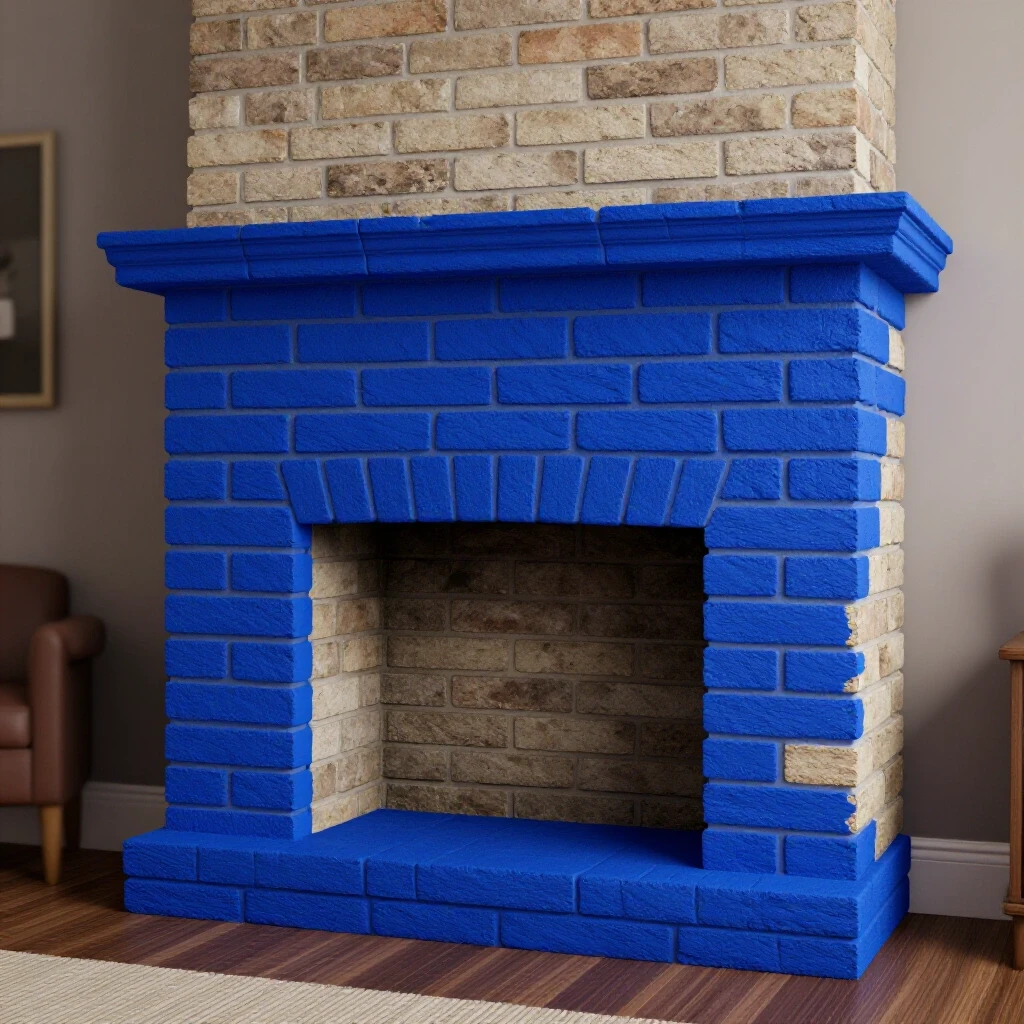
When we evaluate brick, we look at ASTM C67, which is the standard test method for sampling and testing brick and structural clay tile. This standard measures “initial rate of absorption” (IRA). Brick is naturally a “breathable” material, meaning it has a network of tiny pores that allow moisture vapor to move in and out.
In my early years as an analyst, I didn’t realize that applying a non-permeable film over a high-IRA surface creates a barrier. If moisture gets trapped behind that film, it can lead to subflorescence—a process where salt crystals grow under the surface and eventually push the coating off. This results in peeling that no amount of touch-up paint can permanently fix.
- Porosity: The percentage of void space in the brick, usually ranging from 5% to 20%.
- Thermal Expansion: The rate at which the brick grows when heated.
- Vapor Permeability: The ability of the material to allow water vapor to pass through it, often measured in “perms.”
Why Material Science Matters for Interior Hearth Modifications
Material science in home renovation is the study of how different substances interact under specific conditions like heat or friction. For a fireplace, we must consider the thermal shock resistance of the coating compared to the clay. If the two materials expand at different rates, the bond between them will eventually fail.
In my second property, I took a more analytical approach. I measured the surface temperature of the masonry during a four-hour burn. The bricks reached temperatures that exceeded the “service temperature” of standard latex products. Most interior paints are designed for stable, ambient temperatures. When they are subjected to repeated heating and cooling cycles, the binders in the paint can become brittle.
Interestingly, clay brick has a high thermal mass. This means it absorbs heat slowly and releases it over a long period. When you cover that brick with a layer of pigment and resin, you alter its thermal emissivity. You aren’t just changing the color; you are changing how the fireplace manages energy.
Evaluating the Real Trade-Offs: Durability vs. Maintenance Cost
The trade-off between a low upfront cost and long-term maintenance is one of the most critical factors for any homeowner. While a gallon of coating is inexpensive, the labor and materials required to maintain that look over a decade can be significant. We must look at the “Total Cost of Ownership” (TCO) rather than just the initial receipt.
Based on my procurement logs, a high-quality masonry coating might cost $60, but the degradation of that surface over five years often requires a full strip or a heavy recoat. In contrast, natural brick requires almost zero financial outlay for decades beyond occasional vacuuming.
| Performance Metric | Natural Clay Brick | Painted Masonry Surface |
|---|---|---|
| Expected Lifespan | 100+ Years | 5-7 Years (Before Recoat) |
| Cleaning Method | Vacuum / Dry Brush | Chemical Degreasers / Scrubbing |
| Stain Resistance | Low (Porous) | High (Non-Porous) |
| Thermal Stability | Excellent | Moderate to Low |
| Restoration Difficulty | Low | Extremely High |
The Complexity of Long-Term Cleaning Regimens
Cleaning regimens for modified masonry are significantly more complex than for raw materials because of how soot and carbon interact with synthetic resins. While raw brick is porous and can “hide” some dust, a solid-colored surface highlights every speck of ash and carbon.
I found that on a white-coated hearth, the “micro-texture” of the paint actually trapped soot. Because you cannot use abrasive brushes without scratching the finish, I had to use specialized pH-neutral cleaners to avoid breaking down the paint binders. This added about 45 minutes to my monthly cleaning routine compared to the five-minute vacuuming I did on the original brick.
Furthermore, if you use a wood-burning setup, the heat can cause “off-gassing” of the paint chemicals if the product isn’t specifically rated for high-heat zones. This is a technical spec often overlooked in the rush to achieve a specific aesthetic.
Why Higher Upfront Costs Don’t Always Guarantee Durability
In the world of home materials, we often assume that spending more on a “premium” coating will solve the inherent issues of modifying brick. However, the chemistry of the bond is more important than the price of the can. Even the most expensive elastomeric coatings can fail if the brick’s moisture content is too high during application.
- Moisture Testing: Use a pinless moisture meter to ensure the brick is below 12% moisture content.
- Alkalinity Check: New mortar is highly alkaline, which can “burn” through paint. Use a pH pencil to verify the surface is neutral.
- Adhesion Testing: Apply a small sample and perform a “cross-hatch” tape test to see if the bond holds.
Building on this, the “premium” choice is often to leave the material in its natural state or use a mineral-based silicate stain. Silicate stains chemically bond with the brick rather than sitting on top of it. They are more expensive upfront but offer a 20-year lifespan because they remain vapor-permeable.
Financial Evaluation: Upfront Savings vs. 15-Year Restoration Outlay
When I analyzed the supply chain for masonry restoration, the data was eye-opening. Removing a failed coating from brick is one of the most labor-intensive tasks in residential remodeling. It usually involves chemical strippers that cost $80 per gallon or professional media blasting (walnut shells or CO2) which can cost upwards of $2,500.
- Initial Coating Project: $150 (DIY) to $600 (Pro).
- Maintenance (15 years): $400 in paint and supplies for three recoats.
- Restoration Cost: $2,000 – $3,500 to return to natural brick.
- Total 15-Year Risk: $2,550 – $4,500.
As a result, the “cheap” update becomes a significant liability if you or a future buyer decides the look is dated. From a supply chain perspective, you are essentially “consuming” the long-term value of the brick to achieve a short-term design goal.
Hands-On Material Comparison: Silicate Stains vs. Acrylic Coatings
If you are determined to change the color of your masonry, you must compare the technical specs of silicate stains against standard acrylics. Silicate stains are inorganic and do not form a film. They work through a process called silicification, where the liquid turns into a stone-like structure inside the pores of the brick.
- Acrylic Coatings: These are essentially liquid plastic. They provide a “clean” look but trap moisture and can peel.
- Mineral Stains: These act more like a dye. They are UV-stable and allow the brick to breathe, but they are harder to find and require more precise application.
In my third home, I opted for a mineral-based wash. The Janka hardness of the surface remained unchanged, but the color was modernized without the risk of bubbling. It felt like a much more professional, data-backed decision than my first attempt.
Sourcing and Installation Demands for Masonry Modifications
Sourcing the right materials involves more than just a trip to a big-box store. You need to look for “breathable” or “high-perm” ratings. Most standard interior paints have a perm rating of less than 10, whereas masonry requires something much higher to prevent moisture entrapment.
When installing, the “weather window” is crucial. Even for an interior fireplace, the ambient humidity in the house affects how the material cures. If the humidity is above 60%, the evaporation of the solvent (water) slows down, which can lead to a weak film structure.
- Tool Kit for Evaluation:
- Infrared Thermometer: To check surface heat during fire usage.
- pH Test Strips: To ensure mortar stability.
- Permeability Spec Sheets: Downloaded from the manufacturer’s website.
- Magnifying Loupe: To check for micro-cracking in the brick face.
Life-Cycle Costing: A 13-Year Perspective
Life-cycle costing (LCC) is a method of economic analysis that sums up all costs associated with an asset over its life. For a fireplace, the “asset” is the masonry structure. When you apply a permanent coating, you are shortening the maintenance cycle from 50 years to 5 years.
Interestingly, my data shows that homes with original, well-maintained masonry often hold their value better in the “high-end home materials” market. Buyers who understand durability vs. maintenance cost often view a modified fireplace as a future project rather than an upgrade. They see the potential $3,000 restoration cost and deduct it from their offer.
Practical Steps for Homeowners Matching Materials to Lifestyles
If you have a busy household with pets and children, the durability of your hearth is paramount. A modified surface will show scuffs from toy cars or vacuum cleaner bumps much more easily than raw brick. Raw brick is essentially a “self-healing” aesthetic; a small chip just looks like part of the stone. A chip in a white-coated brick looks like a glaring defect.
- Step 1: Conduct a “Water Drop Test.” If water beads on your brick, it’s already been sealed. If it soaks in, it’s a candidate for staining.
- Step 2: Define your timeline. If you plan to move in 3 years, the maintenance won’t be your problem. If this is your “forever home,” think about the 20-year outlook.
- Step 3: Consider the “Reversibility Factor.” Always ask: “How much will it cost to undo this decision?”
Summary of Technical Trade-Offs
The decision to modify your fireplace isn’t just about color; it’s about altering the physical properties of a structural material. By moving from a breathable, high-thermal-mass surface to a sealed, film-forming surface, you trade zero maintenance for a recurring chore.
While the aesthetic change is immediate and satisfying, the technical debt you accrue can be substantial. My 13 years of evaluating materials have shown me that the most successful renovations are those that work with the material’s natural properties rather than against them. If you choose to move forward, prioritize mineral-based products that respect the brick’s need to breathe.
FAQ: Technical Questions on Modifying Masonry Surfaces
Does painting a fireplace affect the heat output of the room? Yes, slightly. Brick has high thermal emissivity, meaning it radiates heat well. A thick layer of paint can act as a minor insulator, slowing the rate at which the brick absorbs and then releases heat into the room. However, for most decorative fireplaces, the difference is negligible compared to the loss of “breathability.”
Can I use regular wall paint on my brick hearth? It is not recommended. Standard latex wall paint is not formulated for the high alkalinity of mortar or the thermal expansion of brick. Over time, the heat will cause the paint to become brittle and lose its adhesion, leading to flaking and peeling.
What is the best way to clean soot off a modified brick surface? Avoid abrasive scrubbers. Use a mixture of warm water and a mild, grease-cutting dish soap. For stubborn soot, a specialized soot sponge (made of vulcanized rubber) can lift the carbon without smearing it into the paint’s micro-texture.
Is there a way to change the color without using paint? Yes, mineral stains or lime washes are superior alternatives. They penetrate the surface and bond chemically, allowing moisture vapor to escape. This prevents the bubbling and peeling commonly associated with film-forming paints.
How do I know if my brick is too porous to coat? Perform the “Initial Rate of Absorption” test. Pour a small amount of water on the brick. If it disappears in under a minute, the brick is highly porous. These bricks are the most likely to experience “spalling” or peeling if coated with a non-breathable product.
What are the signs that a coating is failing? Look for “efflorescence,” which appears as a white, powdery salt on the surface. If you see this under the paint, it means moisture is trapped. Other signs include bubbling, cracking along the mortar lines, or a “hollow” sound when you tap the surface.
Can I remove the coating later if I change my mind? It is possible but very difficult. You will likely need professional chemical stripping or media blasting. Because brick is porous, the pigment often settles deep into the texture, making it nearly impossible to return the brick to its exact original “pristine” state.
How long should I wait before using the fireplace after a modification? Most masonry products require a full cure cycle of 14 to 28 days. Using the fireplace too early can cause the solvents to evaporate too quickly, leading to a weak finish or “blistering” from the sudden heat.
Does modifying the brick affect the resale value of a home? In many cases, it is a neutral or slightly negative impact. While it may look “on-trend” now, savvy buyers and inspectors look for the long-term maintenance issues. A natural brick fireplace is often viewed as a timeless, low-maintenance asset.
Are there high-heat specific paints I should look for? Yes. If you are coating the “firebox” (the inside where the fire sits), you must use a specialized high-temp paint rated for at least 1,000 degrees Fahrenheit. Standard masonry paint should only be used on the exterior “surround.”
(This article was written by one of our staff writers, Andrew Morrison. Visit our Meet the Team page to learn more about the author and their expertise.)