Pegboard vs Cabinets for Workshop Storage: Which Is Better? (Guide)

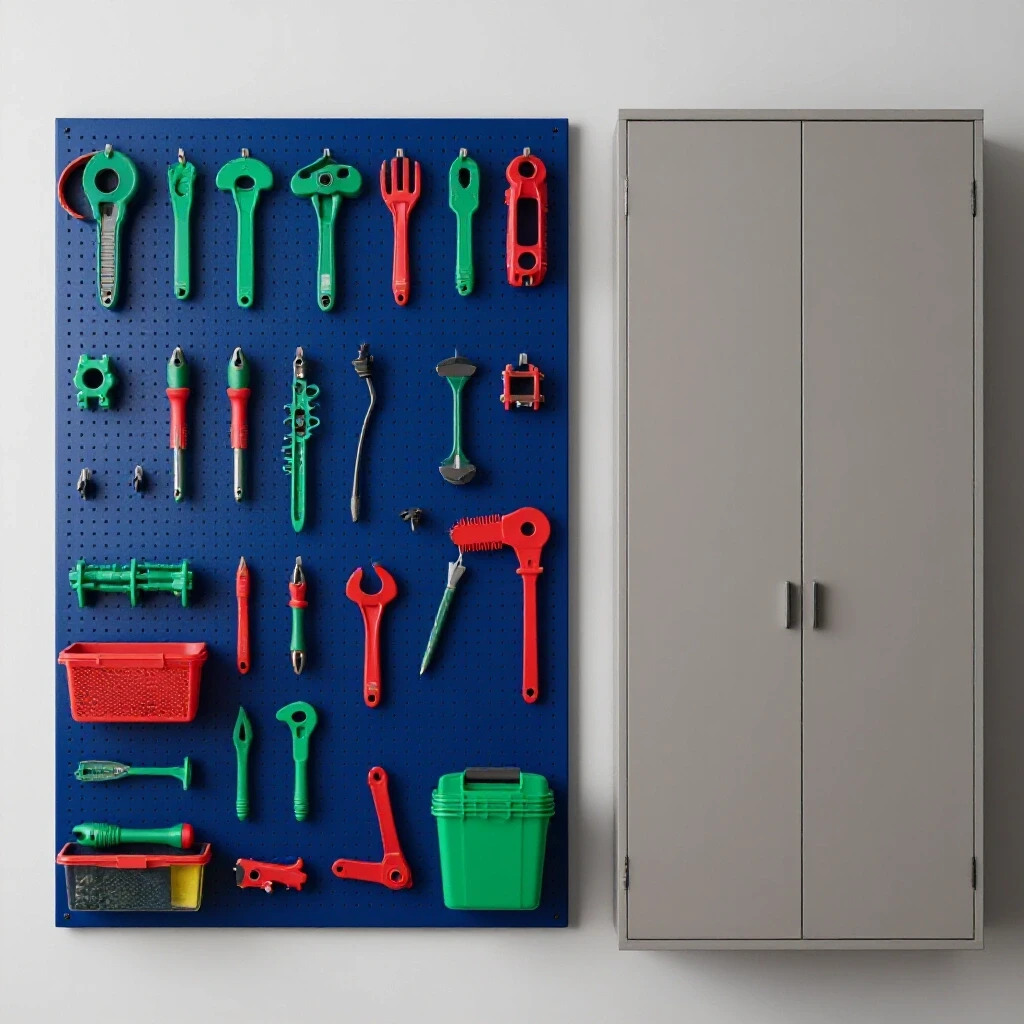
Focusing on cost-effectiveness is often the first step when setting up a functional home workspace. After 13 years of analyzing supply chains and material performance, I have found that the most expensive option rarely guarantees the best workflow. When you are deciding between open, wall-mounted visibility and enclosed, dust-protected containment, the choice hinges on technical specifications and how you interact with your tools.
In my own experience managing property renovations, I have seen how environmental factors like humidity and airborne particulates can degrade materials over time. I once installed a high-end set of wood enclosures in a garage, only to find that the porosity of the material trapped moisture, leading to warping within three years. Conversely, I have used perforated metal panels that offered immediate access but left precision instruments exposed to a layer of fine sawdust. Understanding the material science behind these storage systems helps you move past the marketing and into evidence-based decision-making.
Understanding Technical Standards for Wall-Mounted Systems and Enclosed Storage
Technical standards involve the measurable physical properties of a material, such as its tensile strength, load-bearing capacity, and resistance to environmental stressors. These metrics determine how much weight a storage unit can hold before the material deforms or the fasteners fail under tension.
When evaluating your workshop layout, you must consider the American Society for Testing and Materials (ASTM) standards. For instance, ASTM D1761 covers the testing of mechanical fasteners in wood-based materials. If you choose an enclosed system made of medium-density fiberboard (MDF), the screw-holding capacity is significantly lower than that of solid plywood or metal. In my comparative evaluations, I look for materials that balance weight with structural integrity.
- Tensile Strength: This is the maximum load a material can support without fracturing when being stretched. Metal wall panels typically offer higher tensile strength than plastic or wood-based boards.
- Porosity: This refers to the “void” spaces in a material. High porosity in wood enclosures can lead to the absorption of oils and humidity, whereas non-porous metal or coated surfaces repel these elements.
- Load-Bearing Capacity: This is the total weight a system can safely hold. It is influenced by both the material of the storage unit and the substrate of the wall it is attached to.
| Material Feature | Open Perforated Panels | Enclosed Cabinet Units |
|---|---|---|
| Primary Material | Steel, Aluminum, or Hardboard | Plywood, MDF, or Steel |
| Surface Porosity | Low (if metal) | Variable (depends on finish) |
| Standard Thickness | 0.8 mm to 6.35 mm | 12 mm to 19 mm |
| Accessibility Rating | High (Visual Inventory) | Low (Requires Opening) |
| Dust Protection | None | High (Sealed Environment) |
Accessibility and Spatial Efficiency: The Speed of Open Storage
Accessibility speed measures the time required to locate, retrieve, and return a tool to its designated spot during a task. Spatial efficiency refers to how well a storage system utilizes vertical wall space without encroaching on the floor area or creating physical barriers.
In my workshop tests, I have found that open systems using hooks and pegs significantly reduce “search time.” When a tool is mounted on a wall, your brain processes its location instantly. Interestingly, the National Association of Home Builders (NAHB) often highlights the importance of ergonomics in workspace design. An open layout allows you to maintain a “line of sight,” which is a psychological benefit that reduces frustration during complex builds.
However, spatial efficiency is not just about hanging things up. It is about the depth of the storage. Perforated panels usually sit only 1 to 2 centimeters off the wall. This keeps the workspace open and prevents the “closed-in” feeling that deep enclosures can create in smaller rooms.
- Visual Inventory: You can see exactly what you have at a glance, preventing duplicate purchases of tools you already own.
- Vertical Optimization: These systems turn dead wall space into active storage without requiring a large footprint.
- Flexibility: You can move hooks and accessories in seconds as your tool collection grows or changes.
Environmental Protection: Managing Dust and Porosity in Enclosed Units
Environmental protection in a workshop context refers to the ability of a storage system to shield contents from external contaminants like sawdust, moisture, and chemical vapors. Porosity is the key technical metric here, as it dictates how much a material “breathes” or absorbs.
If you work with precision electronics or sensitive wood-turning tools, dust is your primary enemy. Enclosed units provide a physical barrier that open panels cannot match. During my decade of material testing, I noticed that tools stored in high-quality cabinets required 70% less cleaning than those left on open walls. This is a significant maintenance trade-off.
The material of the enclosure matters deeply. For example, a cabinet made of melamine-coated particle board has a non-porous surface that is easy to wipe down. However, if the edges are not sealed, the core can swell when exposed to spills. Solid steel enclosures offer the best protection against both dust and moisture, though they lack the aesthetic warmth of wood.
- Dust Mitigation: Sealed doors prevent fine particulates from settling on lubricated tool parts.
- Chemical Resistance: Enclosed storage is better for housing solvents or finishes that might off-gas or leak.
- Tool Longevity: Reducing exposure to ambient humidity helps prevent oxidation (rust) on carbon steel tools.
Material Science of Storage: Tensile Strength and Load-Bearing Ratings
Material science is the study of how the structure of a material at the atomic or molecular scale relates to its macro-scale properties. In storage, we focus on how materials handle stress, weight, and impact over a long life cycle.
When you hang a heavy hammer on a peg, you are applying a cantilevered load to a small point. A standard hardboard panel (compressed wood fibers) has a lower shear strength than a 20-gauge steel panel. Over time, the holes in hardboard can “egg out” or elongate, causing hooks to fall out. Building on this, metal systems provide a much higher safety margin for heavy items like sledgehammers or power drills.
For enclosed units, the focus shifts to the Janka hardness of the wood or the gauge of the steel. Janka hardness measures the resistance of a wood sample to denting and wear. If you are mounting heavy drawers inside a cabinet, the “pull-out” strength of the slides is the technical spec that matters most.
- Hardboard (Wood Fiber): Budget-friendly but prone to moisture damage and hole wear.
- Thermoplastic: Impact-resistant and waterproof, but can sag under heavy heat or extreme weight.
- Galvanized Steel: High tensile strength, rust-resistant, and provides the most secure fit for heavy-duty hooks.
- Plywood (Cabinet Grade): Excellent strength-to-weight ratio and holds fasteners better than MDF.
Trade-Off Analysis: Reorganization Ease vs. Organized Containment
Trade-off analysis is a systematic approach to weighing two competing benefits to find the best fit for a specific need. In this case, we are comparing the ease of moving tools around on a wall versus the organized containment of a drawer or shelf system.
If your workflow changes frequently, the reorganization ease of a perforated wall is unmatched. You can move a drill dock from the left side to the right side in under a minute. As a result, your workshop evolves with your projects. This is a “dynamic” storage strategy.
Enclosed containment is a “static” storage strategy. Once you install shelves or drawers, changing the layout is labor-intensive. However, containment allows you to hide the visual clutter of small parts, screws, and miscellaneous items that would look messy on a wall. It provides a sense of order that can improve focus for some users.
- Open System Pros: Instant re-configuration, high visibility, low profile.
- Closed System Pros: Cleaner aesthetics, superior protection, higher weight capacity for bulky items.
- The Hybrid Approach: Many homeowners find that using open panels for “active” tools and enclosures for “passive” storage (like chemicals or seasonal gear) provides the best of both worlds.
Practical Evaluation: Which System Fits Your Workflow?
A practical evaluation is a hands-on test where you simulate real-world usage to see how a material or system performs. This involves looking at the frequency of tool use, the type of debris your work creates, and the physical limits of your space.
I recommend starting with a small “test zone.” If you find that you are constantly opening and closing a cabinet door to reach for a screwdriver you use every five minutes, that tool belongs on an open wall. Conversely, if you have a set of expensive chisels that you only use once a month, they should be protected inside a drawer.
Consider the “15-year outlook.” A cheap plastic pegboard might be cost-effective today, but if it warps or the hooks stop staying in place, the frustration cost becomes high. A well-built cabinet or a heavy-duty metal wall panel is a “buy once, cry once” investment that maintains its utility for decades.
Technical Spec Tracker for Storage Materials
- Material Thickness: Look for at least 18-gauge steel for panels or 19 mm (3/4 inch) plywood for cabinet boxes.
- Coating Type: Powder-coated finishes are more durable than paint and resist scratching during tool retrieval.
- Fastener Grade: Always use Grade 5 or higher screws when mounting to wall studs to ensure the system doesn’t pull away under load.
- Warranty Limits: Professional-grade storage often carries a 10-year or lifetime warranty, whereas entry-level kits may only offer 90 days.
Summary of Key Takeaways
Making a confident purchasing decision requires looking past the surface. Open wall systems excel in accessibility and flexibility, making them ideal for high-frequency tools. Enclosed units offer a sanctuary for sensitive equipment and keep your workspace looking tidy by hiding clutter.
When evaluating these materials, prioritize tensile strength and non-porous surfaces. If you live in a high-humidity area, metal or treated wood will outperform standard fiberboard every time. By matching the technical specs of the storage system to the specific demands of your hobby or trade, you ensure that your investment adds value to your home and your workflow for years to come.
FAQ: Common Questions About Workshop Storage Systems
How do I know if my wall can support a heavy storage system? Most residential walls use 2×4 studs spaced 16 inches apart. To support heavy loads, you must anchor your storage system directly into these studs using lag bolts or high-shear screws. Avoid relying on drywall anchors for anything heavier than a few pounds.
Does metal storage interfere with Wi-Fi signals in a workshop? Large amounts of sheet metal can act as a shield, potentially weakening Wi-Fi signals if your router is on the other side of the wall. If you plan to use smart tools or tablets, consider the placement of your metal panels or enclosures.
What is the best way to prevent hooks from falling out of perforated boards? This is a common pain point. Look for “locking” hooks that use a small screw or a plastic clip to stay in place. Alternatively, metal panels often have proprietary slots that hold accessories much more securely than round holes.
Are wood cabinets better than metal ones for noise reduction? Yes. Wood is naturally more dampening. If you are frequently tossing metal tools into drawers, a wood cabinet with rubber liners will be much quieter than a metal one, which can “ring” or clatter.
How often should I clean my open wall storage? In a typical woodworking shop, dust builds up quickly. A light vacuuming once a month or a quick blast with compressed air is usually enough to keep open systems functional. Enclosed systems may only need an external wipe-down every few months.
Can I mix and match different brands of hooks and panels? Standard perforated boards use 1-inch spacing with 1/4-inch or 1/8-inch holes. Most “universal” hooks fit these. However, many high-end metal systems use unique slot patterns that require brand-specific accessories. Always check compatibility before buying.
Is MDF a bad choice for workshop cabinets? MDF is very stable and flat, which is great for doors. However, it is heavy and sensitive to water. If your workshop is in a damp basement or garage, plywood or metal is a much safer long-term choice.
What is the “golden rule” of workshop storage height? Keep your most-used tools within the “reach zone”—between your waist and shoulder height. Anything higher should be for long-term storage, and anything lower should be for heavy items that are easier to lift from the floor.
Do enclosed cabinets help with workshop safety? Absolutely. Being able to lock away sharp blades, heavy power tools, or hazardous chemicals is a major advantage if you have children or pets in the home.
How do I evaluate the “wear layer” on a storage cabinet? The wear layer is the outermost coating. For cabinets, look for thermally fused laminate (TFL) or high-pressure laminate (HPL). These are much more resistant to scratches and impacts than simple paint or thin veneers.
(This article was written by one of our staff writers, Andrew Morrison. Visit our Meet the Team page to learn more about the author and their expertise.)