Rug Shopping Cost Comparison: Actual vs Expected Prices (Guide)

Highlighting craftsmanship in home decor often comes with a price tag that surprises even the most diligent planners. In my decade as a financial planner, I have tracked every cent of my home improvement projects across two full renovations. I have found that floor coverings are one of the most difficult categories to estimate accurately. While most people focus on the sticker price of a rug, the actual amount spent often includes several layers of overlooked expenses.
Establishing a Realistic Framework for Floor Covering Expenditures
Setting a ceiling for decor spending based on room utility and total home value is essential to prevent budget creep. It involves looking at the floor as a functional asset rather than just a visual choice.
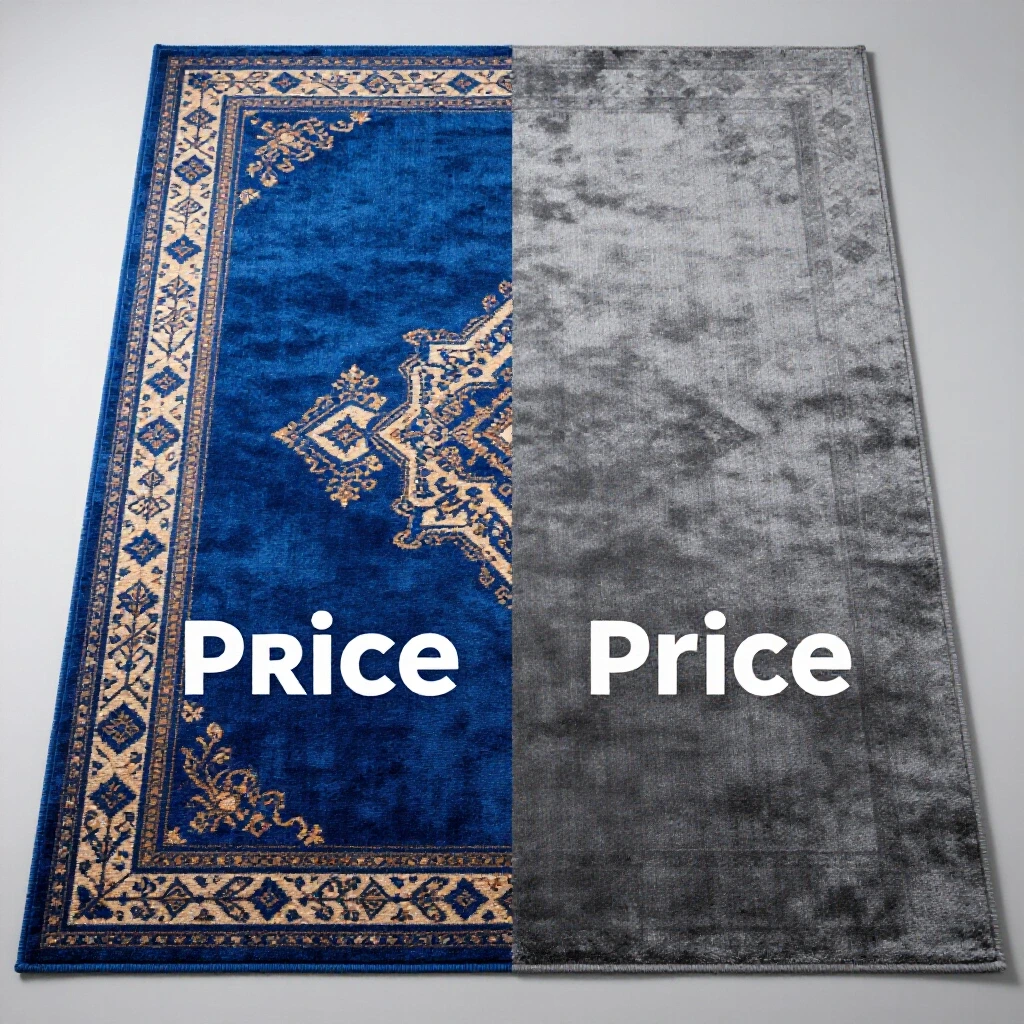
When I first started tracking my home renovation budget, I assumed a standard 8×10 rug would cost a flat amount. I quickly learned that the financial planning for homeowners must account for the “landed cost” of an item. This includes the rug itself, the pad, shipping, and local taxes. In my first project, I budgeted $500 for a living room rug. By the time I added a high-quality felt pad and paid for shipping, the total was $685. That is a 37% variance from my initial estimate.
To avoid this, I now use a 20% “buffer rule” for all decor purchases. This percentage covers the small extras that often get missed in a remodeling expense tracker. If you are looking at a $1,000 rug, your spreadsheet should actually reflect a $1,200 total. This conservative approach keeps your overall project from running into the red.
Material Selection and Its Impact on Your Home Renovation Budget
Understanding how fiber choice dictates the price per square foot and long-term durability is the first step in building a cost breakdown guide. Materials range from budget-friendly synthetics to mid-range natural fibers.
Material choice is the biggest driver of cost variance. For example, a 100% wool rug will almost always cost more than a polypropylene version of the same size. According to data trends in home goods, wool often carries a 50% to 100% premium over synthetic fibers. This is because wool is a renewable resource with natural stain resistance, whereas synthetics are petroleum-based.
- Polypropylene: Usually the most affordable option, ranging from $1 to $5 per square foot.
- Jute and Sisal: Natural fibers that offer a mid-range price point of $3 to $8 per square foot.
- Wool: A durable, high-end natural fiber typically costing $10 to $25 per square foot for machine-made varieties.
- Cotton: Often used for flatweave rugs, costing between $2 and $6 per square foot.
In my own experience, I opted for a cheaper synthetic rug in a high-traffic hallway. It looked great for six months but matted down quickly. I had to replace it within a year. This “cheap” purchase actually cost me more in the long run than if I had invested in a durable wool runner from the start.
The Variance Between Initial Estimates and Final Checkout Totals
Identifying the gap between a sticker price and the total cost is vital for cost vs value home improvement. This section examines the hidden fees that can disrupt a well-planned budget.
Many homeowners find a rug online and add that exact price to their spreadsheet. However, the final price at checkout is rarely that number. Shipping is a major factor, especially for large 9×12 rugs that require freight delivery. Some retailers charge a flat fee of $50 to $150 for oversized items.
| Item Category | Estimated Price | Actual Price Paid | Variance (%) |
|---|---|---|---|
| 8×10 Wool Rug | $650.00 | $725.00 | +11.5% |
| Premium Rug Pad | $60.00 | $85.00 | +41.6% |
| Shipping/Freight | $0.00 | $95.00 | N/A |
| Sales Tax (8%) | $56.80 | $72.40 | +27.5% |
| Total | $766.80 | $977.40 | +27.5% |
As shown in the table above, the “hidden” costs can add nearly $200 to a mid-range purchase. For a cost-conscious planner, this difference can be the reason a project goes over budget. I always recommend checking the return policy before buying. Some companies charge a “restocking fee” of 10% to 20% plus return shipping. If a $800 rug doesn’t fit, it could cost you $200 just to send it back.
Sizing Errors and the Cost of Going Too Small
The financial risk of buying an undersized rug can lead to a secondary purchase and wasted capital. Proper scaling ensures the investment serves its purpose in the room’s layout.
A common mistake I see in client consultations is the “postage stamp” rug. This happens when a homeowner buys a 5×7 rug for a large living room because it is significantly cheaper than an 8×10. However, a rug that is too small makes the room look disjointed and often needs to be replaced later.
- 5×7 Rugs: Best for small offices or under coffee tables in tight spaces.
- 8×10 Rugs: The standard for most average-sized living rooms and dining rooms.
- 9×12 Rugs: Necessary for large, open-concept spaces to ground the furniture.
From a financial perspective, buying the right size the first time is cheaper than buying a small rug and then replacing it. In my second renovation, I measured my dining room three times. I realized a standard 8×10 would leave the back legs of the chairs off the rug. I spent an extra $200 for a 9×12, but it saved me from the frustration of a functional failure.
Retail Channels and Pricing Strategies
Different shopping venues offer varying price points and levels of transparency. Knowing where to shop can help you stay within your financial boundaries.
Where you buy your rug matters as much as what it is made of. Big-box retailers often have the lowest prices but limited material quality. Online marketplaces offer the best variety but come with the risk of color mismatch and high return costs. Local boutiques provide the best “touch and feel” experience but often have a 20% to 40% markup to cover their storefront overhead.
- Big-Box Stores: Best for synthetic rugs and low-traffic areas.
- Online Decor Sites: Best for comparing prices and finding specific sizes.
- Liquidation Outlets: Great for high-end materials at a discount, though stock is inconsistent.
- Local Specialty Shops: Best for seeing the true color and texture before committing.
I suggest using online sites to find the average price for the material and size you want. This becomes your “market baseline.” If a local shop is charging 50% more than the baseline, you are paying for the convenience of immediate pickup and personalized service.
Budgeting for Accessories: The Rug Pad Factor
Rug pads are a non-negotiable expense that protects both the rug and the floor underneath. They vary in price based on thickness and material.
A rug pad is not just an add-on; it is a protective layer for your home’s flooring. Using a cheap plastic pad on hardwood floors can actually cause damage over time due to chemical reactions. I always budget for a felt or rubberized pad.
- Thin Non-Slip Pads: $0.50 to $1.00 per square foot. Good for preventing trips on thin rugs.
- Felt Pads: $1.50 to $2.50 per square foot. Adds cushion and soundproofing.
- Dual-Surface Pads: $2.00 to $3.50 per square foot. Best for rugs placed over carpet or hardwood.
In my home, I spent $120 on a high-quality felt pad for my living room. While it felt like a lot at the time, it made a $400 rug feel like an $800 rug. This is a classic example of “value engineering” in a home renovation budget. You can save money on the rug itself if you invest in a quality pad.
Long-Term Financial Impact and Depreciation
Floor coverings are considered “wasting assets” in personal finance, meaning they lose value over time. Understanding this helps in deciding how much to allocate to this category.
Unlike a kitchen remodel or a bathroom upgrade, rugs do not typically increase the resale value of a home. They are personal property. Therefore, I advise my clients to look at the “cost per year of use.” If a $1,000 wool rug lasts 10 years, it costs $100 per year. If a $300 synthetic rug lasts two years, it costs $150 per year.
- Synthetic Lifespan: 3 to 5 years.
- Natural Fiber Lifespan: 5 to 10 years.
- Wool Lifespan: 10 to 20+ years with proper care.
When tracking these in a spreadsheet, I categorize rugs under “Furnishings” rather than “Capital Improvements.” This distinction is important for tax purposes and when calculating your home’s equity. Capital improvements might be tax-deductible or added to your cost basis, but decor items like rugs are not.
A Practical Step-by-Step Budgeting Guide
Following a structured process ensures that you don’t miss any line items. This list helps keep your spending aligned with your initial goals.
- Measure the Room: Determine the exact dimensions needed. Don’t guess.
- Select Material Based on Traffic: Use wool for living rooms and synthetics for mudrooms.
- Research the Market Baseline: Find three similar rugs online to establish an average price.
- Calculate the All-In Cost: Add the rug, pad, shipping, and tax to your spreadsheet.
- Check the Return Policy: Verify if there are restocking fees or return shipping costs.
- Set a “Walk-Away” Price: Know the maximum you are willing to pay before you start shopping.
By following these steps, I managed to stay within 5% of my budget during my last hallway update. It required more upfront work, but the lack of financial stress was worth the effort.
Conclusion: Final Steps for the Cost-Conscious Planner
To keep your home projects on track, start by creating a dedicated tab in your renovation spreadsheet specifically for decor and floor coverings. Enter your “market baseline” prices today, even if you aren’t ready to buy yet. This will help you visualize the total cost of a room before you commit to larger renovations. Remember to always include a 20% contingency for those hidden fees like shipping and taxes. By treating rug purchases with the same analytical rigor as a kitchen remodel, you protect your savings and ensure your home remains a source of comfort rather than financial strain.
Frequently Asked Questions
Why is there such a large price gap between online rugs and local store rugs? Local stores have higher overhead costs, including rent, utilities, and staff. They also often curate higher-quality items, whereas online marketplaces may sell mass-produced versions. When you buy locally, you are paying for the ability to see the product in person and the convenience of taking it home immediately.
Should I budget more for a rug pad or the rug itself? Always spend more on the rug, but do not skip the pad. A good rule of thumb is to allocate about 10% to 15% of the rug’s price to the pad. A quality pad extends the life of the rug and protects your floors, which saves money in the long run.
How do I calculate the shipping costs for a large area rug? Many retailers offer “free shipping,” but this is often baked into the price. For those that don’t, check if the item requires “LTL” (Less Than Truckload) or freight shipping. This can range from $50 to over $200 depending on your location and the rug’s weight.
Are synthetic rugs always the most cost-effective choice? Not necessarily. While they have a lower entry price, they wear out faster in high-traffic areas. If you have to replace a $200 synthetic rug every three years, a $600 wool rug that lasts twelve years is actually the more economical choice over a decade.
What is a restocking fee, and why does it matter? A restocking fee is a charge (usually 10-20% of the item’s price) that a retailer deducts from your refund if you return an item. For a $1,000 rug, a 20% fee means you lose $200 just for trying it out. Always read the fine print on returns before clicking “buy.”
How does rug size affect the total price? Prices usually increase exponentially with size, not linearly. A 9×12 rug is roughly double the square footage of a 5×8, but it often costs three to four times as much because larger looms and more material are required.
Can I save money by layering a smaller expensive rug over a large cheap one? Yes, this is a common design and budgeting trick. You can buy a large, inexpensive jute or sisal rug to cover the floor and place a smaller, high-quality wool rug on top. This provides the look of a large luxury rug at a fraction of the cost.
Does the “pile height” affect the cost of the rug? Generally, yes. A higher pile or a denser “knot count” requires more material and more time to produce. Shag rugs or thick plush rugs will usually be more expensive than flatweaves of the same material.
Is it worth paying for a professional measure before buying a rug? For standard rooms, a professional measure isn’t usually necessary if you have a reliable tape measure. However, if you have an odd-shaped room or built-in furniture, a professional can help ensure you don’t buy a size that won’t fit, saving you from return fees.
How do I track these costs in my home renovation spreadsheet? Create a line item for “Floor Coverings” and sub-items for “Rug,” “Pad,” “Shipping,” and “Tax.” Use a “Budgeted” column and an “Actual” column to see your variance in real-time. This keeps you accountable to your total project limit.
(This article was written by one of our staff writers, Steven Fletcher. Visit our Meet the Team page to learn more about the author and their expertise.)