How to Update Your Entryway for Each Season (Step-by-Step Guide)

Moving into your first home is like stepping onto a stage where you are both the lead actor and the stage manager. The entryway is your opening scene. It is the first thing you see when you return from a long day and the last thing guests notice before they leave. In my fourteen years of owning three different properties, I have learned that this small space dictates the mood and cleanliness of the entire house. When the threshold is cluttered or ignored, the rest of the home often follows suit.
Establishing a rhythm for updating this space is not just about aesthetics. It is a functional necessity. According to the U.S. Census Bureau’s American Housing Survey, the average homeowner spends significant time and money on maintenance and improvements within the first two years of purchase. By focusing on the transition point of your home, you can manage the flow of dirt, moisture, and seasonal gear before they overwhelm your living space.
Transitioning the Threshold: Financial and Emotional Foundations
Preparing the mind and the wallet for the periodic updates required at the front door helps maintain curb appeal and functional organization. For many first-time owners, the “honeymoon phase” ends when the first rainstorm tracks mud across the new hardwood floors.
In my first home, a 1940s bungalow, I ignored the transition from summer to fall. I didn’t have a plan for wet boots or heavy coats. The result was a warped floorboard and a very stressed Saturday morning spent scrubbing grit out of crevices. Since then, I have treated the entry point as a high-traffic zone that requires its own mini-budget and schedule. Emotional burnout often comes from feeling like your home is “winning” against you. A simple, repeatable routine for the front door helps you reclaim that control.
Establishing an Entryway Update Budget
A structured financial approach to managing the costs of mats, wreaths, and organizational tools keeps your household spending predictable throughout the year. Most financial experts suggest the 1% rule, where you set aside 1% of your home’s value for annual maintenance.
While a new wreath or a heavy-duty doormat seems like a small expense, these costs add up. In my personal logs, I have tracked that a complete seasonal refresh for the entry area typically costs between $50 and $150, depending on how much I DIY. If you don’t plan for this, you might find yourself dipping into your emergency fund for “frivolous” items, which creates unnecessary guilt.
| Item | DIY/Low-Cost Option | Retail/Pre-made Option | Expected Lifespan |
|---|---|---|---|
| Seasonal Wreath | $15 (Handmade) | $60 – $120 | 3-4 Seasons |
| Heavy-Duty Mat | $20 (Utility grade) | $45 – $70 | 2 Years |
| Boot Tray | $10 (Plastic) | $40 (Copper/Metal) | 10+ Years |
| Decorative Accents | $5 (Natural finds) | $30 – $50 | 1 Season |
Why a Sinking Fund Works for Homeowners
A sinking fund is a strategic way to save for specific, non-emergency expenses. Instead of being surprised by the need for a “Winter” setup in December, I set aside $10 a month specifically for these transitions. This covers the cost of a fresh mat for salt and snow or a spring wreath to brighten the door after a grey winter. It removes the “should I spend this?” anxiety that plagues new homeowners.
Organizing the Foyer for Weather Shifts
Adapting the storage and flooring of the home’s entry point allows you to handle rain, snow, or summer dust efficiently. This is the “functional” side of the routine that protects your investment.
When I evaluated a series of suburban homes last year, the ones with the most floor damage were consistently those without a “landing zone.” The entry area should act as a literal airlock. During the transition into wetter months, your routine must include swapping out lightweight rugs for high-absorbency mats. HUD reports often highlight that moisture is the primary enemy of home longevity. Preventing it from entering past the first three feet of your home is the most cost-effective maintenance task you can perform.
Managing Moisture and Debris
- Use a “Scraper” mat outside the door to remove large chunks of mud or snow.
- Place a “Sorbent” mat inside to catch fine dust and remaining water.
- Implement a “No Shoes” policy during the wet seasons to reduce floor wear by up to 50%.
- Rotate a dedicated boot tray into the space as soon as the first frost or heavy rain is forecast.
Aesthetic Cohesion: DIY Decor Swaps for Every Quarter
The process of rotating visual elements like wreaths and door hangings reflects the changing seasons without overspending. This is where you can express your style without committing to a full room renovation.
In my second home, I felt pressured to buy expensive, pre-made decor for every holiday. I soon realized that storage was becoming an issue. Now, my routine focuses on “multi-season” bases. I use one high-quality grapevine wreath and simply swap out the ribbons or tucked-in greenery. This saves money and reduces the physical clutter in my basement or garage.
Simple Wreath and Mat Rotations
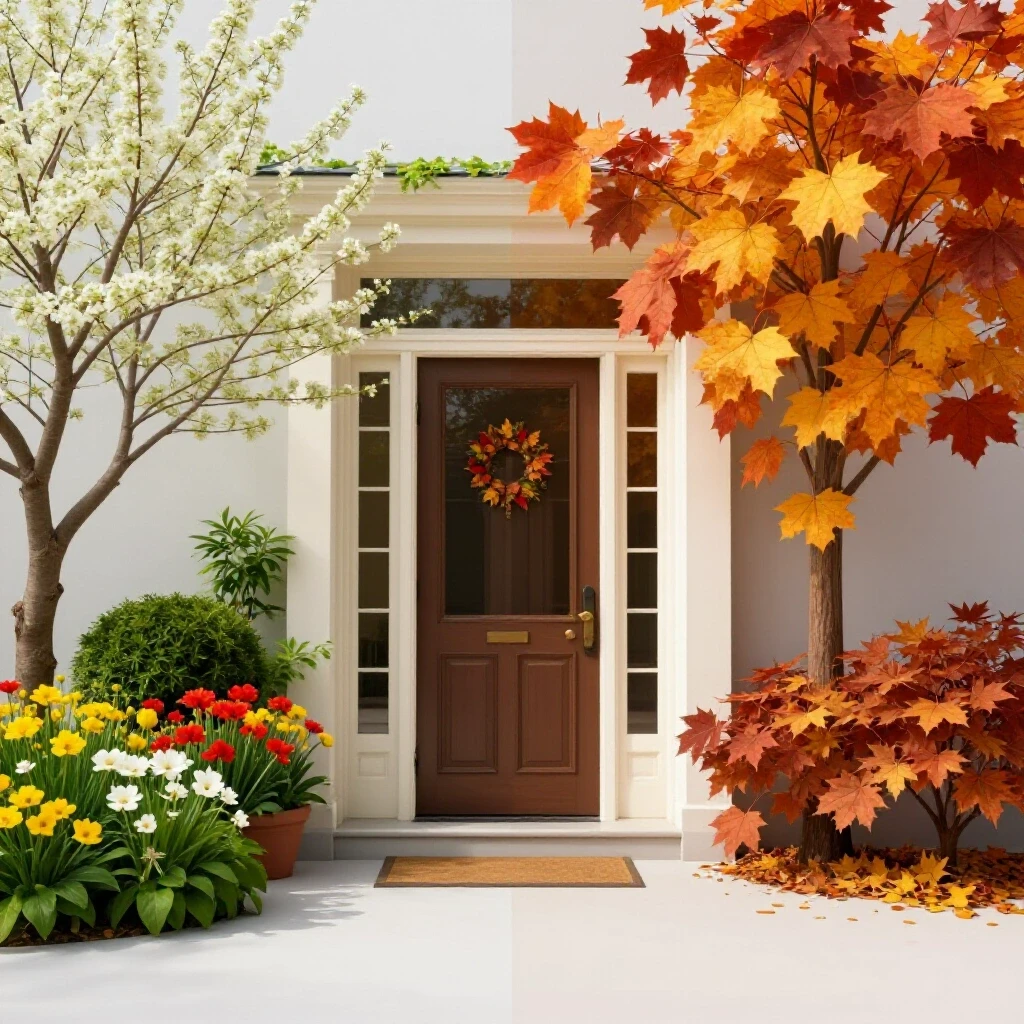
- Spring: Focus on bright, cool colors. A simple boxwood wreath works well. Replace heavy winter mats with lighter, woven coir versions.
- Summer: Use natural textures. I often use dried eucalyptus or simple straw hats as door decor. This is the time to shake out mats weekly to manage high dust levels.
- Fall: Incorporate warm tones and heavier textures. Dried corn husks or simple orange ribbons can transform a basic wreath.
- Winter: Function is king here. The wreath should be hardy enough to handle wind. The mat must be rubber-backed to prevent salt from seeping onto your floors.
Long-Term Asset Protection Through Entryway Care
Using mats and cleaning routines prevents dirt and moisture from damaging the primary flooring of the home. This is a critical point for first-time owners who are often focused on the “look” of the home rather than the “bones.”
Data from my 14-year home logs shows that areas where I maintained a strict seasonal mat routine required zero floor refinishing. In contrast, the one home where I was lax required a $2,000 floor sanding after just five years. Dirt acts like sandpaper under your feet. By changing your entryway setup to match the grit level of the season, you are literally saving thousands of dollars in future repairs.
The Lifecycle of Entryway Components
- Coir Mats: These last about 12 months in high-traffic areas before they lose their “scrubbing” ability.
- Rubber Trays: These are nearly indestructible but should be bleached once a year to prevent mold growth.
- Door Hardware: Seasonal changes are a good time to lubricate hinges and check the weather stripping.
- Command Hooks: If you use these for wreaths, replace the adhesive every two years to prevent them from failing and damaging the door finish.
Managing Homeowner Fatigue During Transitions
Recognizing the mental load of keeping a home “guest-ready” is essential for long-term satisfaction. It is easy to feel overwhelmed by the endless “to-do” list of a new home.
I recommend the “One-Hour Rule.” Each season, give yourself exactly one hour to transition your entryway. This includes cleaning the glass, swapping the mat, and hanging the new decor. If it takes longer than that, you are likely over-complicating the process. Homeownership is a marathon, not a sprint. You do not need a magazine-perfect foyer; you need a space that works for your life and protects your property.
Signs of Homeowner Burnout
- Ignoring a pile of shoes that has grown into a tripping hazard.
- Leaving a “Spring” wreath up until October because the task feels too heavy.
- Feeling resentment toward guests who bring in dirt.
- Avoiding the front door entirely and only using the garage.
If you feel these signs, simplify your routine. A clean, empty space is better than a cluttered, “decorated” one that causes stress.
Strategic DIY Prioritization
Not every entryway update needs to be a project. For young professionals and families, time is the most valuable resource. When planning your seasonal shifts, decide which tasks offer the highest “Return on Effort” (ROE).
In my analysis of residential housing trends, I’ve noticed that simple, clean entries consistently rank high in perceived home value. You don’t need a custom-built mudroom bench. A simple set of sturdy hooks and a clean rug can achieve the same functional result for a fraction of the cost and time. Focus on the “Big Three”: Lighting (ensure the bulb is bright for dark winter evenings), Flooring (protect it), and Storage (make it easy to put things away).
Practical Next Steps for New Homeowners
To start your own routine without feeling overwhelmed, follow these low-barrier steps this week:
- Audit your current setup: Do you have a mat inside and outside? If not, buy one for the current season.
- Clear the deck: Remove everything from your entry area that doesn’t belong there daily.
- Check the seals: Feel for drafts around the door. If you feel air, buy a $10 weather-stripping kit. This is a “seasonal change” that pays for itself in utility savings.
- Set a calendar alert: Mark the first day of each season in your phone to spend 30 minutes refreshing the space.
FAQ
How often should I actually change my front doormat? Most high-traffic mats lose their effectiveness after about 12 months. However, in climates with heavy snow or mud, you may need to swap between a “heavy-duty” winter mat and a “decorative” summer mat twice a year. If the bristles are flat, it is no longer cleaning your shoes.
What is the most cost-effective way to decorate for seasons? Invest in a single, high-quality “base” wreath made of grapevine or faux greenery. Instead of buying four different wreaths, buy small accents like ribbons, silk flowers, or pinecones that you can wire on and off. This reduces storage needs and costs.
Do I really need a boot tray if I have tile floors? Yes. While tile is water-resistant, the grout between tiles is often porous. Standing water or melting snow can seep into grout lines, causing discoloration or even loosening the tiles over time. A tray contains the mess and makes cleanup much faster.
How do I stop my entryway from becoming a “clutter magnet”? The “One-In, One-Out” rule is vital. If you bring out winter coats, move the summer light jackets to a secondary closet. If the entryway is the only place for shoes, limit each family member to two pairs in that space at any given time.
Is it worth buying “smart” lighting for the entryway? From a maintenance and safety perspective, yes. Setting your entry light to turn on at sunset ensures you never arrive at a dark house. It also saves energy compared to leaving the light on all day, which aligns with EPA energy-efficiency recommendations.
How do I clean a coir (coconut fiber) mat? Do not use water on natural coir mats, as it can cause them to rot or stain. The best method is to wait for the mat to be completely dry, turn it upside down, and give it a firm shake or hit it with a broom to dislodge the trapped dirt.
What should I do if my front door faces direct sunlight and fades my decor? Look for UV-resistant faux plants and fabrics. You can also spray your wreaths with a clear UV-protectant spray found at most hardware stores. This can double the lifespan of your seasonal items.
How much should I realistically spend on seasonal entry updates? For a first-time homeowner, keeping it under $200 per year is a healthy goal. This allows for one or two new functional items (like a rug) and a few DIY decor refreshes without straining your primary mortgage and utility budget.
What is the best way to store seasonal items when they aren’t in use? Use clear, labeled plastic bins stored in a climate-controlled area if possible. For wreaths, hanging them on a rod in a closet or using dedicated wreath boxes prevents them from being crushed, which ensures they last for several years.
Should I prioritize aesthetics or functionality in the entryway? Always prioritize functionality first. A beautiful entryway that allows mud to ruin your carpet is a failure of home maintenance. Once you have the moisture and dirt under control with mats and trays, then layer on the decor.
(This article was written by one of our staff writers, Michael Morrison. Visit our Meet the Team page to learn more about the author and their expertise.)