Shared Family Closet Organization: Common Mistakes to Avoid (Guide)

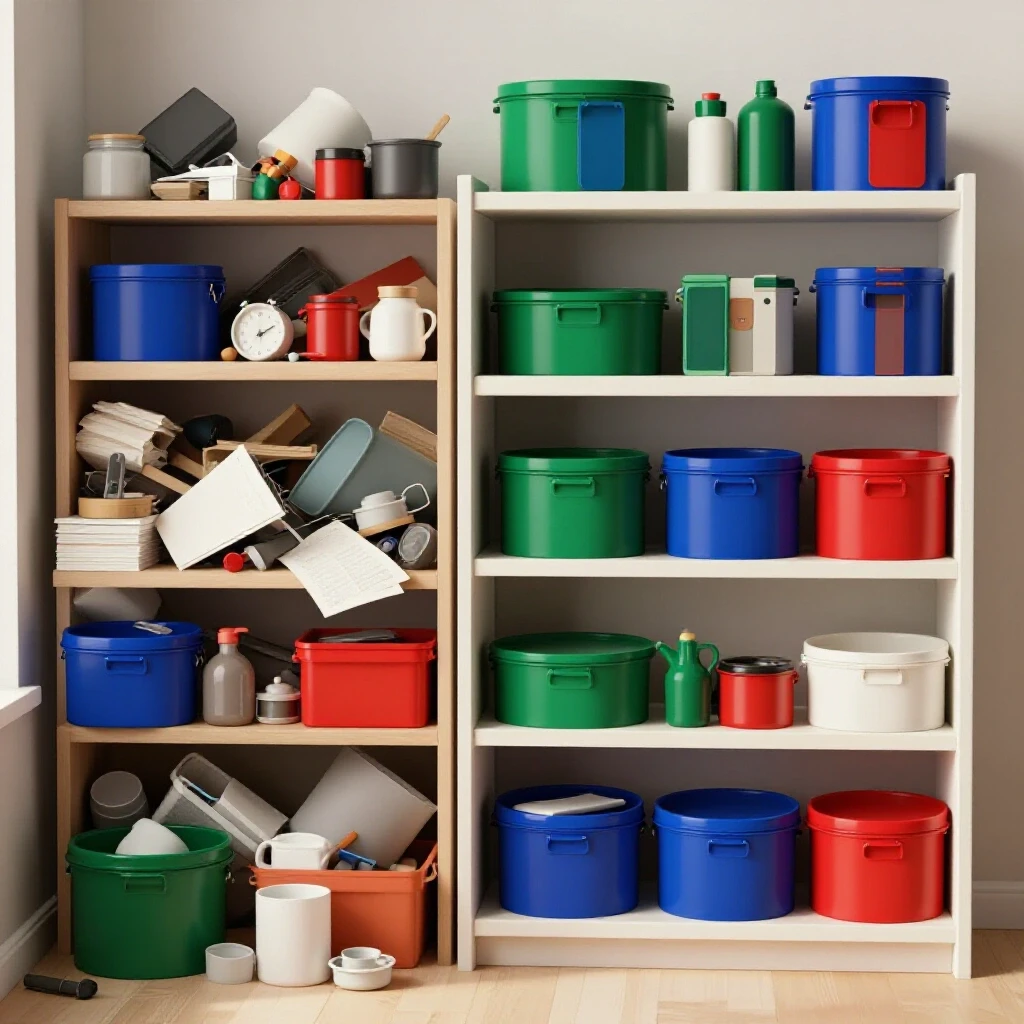
I stood in front of our main hallway storage hub last Tuesday, staring at a mountain of mismatched socks and tangled hangers. I had spent four hours the previous Saturday meticulously folding and sorting every piece of clothing for my family of four. By Tuesday morning, the system had completely collapsed. This was my “aha” moment: I realized that I was applying high-maintenance aesthetic standards to a high-traffic logistics problem. In my professional life, I manage supply chains where efficiency is measured by “touches” and “travel time.” Yet, in my own home, I had designed a communal wardrobe system that required twelve steps just to put away a single t-shirt.
The Spatial Logistics of Centralized Clothing Hubs
Spatial logistics in a home environment refers to the strategic management of how items move into, through, and out of a storage area. It focuses on maximizing the efficiency of movement and minimizing the physical effort required to retrieve or store items based on their frequency of use and physical dimensions.
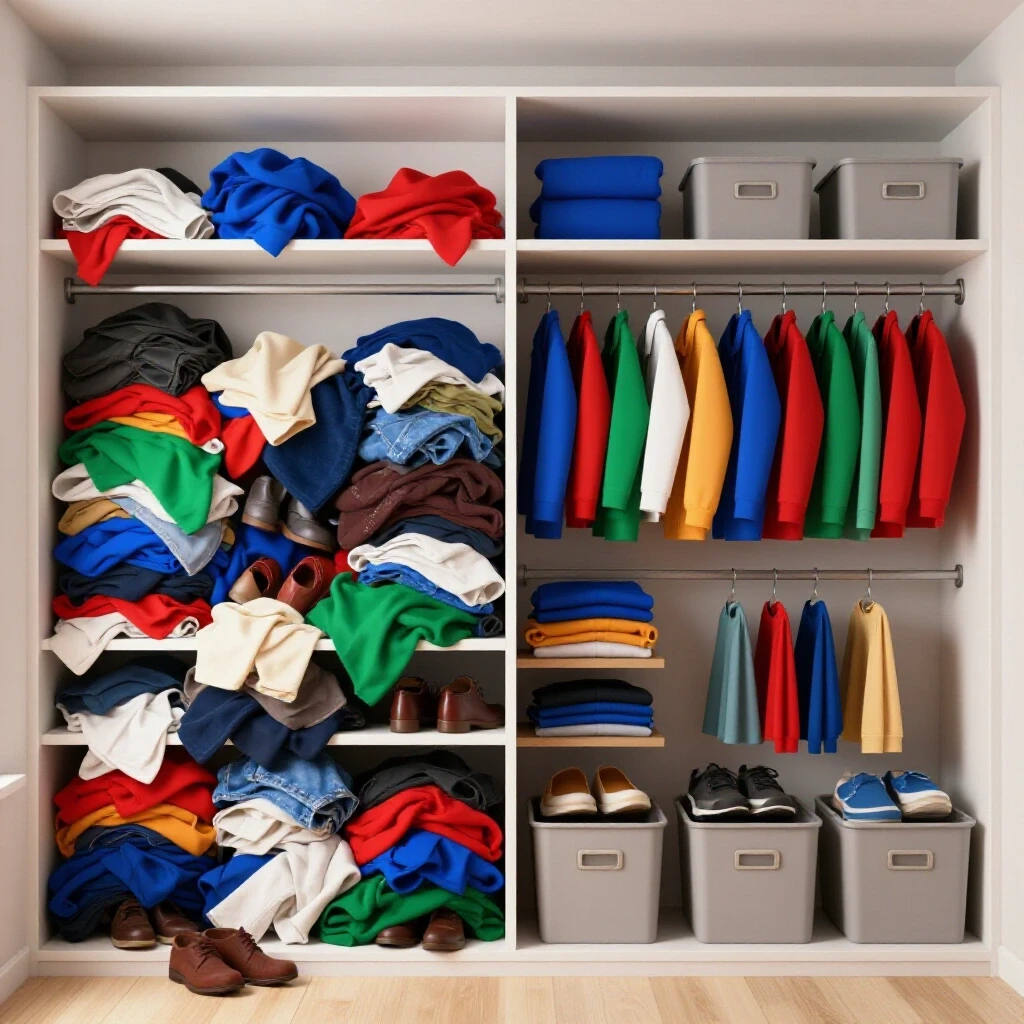
When we attempt to consolidate clothing for multiple people into one zone, we often ignore the “spatial capacity limit.” In logistics, a warehouse is considered full at 85% capacity. Once you cross that threshold, the time it takes to move items increases exponentially because there is no “swing space” to shift things around. Most communal wardrobes operate at 95% to 100% capacity. This creates a bottleneck where every person trying to access their items is physically blocking someone else or disturbing the order of another person’s zone.
The failure of these high-density areas usually stems from a lack of “flow rate” planning. We think about where things go, but we don’t think about how often they come out. A functional home storage system must account for the daily “inflow” of clean laundry and the “outflow” of dirty clothes. When the physical path to a shelf is blocked by a bin that requires two hands to lift, the system creates “retrieval friction.” This friction is the primary reason why even the most organized-looking spaces revert to chaos within 72 hours.
Defining Retrieval Friction in Communal Wardrobes
Retrieval friction is the measurable amount of physical and mental effort required to access a specific item within a storage system. High friction occurs when multiple steps, such as moving other objects or opening complex latches, are necessary to reach the intended target, leading to system abandonment.
In my own household, I tracked the “step count” for a simple morning routine. To get a pair of pants from our centralized hub, a family member had to: 1. Open the main door. 2. Move a basket of out-of-season items. 3. Unstack a smaller bin. 4. Unlatch the lid. 5. Search through a deep pile.
That is five steps for one item. In a logistics environment, we aim for “one-touch” or “two-touch” systems. Anything more than three steps for a daily-use item is a guaranteed failure point for a busy family. Sustainable decluttering isn’t about having fewer things; it’s about reducing the steps required to manage what you have.
The table below illustrates how different storage choices impact the daily “friction score” of a shared space.
| Storage Method | Steps to Retrieve | Steps to Store | Friction Level |
|---|---|---|---|
| Open Front Cubby | 1 | 1 | Low |
| Hanging Rod (Eye Level) | 1 | 2 | Low |
| Pull-out Drawer | 2 | 2 | Medium |
| Lidded Bin (Stacked) | 4 | 5 | High |
| Deep Shelf (Double Rowed) | 3 | 4 | High |
Why High-Friction Bins Lead to Rapid Clutter Reversion
High-friction bins are storage containers that require significant physical manipulation to access, such as those with tight-fitting lids, complex latches, or those designed to be stacked vertically. While they look neat on a shelf, they create a barrier to both retrieval and consistent maintenance.
Many families invest in beautiful, opaque bins with lids to hide the visual noise of clothing. While this helps with “visual processing overload,” it fails the “functional home storage” test. When a bin is stacked three-high, the person needing the bottom bin will often just pull what they need from the top or, worse, leave the clean laundry on the floor because the effort to unstack and restack is too high.
Environmental psychology research suggests that “clutter blindness” occurs when a system is too difficult to interact with. We stop seeing the mess because our brains are protecting us from the frustration of the task. To combat this, we must prioritize “visibility” and “reachability” over “hideability.” If you cannot see the item or reach it with one hand, the storage solution is likely too complex for a high-traffic family environment.
Visual Processing Overload and Decision Fatigue
Visual processing overload is a cognitive state where the brain is overwhelmed by the sheer volume of visual information in an environment. In a closet, this manifests as a “wall of fabric” where individual items become indistinguishable, leading to increased search times and mental exhaustion.
Every time you open a shared wardrobe, your brain has to filter through everyone else’s items to find your own. This is a form of decision fatigue. If a parent has to process 50 items of clothing just to find a child’s sweater, they are using up valuable mental energy before the day has even started. This is why “zoning” is a critical logistical concept.
Zoning involves creating distinct, unbreakable boundaries for different categories of items. In a communal space, these zones must be physical, not just conceptual. Using a shelf divider is a physical boundary; simply telling everyone to “keep their stuff on the left” is a conceptual boundary. Conceptual boundaries always fail in busy households because they rely on constant vigilance rather than physical constraints.
The Failure of High-Maintenance Sorting Frameworks
A sorting framework is the set of rules used to categorize and arrange items within a storage system. High-maintenance frameworks require precise actions, such as color-coding or complex folding techniques, which are difficult for all family members to follow consistently over time.
I once tried to implement a “file-folding” method for our shared t-shirt drawer. It looked like a retail display for exactly two days. The failure wasn’t the folding itself; it was the “sorting speed.” In logistics, we look at “throughput”—how quickly can an item move through the system? File-folding takes 30 seconds per shirt. A simple “flat fold” or “toss-in-bin” method takes 5 seconds.
For a family with 40 t-shirts in the weekly laundry cycle, that is the difference between 20 minutes of folding and 3 minutes. Over a year, that adds up to 14 hours of extra labor. Most busy professionals do not have an extra 14 hours for shirt-folding. When the “maintenance cost” of a system exceeds the “perceived benefit,” the system will be abandoned. This is a fundamental law of organizational behavior.
Measuring Item Density and Space Utilization
Item density refers to the ratio of stored items to the total available volume of a storage space. High item density leads to “compression,” where items are packed so tightly that retrieving one causes others to fall or become disorganized.
To maintain a functional home storage area, you should aim for a 70% utilization rate. This means 30% of your shelf or rod space should be empty “white space.” This allows for the “air” needed to move items without friction. When we audit a failing wardrobe, the first metric I check is density. If you have to push five hangers aside to see one shirt, your density is too high.
- Low Density (50-60%): Easiest to maintain, but requires significant space.
- Optimal Density (70%): Best balance of storage volume and retrieval speed.
- High Density (90%+): Guaranteed to fail; leads to wrinkled clothes and “hidden” items.
Diagnostic Spatial Audit: Why Your Current System Is Failing
A spatial audit is a systematic evaluation of how a storage area is used, focusing on identifying bottlenecks, high-friction zones, and underutilized space. It involves tracking real-world usage patterns over a set period to gather data for system improvements.
Before buying new bins or rearranging shelves, you must perform a diagnostic audit. For three days, don’t clean the shared area. Instead, observe where the “piles” form. These piles are data points. A pile of clothes on the floor usually indicates that the “outflow” (the hamper) is too far away or the “inflow” (the shelf) is too hard to reach.
- Identify the “Drop Zone”: Where do items land when people are in a rush?
- Count the Touches: How many things do you have to move to get to your most-used item?
- Check the “Return Rate”: How many items actually make it back to their designated spot versus staying in the “clean laundry basket” for a week?
Building Systematic Habit Loops for Shared Spaces
A habit loop is a psychological pattern consisting of a cue, a routine, and a reward. In home organization, a successful habit loop relies on making the “routine” (the act of putting something away) so easy that the “cue” (seeing the item) triggers immediate action.
The goal of a sustainable decluttering journey is to create “low-barrier” habits. If the system requires a label maker and a 20-page manual, it won’t stick. Instead, focus on “point-of-use” storage. If a family member always changes in a specific spot, that is where the storage should be. Forcing a person to walk across the house to a centralized hub to put away a single item creates “spatial friction” that most people will avoid.
Reducing Household Clutter Through Inflow Control
Inflow control is the practice of managing the volume of new items entering a home to ensure they do not exceed the system’s capacity to store and organize them. It is a proactive approach to preventing clutter before it starts.
We often focus on the “decluttering journey” as a one-time event, but logistics professionals know that “inventory management” is a daily task. If you bring in five new shirts but don’t remove five old ones, you are increasing your item density. A simple “one-in, one-out” rule is a logistical necessity for shared spaces with fixed boundaries.
- Standard Item-Density Guideline: No more than 10 hanging items per foot of rod.
- Sorting Time-Box Interval: 10 minutes of “reset” time every evening.
- Daily Habit Tracking: Check the “Drop Zone” every day at 6:00 PM.
Selecting Low-Maintenance Storage Gear
Low-maintenance storage gear consists of durable, easy-to-use containers and organizers that do not require complex assembly or frequent adjustments. These tools prioritize functionality and accessibility over aesthetic trends.
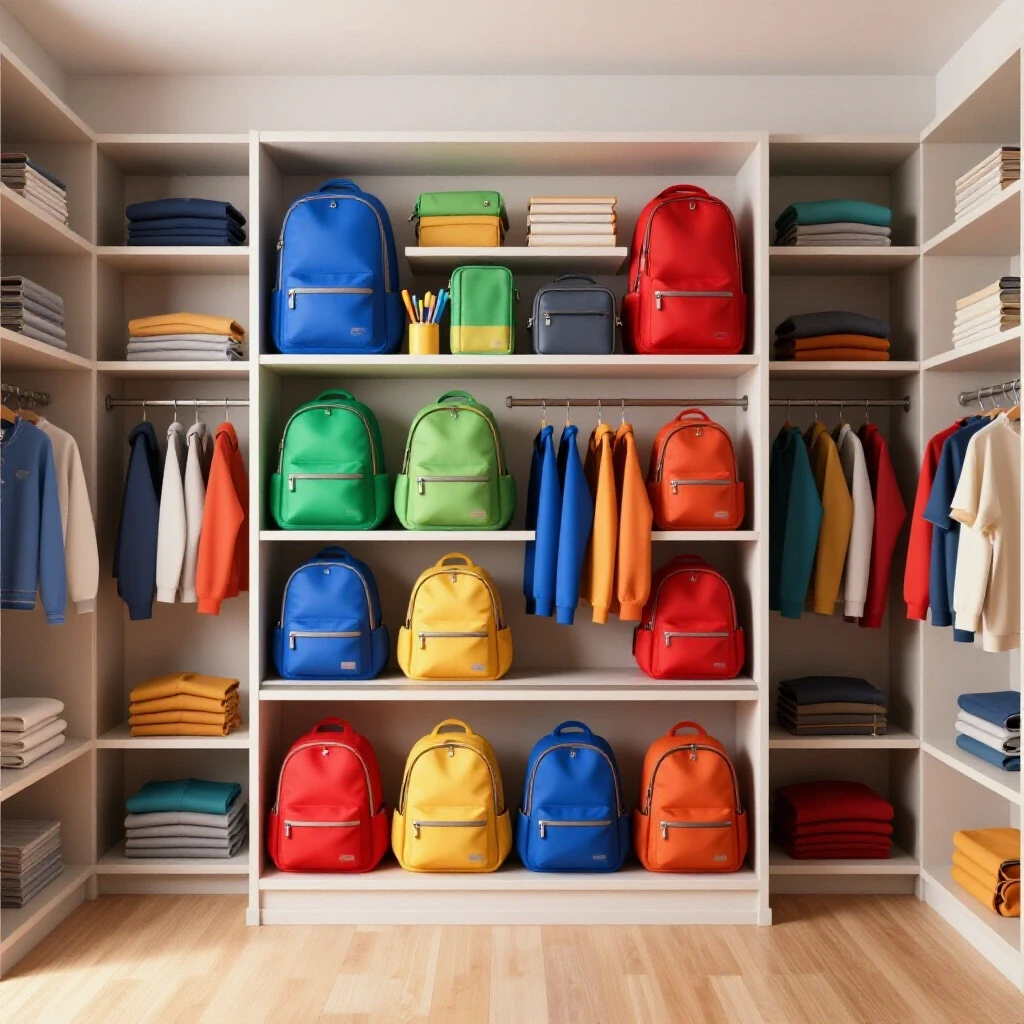
When selecting gear, avoid anything with a “specialty” use. A bin that only fits one specific type of leggings is a liability if your style changes. Look for “modular” units that can be repurposed. Open-front bins are the gold standard for shared spaces because they allow for “one-hand” retrieval and “toss-in” storage.
- Open-Front Bins: Best for socks, underwear, and t-shirts.
- Heavy-Duty Hangers: Use one style (e.g., slim velvet or sturdy plastic) to reduce visual noise and prevent snagging.
- Clear Labeling: Use large, bold text. If you have to squint to read a label, it’s not working.
- Digital Inventory (Optional): For off-season items, a simple photo-based app can help you remember what is in a bin without opening it.
Practical Steps to Redesign a High-Friction Area
Redesigning a storage area involves reconfiguring the physical layout and organizational rules to better align with the actual behavior of the users. The focus is on reducing steps and increasing the visibility of items.
To fix a failing system, start by “emptying the tank.” Take everything out. This allows you to see the “spatial capacity” without the bias of the old system. Then, map your zones based on “frequency of use.” The items used every day must stay in the “prime real estate” zone (between your knees and your shoulders). Anything stored above your head or below your knees should be for items used less than once a week.
- Zone 1 (Prime): Daily wear (underwear, shirts, work clothes).
- Zone 2 (Secondary): Weekly wear (gym clothes, specific uniforms).
- Zone 3 (Deep Storage): Monthly or seasonal wear (heavy coats, formal wear).
Frequently Asked Questions
Why does my shared closet get messy again so fast? The most common reason is “retrieval friction.” If it takes more than two or three steps to put an item away, family members will naturally leave it on a surface or the floor. Your system likely prioritizes how things look over how easily they move in and out.
How can I tell if I have too much stuff or just a bad system? Check your “item density.” If your shelves and rods are more than 80% full, you have a volume problem. If you have empty space but still can’t find anything, you have a system problem. A good system needs “white space” to function.
What are the best bins for a shared family wardrobe? Open-front or “scoop” bins are ideal. They allow you to see what is inside and toss items back in with one hand. Avoid bins with separate lids or those that require unstacking to access.
How do I get my family to follow the system? Reduce the “cost of entry.” If the system is so simple that it’s harder to drop an item on the floor than to put it away, they will follow it. Use clear, large labels and ensure everyone can reach their designated zone without help.
Is color-coding worth the effort? For most busy families, no. Color-coding is a high-maintenance framework that adds “sorting time” to your laundry routine. Unless it genuinely helps you find things faster, it’s usually just “organizational theater” that won’t last.
What is the “one-in, one-out” rule? It is a simple inventory management strategy. For every new item of clothing that enters the closet, one old item must be donated, recycled, or discarded. This keeps your “item density” at a manageable level.
How often should I “reset” the shared space? A daily 5-minute “sweep” is more effective than a 4-hour monthly deep clean. Logistics rely on “continuous flow” rather than “batch processing.” Small, daily adjustments prevent the system from reaching a “point of no return.”
What if my closet is physically too small for my family? If you have maximized your “spatial utilization” and still can’t hit a 70% density rate, you must reduce the volume. No organizational system can overcome the physical limits of a space. Focus on “active” clothing and move “archival” items elsewhere.
Are labels really necessary if everyone knows where their stuff is? Yes. Labels act as “visual anchors.” In moments of stress or hurry, we lose our “spatial memory.” A clear label reduces the cognitive load of deciding where an item belongs, making it more likely the item will be returned to the correct spot.
How do I handle “in-between” clothes (worn but not dirty)? This is a major “system leak.” Designate a specific, low-friction zone—like a row of sturdy hooks—specifically for these items. If you don’t have a spot for them, they will inevitably end up on the floor or mixed back in with clean clothes.
(This article was written by one of our staff writers, Christopher Bennett. Visit our Meet the Team page to learn more about the author and their expertise.)