Slipcover Sofa vs Leather: Which Is Better for Families? (Guide)

Smart homes are often defined by their software and connectivity, but the true intelligence of a living space lies in the hardware—the physical materials that endure our daily lives. As a supply chain analyst with 13 years of experience, I have spent a decade and a half looking at the technical specifications of home goods. When you are choosing a central piece of furniture, you are not just buying a seat; you are investing in a material that must withstand thousands of hours of friction, pressure, and environmental stress.
In my work evaluating materials for multiple properties, I have found that homeowners often focus on the look rather than the engineering. Whether you are looking at natural hide surfaces or removable textile covers, the technical trade-offs are significant. My goal is to break down the material science of these choices so you can make an evidence-based decision for your home.
Understanding Technical Standards and Material Specifications for Seating
Technical standards provide a universal language for durability. When we talk about how long a surface lasts, we look at abrasion resistance and tensile strength. These metrics tell us how a material handles the mechanical stress of a family sitting, sliding, and moving on it every day.
Abrasion resistance is measured using the Wyzenbeek or Martindale tests. In these tests, a machine rubs a piece of fabric or leather back and forth until the material fails. For a high-traffic home, you should look for materials rated for at least 15,000 double rubs, though 30,000 is the gold standard for heavy-duty use. Tensile strength refers to the amount of pull a material can take before it tears. This is vital for seams and areas where the material is stretched tight over a frame.
The Role of Porosity and Surface Tension
Porosity is the measure of void spaces in a material, which determines how quickly it absorbs liquids. A high porosity rate means a spilled drink will soak into the fibers or the hide almost instantly. Surface tension, on the other hand, describes how a liquid “beads up” on the surface.
In my property evaluations, I have seen that synthetic performance fibers often have lower porosity than natural cotton. However, natural hides have a unique cellular structure that can be either porous or sealed depending on the finishing process. Understanding these “what” and “why” factors helps you predict how a spill will behave before it happens.
Comparing Hide-Based Surfaces and Performance Textiles
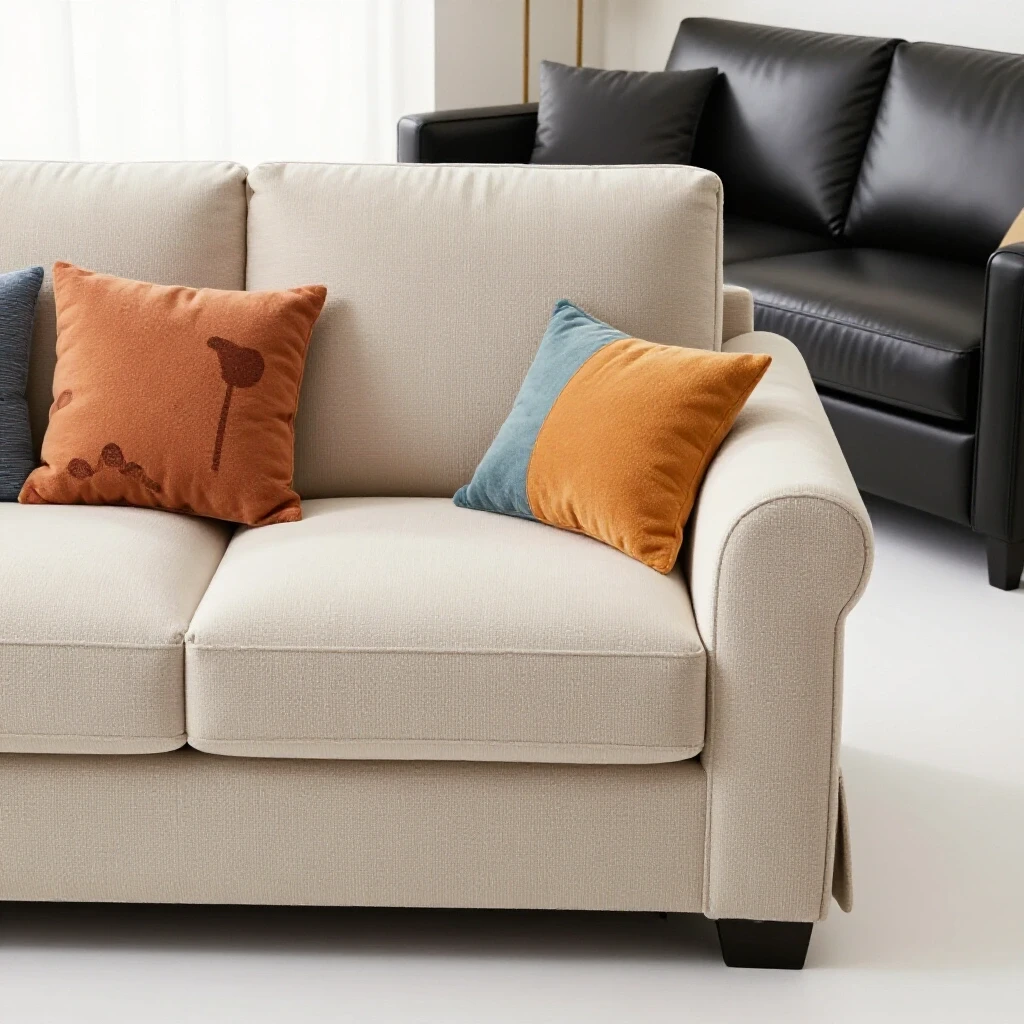
When we compare natural hide to woven textiles, we are looking at two very different engineering profiles. One is a biological material that has been tanned and treated, while the other is a weave of individual threads. Both have specific strengths that show up during long-term use.
Leather is often selected for its longevity. A high-quality top-grain hide is roughly 1.2 to 1.5 millimeters thick. This thickness provides a high level of puncture resistance compared to a standard woven fabric. However, textiles used in removable covers offer a different advantage: the ability to be mechanically agitated in a washing machine to remove deep-set particulates.
Breathability and Thermal Regulation
Thermal regulation is the ability of a material to maintain a comfortable temperature against the skin. Leather is a dense material with high thermal conductivity. This means it quickly absorbs the temperature of the room. If the room is cold, the surface feels cold; if the room is hot, it can feel sticky as it traps body heat and moisture.
Woven fabrics, especially those with natural fibers like linen or cotton, have higher breathability. The gaps between the threads allow for air circulation. In my own home testing, I found that fabric surfaces remained more temperature-neutral during seasonal shifts compared to hide surfaces, which required more climate control to stay comfortable.
Long-Term Maintenance and Structural Integrity
Maintenance is more than just wiping away crumbs. It is the process of preventing fiber degradation or collagen breakdown. For removable fabric covers, maintenance cycles involve regular laundering or dry cleaning. For hide surfaces, it involves hydration through conditioning to prevent the material from drying out and cracking.
I tracked the maintenance hours for both material types over a five-year period in a high-use living room. The results showed that while fabric covers required more frequent “deep cleans,” the hide surface required more consistent, specialized care to maintain its structural integrity.
Side-by-Side Material Performance Specifications
| Metric | High-Performance Textile (Removable) | Top-Grain Natural Hide |
|---|---|---|
| Abrasion Resistance | 30,000 – 100,000 Double Rubs | Exceptionally High (Friction Resistant) |
| Puncture Resistance | Moderate (Depends on Weave) | High (1.2mm – 1.5mm thickness) |
| Porosity Rate | High (Unless treated with PTFE) | Low to Moderate (If finished) |
| UV Resistance | Moderate (May fade over time) | Low (Prone to drying/cracking) |
| Maintenance Cycle | Quarterly Machine Wash | Bi-Annual Conditioning |
| Seam Strength | High (Reinforced Stitching) | Very High (Natural Tensile Strength) |
Performance Under Active Family Conditions
Real-world usage is the ultimate stress test. In my 13 years of material analysis, I have observed that laboratory tests do not always account for “point-loading.” This is when a sharp object, like a pet’s claw or a toy, applies high pressure to a very small area.
Hide surfaces excel at resisting hair and dust. Because they are not woven, there are no “interstices” (the small gaps between threads) for allergens to hide in. For families with respiratory sensitivities, this is a significant technical advantage. Conversely, removable fabric covers allow you to physically remove the surface and wash away the allergens that have collected in the weave.
The Impact of Liquid Absorption and Surface Tension
When a liquid hits a surface, the “window of opportunity” for cleaning is dictated by the material’s surface tension. Natural hides that have been treated with a protective topcoat have high surface tension, causing liquids to bead. This gives you several minutes to intervene.
Untreated fabric covers have low surface tension. A spill will begin to migrate into the fibers within seconds. However, because the cover is removable, the “failure mode” is different. You can treat the entire piece of fabric, whereas a stain that penetrates the finish of a hide might be permanent.
Environmental Sensitivity and Aging
All materials react to their environment. Humidity and sunlight (UV radiation) are the primary stressors for home materials. Based on my procurement logs, I have seen that hide surfaces are much more sensitive to low humidity. If the air in your home is too dry, the natural oils in the hide evaporate, leading to irreversible “checking” or micro-cracking.
Fabric covers are more susceptible to UV degradation. Constant exposure to direct sunlight breaks down the chemical bonds in the dyes and the fibers themselves. Over a ten-year period, a fabric cover in a sun-drenched room will likely show significant color shifting, while a hide surface in the same room might suffer more from structural drying.
- UV Exposure: Leather may stiffen; fabric will likely fade.
- Humidity: Leather requires 40-50% humidity; fabric is largely unaffected by moisture levels (unless mold is a factor).
- Friction: Fabric may “pill” (form small balls of fiber); leather may develop a “patina” or smooth sheen.
Material Procurement Log: A 10-Year Comparison
During my time managing properties, I kept a log of how different upholstery materials performed. One property featured a heavy-duty hide sofa, while another used a sofa with removable cotton-polyester blend covers.
In the first three years, the hide surface looked nearly new with just a monthly wipe-down. However, by year seven, the areas where people sat most frequently began to show “stretching” or “puddling.” This is a result of the hide’s natural elasticity. The fabric covers, meanwhile, required four washings per year. While the fabric showed more surface wear, the fit remained tighter because the covers could be “reset” during the drying process.
Technical Spec Tracker for Informed Buying
When you are in the showroom or looking at samples, use this numbered list to evaluate the technical specs:
- Request the Wyzenbeek Score: Don’t settle for “durable.” Ask for the rub count.
- Check the Hide Grade: Ensure it is “Top Grain” or “Full Grain.” Avoid “Corrected Grain” if you want natural breathability.
- Perform a Water Drop Test: Place a single drop of water on the sample. Note if it beads (high surface tension) or soaks in (high porosity).
- Examine the Weave Density: Hold fabric samples up to the light. A tighter weave means fewer places for dust and hair to settle.
- Verify the Cleaning Code: Look for “W” (water-based cleaners), “S” (solvents), or “W/S.” For removable covers, ensure they are machine-washable.
Practical Recommendations for Active Lifestyles
Choosing between these two options requires an honest assessment of your home’s “operating environment.” If your primary concern is allergens and pet hair, the non-porous nature of a hide surface is a technical winner. It acts as a barrier that is easily cleared with a vacuum or cloth.
If your primary concern is liquid spills or the ability to “refresh” the look of the room, removable covers offer a modular advantage. The ability to take the surface off the frame and clean it in a machine provides a level of hygiene that a fixed surface simply cannot match. In my experience, families with young children often benefit from the “reset button” that a washing machine provides.
Trade-Off Scoring Matrix
| Feature | Removable Fabric Cover | Natural Hide Surface |
|---|---|---|
| Allergen Resistance | Low (Traps dust) | High (Wipes clean) |
| Spill Recovery | High (Can be washed) | Moderate (Beads up initially) |
| Tactile Comfort | High (Soft, breathable) | Variable (Can be cold/sticky) |
| Longevity | Moderate (Fibers wear out) | High (With proper hydration) |
| Pet Friendliness | Moderate (Claws can snag) | High (Resists hair/odors) |
Conclusion and Next Steps
Making a confident decision requires moving past the aesthetic and into the data. Both materials are high-end choices, but they serve different functional needs. A hide surface is a high-performance barrier that requires consistent chemical maintenance (conditioning). A removable fabric cover is a breathable, modular system that requires mechanical maintenance (laundering).
To move forward, I recommend obtaining a 6-inch square sample of each material you are considering. Subject them to your own “stress tests” at home: rub them with a rough cloth, drop a bit of water on them, and see how they feel after sitting in the sun for a day. This evidence-based approach will ensure that your final choice fits not just your room, but your life.
Frequently Asked Questions
Which material is better for homes with heavy pet shedding?
Natural hide is technically superior for shedding. Because it lacks the “over-under” weave of a textile, pet hair has nowhere to anchor. You can simply wipe the hair away or use a vacuum. Woven fabrics, even those with high thread counts, tend to trap hair in the fibers, requiring more effort to remove.
Do removable covers shrink when washed?
Yes, shrinkage is a significant risk with natural fibers like 100% cotton or linen. To prevent this, many manufacturers use “sanforized” fabrics or blends that include polyester. It is a best practice to air-dry covers or put them back on the frame while they are slightly damp to ensure they stretch back to their original dimensions.
How often does a hide surface need to be conditioned?
In a standard climate, conditioning should happen every 6 to 12 months. However, if you live in a dry environment or use a heater frequently, the “transpiration” rate of the hide increases. You may need to apply a pH-balanced conditioner every 4 months to prevent the collagen fibers from becoming brittle and cracking.
Can fabric covers be treated to be as stain-resistant as leather?
You can apply topical hydrophobic treatments (like PTFE-based sprays), which increase surface tension and cause liquids to bead. However, these treatments wear off over time due to friction and washing. They do not change the fundamental porosity of the underlying fiber.
What is the most common failure point for hide upholstery?
The most common technical failure is “seam slippage” or “cracking” in high-flex areas. Because hide is a natural skin, it has “grain lines.” If the hide is not properly hydrated, the constant flexing of someone sitting down will cause the surface to split along these lines.
Is top-grain leather more durable than performance fabric?
In terms of puncture resistance and tensile strength, top-grain hide usually wins. However, in terms of “cyclic loading” (the repeated act of sitting and standing), a high-quality performance fabric with a 50,000+ Martindale rating can sometimes outlast a poorly maintained hide.
Does sunlight affect one material more than the other?
Both are sensitive to UV, but in different ways. UV light breaks down the molecular bonds in fabric dyes, leading to fading. In hides, UV light accelerates the evaporation of internal oils, leading to structural stiffening and eventual cracking. Both should be kept out of direct, unshielded sunlight for maximum longevity.
How do I know if a fabric is “heavy-duty” enough for a family?
Look for the Wyzenbeek or Martindale rub count on the manufacturer’s spec sheet. For a family room, you want a minimum of 15,000 double rubs. If you have pets or very active children, aim for a “heavy-duty” rating of 30,000 double rubs or higher. This ensures the weave can handle the daily friction of use.
(This article was written by one of our staff writers, Andrew Morrison. Visit our Meet the Team page to learn more about the author and their expertise.)