Solar Panel Cost Breakdown and Payback Guide (Budget Planning)

When I first considered adding a renewable energy system to my own home, I spent weeks looking at the craftsmanship of different installations. I didn’t just want a utility on my roof; I wanted something that complemented the clean lines of my 1920s Craftsman-style house. For a cost-conscious home planner, the beauty of a project often lies in how well the physical work matches the precision of the financial spreadsheet.
Establishing a Sustainable Home Improvement Budget
A sustainable budget is a financial boundary that prevents a project from draining your savings or exceeding your home’s market value. It involves looking at your current energy bills and deciding how much cash you can realistically allocate without touching your emergency fund. This process ensures your home renovation budget remains a tool for stability rather than a source of stress.
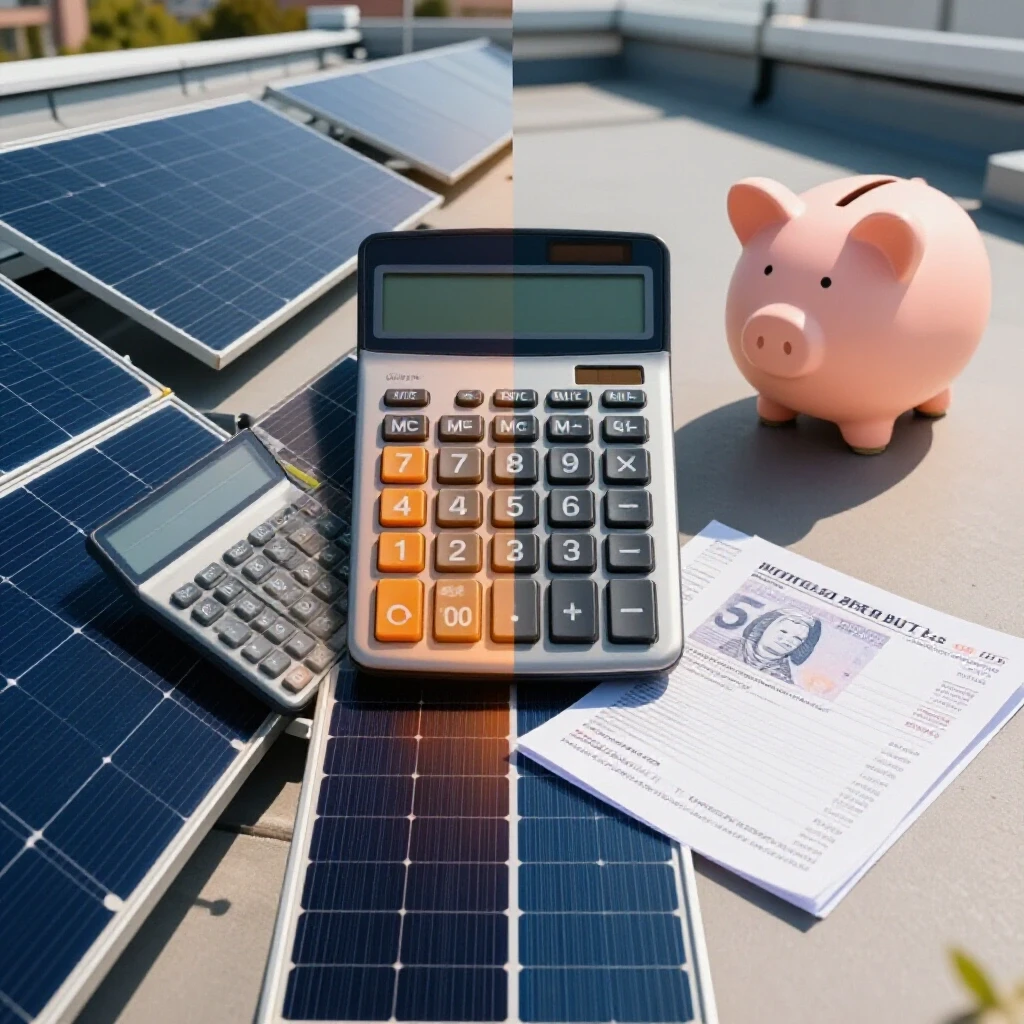
In my decade of tracking home expenses, I have found that the most successful projects start with a hard cap. When I planned my own energy upgrade, I looked at my five-year average for electricity and compared it to the local cost vs value home improvement data for my zip code. I realized that over-improving for the neighborhood would be a mistake. I set a budget that was 10% lower than the maximum I could afford, leaving room for the inevitable surprises that come with older homes.
- Review the last 24 months of utility statements to find your baseline.
- Check local real estate listings to see if similar upgrades are common in your area.
- Determine if you will use cash or a home equity line, keeping interest in mind.
- Set a firm “walk away” price before you ever call a contractor for a quote.
Why Standard Estimates Often Miss the Mark
Standard estimates are generic figures provided by companies that do not account for the unique structural or geographical needs of your specific property. These “ballpark” numbers usually ignore the condition of your existing roof, the distance to your electrical panel, or the presence of shading from nearby trees. A realistic expense forecast must account for these site-specific variables to be accurate.
Interestingly, during my second renovation, I received three quotes that varied by nearly $6,000. One contractor missed the fact that my roof required additional bracing to handle the weight of the hardware. Another failed to account for the specialized flashing needed for my specific tile type. If I hadn’t been using a detailed remodeling expense tracker to compare these line items, I might have chosen the lowest bid and faced a massive change order mid-project.
- Roof Age: If your roof has less than 10 years of life left, you must budget for a replacement.
- Structural Integrity: Older rafters may need “sistering” to support a 500-pound array.
- Tree Work: You might need to spend $1,500 on professional arborists to clear a path for the sun.
- Electrical Upgrades: An outdated 100-amp panel may need a $2,500 upgrade to handle the new load.
Breaking Down the Line-Item Expenses for Residential Solar
A comprehensive cost breakdown guide separates the visible hardware from the invisible costs of labor and logistics. By looking at each component as an individual line item, you can see exactly where your money is going and where you might have room to negotiate. This granular view is the best defense against hidden fees and budget creep during a home renovation.
Based on my personal ledger and data from the U.S. Bureau of Labor Statistics, labor typically accounts for about 10% to 15% of the total project cost. The hardware itself—the panels, the inverter, and the mounting racks—makes up the largest chunk. However, the “soft costs” like permits and inspections can vary wildly depending on your local municipality.
| Budget Item | Projected Cost (Low) | Actual Cost (High) | Variance Notes |
|---|---|---|---|
| Hardware (Panels/Inverter) | $8,000 | $12,000 | Quality and efficiency ratings |
| Mounting & Racking | $1,200 | $2,000 | Roof pitch and material impact |
| Labor & Installation | $2,500 | $4,500 | Regional labor rate indexing |
| Permits & Inspections | $300 | $1,200 | Varies by city and county |
| Contingency Buffer (20%) | $2,400 | $3,940 | For hidden structural issues |
The Real-World Timeline for Recouping Your Investment
Recouping your investment is the process of using monthly energy savings to pay back the initial capital spent on the installation. This timeline is not a guess; it is a mathematical calculation based on your system’s output and your local utility rates. Most homeowners should look for a break-even point that falls within a 6 to 10-year window.
In my client consultations, I often see people get frustrated because they expect immediate riches. In reality, the “payback” is a slow burn. If you spend $15,000 and save $150 a month, your break-even point is 100 months, or about 8.3 years. I track this in my own spreadsheet by subtracting my new, smaller bill from my old average bill every single month. This keeps the financial reality grounded and prevents me from overestimating the “value” of the project.
- Daily Living Patterns: If you work from home, you use more power when the sun is out.
- Seasonal Shifts: Your “payback” will accelerate in the summer and slow down in the winter.
- Utility Rate Hikes: As the power company raises prices, your system actually becomes more valuable.
- Degradation: Panels lose about 0.5% efficiency every year, which slightly extends the timeline.
Integrating Solar with Home Aesthetics and Design
Integrating technology into your home’s design means choosing materials and placement that enhance the property’s curb appeal. For many cost-conscious planners, the fear of “ugly” panels lowering the home’s resale value is a major concern. Selecting low-profile mounting systems or all-black panels can turn a utility project into a high-end architectural feature.
Building on this, I once worked with a homeowner who was worried about putting panels on the front of her Cape Cod-style house. We decided to build a DIY timber-frame garden shed in the backyard and mount the panels there instead. This “lifestyle upgrade” provided extra storage and kept the main house looking traditional. It was a perfect example of financial planning for homeowners that prioritized both energy and aesthetics.
- Symmetry: Aligning panels with the edges of the roof looks more intentional.
- Color Choice: Black-on-black panels disappear more easily on dark shingle roofs.
- Conduit Hiding: Ask the installer to run the wires through the attic rather than across the roof.
- Monitoring Apps: Use a digital dashboard to see your “craftsmanship” in action through data.
Avoiding Common Financial Traps in Energy Projects
Financial traps are unexpected costs that arise from poor planning or a lack of research into local building codes. These can range from a surprise requirement for a new circuit breaker to a city inspector demanding a specific type of fire-rated walkway on your roof. Identifying these traps early allows you to allocate a contingency buffer that protects your main budget.
One of the biggest traps I encountered in my own renovation was the “change-order escalation.” This happens when a contractor starts the work and discovers a problem they “couldn’t have seen” before. To avoid this, I now include a clause in my contracts that requires a fixed-price bid for the entire scope of work. I also keep a 20% contingency fund in a separate high-yield savings account, just in case.
- The Old Roof Trap: Installing panels on a 15-year-old roof is a financial disaster waiting to happen.
- The Permit Delay Trap: Some cities take months to approve plans, which can lead to price increases for materials.
- The “Free” Solar Trap: Never sign a contract that promises “no cost” without reading the fine print on long-term liens.
- The Over-Sizing Trap: Building a system larger than you need results in a longer timeline to recoup your costs.
Long-Term Maintenance and Value Retention
Maintenance and value retention refer to the ongoing effort and cost required to keep your system running at peak performance. While these systems are generally low-maintenance, ignoring them can lead to a drop in efficiency that ruins your financial projections. Factoring in a small annual “upkeep” fee ensures your spreadsheet remains accurate over the 25-year life of the hardware.
Interestingly, Remodeling Magazine’s data suggests that energy-efficient upgrades can add significant value to a home, but only if they are well-maintained. I recommend a simple “check-up” twice a year. I use a soft brush and water to clear off pollen and dust, which can improve output by up to 10%. This small bit of sweat equity protects the thousands of dollars I’ve already invested.
- Cleaning: Budget $0 if you do it yourself, or $150 for a professional service.
- Inverter Replacement: Most inverters last 12 to 15 years; budget $1,500 for a future swap.
- Monitoring: Most systems come with free apps, but some “premium” services have a monthly fee.
- Insurance: Call your agent to ensure the system is covered under your homeowner’s policy.
Practical Tools for Tracking Your Energy Project
To keep your project on track, you need more than just a general idea of costs; you need a system for recording every penny. Using specialized software or a well-organized spreadsheet allows you to see the “budget vs. actual” numbers in real-time. This level of detail is what separates a successful renovation from a financial headache.
I have spent years refining my own remodeling ledger files. I break my tracker down by category: Materials, Labor, Permits, and Contingency. Each time I get a receipt, it goes into the tracker immediately. This prevents the “death by a thousand cuts” where small $50 trips to the hardware store end up totaling thousands of dollars by the end of the month.
- Tiller Money: Connects your bank accounts directly to Google Sheets for real-time tracking.
- ProjectPay: A tool for managing contractor payments and ensuring work is completed before funds are released.
- PVWatts Calculator: A free tool from the National Renewable Energy Laboratory to estimate your system’s output.
- HomeZada: A comprehensive home management app that tracks maintenance schedules and project costs.
Final Steps for the Cost-Conscious Planner
If you are ready to move forward, start by creating your own version of a remodeling expense tracker. Don’t rush into signing a contract. Instead, spend the next month gathering data on your energy use and talking to neighbors who have already completed similar projects. This “pre-construction” phase is the most important part of your financial planning.
Building on this, remember that your home is an investment, but it is also where you live. The goal of any energy upgrade should be to improve your quality of life while maintaining a disciplined approach to your finances. By following a strict financial framework and accounting for every line item, you can enjoy the benefits of a sustainable home without the stress of unexpected debt.
- Download a basic budget template and customize it for your energy project.
- Get at least three quotes from local installers with at least five years of experience.
- Verify the structural health of your roof before committing to any hardware.
- Set your “break-even” expectations based on a 10-year horizon for maximum safety.
Frequently Asked Questions
How much should I set aside for a contingency fund? For most residential energy projects, a 15% to 20% contingency buffer is recommended. This covers unexpected electrical upgrades, roof repairs, or permit fee increases. If you are working on an older home with lath-and-plaster walls or outdated wiring, aim for the higher end of that range to be safe.
Does adding solar panels actually increase my home’s resale value? Data from the Cost vs. Value reports suggests that energy-efficient upgrades are highly attractive to modern buyers. However, the exact value depends on your local market. In areas with high utility rates, the value retention is much higher than in areas where power is cheap. Always check with a local real estate agent before assuming a 1:1 return.
Can I save money by doing a DIY installation? While you can save on labor costs, DIY energy projects are complex. You will still need a licensed electrician to handle the final connection to your home’s main panel. If you are a skilled DIYer, you might save 10% to 20%, but the risk of improper flashing leading to roof leaks can quickly erase those savings.
How do I know if my roof is right for this project? Ideally, your roof should face south and have a pitch between 15 and 40 degrees. It should also be in the first half of its expected lifespan. If your roof is more than 15 years old, the cost of removing and re-installing the panels later will make the project much more expensive in the long run.
What is the most common hidden fee in these projects? The most common hidden fee is the “main lug” or panel upgrade. Many older homes have electrical panels that simply do not have the physical space or the amperage capacity to accept a new power source. This can add $2,000 to $3,500 to your project cost very quickly.
How often do the panels need to be replaced? Modern panels are designed to last 25 to 30 years. They don’t usually “break,” but they do become less efficient over time. Most manufacturers guarantee that the panels will still produce at least 80% of their original power after 25 years.
What happens if I move before the 8-year payback period? If you move early, you haven’t “lost” the money, but you haven’t fully recouped it through energy savings either. In this case, you are relying on the increased resale value of the home to make up the difference. This is why it is vital to ensure the installation is aesthetically pleasing and professionally done.
Does weather affect my financial projections? Yes, your spreadsheet should account for seasonal variations. You will likely “over-produce” in the spring and summer and “under-produce” in the winter. A good financial plan looks at the annual average rather than month-to-month fluctuations to determine the true return on investment.
Should I wait for better technology before buying? Energy technology improves every year, but the gains are usually incremental—perhaps 1% or 2% more efficiency. If you wait five years for “perfect” panels, you miss out on five years of energy savings. For a cost-conscious planner, the best time to start is usually when the numbers in your current spreadsheet make sense.
How do I track my savings after the project is done? The simplest way is to compare your new utility bill to the same month from the previous year. Be sure to account for any changes in your lifestyle, such as adding an electric vehicle or a new air conditioning unit, which would naturally increase your power consumption.
(This article was written by one of our staff writers, Steven Fletcher. Visit our Meet the Team page to learn more about the author and their expertise.)