Staircase Makeover Cost Breakdown: Safety vs Style (Full Guide)

Updating a staircase is often the most overlooked “must-have” in a home renovation budget. While we often focus on kitchens and bathrooms, the staircase is a high-traffic structural element that bridges the design of your entire home. From a financial planning perspective, it is a unique project where safety regulations and aesthetic choices collide, often leading to significant budget variances if not managed with a strict ledger.
In my decade of tracking home expenses, I have found that homeowners often underestimate the technical complexity of stairs. My own first renovation taught me this lesson the hard way. I had budgeted for a simple cosmetic refresh, only to discover that my existing handrail height did not meet modern safety codes. This single oversight triggered a cascade of “change orders” that increased my initial estimate by 25%. This article provides the data-driven framework I now use to help clients avoid these financial traps while balancing structural integrity with visual style.
Building a Resilient Financial Framework for Stairway Improvements
A financial framework is the structured plan you use to allocate money for home projects. It identifies your total available funds, sets a hard limit on spending, and creates a buffer for surprises. This ensures your project finishes without draining your emergency savings or retirement accounts.
Before you look at wood samples or paint colors, you must establish your funding boundaries. I recommend a “bottom-up” budgeting approach. Start by identifying the non-negotiable safety repairs required by your local building department. Only after these are funded should you look at the “style” layer. In my client consultations, I use a 20% contingency buffer as a standard rule. If your spreadsheet shows a $5,000 estimate, your actual funding capacity must be $6,000.
This buffer protects you from the material price shifts we have seen recently. According to recent construction price indexes, the cost of finish-grade lumber can fluctuate by 10-15% in a single quarter. By locking in a conservative budget early, you prevent the stress of running out of money mid-project, which is the biggest pain point for cost-conscious planners.
Why Standard Estimating Fails and How to Forecast Better
Standard estimates are generic price ranges found online that often ignore local building codes and specific house conditions. Accurate forecasting involves using your home’s actual measurements and local labor rates. This prevents the common trap of underestimating costs by failing to account for structural repairs or permit fees.
The primary reason staircase budgets fail is the “hidden layer” problem. When you pull up old carpet, you might find cracked treads or uneven risers that were not visible during your initial walkthrough. In my personal renovation ledger from 2018, I recorded a $450 “preparation fee” just for removing 30-year-old staples and adhesive that the contractor hadn’t included in the base quote.
To forecast accurately, you must account for the following three variables: * The “As-Is” Condition: Are the structural stringers (the bones of the stairs) solid? * Municipal Requirements: Does your city require a permit for rail replacement? * Labor Multipliers: Is your staircase in a tight hallway or an open foyer? Restricted space increases labor hours.
Projected vs. Actual Budget Line-Item Breakdown
The table below reflects a mid-range project scope based on my historical data tracking.
| Category | Projected Cost (Low) | Actual Cost (Average) | Variance Explanation |
|---|---|---|---|
| Demolition & Disposal | $300 | $550 | Hidden subfloor damage |
| Materials (Oak Treads) | $1,200 | $1,450 | 15% material price surge |
| Balusters & Handrails | $800 | $950 | Code-compliant spacing |
| Professional Labor | $2,500 | $3,100 | Extra sanding/prep time |
| Permits & Inspections | $150 | $225 | Local filing fee increase |
| Total | $4,950 | $6,275 | ~26% Overrun |
Navigating the Trade-offs Between Structural Integrity and Visual Appeal
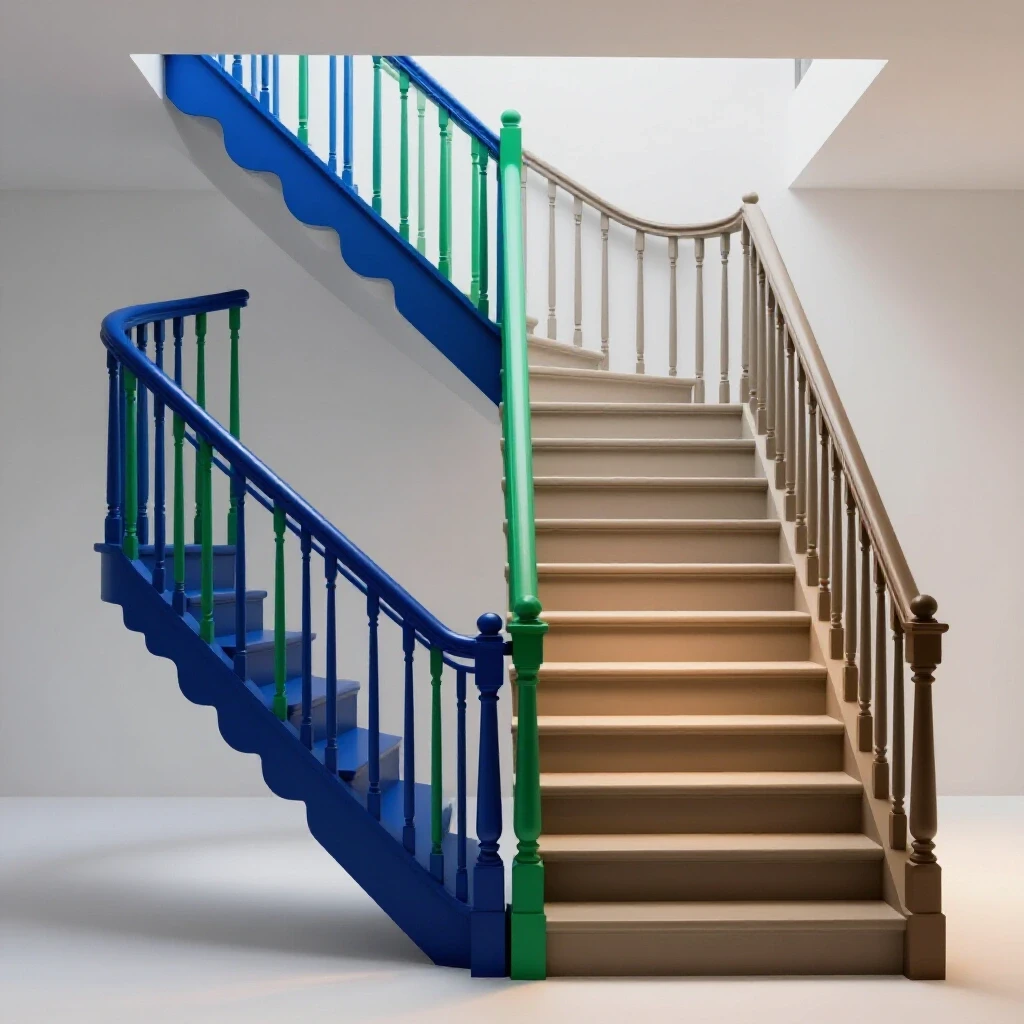
This concept focuses on prioritizing essential safety repairs, like fixing loose treads or meeting height requirements, before spending on decorative items. Balancing safety and style means your budget first covers what makes the stairs functional. Only after safety is secured do you allocate funds for paints, stains, or new balusters.
When I review home renovation budgets, I often see “over-improvement” in the style category. A homeowner might want expensive wrought iron balusters but ignore a wobbly handrail. From a resale perspective, a beautiful staircase that fails a home inspection due to safety violations is a liability, not an asset.
I suggest a “Safety First” allocation rule: 1. Allocate 100% of funds needed for structural repairs and code compliance. 2. Review the remaining balance for “Style” upgrades. 3. If the balance is low, choose high-impact, low-cost aesthetic changes like paint or a new runner rather than structural changes.
Line-Item Analysis of Material and Component Expenses
A line-item analysis breaks down your total project into every individual part you need to buy. For a staircase, this includes treads, risers, handrails, and hardware. Listing every item helps you track where every dollar goes and allows you to swap materials if you need to save money.
Materials usually account for 30% to 40% of the total remodeling expense tracker. In my experience, the choice of wood species is the largest variable. Red oak is a standard mid-range choice that balances durability and cost. White oak or walnut can increase material costs by 50% or more.
- Treads: These are the horizontal steps. Expect to pay more for “retro-fit” treads designed to go over existing wood.
- Risers: The vertical backings. Using paint-grade poplar instead of matching hardwood can save $20-$40 per step.
- Newel Posts: These are the heavy anchor posts. They are vital for safety and can cost between $150 and $400 each depending on the design.
- Hardware: Do not forget the cost of specialized screws, wood glue, and brackets. These “small” items often total $100-$200.
The Impact of Regional Labor Rates on Your Bottom Line
Labor rates refer to the hourly or project-based fees charged by professional contractors and carpenters in your specific area. These costs vary significantly based on the local cost of living and demand for tradespeople. Understanding these rates helps you decide between hiring a pro or doing some work yourself.
According to the U.S. Bureau of Labor Statistics, the median hourly wage for carpenters is approximately $25 to $35 per hour, but this is a base rate. In high-cost urban areas, a specialized finish carpenter may charge $75 to $120 per hour. When I analyze regional data, I use a “Labor Coefficient” to adjust my spreadsheets based on the location.
Regional Labor Cost Coefficients
Use these multipliers to adjust national average estimates to your specific region.
| Region | Multiplier | Financial Impact |
|---|---|---|
| Northeast / West Coast | 1.35 | Higher insurance and overhead |
| Midwest | 0.95 | Lower cost of living, stable rates |
| Southeast | 0.90 | Competitive labor market |
| National Average | 1.00 | Baseline for standard estimates |
Accounting for Hidden Fees and Municipal Protections
Hidden fees include costs like permit applications, debris hauling, and protective floor coverings. Municipal protections refer to the building codes that ensure your stairs are safe for all occupants. Ignoring these can lead to fines or the need to tear out and redo work, which is a financial disaster.
Many homeowners try to avoid permits to save a few hundred dollars. I strongly advise against this. A permit is a form of financial insurance. It ensures a third-party inspector verifies the work is safe. If you sell your home and the buyer’s inspector finds non-permitted structural work on the stairs, it can stall the sale or lead to a price reduction that far exceeds the original permit cost.
Common hidden costs to include in your remodeling expense tracker: * Dumpster rental or junk removal fees: $200-$500. * Floor protection (Ram Board) and dust barriers: $50-$100. * Permit filing and inspection fees: $100-$400 depending on the municipality. * Tool rentals (if DIY): $100 per day for specialized saws or sanders.
Long-Term Value and Return on Investment for Stairway Projects
Return on investment (ROI) is the percentage of the project cost you can expect to recover when you sell your home. It measures how much value the upgrade adds compared to its price. Knowing your local market’s ceiling prevents you from over-improving the stairs beyond what buyers will pay for.
Data from Remodeling Magazine’s Cost vs. Value reports suggests that interior renovations generally recoup between 50% and 70% of their cost. However, staircases are unique. Because they are a focal point, a well-executed update can increase the “marketability” of a home, leading to a faster sale even if the direct ROI isn’t 100%.
To avoid over-improving, look at “comps” (comparable homes) in your neighborhood. If most homes in your area have standard carpeted stairs with oak handrails, installing a custom glass and steel staircase might not yield a higher sale price. I recommend staying within 10-15% of the neighborhood standard for finishes.
Tracking Your Project with a Remodeling Ledger
A remodeling ledger is a detailed record of every transaction, quote, and receipt related to your project. It is the most effective tool for keeping a budget on track. By comparing your “estimated” cost to your “actual” cost in real-time, you can make adjustments before you overspend.
I use a simple three-column spreadsheet for my projects. The first column is the “Budgeted Amount,” the second is the “Committed Cost” (when I sign a contract or buy materials), and the third is the “Actual Paid.” This allows me to see exactly how much of my contingency fund is left at any given moment.
5 Essential Tools for Financial Tracking
- Microsoft Excel or Google Sheets: For custom ledger creation.
- Personal Capital or Mint: To track overall home equity and project spending.
- HomeZada: A digital home management app for tracking maintenance and renovation ROI.
- Construction Visualizer Apps: To estimate material quantities accurately.
- Local Building Department Websites: For the most current permit fee schedules.
Actionable Steps for the Cost-Conscious Planner
To keep your stairway project on a firm financial footing, follow these steps in order. This sequence is designed to identify costs early and prevent mid-project surprises.
- Perform a Safety Audit: Check for loose steps, proper rail height (usually 34-38 inches), and baluster spacing (usually less than 4 inches apart).
- Get Three Detailed Quotes: Ensure each contractor breaks down labor and materials separately. Ask about their “change-order” policy.
- Verify Local Codes: Call your city’s building department to see if a permit is required for your specific scope of work.
- Create Your Ledger: Use the line items discussed above to build your spreadsheet.
- Source Materials Early: If you are managing the project, buy your materials ahead of time to lock in current prices.
By treating your staircase update as a structural investment rather than just a cosmetic one, you protect both your family and your finances. The goal is a result that is as safe as it is stylish, completed without the burden of unexpected debt.
Frequently Asked Questions
How much should I realistically set aside for a staircase update? For a mid-range update involving new treads and a railing system, most homeowners should budget between $4,000 and $8,000. This range accounts for professional labor and quality materials like red oak. Always include a 20% contingency on top of your primary estimate to handle structural surprises or material price increases.
Can I save money by doing the demolition myself? Yes, DIY demolition can save you between $300 and $600 in labor costs. However, you must be careful not to damage the underlying stringers or surrounding drywall. You will also need to account for the cost of hauling away the old materials, which can run $100 to $200 at a local landfill.
Is it cheaper to refinish existing stairs or replace the treads? Refinishing is generally more cost-effective, costing about 30-50% less than replacement. However, this is only an option if the existing wood is thick enough to be sanded and is free of major structural cracks. If the wood is damaged or you want to change the wood species, replacement is necessary.
How do I know if my staircase is “up to code”? Building codes vary by city, but most follow the International Residential Code (IRC). Key safety metrics include a maximum riser height of 7.75 inches, a minimum tread depth of 10 inches, and handrails between 34 and 38 inches high. If your stairs feel steep or the railing is low, they likely need a safety-focused update.
What is the most cost-effective material for a durable staircase? Red oak is the industry standard for a reason. It is incredibly durable, takes stain well, and is widely available, which keeps costs lower than specialty woods like white oak or maple. For risers, paint-grade poplar is a great way to save money without sacrificing the look of the finished project.
Do I really need a permit for just changing the balusters? In many jurisdictions, if you are changing the structural spacing or the height of the guardrail system, a permit is required. This ensures the new system can withstand the required pressure (usually 200 pounds of force). Check with your local building office to avoid potential issues during a future home sale.
How does a staircase makeover affect my home’s tax assessment? Generally, cosmetic interior updates do not trigger a significant change in property tax assessments. However, if the project involves structural changes or a major addition that requires a permit, the city may update your home’s “improvement value.” The impact is usually minimal compared to the value added to the home.
What are the most common hidden costs in these projects? The most frequent hidden costs are subfloor repairs, drywall patching around new posts, and the cost of finishing supplies like high-traffic floor sealers. I also often see costs for “transition strips” where the new stairs meet the existing flooring on the upper and lower levels.
How can I prevent a contractor from overcharging me? The best protection is a detailed, fixed-price contract. Avoid “time and materials” contracts for staircase work, as the hours can add up quickly. Ensure the contract lists the specific materials to be used and includes a clause that all work must pass local safety inspections before the final payment is made.
Should I prioritize style or safety if my budget is tight? Always prioritize safety. A stylish staircase that is difficult to climb or has a loose railing is a major liability. If funds are limited, spend your money on ensuring the structure and handrails are solid and code-compliant. You can always add decorative elements like a runner or fancy paint later when your budget allows.
(This article was written by one of our staff writers, Steven Fletcher. Visit our Meet the Team page to learn more about the author and their expertise.)