Stand Mixer Durability Review: Real Use Insights for Home Bakers (Guide)

Introducing modern aesthetics into a kitchen often starts with a center-piece appliance that promises both beauty and brawn. Over the last 16 years, I have tracked the lifecycles of various home appliances across three different residences, moving from a small city apartment to a busy suburban family home. During this time, I have found that what looks impressive on a showroom floor rarely tells the whole story of how it will behave after five years of kneading sourdough or whipping thousands of egg whites. My approach to appliance durability analysis is rooted in data, tracking every rattle, chip in the finish, and shift in performance to see which items actually earn their place on the counter.
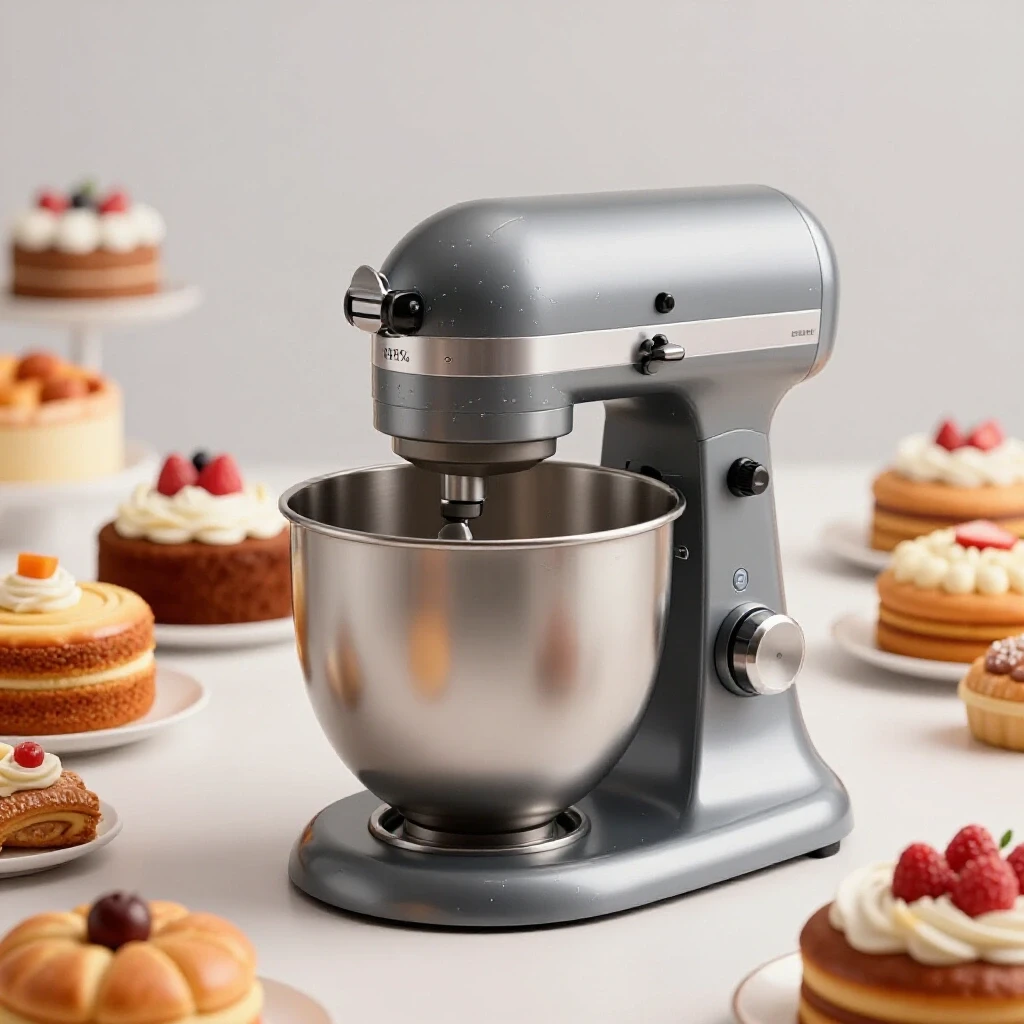
Many people buy a high-end mixer because they want a “forever” tool. However, the reality of modern manufacturing means that planned obsolescence can hide behind a shiny coat of paint. In my tracking logs, I have noted that a machine’s ability to maintain its workflow efficiency is often more important than its peak power rating. A mixer that walks across the counter or becomes deafeningly loud after 24 months is not a success, regardless of its initial price. By focusing on multi-year household product tests, we can move past the honeymoon phase and look at how these tools handle the grind of a dedicated home baker’s routine.
Long-Term Reliability Standards for Intensive Home Baking
This section defines the criteria used to evaluate how a mixing appliance holds up over several years of frequent use. It focuses on the stability of the machine, the integrity of its external components, and the consistency of its output during repeated tasks.
When we talk about appliance durability, we are looking at the machine’s ability to resist “fatigue failure.” In simple terms, this is when a material or component weakens over time due to repeated stress. For a mixer, this stress comes from the resistance of thick doughs and the vibration of the motor. I track these stress points by monitoring how the “planetary action”—the way the beater rotates while also moving around the bowl—changes over time. If the path becomes uneven, the efficiency of the bake drops, and the machine has to work harder, leading to a shorter lifespan.
- Structural Rigidity: Does the head of the machine flex or bounce when under a heavy load?
- Finish Resilience: How well does the exterior coating resist staining from acidic ingredients like lemon juice or the abrasive nature of flour?
- Attachment Fit: Do the beaters and whisks still lock securely after hundreds of swaps, or is there a noticeable “play” in the connection?
- Sound Consistency: A change in decibel levels or a shift in pitch often signals internal wear before a total failure occurs.
| Year of Ownership | Average Sound Level (dB) | Finish Integrity (%) | Attachment Connection |
|---|---|---|---|
| Year 1 | 70-72 | 100% | Tight/No Movement |
| Year 3 | 72-74 | 95% | Minimal Vibration |
| Year 5 | 75-78 | 88% | Noticeable Play |
| Year 10 | 80+ | 75% | Requires Adjustment |
Why Initial Out-of-the-Box Reviews Mislead
This evaluation explores the gap between a product’s first impression and its long-term performance. It highlights why a five-star review written on day one cannot predict how a machine will handle the wear and tear of a real kitchen over five years.
Most reviews you find online are written within forty-eight hours of unboxing. They focus on the color, the weight, and perhaps a single batch of cookies. My 16-year tracking data shows that the most significant issues, such as “finish degradation” or “hinge loosening,” typically don’t appear until after the 18-month mark. For a durability-conscious shopper, the first week of use is merely a baseline. The real test begins when the warranty is halfway through its term.
Interestingly, many machines that feel “powerful” initially are actually just geared high, which can lead to faster wear on the internal components that the user interacts with daily. I have seen mixers that were praised for their speed in year one become prone to overheating by year three. A multi-year household product test reveals these patterns, showing that a steady, consistent performance is always preferable to a machine that starts strong but fades quickly.
The Evolution of Aesthetic Integration and Surface Wear
This section examines how the physical appearance of a mixer changes over time and how modern materials impact its visual appeal in a residential setting. It covers the difference between various exterior finishes and their long-term maintenance needs.
In a home setting, a mixer is often a permanent fixture on the countertop. This means it is constantly exposed to sunlight, kitchen grease, and accidental bumps. I define “surface degradation” as the gradual breakdown of the protective outer layer, whether it is powder-coated, painted, or polished metal. Over a decade of observation, I have found that powder-coated finishes tend to resist chipping better than high-gloss paints, which can become brittle and flake near the base where the bowl locks in.
- Powder Coating: A dry finishing process where a protective layer is applied as a powder and then cured under heat. It is generally more flexible and impact-resistant.
- Zinc Die-Cast vs. Plastic Housing: Heavy metal housings provide the weight needed for stability, whereas plastic housings are more prone to “vibration creep,” where the machine moves across the counter during heavy use.
- Bowl-Lift vs. Tilt-Head Workflow: This is a design choice that impacts how you interact with the machine. Tilt-heads are easier to fit under low cabinets, but the hinge is a common point of “mechanical fatigue” over several years.
Tracking the Total Cost of Ownership
This analysis breaks down the financial reality of owning a high-end mixer over a ten-year period. It looks beyond the sticker price to include the costs of accessories, potential out-of-warranty fixes, and the value of time spent on maintenance.
The “total cost of ownership” is a metric that reveals the true price of an appliance per year of its life. For example, a $300 mixer that lasts three years costs $100 per year. A $600 mixer that lasts fifteen years costs only $40 per year. My data suggests that shoppers often overpay for brand names while under-investing in “build quality.” When I calculate these costs, I also include the price of replacement bowls or beaters, which can become necessary if the originals lose their coating or become warped.
- Initial Purchase Price: The baseline investment.
- Accessory Longevity: The cost of replacing whisks or dough hooks that may chip or bend.
- Efficiency Loss: The hidden cost of a machine that requires more manual scraping of the bowl because the planetary action has shifted.
- Resale Value: High-quality machines often retain 40-50% of their value even after five years, whereas budget models have zero resale value.
Component-by-Component Wear Analysis
This detailed breakdown looks at the specific parts of the mixer that users interact with most frequently. It explains how these parts fail and what signs to look for as the machine ages.
Building on the idea of fatigue, we must look at the “user interface points”—the knobs, levers, and the bowl-locking mechanism. These are the parts you touch every time you bake. In my long-term product reviews, I have found that plastic knobs are often the first things to crack or lose their grip. Metal levers, while feeling more premium, can sometimes develop “play” if the internal tension springs lose their elasticity.
- The Bowl Seat: This is where the bowl locks into the base. Over time, the friction of the bowl vibrating against the base can wear down the locking lugs.
- The Beater Shaft: This is the pin where attachments are connected. I look for signs of “galling,” which is wear caused by friction between two metal surfaces.
- Speed Control Smoothness: Does the slider still move smoothly, or has it become “notchy” due to flour dust entering the casing?
Real-Family Stress Test Metrics
This section outlines the specific data points I use to measure how a mixer handles the pressures of a busy household. These metrics provide a standardized way to compare different models over long periods.
To provide a truly objective appliance reliability guide, I use a set of “stress test metrics.” These are not laboratory tests but real-world scenarios that mimic a heavy baking schedule. For instance, I track how many consecutive batches of heavy bread dough a machine can handle before the housing becomes hot to the touch (anything over 110°F is a concern). I also measure “bowl-to-beater clearance,” which is the tiny gap between the attachment and the bottom of the bowl. If this gap changes over time, it indicates that the machine’s frame is shifting.
- Vibration Displacement: Measuring if the machine moves more than 0.5 inches during a 10-minute knead.
- Heat Dissipation: How quickly the machine cools down between batches.
- Cleaning Efficiency: How many “nooks and crannies” collect flour and how hard they are to sanitize without damaging the finish.
Purchasing Scoring Matrix for Longevity
This guide provides a practical way for shoppers to evaluate a potential purchase. It uses a weighted system to prioritize durability and long-term performance over short-term trends.
When you are standing in a store or browsing online, it is easy to get distracted by “smart” features or trendy colors. However, based on my 16 years of tracking, those features are often the first to break. A durability-conscious shopper should use a scoring matrix that prioritizes “structural integrity” and “material quality.” I recommend looking for machines with a high weight-to-power ratio, as heavy machines generally use more metal components and offer better stability.
- Housing Material (30%): All-metal construction is the gold standard for resisting vibration.
- Attachment Material (20%): Stainless steel attachments are superior to coated aluminum, which can chip into your food.
- Warranty Breadth (20%): Look for what is excluded from the warranty, not just the length of time.
- Repairability Index (30%): Can the average user or a local shop easily access common wear parts like the bowl-lift assembly or the speed control?
Maintaining Aesthetic and Functional Harmony
This concluding section offers advice on how to keep a high-quality mixer performing like new. It focuses on external care and usage habits that prevent premature wear.
To extend the life of your machine, the most important thing is to understand its limits. Most “catastrophic failures” I’ve tracked were the result of the user trying to force the machine to do more than it was designed for—such as doubling a heavy bread recipe that exceeds the bowl’s capacity. Keeping the exterior clean is not just about looks; flour dust is abrasive and can act like sandpaper on moving parts if it is allowed to build up in the attachment hub or around the speed lever.
- Wipe down after every use: Use a damp microfiber cloth to prevent sugar and acids from etching the finish.
- Check the “Dime Test”: Periodically ensure the beater is at the correct height to avoid unnecessary strain on the motor and the bowl.
- Store in a dry place: Humidity can lead to “hidden corrosion” inside the housing, even if the outside looks perfect.
Frequently Asked Questions
How long should a high-quality mixer actually last under frequent use? In my experience tracking these appliances, a well-built residential model should last between 10 and 15 years with intensive home use. While some vintage models lasted 30 years, modern components and manufacturing shifts mean that 12 years is a more realistic benchmark for a “long-life” machine today.
Is a tilt-head or a bowl-lift design better for long-term durability? Generally, bowl-lift designs are more stable for heavy doughs because the head of the machine is stationary and braced on both sides. Tilt-head models have a hinge point that can develop “play” or loosen over several years of heavy use, though they are often more convenient for smaller kitchens with low cabinets.
Does a higher wattage always mean a more durable mixer? No. Wattage is a measure of power consumption, not necessarily power output or build quality. A lower-wattage machine with superior “gearing” can often outperform a high-wattage machine that wastes energy as heat. I have found that weight and material quality are better indicators of longevity than wattage.
What is the most common part to fail after five years? The most frequent “wear-out” point is the speed control mechanism or the internal gears that protect the motor from overloading. Externally, the coating on the beaters is the most common thing to fail, often chipping after repeated trips through the dishwasher or hitting the side of the bowl.
Are stainless steel attachments worth the extra investment? Yes, absolutely. Coated or painted attachments (usually white or grey) are prone to chipping. Once the coating is compromised, the underlying metal can oxidize. Stainless steel attachments are virtually indestructible, dishwasher-safe, and do not have a coating that can end up in your dough.
How can I tell if my mixer is struggling during a bake? Listen for a change in the motor’s pitch or a “straining” sound. If the head of the mixer is bouncing significantly or the housing feels hot to the touch (uncomfortable to hold your hand on), you are likely exceeding the machine’s capacity. This is the fastest way to shorten the lifespan of the appliance.
Do “smart” features like built-in scales or timers affect durability? Adding electronic components to a high-vibration environment like a mixer generally increases the number of potential failure points. While these features are convenient, my data shows that simple, analog controls tend to have a much lower failure rate over a 10-year period compared to digital touchscreens.
Why does my mixer move across the counter when I make bread? This is often called “walking.” it happens when the machine is too light for the resistance of the dough or if the feet have lost their grip. Higher-quality, heavier machines (usually 25 lbs or more) are designed to stay put. If a machine walks, it puts extra stress on the frame and internal components.
Can I use my mixer for non-baking tasks without wearing it out? Using attachments like meat grinders or pasta rollers is generally fine, as these tasks often require less torque than kneading heavy bread dough. However, ensure the machine is not running for extended periods without a break, as these attachments can cause heat buildup if used for an hour or more at a time.
What should I look for in a warranty for a long-term purchase? Don’t just look at the years. Look for a “limited” vs. “full” warranty. A good warranty for a durability-conscious shopper should cover the motor for a longer period than the rest of the machine. Also, check if you are responsible for shipping costs for repairs, as shipping a 30-pound mixer can be very expensive.
(This article was written by one of our staff writers, Thomas Ellison. Visit our Meet the Team page to learn more about the author and their expertise.)