Table Centerpiece Budget Breakdown: Cost Guide for Events (Tips)

Introducing modern aesthetics into a home often feels like a balancing act between style and solvency. As a financial planner who has spent a decade managing detailed remodeling spreadsheets, I have seen how small styling choices can impact a larger home renovation budget. Many homeowners focus on the big-ticket items like cabinets or flooring but overlook the cumulative cost of hosting and decor. This guide provides a structured framework for managing the costs of tabletop arrangements for gatherings without jeopardizing your overall financial health.
Establishing a Financial Framework for Home Styling Expenses
A financial framework is a set of rules that governs how much you spend based on your total home value and monthly cash flow. It prevents emotional spending on decor by setting hard caps before you start shopping. This ensures that every dollar spent on a gathering contributes to your lifestyle without creating a deficit in your primary maintenance funds.

In my own home-related expenses spreadsheet, I categorize aesthetic updates as “lifestyle value” rather than “equity-building” investments. This distinction is vital for cost-conscious home planners. While a kitchen remodel might offer a high return on investment, the money spent on a tabletop arrangement for a dinner party is a pure consumption cost. I recommend allocating no more than 0.5% to 1% of your total home renovation budget toward these temporary or semi-permanent styling elements.
The 1% Rule for Interior Styling and Gatherings
The 1% rule suggests that your annual budget for home decor and hosting should not exceed 1% of your home’s current market value. This provides a realistic ceiling that keeps your spending in line with your local neighborhood’s economic standards. It helps avoid over-improving a space through high-end accessories that do not add to the appraisal value.
Building on this, I track these costs using a remodeling expense tracker to see how they fluctuate by season. For a home valued at $400,000, a $4,000 annual budget for all decor and events is a safe limit. If you plan four major gatherings a year, that leaves roughly $1,000 per event. When you break that down further into individual table settings, a range of $50 to $150 per arrangement is both prudent and achievable.
Line-Item Cost Breakdowns for Tabletop Arrangements
A line-item cost breakdown is a detailed list of every component required for a project, paired with its estimated and actual price. This accounting method exposes hidden costs that usually get lost in a “general” budget. It allows you to see exactly where your money is going and where you can make cuts.
When I assist clients with financial planning for homeowners, we often find that “miscellaneous” categories are the primary source of budget leaks. For a tabletop project, this includes the vessel, the filler, and the lighting. By using a cost breakdown guide, you can compare the price of a $30 glass vase against a $15 repurposed ceramic bowl. This level of detail is what keeps a project from spiraling.
| Item Category | Budgeted Cost (Low) | Budgeted Cost (High) | Actual Cost (Example) | Variance |
|---|---|---|---|---|
| Primary Vessel/Base | $15.00 | $45.00 | $22.00 | -$7.00 |
| Botanical Fillers | $20.00 | $60.00 | $48.00 | +$3.00 |
| Textiles/Linens | $10.00 | $30.00 | $15.00 | -$5.00 |
| Lighting/Candles | $5.00 | $15.00 | $12.00 | -$3.00 |
| Total per Setting | $50.00 | $150.00 | $97.00 | -$12.00 |
Material-to-Labor Ratios for DIY Decor
A material-to-labor ratio compares the cost of raw goods to the value of the time or professional help required to assemble them. For home planners, calculating “sweat equity” helps determine if a DIY project is actually saving money. If a project takes five hours to save $20, the financial trade-off might not be worth the effort.
Interestingly, the U.S. Bureau of Labor Statistics notes that service costs for home decor and floral arrangement have risen due to logistics and labor shortages. By handling the assembly yourself, you effectively remove the 30% to 50% markup typically charged by professional decorators. I suggest a 70/30 split: 70% of your budget for durable materials and 30% for perishables or time-intensive components.
Regional Cost Variations and Market Impact
Regional cost variations are the differences in prices for materials and labor based on your geographic location. A dollar spent in a high-cost-of-living area like San Francisco does not buy the same amount of goods as a dollar in a lower-cost area like Indianapolis. Understanding your local “cost multiplier” is essential for accurate forecasting.
According to data often cited in Remodeling Magazine’s Cost vs. Value reports, labor and material costs can vary by as much as 20% between neighboring states. When planning your hosting expenses, you must adjust your expectations based on local availability. If you live in a region where certain botanicals are out of season, the shipping costs will inflate your budget.
- Northeast Multiplier: 1.15x the national average.
- Midwest Multiplier: 0.95x the national average.
- South Multiplier: 0.90x the national average.
- West Multiplier: 1.20x the national average.
Why Standard Estimates Fail in Local Markets
Standard estimates fail because they use national averages that do not account for local supply chain issues or municipal taxes. A “standard” $100 budget might only cover $80 worth of goods in a metropolitan center after taxes and delivery fees are applied. This is why I always include a 10% regional adjustment in my spreadsheets.
As a result, I recommend checking local prices at at least three different vendors before finalizing your budget. This prevents the “sticker shock” that often occurs when you transition from a Pinterest-inspired idea to a real-world purchase. Always look for materials that are native to your area to keep transport costs low and ensure the items last longer in your local climate.
Accounting for Hidden Fees and Contingency Buffers
A contingency buffer is a reserved portion of your budget set aside to cover unexpected expenses. In home renovation, this is usually 10% to 20% of the total project cost. For smaller decor projects, a 15% buffer is a safe standard to protect against price spikes or broken items.
Hidden fees often include sales tax, shipping costs, and the price of tools needed for assembly, such as floral wire or specialized adhesives. During one of my own kitchen updates, I forgot to account for the cost of the hardware needed to display decor, which added 5% to the final bill. These small oversights can lead to debt if they occur across multiple projects.
- Sales Tax: Always calculate your local tax rate into the final cost of every item.
- Shipping/Delivery: Factor in “last-mile” delivery fees for heavy items like stone or large glass.
- Preparation Tools: Include the cost of scissors, foam, tape, and cleaning supplies.
- Replacement Factor: Budget for at least one item breaking during assembly or transport.
Managing Change-Order Escalation in Small Projects
Change-order escalation occurs when you decide to upgrade a material or add a feature after the initial budget is set. This is a common trap for cost-conscious planners who get caught up in the excitement of a project. To avoid this, I use a “one-in, one-out” rule: if you want a more expensive vase, you must find a cheaper filler to balance the cost.
Building on this, I suggest setting a “hard stop” limit. If your total expenditure for a table arrangement reaches $150, you stop adding items. This discipline is what separates a successful financial plan from a project that drains your savings. It ensures that your hosting activities do not interfere with your ability to pay for essential home maintenance or mortgage payments.
Tracking Expenses with a Remodeling Expense Tracker
A remodeling expense tracker is a tool—either a spreadsheet or an app—used to log every purchase in real-time. It provides a visual representation of your remaining funds and your spending pace. This real-time data allows you to make informed decisions before you overspend.
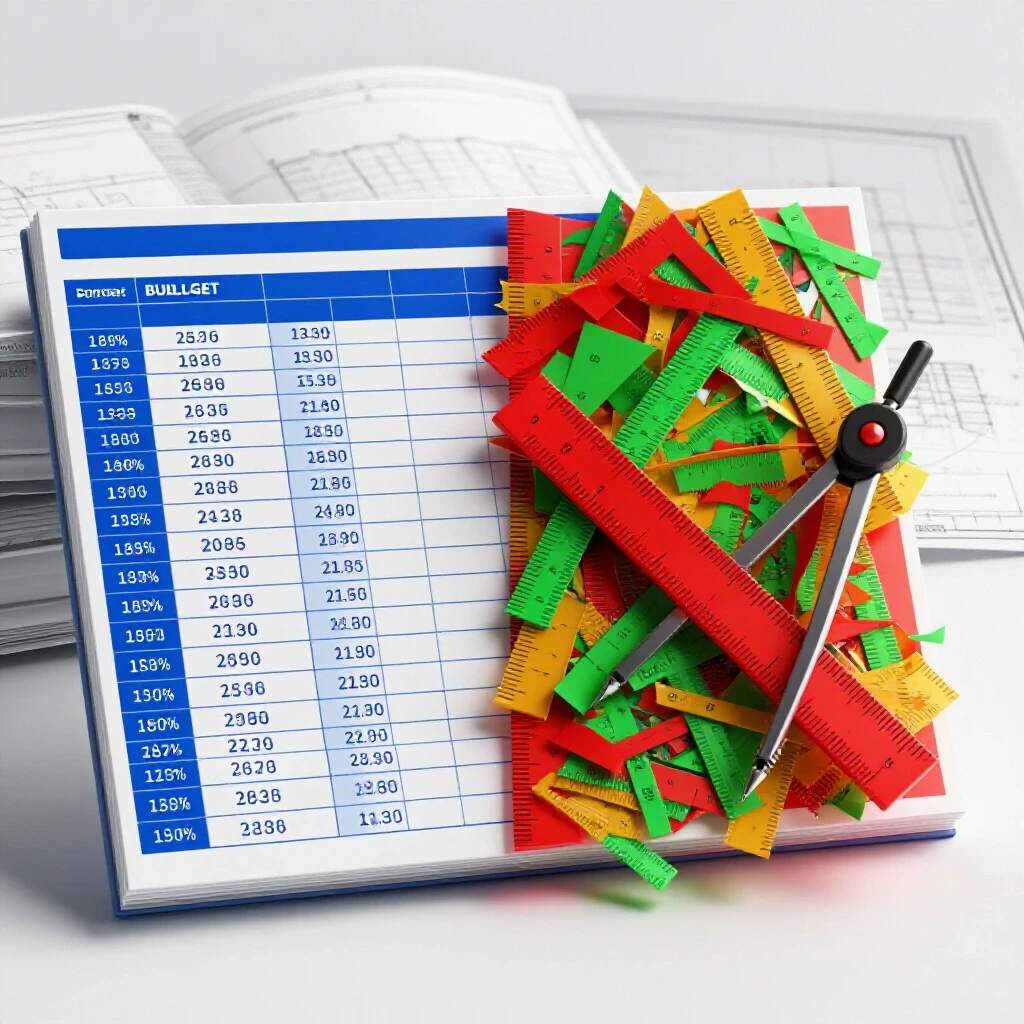
I personally use a simple Excel sheet that tracks “Projected vs. Actual” costs. For my clients, I recommend starting with a basic template that includes columns for the item name, the vendor, the estimated price, the actual price, and the variance. This creates a historical record that makes planning the next event much easier and more accurate.
- Step 1: List every item required for the arrangement.
- Step 2: Research prices online to create a realistic estimate.
- Step 3: Total the estimates and add a 15% contingency.
- Step 4: Log actual receipts as you shop.
- Step 5: Analyze the variances to improve future budgeting.
ROI and Repurposing Strategies for Long-Term Value
Return on Investment (ROI) in home decor is measured by how many times you can reuse an item or its impact on your home’s aesthetic appeal for future buyers. Repurposing is the practice of using an item in a different way or in a different room after its initial use. This lowers the “cost per use” and improves the overall value of the purchase.
Interestingly, durable goods like high-quality linens or classic glass vessels have a much better cost-benefit amortization than trendy, single-use items. If you spend $100 on a versatile centerpiece that you use for ten different gatherings, the cost per event is only $10. This is a much smarter financial move than spending $50 on a themed item that you will throw away or store indefinitely.
Practical Budgeting Frameworks for Busy Households
A budgeting framework is a simplified method for allocating money without needing a degree in accounting. For busy households, these frameworks provide quick “go/no-go” signals for spending. They help maintain financial discipline even when life gets hectic.
One effective method is the “Envelope System” for home projects. You set aside a specific amount of cash for your decor and hosting. Once the cash is gone, the spending stops. This prevents the use of credit cards, which can lead to high-interest debt and long-term financial strain. Another framework is the “Cost-to-Value Recovery” check, where you ask if the item adds value to your daily life or just for a single evening.
- The 50/30/20 Rule: 50% for needs, 30% for wants (including decor), and 20% for savings.
- The 72-Hour Rule: Wait three days before purchasing any decor item over $50 to avoid impulse buys.
- The Local Comp Multiplier: Ensure your decor spending matches the “comparable” standards of your neighborhood.
Common Financial Traps to Avoid in Home Styling
One of the biggest traps is the “while I’m at it” syndrome. This happens when a small project like a table arrangement leads to a desire to repaint the whole room or buy new furniture. To stay on track, you must define the scope of your project clearly and stick to it. Another trap is ignoring the “depreciation schedule” of decor; items like candles and fresh flowers have zero resale value and should be budgeted as 100% loss.
To protect your budget, avoid buying “sets” that include items you don’t need. It is often more cost-effective to buy individual pieces that fit your specific vision. Also, be wary of “free shipping” thresholds that encourage you to spend more than you originally planned. Stick to your spreadsheet and your pre-defined limits.
Practical Next Steps for Cost-Conscious Planners
To keep your project budgets on track, start by auditing your current inventory. You likely already own 40% of what you need for a beautiful tabletop arrangement. Use your remodeling expense tracker to document what you have before you buy anything new. This simple step can save you hundreds of dollars over the course of a year.
Next, establish a “decor reserve” in your savings account. By contributing a small amount each month, you can fund your gatherings without touching your emergency fund or renovation budget. This proactive approach reduces financial stress and allows you to enjoy the creative process of home styling. Always remember that the goal is to enhance your home, not to create a financial burden.
- Download a basic budgeting template or create one in a spreadsheet.
- Set a hard limit of $50 to $150 per arrangement.
- Research local prices to adjust for regional cost variations.
- Focus on repurposing items to maximize long-term value.
FAQ: Navigating the Costs of Home Gathering Decor
What is a realistic budget for a single tabletop arrangement? A realistic budget for a cost-conscious homeowner ranges from $50 to $150. This covers a quality vessel, botanical elements, and small accents like candles. Spending more than this often leads to over-improvement that does not reflect in the home’s market value.
How do I track these small expenses without it becoming a chore? Use a simple remodeling expense tracker on your phone. Snap photos of receipts and enter the totals into a spreadsheet once a week. This keeps the data fresh and allows you to see if you are approaching your budget ceiling.
Should I include the cost of my own labor in the budget? While you don’t pay yourself cash, you should track your “sweat equity” hours. If a DIY project takes ten hours to save $30, it may be more financially sound to buy a pre-made item and use those ten hours for professional work or home maintenance.
How can I reduce the cost of botanical elements? Use a mix of “high and low” materials. Combine a few expensive focal flowers with inexpensive greenery or foraged items from your own garden. This creates a high-end look while keeping the botanical line-item under $50.
Are there hidden fees I should watch out for when shopping online? Yes, always look for “oversize” shipping fees on glass or heavy items. Also, be aware of “restocking fees” if you need to return items that didn’t fit the space as expected. These can eat up 15% to 20% of the item’s cost.
How does a table arrangement affect my home’s resale value? Temporary decor has zero impact on appraisal value. However, it can improve “perceived value” during an open house or showing. For everyday financial planning, treat these costs as a lifestyle expense rather than a capital improvement.
What is the best way to handle a budget overrun? If you go over budget on one item, you must find a “offset” in another category. For example, if the flowers cost $20 more than planned, use linens you already own instead of buying new ones. This keeps the total project cost neutral.
How do I calculate the cost-per-use for decor items? Divide the total cost of the item by the number of times you expect to use it over three years. A $60 vase used 12 times has a cost-per-use of $5. This metric helps justify spending more on durable, classic pieces.
Is it better to buy or rent items for a one-time gathering? For items under $150, buying is usually better because you can repurpose the items in other rooms. Renting is typically only cost-effective for high-volume items like 50+ chairs or professional-grade lighting systems.
What should I do with leftover materials? Store them in a labeled “decor bin” to use for future projects. This reduces the cost of your next arrangement to nearly zero. Tracking this “inventory value” in your spreadsheet helps you see the long-term savings of your initial investments.
(This article was written by one of our staff writers, Steven Fletcher. Visit our Meet the Team page to learn more about the author and their expertise.)