How to Organize Before Shopping: Save Money and Reduce Clutter (Guide)

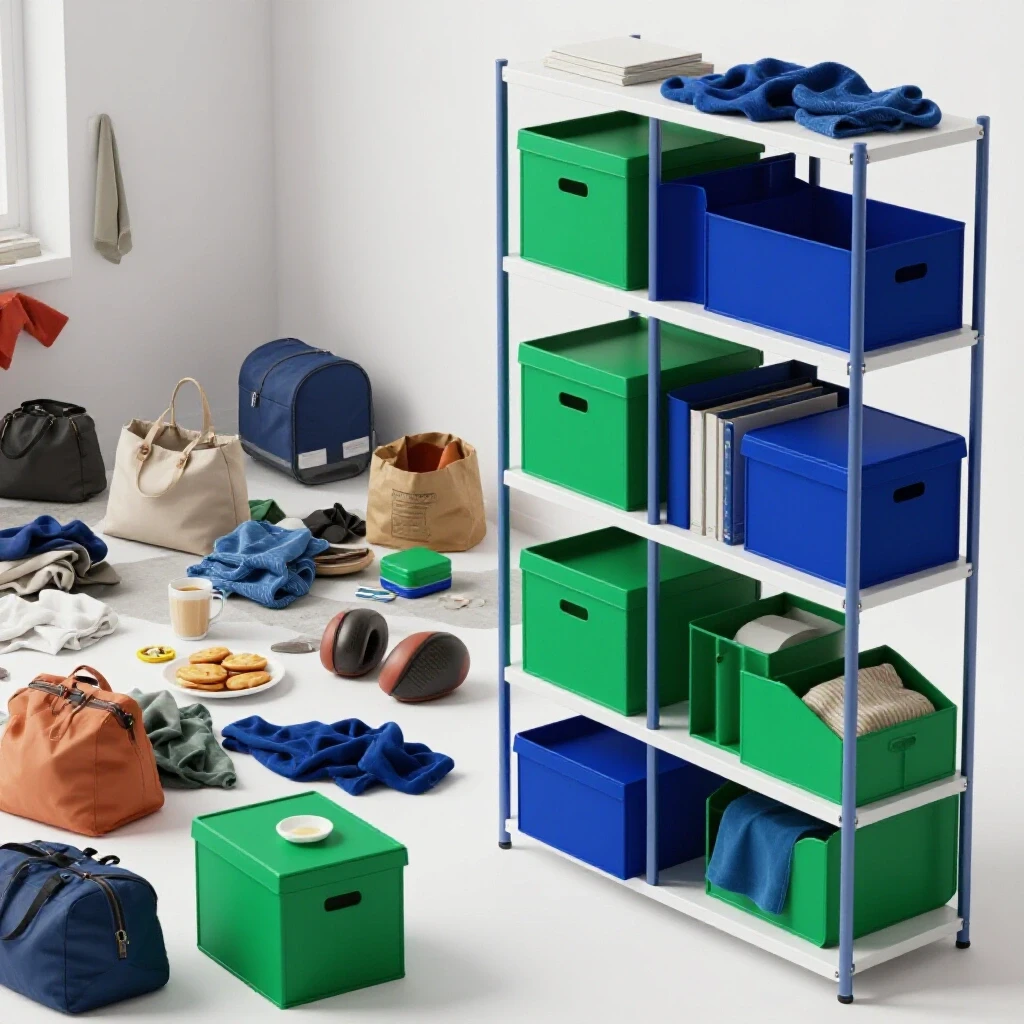
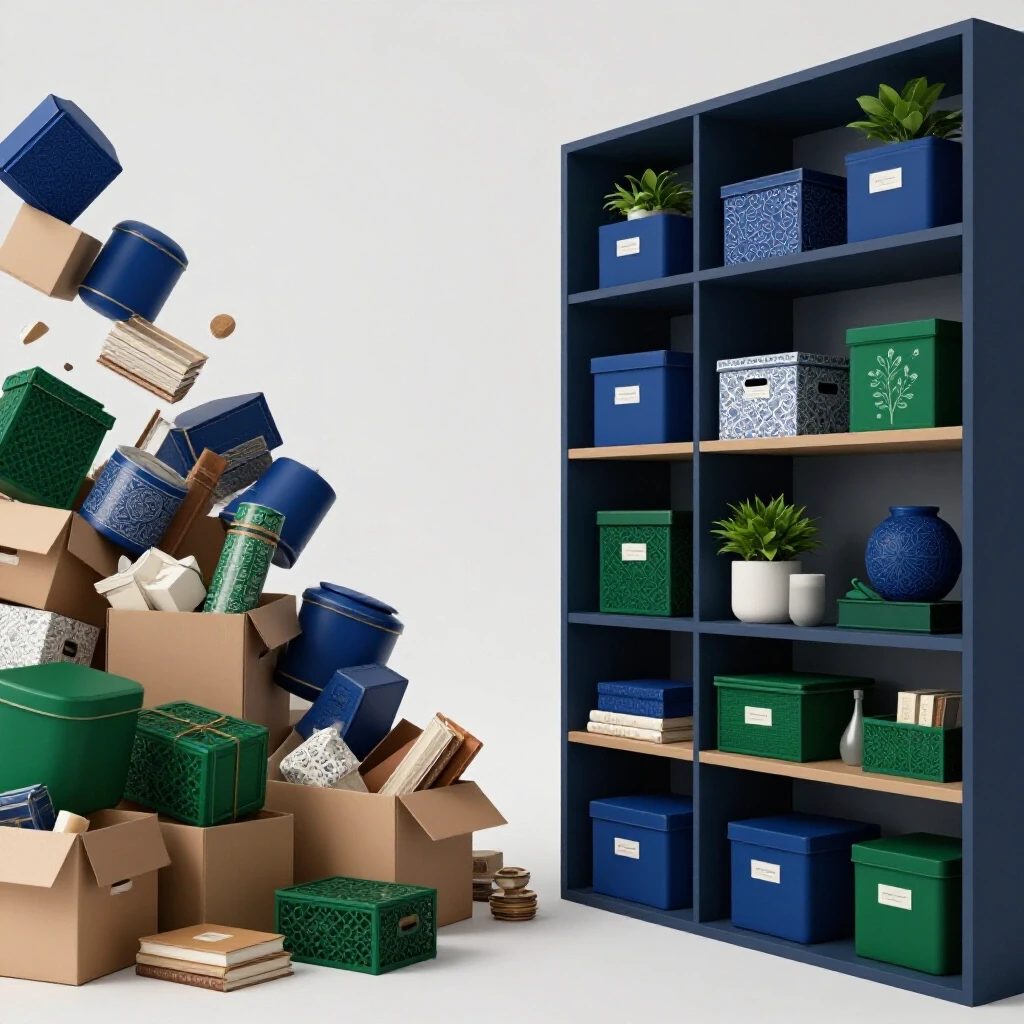
Sustainability in a family home isn’t about having a space that looks like a magazine cover. It is about creating a system that survives a Tuesday night after soccer practice and a long day at the office. Over my 11 years in operations and logistics, I have learned that the biggest mistake families make is trying to buy their way out of a mess. We see a cluttered room and immediately head to the store for matching bins and trendy baskets. However, adding more containers to a cluttered space is like trying to fix a broken supply chain by buying more trucks; if the inventory is the problem, more hardware only adds to the chaos.

I have guided my own family through dozens of organization sprints. In the early days, I fell into the same trap many of you do. I bought expensive, lidded acrylic bins for my children’s building blocks, thinking the visual clarity would help. Within three days, the blocks were back on the floor because the “retrieval friction”—the number of steps required to open the lid and put the item away—was too high for a five-year-old. We didn’t need better bins; we needed to audit our inventory and simplify the process. By focusing on sorting our belongings before spending a dime, we reduced our daily cleanup time from forty minutes to less than ten.
The Logistics of Household Chaos: Why Spaces Fail
Understanding why homes revert to clutter involves analyzing the balance between item volume and the speed at which a family can process those items. When the inflow of new goods exceeds the outflow of old ones, the system reaches a breaking point called spatial capacity.
In the world of logistics, we look at “throughput,” which is the rate at which items move through a system. In a home, if you have 50 toys but only enough shelf space for 30, the remaining 20 will always end up on the floor. Most families attempt to solve this by buying more storage, but this often just hides the problem. Research in environmental psychology suggests that visual clutter increases cortisol levels, our primary stress hormone. When we shop before we sort, we often buy containers that don’t fit our actual needs, leading to “clutter creep” where the bins themselves become part of the mess.
- Spatial Capacity: The physical limit of what a shelf or drawer can hold while remaining functional.
- Inflow Control: The habit of evaluating every new item that enters the home.
- Outflow Rate: How quickly unused items are donated, recycled, or discarded.
Why You Should Categorize Items Before Visiting the Store
Auditing your current belongings prevents the purchase of redundant storage and ensures that new systems actually fit the items you own. This phase is about gathering data so you can make informed decisions rather than emotional purchases.
When you shop first, you are guessing at what you need. This leads to “empty container syndrome,” where you feel pressured to fill the bins you bought, even if you don’t need the items inside. By categorizing everything first, you reveal the true volume of your possessions. Interestingly, many families find that once they sort their items, they already own enough containers to hold what remains. This saves money and prevents the house from being overrun by plastic tubs that don’t quite fit the shelves.
The Cost of Redundant Purchases
Buying duplicates of items you already own because they were buried in clutter is a hidden tax on the household budget. This happens most often in kitchens and craft rooms.
I remember a specific inventory audit we did in our pantry. We had three half-used bags of flour and four jars of cinnamon. Because we hadn’t sorted the space, we kept buying more every time we couldn’t find the original. By implementing an inventory-led approach, we stopped spending money on things we already had. This isn’t just about saving five dollars on spices; it’s about reducing the mental fatigue of managing a surplus that you don’t actually need.
- Duplicate Identification: Finding multiple versions of the same tool or ingredient.
- Volume Assessment: Knowing exactly how many inches of shelf space your “baking” category requires.
- Budget Reallocation: Using the money saved from not buying bins to invest in higher-quality items you actually use.
The Sort-First Framework: A Step-by-Step Inventory Guide
A structured approach to decluttering involves physically grouping like items together to see the true volume of what needs to be managed. This process allows you to see the “density” of your belongings.
To begin, you must clear a staging area, such as a dining table or a section of the floor. Take every single item out of the space you are organizing. This is a non-negotiable step. Seeing the empty shelf helps you reset your mental map of the room. As you sort, group items by function, not by size or color. All “writing tools” go together; all “batteries” go together. This allows you to see the scale of the category before you decide how to store it.
| Item Category | Current Volume (Est.) | Target Volume | Action Needed |
|---|---|---|---|
| Kids’ Art Supplies | 2 Large Boxes | 1 Medium Bin | Test markers; discard dried ones |
| Winter Accessories | 15 Pairs of Gloves | 8 Pairs | Match pairs; donate extras |
| Kitchen Gadgets | 40 Items | 25 Items | Remove “single-use” tools |
| Bed Linens | 12 Sets | 6 Sets | Keep 2 sets per bed |
- Time-Boxing: Set a timer for 20 minutes to prevent burnout during the sorting phase.
- The “Maybe” Box: Use a temporary container for items you aren’t sure about, but keep it out of sight for 30 days.
- Density Check: Aim for 70% shelf utilization to allow for easy retrieval.
Designing High-Speed Zoning Maps for Busy Families
Zoning is the practice of assigning specific, logical locations for item categories based on how often they are used and where they are used. It is the residential version of “lean manufacturing.”
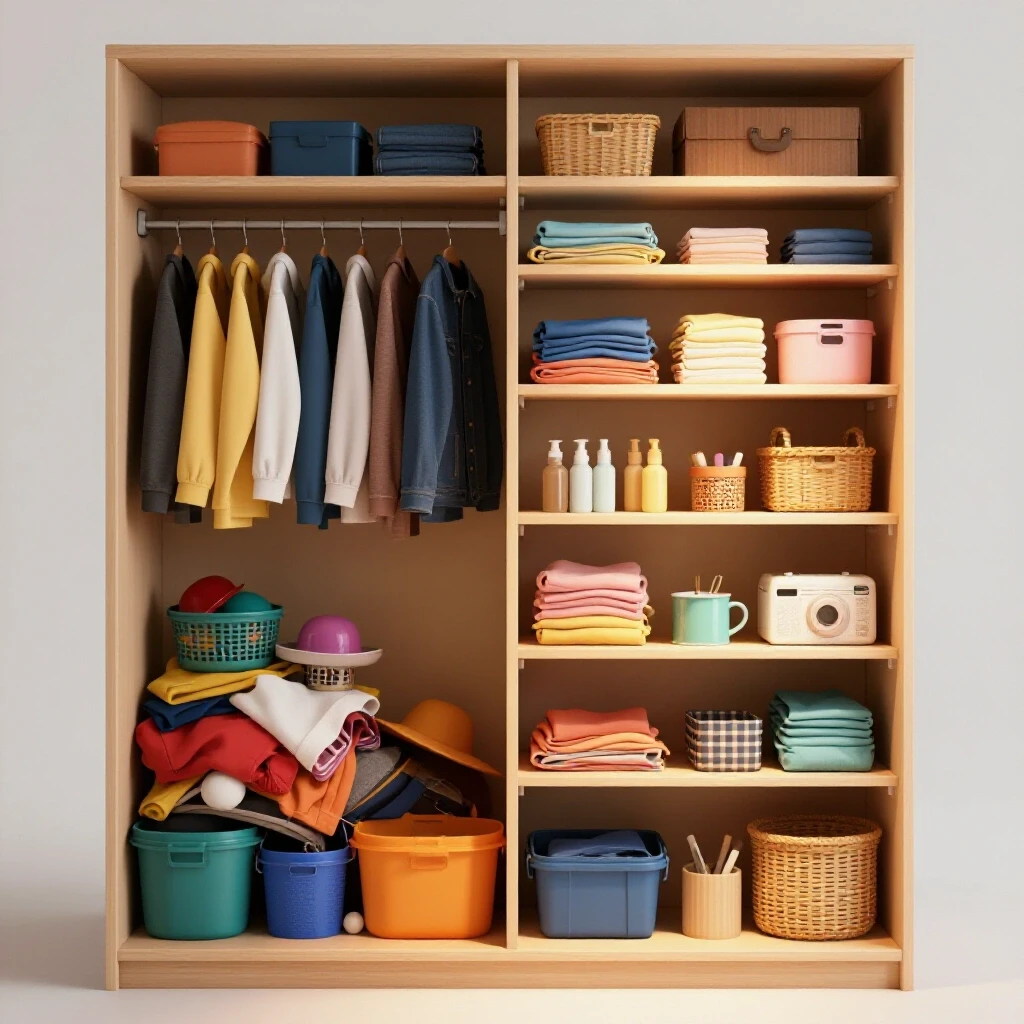
In my professional work, we place high-demand items at chest height and close to the shipping dock. In your home, “high-demand” items are things like car keys, school bags, and daily-use coffee mugs. These should live in “Prime Real Estate”—the area between your knees and your shoulders. Items used once a year, like holiday decor, belong in “Deep Storage” like the attic or the highest shelves. When you map your home this way, you reduce the physical effort of staying organized.
- Zone 1 (Daily): Items used every day. Must be accessible with one hand.
- Zone 2 (Weekly): Items used once or twice a week. Can be behind a cabinet door.
- Zone 3 (Monthly/Seasonal): Items stored in bins on high shelves or in the garage.
Reducing Storage Friction to Prevent Clutter Reversion
Friction refers to the effort required to put an item away; lower friction systems are more likely to be maintained by children and tired adults. If a system is too hard to use, it will fail, no matter how much you spent on the bins.
We often think that “organized” means “hidden.” However, for many busy families, “out of sight” leads to “out of mind” and eventually “all over the floor.” Using open bins for high-frequency items like toys or laundry reduces the steps needed to clean up. If a child has to unstack three bins and remove a lid to put away a toy, they won’t do it. If they can simply toss it into a labeled basket, the system sticks.
| Storage Type | Retrieval Steps | Friction Level | Best Use Case |
|---|---|---|---|
| Open Basket | 1 (Drop in) | Low | Toys, shoes, daily mail |
| Pull-out Drawer | 2 (Open, Drop) | Medium | Cutlery, socks, tools |
| Lidded Bin | 3+ (Unstack, Open, Drop) | High | Seasonal clothes, keepsakes |
| Cabinet with Lock | 4+ (Key, Open, Drop) | Very High | Chemicals, medicine |
- Labeling: Use text and pictures so every family member knows where things go.
- Visibility: Use clear containers only for items that don’t look messy (like pasta or blocks).
- Accessibility: Ensure children can reach the zones assigned to their belongings.
Aligning Household Behavior with Sustainable Systems
Organization fails when the system requires more discipline than the users naturally possess, making habit-alignment essential. You cannot force a messy teenager to become a minimalist overnight, but you can build a system that works with their habits.
Observe where clutter naturally “lands.” If your mail always ends up on the kitchen island, don’t try to force yourself to walk it to an office across the house. Instead, put a small sorting tray right on the island. This is called “path of least resistance” organizing. By placing the storage where the behavior already happens, you eliminate the friction that causes clutter to build up.
- The 30-Second Rule: If a task takes less than 30 seconds (like hanging up a coat), do it immediately.
- Feedback Loops: If a drawer is getting hard to close, that is a “signal” that the volume has exceeded the capacity.
- Family Sync: Spend 5 minutes every Sunday night resetting the “Prime Real Estate” zones together.
Practical Metrics for Maintaining a Functional Home
Using measurable data, such as daily cleanup times or item density, helps families track the health of their living spaces. Metrics take the emotion out of decluttering.
In logistics, we use “cycle time” to measure how long a process takes. You can do the same at home. If it takes you more than 15 minutes to clear the living room at night, you have too many items in that zone or the storage is too far away. Aim for a “Reset Time” of 10 minutes or less for common areas. If you find yourself consistently going over this limit, it is time for a new inventory audit.
- Item Density: No shelf should be more than 80% full. This allows for “air” between items, making them easier to grab.
- Retrieval Time: You should be able to find any “Zone 1” item in under 30 seconds.
- The One-In, One-Out Metric: For every new item brought into the house, one old item must leave.
- Maintenance Interval: Schedule a “mini-sort” every 90 days to catch clutter before it becomes overwhelming.
Building the Habit of Auditing Before Buying
The most effective way to save money and maintain order is to make “sorting first” a standard operating procedure for your household. Before any trip to a home goods store, ask yourself: “Do I know exactly what I am storing, and have I measured the space for it?”
I have found that using a simple digital list on my phone helps keep our family on track. When we feel the urge to buy a new organization “system,” we first check the list to see if we have already audited that category. Often, we find that a simple rearrangement of what we already own solves the problem. This shift in mindset from “buying solutions” to “managing inventory” is the key to a functional, low-stress home.
Practical Steps to Start Today
- Audit one drawer: Don’t do the whole kitchen. Pick the “junk drawer” and sort it into categories today.
- Measure before you move: If you think you need a bin, measure the shelf height, width, and depth first.
- Use what you have: Try using shoeboxes or shipping boxes as temporary dividers to test a system before buying permanent ones.
- Categorize by “Verb”: Group things by what you do with them (e.g., “Mending,” “Paying Bills,” “Packing Lunches”).
By focusing on the logistics of your home rather than the aesthetics, you create a space that supports your life instead of demanding your constant attention. The goal isn’t a museum; it’s a home where you can find your keys, your kids can clean up their own toys, and your weekends aren’t spent in a constant cycle of tidying and re-tidying.
Frequently Asked Questions
Why does my house get messy again just days after I organize it? This usually happens because the “retrieval friction” is too high or the volume of items exceeds the spatial capacity of the room. If it’s too hard to put things away, people will just leave them on the counter. You likely need to reduce the number of items or simplify the storage method (e.g., switching from lidded boxes to open bins).
How do I know if I actually need to buy new storage bins? You only know this after you have sorted every item in that category and discarded what you don’t need. Once you have a “final pile,” measure its volume. If your current shelves or containers cannot hold that volume at 70-80% capacity, then—and only then—should you look for new storage.
What is the best way to get my kids to follow an organization system? Keep it “low friction.” Use open baskets at their height and label them with pictures. If a child can “toss” an item into its home, they are much more likely to do it than if they have to use a complex filing system or heavy lids.
Is it really cheaper to sort first? Yes. Auditing your belongings almost always reveals duplicates you didn’t know you had, saving you from buying more. It also prevents you from purchasing expensive “organizational systems” that don’t actually fit your items or your space, which is a common source of wasted household funds.
How do I handle “sentimental” clutter during the sorting phase? Move sentimental items out of your “Prime Real Estate” zones immediately. These items don’t need to be accessed daily, so they shouldn’t take up valuable shelf space in your kitchen or living room. Put them in a dedicated “memory box” and store them in a “Zone 3” area like a high closet shelf.
What is the “one-in, one-out” rule? It is a simple logistical habit where you commit to removing one item from your home for every new item you bring in. This keeps your total inventory stable and prevents your spatial capacity from being overwhelmed over time.
How often should I re-evaluate my home organization systems? A quick “system check” every three months (seasonally) is usually enough. As children grow or hobbies change, your categories will shift. A quick 15-minute audit of your most used zones will tell you if the current system still fits your family’s needs.
Should I label everything? Labels are the “signage” of your home’s logistics system. They help everyone—including guests and children—know exactly where things belong. You don’t need a fancy label maker; even masking tape and a marker can significantly reduce the mental effort required to maintain order.
What should I do with items I’m not sure about keeping? Place them in a “Maybe Box” and date it. If you haven’t opened that box or looked for those items in 30 to 60 days, you have data-driven proof that you don’t need them. You can then donate the entire box without the guilt of “what if I need this?”
How do I manage paper clutter without buying a massive filing cabinet? Most paper clutter can be reduced by sorting at the “entry point.” Place a recycling bin right where you open the mail. Sort into three categories: Action (bills to pay), Archive (tax records), and Trash. Only the “Archive” items need long-term storage, which can usually fit in a small, portable file box.
(This article was written by one of our staff writers, Christopher Bennett. Visit our Meet the Team page to learn more about the author and their expertise.)