How to Replace a Floor Threshold for Better Room Flow (Step-by-Step)

Between managing a career and keeping a household running, a major home renovation often feels like a second full-time job. You spend weeks picking out the perfect quartz countertop or the exact shade of navy for the kitchen cabinets, but the smallest details often cause the most frustration. I remember standing in the hallway of my second personal home renovation, a 1940s colonial, staring at a jagged one-inch gap between the new primary bathroom tile and the original oak floors. It was a tripping hazard and an eyesore that made the whole expensive project look unfinished.
These transition points are the “connective tissue” of your home. When handled correctly, they create a sense of intentional design and easy movement between rooms. When ignored, they become the spots where dust collects, toes get stubbed, and the visual “flow” of your renovation breaks down. My 18 years in project coordination have taught me that these finish details require as much planning as the cabinets themselves to avoid last-minute scrambles and budget-draining fixes.
Defining the Scope of Interior Floor Transitions
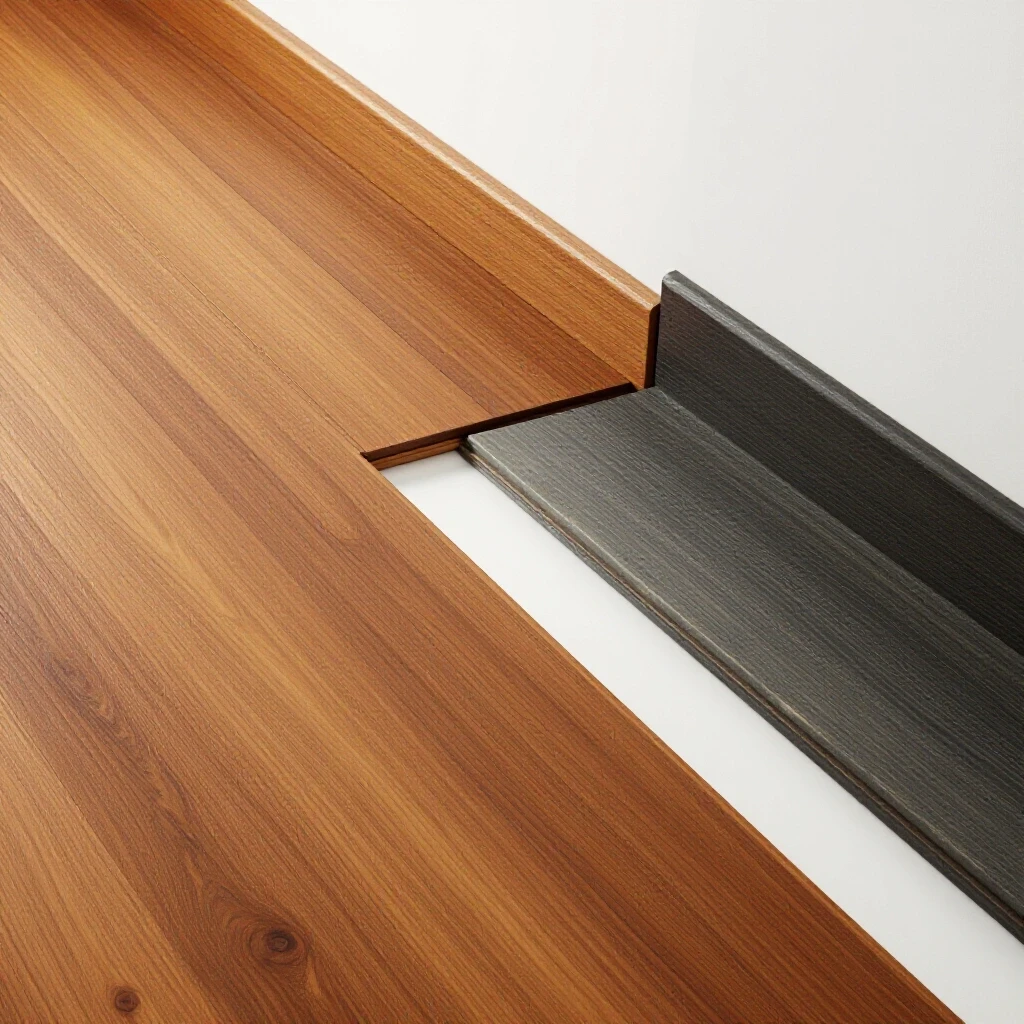
The scope of work for floor transitions involves identifying every point where two different flooring materials meet and selecting the hardware to bridge them. This process ensures that the move from a carpeted bedroom to a tiled hallway is both safe and visually appealing.
In my experience, homeowners often overlook these seams until the flooring installers are already on-site. By defining the scope early, you can choose materials that complement your decor rather than settling for whatever the local big-box store has in stock. A well-planned transition considers the height of both floors, the traffic level in that doorway, and the moisture levels of the rooms involved.
- Wood-to-Tile: Often requires a “reducer” if the tile is higher than the wood.
- Tile-to-Carpet: Usually involves a “Z-bar” or a “tuck” method to hide the carpet edge.
- Room-to-Room Wood: Uses a “T-molding” to allow for natural expansion and contraction of the planks.
Material Selection for Aesthetic Harmony
Material selection involves choosing the physical strips—made of wood, marble, metal, or composite—that will cover the expansion gaps between rooms. This choice dictates whether the transition blends into the floor or acts as a decorative accent.
During a whole-house remodel I coordinated three years ago, the homeowner wanted a seamless “curbless” look. We used low-profile brushed nickel strips that matched the door hardware. This subtle choice made the transitions nearly invisible, whereas a standard bulky wood strip would have broken the visual line of the modern floor. Using RSMeans data, I typically estimate these materials at $15 to $45 per unit, depending on whether you choose a basic oak strip or a custom-cut marble sill.
Budgeting for Floor Seam Upgrades
Budgeting for these components requires looking beyond the price of the strip itself and accounting for the labor of “scribing” or custom-fitting the piece to your specific doorway. This ensures you don’t run into financial surprises during the final week of your project.
I recommend setting aside a specific line item for “Transition and Trim Hardware.” In a standard three-bedroom home, you might have eight to twelve doorways that need attention. If you only budget for the flooring itself, a $500 bill for custom transition pieces can feel like a “hidden cost” that strains your final contingency fund.
Comparison of Transition Material Costs
| Material Type | Average Cost (Material Only) | Durability | Best Use Case |
|---|---|---|---|
| Unfinished Oak | $12 – $18 | High (if sealed) | Hardwood to Hardwood |
| Anodized Aluminum | $15 – $25 | Very High | Modern homes, Tile to LVP |
| Solid Marble/Stone | $35 – $60 | High | Bathroom doorways |
| Laminate Wrap | $10 – $15 | Moderate | Budget-friendly LVP/Laminate |
Note: Costs are based on standard 36-inch doorway widths using RSMeans-derived averages.
Coordinating the Installation Sequence
The installation sequence is the order in which flooring, door casings, and transition strips are placed to ensure a tight fit. Proper timing prevents the need to “hack” a piece into place after the doors are already hung.
One mistake I see frequently is installing the door trim before the flooring is finished. In my own first renovation, I made this error. We had to go back and “undercut” every single door jamb with a specialized saw to slide the new flooring and transition strips underneath. It added four hours of tedious labor that could have been avoided with a better schedule.
- Subfloor Preparation: Ensure both rooms have a level base.
- Primary Flooring Installation: Lay the main floors, leaving the specified gap at the doorway.
- Jamb Undercutting: Trim the bottom of the door frames to the exact height of the new floor.
- Transition Fitting: Measure and cut the bridge piece to fit snugly between the jambs.
- Final Fastening: Secure the piece using adhesive or hidden tracks, never nailing directly into the flooring planks.
Troubleshooting Height Variations and Subfloor Issues
Height variations occur when the “stack up” of one floor (subfloor + underlayment + finish material) is taller than the adjacent floor. Resolving this is critical for preventing trips and ensuring the home feels accessible.
If you find that your new bathroom tile is 3/4 of an inch higher than your hallway wood, you cannot use a flat strip. You need a “reducer.” In one project, we discovered the subfloor in an old kitchen had shifted, creating a significant slope. We had to use a “shimmed” transition, which is a custom-made piece that gradually slopes to meet the lower floor.
Contingency Buffer Allocations by Property Age
| Property Age | Recommended Contingency | Common Discovery |
|---|---|---|
| New Build (0-10 years) | 5-10% | Minor subfloor unevenness |
| Mid-Century (40-60 years) | 15% | Plywood delamination, old adhesive |
| Historic (80+ years) | 25% | Rot under old sills, non-standard joist spacing |
Managing Materials and Tools for a Smooth Finish
Having the right tools on hand prevents the “jagged edge” look that screams DIY. For a professional-grade finish, you need more than just a hammer and nails.
When I manage these tasks, I ensure the team has a high-tooth-count miter saw blade. Cutting a delicate oak or metal strip with a rough framing blade will splinter the edges. If you are doing this yourself, invest in a “contour gauge.” This tool allows you to map the exact shape of a complex door molding so you can cut your transition piece to fit like a puzzle piece.
- Miter Saw: For clean, 90-degree or angled cuts.
- Contour Gauge: To match the shape of door casings.
- Construction Adhesive: Used for stone or tile transitions where nails aren’t possible.
- Pneumatic Brad Nailer: For wood transitions, providing nearly invisible holes.
- Digital Level: To check the slope of reducers for safety.
Common Pitfalls in Interior Transitions
A common pitfall is failing to account for the “expansion gap.” Most flooring materials, especially wood and laminate, expand and contract with changes in humidity.
If you pin a transition strip too tightly against the flooring, the floor may “buckle” or “peak” in the middle of the room because it has nowhere to move. I once saw a beautiful hickory floor ruined because the installer nailed the transition strips directly through the floorboards into the subfloor. Within one summer, the floor had popped up two inches off the ground. Always fasten the transition to the subfloor, not the finish floor.
- Mistake: Using the wrong adhesive on marble sills, which can stain the stone.
- Mistake: Creating a “trip lip” by using a flat strip where a reducer was needed.
- Mistake: Forgetting to seal the underside of wood transitions in “wet” areas like bathrooms.
Execution Strategy: The “Dry Fit” Method
The “dry fit” method involves placing all transition pieces in their final locations without any glue or nails to verify the fit and swing of the door. This is your last chance to catch errors before they become permanent.
During this phase, I always check the “door undercut.” Close the door and see if it clears the new transition. If the door rubs, you will need to take the door off its hinges and shave 1/8 of an inch off the bottom. It is much easier to do this now than after you have moved your furniture back in.
Post-Occupancy Evaluation: What to Watch For
After the project is finished and you’ve lived with the new floors for a few months, perform a quick walk-through. Check for any “give” or “bounce” in the transitions.
If a strip feels loose, it’s usually a sign that the adhesive didn’t bond or a clip has broken. Addressing this early prevents the piece from cracking or causing a fall. In my post-occupancy reviews, I also look for “gapping”—where the flooring has shrunk away from the transition strip during the dry winter months. If the gap is wider than 1/4 inch, you may need a wider profile strip.
- Check for squeaks when stepping on the transition.
- Inspect for finish wear on high-traffic wood strips.
- Ensure metal strips aren’t developing sharp edges from heavy use.
Actionable Benchmarks for Your Project
To keep your project on track, use these benchmarks to measure progress and quality. These are the same standards I used to hold subcontractors accountable.
- The Credit Card Test: A transition should be tight enough that you cannot slide a credit card between the strip and the door jamb.
- The Level Test: A reducer should have a slope no steeper than 1 inch of rise for every 12 inches of length (though for small interior shifts, a steeper slope is often necessary, aim for gradual).
- The Visual Line: Stand back 10 feet; the transition should look parallel to the door frame, not slanted.
By focusing on these small but critical joins, you ensure that your home remodel feels cohesive and professionally executed. You avoid the “DIY look” and create a living space that flows naturally from one room to the next, protecting both your investment and your family’s safety.
Frequently Asked Questions
What is the difference between a T-molding and a reducer?
A T-molding is shaped like the letter “T” and is used to join two floors of the same height, providing an expansion gap underneath. A reducer is used to join two floors of different heights, sloping down from the higher floor to the lower one to eliminate a trip hazard.
Can I use wood transitions in a bathroom?
Yes, but you must seal all sides of the wood, including the bottom and the cut ends, with a waterproof polyurethane. However, for a bathroom-to-hallway transition, a marble or stone sill is often a more durable choice because it won’t rot if it comes into contact with standing water.
How do I handle a transition if my floor is uneven?
If the subfloor is uneven, you may need to use a “flexible” transition strip or custom-scribe a wood piece to match the dip in the floor. For significant height differences (over 1/2 inch), a custom-milled wood reducer is the safest and most professional-looking solution.
Should the transition match the floor I am leaving or the floor I am entering?
This is a design choice, but generally, the transition should match the floor that is most “dominant” or the one that continues into the hallway. Alternatively, many designers choose a material like brass or marble that acts as a deliberate “border” between the two spaces.
Do I need to remove my door to install a new transition?
Not always, but it makes the job much easier and more precise. Removing the door allows you to cut the door jambs cleanly and ensures you can check the door’s clearance over the new strip without scratching the finish.
Why is my new transition strip squeaking?
Squeaking usually happens if the strip is rubbing against the flooring or if the subfloor underneath is loose. To fix this, you can apply a small amount of silicone lubricant to the edge or ensure the strip is more securely fastened to the subfloor.
What is the best way to cut metal transition strips?
Use a miter saw equipped with a non-ferrous metal cutting blade. Go slowly and wear eye protection. After cutting, use a metal file or sandpaper to smooth the edges, as the cut ends can be very sharp.
How much gap should I leave between the floor and the transition?
Most manufacturers recommend a 1/4-inch to 1/2-inch expansion gap. The transition strip is designed to cover this gap while allowing the floor to move slightly with temperature and humidity changes.
Can I glue a transition strip directly to a concrete slab?
Yes, you should use a high-quality polyurethane construction adhesive. Ensure the concrete is clean, dry, and free of any old paint or glue. For extra security, some strips come with a track that you screw into the concrete using Tapcon screws.
How do I transition from tile to carpet?
The most common method is a “Z-bar” or a “tuck strip.” The carpet is stretched over a spiked strip and then tucked into a small channel next to the tile, creating a clean, flush edge where no hardware is visible.
(This article was written by one of our staff writers, David Langford. Visit our Meet the Team page to learn more about the author and their expertise.)