How to Fix Common Toy Organization System Failures (Step-by-Step)

The Hidden Science of Why Family Storage Systems Collapse Within a Week
I have spent over a decade managing supply chains and logistics, but the most challenging warehouse I ever encountered was my own living room. Eleven years ago, I assumed that applying professional spatial management to a family home would be straightforward. I was wrong. Like many busy parents, I spent my weekends building custom storage units and sorting items into meticulous categories, only to watch the entire system disintegrate by Tuesday afternoon. The frustration wasn’t just about the mess; it was the mental fatigue of knowing that my hard work lacked the durability to survive daily life.
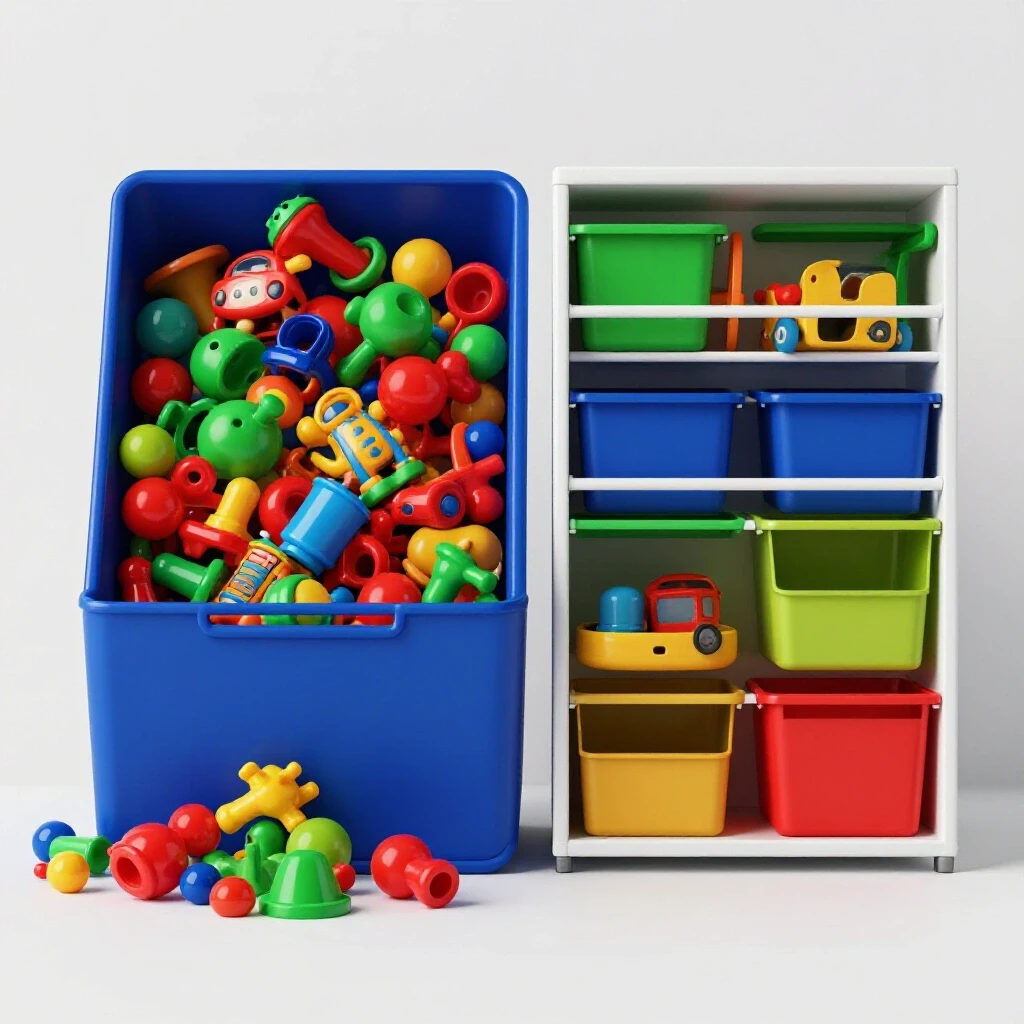
In my professional life, a “bottleneck” is a point where the flow of goods gets stuck. In a home, bottlenecks happen when the effort required to put something away is higher than the motivation to do it. My early attempts at managing play areas failed because I focused on how the storage looked rather than how it functioned. I ignored the “retrieval friction”—the number of steps required to access or replace an item. By analyzing these initial shortcomings, we can identify why certain layouts fail and how to build systems that actually account for human behavior.
The Psychological Toll of Visual Overload in Shared Spaces
Visual overload occurs when the brain is forced to process too many competing stimuli in a single environment, leading to increased cortisol levels and decision fatigue. In a family setting, this often manifests as a “clutter wall” where parents and children feel too overwhelmed to even begin the tidying process.
Environmental psychology research suggests that our brains are hardwired to seek patterns. When a room is filled with mismatched items and overflowing bins, the lack of a clear visual hierarchy creates a state of low-grade chronic stress. In my early projects, I made the mistake of using open-fronted, shallow shelving that displayed every single item. While I thought this would make things easier to find, it actually caused a “clutter feedback loop.” Because everything was visible, nothing felt organized, and my family quickly lost the incentive to maintain the system.
Understanding Retrieval Friction and Spatial Capacity
Retrieval friction is the measurable amount of physical and mental effort required to get an item out of storage or put it back where it belongs. High friction leads to items being left on floors or tables, as the “cost” of proper storage feels too high in the moment.
When I first started, I built deep, tiered shelving units for my children’s play items. I quickly learned that any item buried more than two layers deep was effectively lost. In logistics, we call this “dead stock.” In a home, it leads to children dumping out entire bins just to find one specific piece. This creates a massive outflow of items with no efficient way to manage the inflow. To fix this, I had to measure our “spatial capacity limits”—the point at which a storage area becomes so full that its functionality drops to zero.
| Storage Type | Retrieval Steps | Sorting Speed | System Friction Level |
|---|---|---|---|
| Open Bins (No Lids) | 1 | High | Low |
| Lidded Tubs (Stacked) | 4+ | Low | High |
| Deep Custom Cubbies | 3 | Medium | Medium |
| Multi-Part Kits | 5+ | Very Low | Critical |
Why My First Custom Storage Projects Failed the Durability Test
Material durability and layout miscalculations are the primary reasons why DIY storage solutions fail in high-traffic family homes. If the physical structure cannot withstand the weight or the frequency of use, the entire organizational framework will eventually collapse under its own weight.
My first major project involved building custom dividers out of heavy-duty cardboard and thin plywood. I spent hours measuring every item and creating “perfect fit” slots. This was a classic logistical error: I built a static system for a dynamic environment. Within three months, the cardboard warped, the plywood splintered under the weight of heavier items, and the children’s interests shifted, leaving me with custom slots that no longer fit anything. I had prioritized “aesthetic precision” over “structural resilience.”
The Layout Miscalculation Trap
A layout miscalculation occurs when the physical placement of storage does not align with the natural traffic patterns of the inhabitants. If a child plays in the center of the room but the storage is behind a heavy door in the corner, the system is destined to fail.
In my home, I originally placed all the storage units against the far wall to maximize floor space. I didn’t realize that I was creating a “long-haul” logistics problem. The distance between the “zone of use” and the “zone of storage” was too great. As a result, items stayed in the middle of the floor because the transit time to the wall felt like a chore. By tracking where the mess actually accumulated, I realized that storage must be located at the point of highest impact, even if it disrupts the “ideal” look of the room.
Analyzing the Sorting Framework That Caused Decision Fatigue
Decision fatigue is the psychological exhaustion resulting from making too many choices, which leads to poor decision-making or total avoidance of a task. When a sorting system is too complex, the brain views “cleaning up” as a series of difficult problems to solve rather than a simple routine.
I once implemented a system where every type of small play figure had its own specific, labeled container. On paper, it looked like a masterpiece of organization. In practice, it was a disaster. My children had to make dozens of micro-decisions every time they cleaned up: “Does this go in the ‘blue’ bin or the ‘action’ bin?” Eventually, they just stopped trying. We had reached a “sorting saturation point” where the complexity of the system exceeded the cognitive energy available at the end of the day.
Reducing Sorting Friction for Sustainable Habits
To lower the mental load, we must move from “micro-sorting” to “macro-sorting.” This means grouping items by broad categories that require zero thought to identify.
- Macro-Category Sorting: Grouping items by general use rather than specific type (e.g., all “building materials” together).
- The 3-Second Rule: If it takes more than three seconds to decide where an item goes, the category is too specific.
- Volume Over Precision: Focus on getting items off the floor and into a designated zone rather than perfectly aligning them.
Building a Zoning Map Based on Household Flow Rates
A zoning map is a strategic layout of a home that designates specific areas for high-frequency, medium-frequency, and low-frequency activities. Effective zoning ensures that the most used items are the easiest to reach and put away.
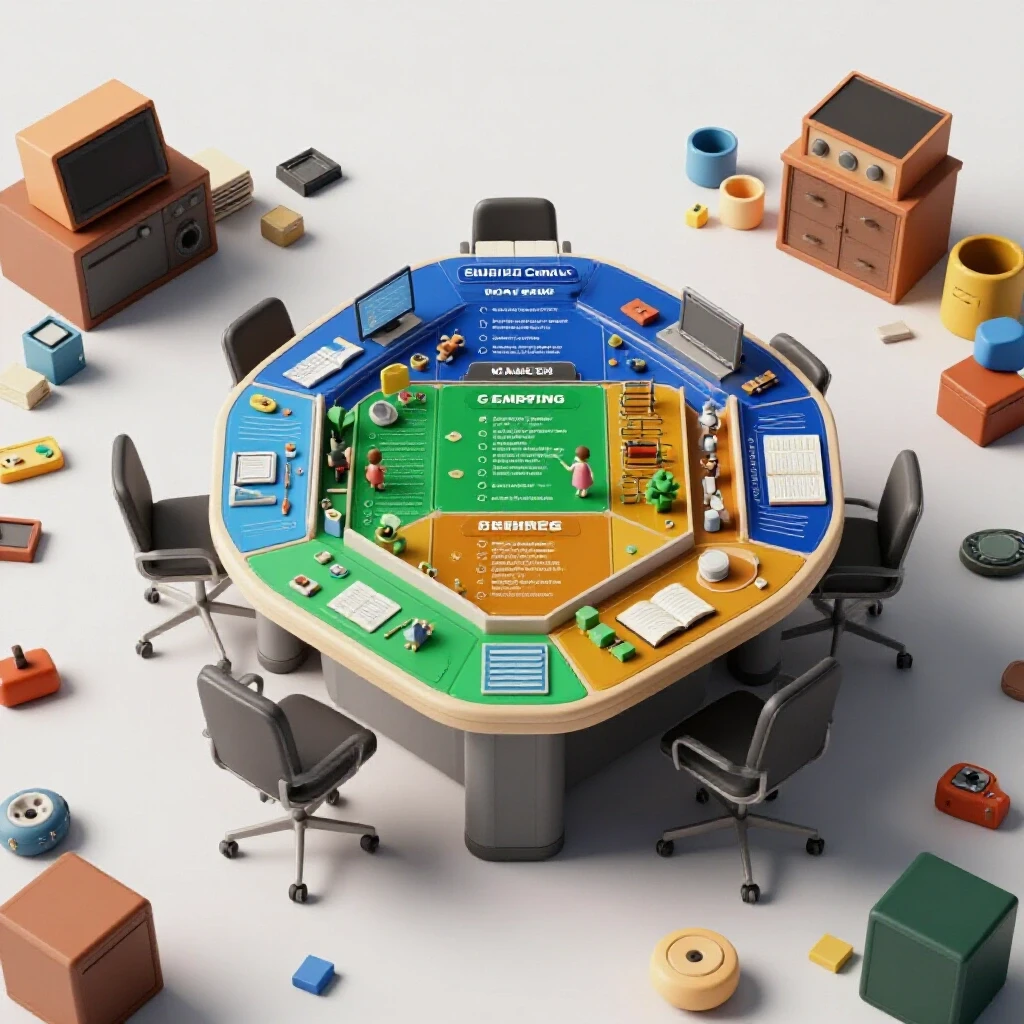
In my early attempts, I treated every square inch of the room as equal. This led to “spatial competition,” where everyday items were fighting for space with things used once a month. To fix this, I performed a spatial audit. I tracked which items were touched daily and which ones sat untouched for weeks. I then mapped the room into three distinct zones based on these flow rates.
The Three Zones of Family Logistics
- The Active Zone: This is the area within arm’s reach of where the activity happens. It should only hold items used daily.
- The Buffer Zone: Shelves or bins that are slightly harder to reach. These hold items used weekly.
- The Deep Storage Zone: High shelves or closets. These are for seasonal items or things used once a month.
| Zone Type | Accessibility | Item Frequency | Maintenance Need |
|---|---|---|---|
| Active | Immediate | Daily | High (Daily Reset) |
| Buffer | 1-2 Steps | Weekly | Medium (Weekly Check) |
| Deep | Multi-Step | Monthly/Seasonal | Low (Monthly Audit) |
Why High-Friction Containers Lead to Rapid Clutter Reversion
Container friction refers to any physical barrier—like lids, latches, or drawers—that prevents a user from easily placing an item inside a storage unit. While lids make things look “tidy,” they are often the number one cause of system failure in busy households.
I used to insist on lidded bins because I wanted to stack them to save space. However, I noticed that the bin at the bottom of the stack stayed organized while the floor around it became a graveyard of loose items. The “cost” of unstacking three bins to put one item away was too high for my family. We were experiencing “access paralysis.” Once I removed the lids and the stacking requirement, the floor stayed clear. The visual trade-off of seeing the items was worth the functional gain of a clear floor.
Identifying Failure Points in Custom Containers
Custom-built containers often fail because they lack the “flexibility” required for a growing family. When I built fixed wooden dividers, I didn’t account for the fact that items change in shape and size over time.
- Fixed vs. Modular: Fixed dividers create “trapped space” that cannot be used for anything else.
- Material Weight: Heavy wooden bins are harder for children to move, leading to items being dumped rather than carried.
- Visual Transparency: Solid-colored bins hide the mess, but they also hide the contents, leading to “searching behavior” which creates more mess.
Establishing a Maintenance Log for Measuring System Health
A maintenance log is a simple way to track how long a system lasts before it needs to be “reset.” This data allows you to identify which parts of your organization are working and which ones are failing.
In my 11 years of experience, I’ve found that families often blame themselves for a messy home when the fault actually lies with the system’s “mean time between failures” (MTBF). If you have to spend two hours every Sunday reorganizing a space, the system is not sustainable. I started tracking our “daily cleanup duration.” If the cleanup took more than 15 minutes, it was a signal that our storage friction had become too high and we needed to simplify the categories.
Actionable Metrics for Family Storage
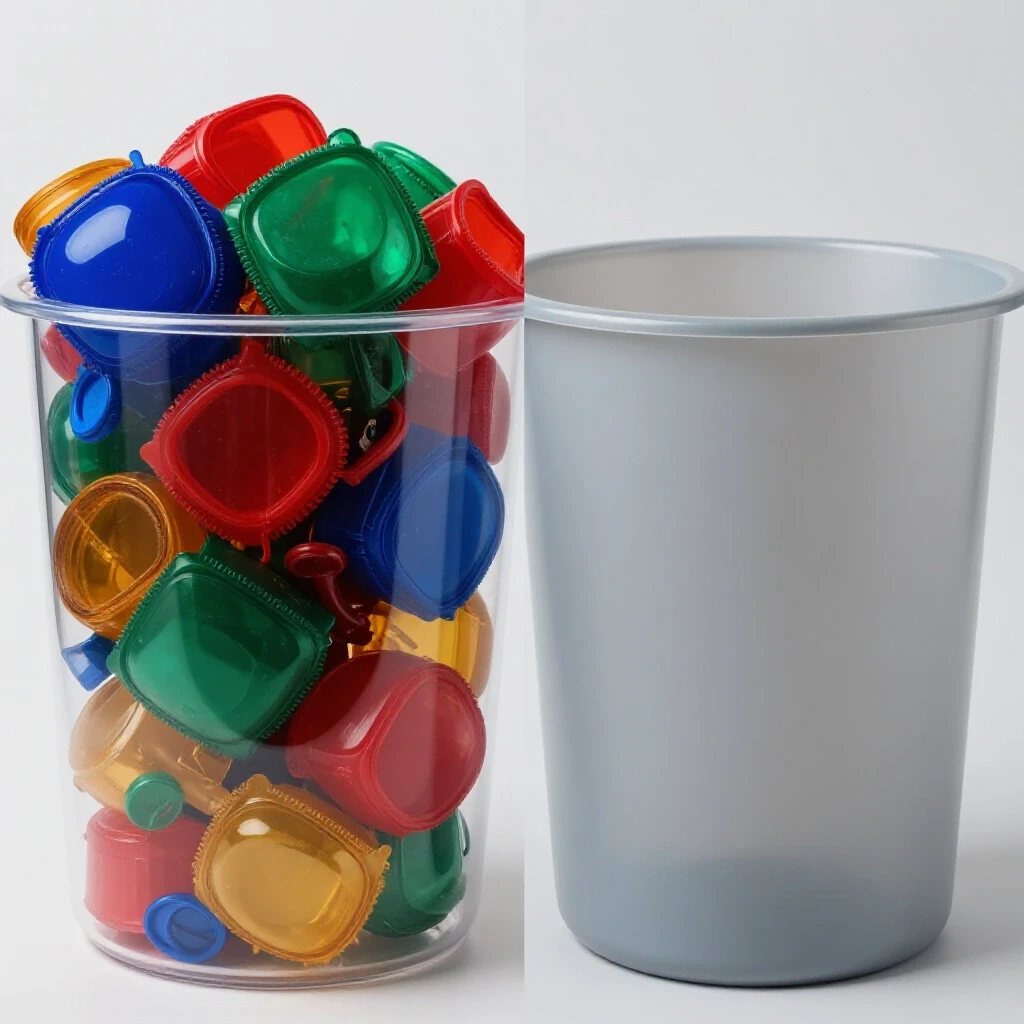
- Item Density: Aim for bins to be no more than 75% full. This allows for easy “hand-in” placement.
- Sorting Time-Box: A standard daily reset should take no more than 10 minutes for a single room.
- The 48-Hour Test: If a room reverts to chaos within 48 hours of a “deep clean,” the storage system is too complex.
Case Study: The Failed “Master Cubby” Project
Early in my decluttering journey, I spent a month’s worth of weekends building a massive, wall-to-wall cubby system for our main living area. I used professional-grade joinery and high-quality finishes. It was beautiful, but it was a logistical failure from day one.
The cubbies were designed for a specific set of items we owned at that moment. As soon as the children received new items for a birthday, the system broke. The cubbies were too deep, meaning items at the back were forgotten and eventually rotted or broke. Furthermore, the height of the top cubbies was out of reach for the children, meaning I became the “human forklift” responsible for every retrieval and return. I had built a system that required a full-time operator, which is the opposite of a low-maintenance home.
Summary of Key Logistical Lessons
The transition from a cluttered home to a functional one isn’t about buying more stuff; it’s about reducing the friction of daily life. By focusing on flow rates, spatial capacity, and material durability, we can create environments that support our families rather than drain our energy.
- Prioritize Function Over Form: An open bin that is used is better than a beautiful lidded box that is ignored.
- Measure Friction: Count the steps it takes to put things away and aim to reduce that number.
- Allow for Evolution: Avoid fixed, custom-sized storage that cannot adapt to changing needs.
- Focus on the Reset: Design systems that allow for a 10-minute “sweep” at the end of the day.
Frequently Asked Questions
Why does my home get messy again so quickly after I spend all day organizing? This usually happens because the system has high “retrieval friction.” If it takes more than one or two steps to put an item away, people will naturally leave it on the nearest flat surface. Your system might be too visually focused and not enough on the physical flow of the room.
Are lids on storage bins a good idea for families? Generally, no. Lids add an extra step to the “put-away” process. In high-use areas, lids often become a barrier that leads to items being stacked on top of the bin rather than inside it. Save lids for long-term storage in the “Deep Zone.”
How do I know if my storage categories are too specific? If you or your children have to stop and think for more than a few seconds about where an item belongs, the category is too narrow. This causes “decision fatigue.” Switch to broader “macro-categories” to speed up the tidying process.
What is the “75% Rule” in home logistics? You should never fill a shelf or bin more than 75% of its capacity. Leaving 25% “buffer space” allows for items to be put away quickly without having to perfectly arrange them. It also accounts for new items entering the home.
Why did my custom-built wooden storage fail? Custom builds are often too static. Families are dynamic; the items you need to store today will change in six months. If your storage has fixed dividers or specific-sized slots, it cannot adapt, leading to “trapped space” and system collapse.
How can I reduce the mental fatigue of cleaning up every night? Reduce the number of decisions you have to make. Use clear bins so you can see contents without thinking, and use broad categories so you don’t have to sort meticulously. The goal is to make the “reset” a mindless, rhythmic task.
What is “spatial capacity” and how does it affect clutter? Spatial capacity is the maximum amount of “stuff” a room can hold while still remaining functional. Once you exceed this limit, no amount of organization will help. At that point, you must reduce the “inflow” of items or increase the “outflow” through decluttering.
How do I handle items that don’t seem to fit into any category? Create a “Utility Bin” for miscellaneous items, but limit its size. If the utility bin overflows, it’s a sign that you need to define a new macro-category or that those items are “dead stock” that is no longer being used.
Why is the location of storage more important than the type of container? Logistics is all about transit time. If the storage is far from where the item is used, the “cost” of putting it away is too high. Always place storage at the “point of use” to minimize the effort required to maintain the system.
What should I do if my family won’t follow the system I built? It is likely that the system has too much friction for their current habits. Observe where they naturally drop things and move your storage to those “hot spots.” A successful system adapts to the users, not the other way around.
(This article was written by one of our staff writers, Christopher Bennett. Visit our Meet the Team page to learn more about the author and their expertise.)