TV Wall Mount Installation Cost Breakdown (DIY vs Pro Guide)

Discussing expert picks for home improvement often centers on high-ticket items like kitchen remodels or basement finishing. However, as a financial planner who has tracked every cent of my home expenses for over a decade, I have found that the most frequent budget leaks occur in the smallest projects. Securing a flat-screen television to an interior wall is a prime example. While it seems like a minor task, failing to apply a strict financial framework to this DIY project can lead to unnecessary spending and minor property damage that costs more to fix later.
Establishing a Financial Framework for Small-Scale Home Projects
A financial framework is a structured plan that defines spending limits, identifies funding sources, and sets success metrics. For small tasks, it prevents scope creep, which is the tendency for a project to grow in cost or complexity beyond its original intent. Establishing this early ensures that a simple hardware purchase does not balloon into a triple-digit expense.
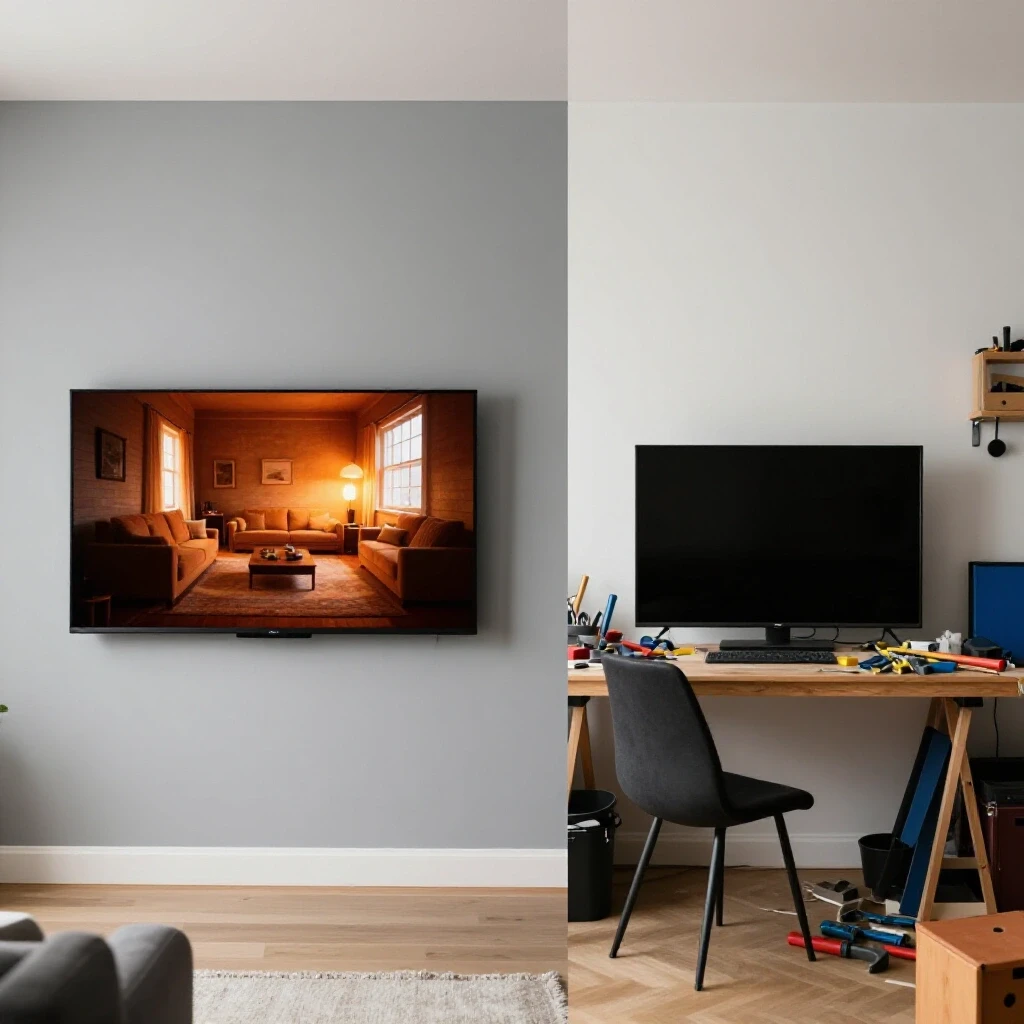
When I first began tracking my home maintenance in a detailed spreadsheet, I realized that I often ignored “micro-costs.” These are the $5 or $10 purchases for drill bits, sandpaper, or specific fasteners. In the context of securing a display to a wall, these costs can represent 30% of the total project price. By applying a formal budget model to even the smallest task, you maintain the discipline required for larger renovations.
- The 20% Contingency Rule: Even for a $40 project, I set aside a 20% buffer. This covers the unexpected need for a different type of wall anchor or a replacement level if the current one is inaccurate.
- Sunk Cost Awareness: If you buy a bracket that doesn’t fit, the money is gone unless you can return it. I track these as “variance” in my ledger to ensure I don’t repeat the mistake.
- Tool Depreciation: I allocate a small portion of my maintenance fund toward the wear and tear of my power drill and hand tools used during the installation.
Why Standard Estimates Often Miss the Mark for Hardware Installations
Standard estimates are generalized price points that often fail to account for local taxes, specific wall materials, or existing tool deficits. A realistic forecast requires a personal audit of your current inventory against the technical requirements of the task. Relying on a “national average” can lead to a 50% margin of error on small-scale projects.
In my personal remodeling portfolio, I once estimated $25 for a basic fixed-position bracket. However, I failed to account for the fact that my wall was plaster and lath rather than modern drywall. This required specialized toggle bolts and a higher-quality masonry bit. My actual expenditure jumped to $48. This 92% increase is a cautionary tale for those who do not verify their “site conditions” before purchasing materials.
Identifying Hidden Tool Requirements
Before you spend a single dollar, you must audit your toolbox. If you lack a stud finder or a bubble level, your “low-cost” project suddenly doubles in price. I recommend using a simple “Have vs. Need” checklist to identify these gaps early.
- Stud Finder: Essential for safety; prevents multiple “test holes” in the drywall.
- Power Drill and Bits: Necessary for creating pilot holes in wooden studs.
- Socket Wrench Set: Required for tightening the heavy-duty lag bolts that hold the weight.
- Measuring Tape: Critical for ensuring the display is centered and at the correct viewing height.
A Line-Item Breakdown of DIY Installation Expenses
Line-item budgeting involves listing every individual component—from the bracket itself to the wall anchors—to create a granular view of total expenditure. This transparency helps identify where cheaper alternatives might be used and where spending more is necessary for safety. It turns a vague “around $50” guess into a precise financial document.
Based on my tracking of retail pricing and personal project logs, here is a realistic breakdown for a basic, fixed-position installation on a standard drywall surface.
| Item Category | Estimated Cost (Low) | Estimated Cost (High) | Notes |
|---|---|---|---|
| Fixed-Position Bracket | $14.99 | $29.99 | Retail entry-level pricing |
| Heavy-Duty Wall Anchors | $0.00 | $8.50 | Only if studs are not reachable |
| Drill Bit Set (Small) | $0.00 | $12.00 | Assuming basic set is not owned |
| Bubble Level | $0.00 | $6.00 | Essential for aesthetics |
| Total Project Cost | $14.99 | $56.49 | Range based on tool ownership |
Building on this data, the largest variable is not the hardware itself but the tools you already own. If you are starting from zero, the project cost can easily exceed $70, which might push a cost-conscious planner to reconsider the timing of the project.
Calculating the ROI of Sweat Equity vs. Professional Costs
Sweat equity is the value added to a project through your own manual labor rather than paying a service provider. In home finance, calculating the hourly “savings” helps determine if a DIY approach is the most efficient use of your time. It is a way to quantify the “opportunity cost” of your weekend.
According to general labor data, a professional might charge between $75 and $150 for a basic installation. If the task takes you two hours to complete, including the trip to the hardware store, you are essentially “earning” $37.50 to $75 per hour in savings. For many homeowners in the 28–55 age bracket, this is a favorable trade-off, provided the risk of error is low.
- Risk-Adjusted Savings: Subtract the cost of potential wall repairs ($20 for spackle and paint) from your savings to see the “true” DIY value.
- Time-to-Value Ratio: If the project takes five hours due to lack of experience, your hourly “wage” drops to $15. At this point, the financial benefit diminishes.
Managing Hidden Risks: Wall Types and Structural Integrity
Structural integrity refers to the ability of a surface to hold weight without failing. In financial planning, assessing this risk prevents catastrophic costs associated with property damage or medical bills. A screen falling off a wall is not just a lost asset; it is a liability that can cost thousands in flooring repairs or injury claims.
Most residential walls are framed with wooden studs spaced 16 inches apart. Finding these is the most critical step in protecting your investment. If you are forced to mount into drywall alone, you must use specialized anchors rated for at least double the weight of the television. This is a non-negotiable safety buffer I include in every project plan.
Understanding Material Variance
Material variance is the difference between the cost of standard supplies and the cost of supplies needed for specific conditions. For example, mounting into a brick fireplace requires masonry anchors and a hammer drill, which are significantly more expensive than drywall screws.
- Drywall on Wood Studs: Lowest cost; uses standard lag bolts included with most brackets.
- Plaster and Lath: Medium cost; requires pre-drilling and careful anchor selection to avoid cracking.
- Concrete or Brick: Highest cost; requires specialized bits and heavy-duty expansion anchors.
Long-Term Financial Impact and Home Value Considerations
Depreciation is the reduction in value of an asset over time. While a basic metal bracket does not add significant resale value to a home, avoiding poorly executed repairs protects the home’s baseline market appraisal. A wall riddled with “missed” stud holes is a red flag to future buyers and can lead to a “repair credit” during a home sale.
In my experience analyzing Cost vs. Value reports, small interior upgrades have a high lifestyle value but a low capital recovery rate. You should not expect a 1:1 return on the $50 spent. Instead, view this as an expense to improve the utility of your living space while preventing the clutter of a bulky media console.
- Localized Market Ceilings: Do not over-improve. A $200 motorized mounting system in a modest starter home is a “sunk cost” that you will likely never recover.
- Maintenance Logs: Keep the original manual and any spare parts in a labeled bag. This adds a level of professionalism that appeals to organized buyers later.
A Practical Guide to Budget Tracking and Execution
To keep your project on track, I recommend using a simplified version of a remodeling expense tracker. This prevents the “death by a thousand cuts” where small, unrecorded purchases break your monthly budget.
- Define the Scope: Decide exactly where the screen will go and measure the VESA pattern (the hole spacing on the back of the TV).
- Create a Purchase Order: List the bracket and any missing tools. Compare prices between at least two local hardware stores or online retailers.
- Execute with Precision: Use the “measure twice, drill once” philosophy. This saves money on drywall repair kits and paint.
- Log the Final Cost: Enter the total, including tax, into your home maintenance spreadsheet. This data will be invaluable for your next project.
Metrics for Success
- Labor-to-Material Ratio: For this project, it should be 0:1 since you are providing the labor.
- Contingency Utilization: If you spent your 20% buffer, analyze why. Did you lose a screw? Was the wall harder to drill than expected?
- Total Cost Ceiling: For a basic DIY setup, I suggest a hard cap of $60. Anything above this suggests you are buying unnecessary “premium” features.
Actionable Steps for the Cost-Conscious Homeowner
If you are ready to begin, start by downloading a basic spreadsheet template for home repairs. Focus on the “Actual vs. Budget” columns. This habit, which I have maintained for over a decade, is the foundation of financial security for homeowners. It turns a stressful task into a controlled, data-driven exercise.
Next, perform a “dry run” of the installation. Hold the bracket against the wall, find your studs, and mark the holes with a pencil. If you encounter a problem at this stage, it costs $0 to fix. This is the ultimate “low-barrier” step toward a successful, budget-friendly home improvement.
Frequently Asked Questions
Is it cheaper to buy a bracket online or in a big-box store?
Generally, online retailers offer lower prices for basic hardware, often ranging from $15 to $25. Big-box stores provide the benefit of immediate returns if the item is incorrect, which can save you the “cost” of a delayed project.
How do I know if my wall can support the weight without extra spending?
Most modern homes use 2×4 wooden studs that can easily support 50–100 pounds when properly tapped. If your home is an older “fixer-upper” with thin plaster, you may need to spend an extra $10 on high-quality toggle anchors to ensure the load is distributed safely.
Should I worry about the “Cost vs. Value” of a TV mount?
In terms of resale, a bracket is a neutral asset. However, the damage caused by a poor installation is a negative asset. Focus on a clean, professional-looking DIY job to protect your home’s “move-in ready” status.
What is the biggest hidden cost in this project?
The biggest hidden cost is often the “oops” factor—drilling into a wire or a pipe. Using a stud finder with AC electrical detection (usually $20) is a one-time investment that prevents a $500 emergency plumber or electrician visit.
Can I reuse old hardware to save money?
Only if the hardware is rated for the weight of the new screen. Reusing screws that are stripped or anchors that have been pulled out once is a major safety risk. For the sake of $5 in new fasteners, it is never worth the risk of the TV falling.
Do I need a permit for this?
In almost all jurisdictions, securing furniture or electronics to a wall is considered a minor cosmetic improvement and does not require a municipal permit. This keeps your “soft costs” at zero.
How much should I budget for cable management?
For a cost-conscious DIYer, a $5 set of plastic zip ties or a $10 cord raceway is sufficient. Avoid “in-wall” cable kits unless you are comfortable with the fire-code requirements for in-wall rated wiring, which can increase costs significantly.
What if I don’t own a drill?
Borrowing one from a neighbor is the most cost-effective solution. If you must buy one, look for a basic 12V cordless drill, which often goes on sale for $30–$40. This tool will pay for itself over the course of three or four small home projects.
How does viewing height affect the budget?
If you mount the TV too high (the “TV over the fireplace” mistake), you may find yourself needing a “tilting” bracket to avoid neck strain. Tilting brackets usually cost $5–$10 more than fixed ones. Measure your eye level while seated before buying your hardware.
Is a $15 bracket actually safe?
Yes, provided it is UL-listed and you follow the weight capacity guidelines. Most “premium” brackets charge for branding or features like “full motion,” which you may not need for a simple living room setup.
How do I track this in my home spreadsheet?
Create a category for “Furniture & Decor Maintenance.” List the date, the vendor, the item name, and the total cost. Note whether you used tools you already owned to get an accurate “project value” for future reference.
(This article was written by one of our staff writers, Steven Fletcher. Visit our Meet the Team page to learn more about the author and their expertise.)