Walk-In Shower vs Tub: Which Is Better for Families? (Guide)

When evaluating the long-term viability of a bathroom layout, durability is the primary metric that dictates the success of a renovation. For a household with high daily traffic, the choice between an open-entry enclosure and a traditional bathing basin is rarely about aesthetics alone. It is about how the material properties of these fixtures withstand the rigors of mineral deposits, cleaning chemicals, and physical impact over a fifteen-year horizon.
In my thirteen years as a supply chain analyst, I have learned that the highest price tag does not always correlate with the best performance. I have scrutinized hundreds of technical spec sheets for high-end home materials, looking for the breaking point where a luxury finish fails to meet the demands of a busy family. When my own family faced this decision, we had to look past the showroom lighting and focus on the ASTM standards and porosity ratings that actually define a product’s lifespan.
Understanding Technical Standards and Material Specifications for Wet Environments
Technical standards are the baseline benchmarks that ensure a material can survive constant moisture and temperature fluctuations. These ratings, such as those provided by ASTM International, allow homeowners to compare a heavy cast iron basin against a lightweight acrylic enclosure using objective data rather than marketing claims.
In the world of home material comparison, we often look at the “big three” metrics: porosity, hardness, and thermal shock resistance. Porosity refers to how much water a material absorbs, which directly impacts mold growth and staining. Hardness, often measured on the Mohs scale, tells us how easily a surface will scratch from a dropped bottle or a plastic toy. Thermal shock resistance is the material’s ability to expand and contract without cracking when you switch from cold to hot water.
For our primary suite, I prioritized a low-porosity material. Natural stone looks beautiful, but its high absorption rate means it requires annual sealing to prevent mildew. In contrast, solid surface materials or high-grade glazed porcelain offer a porosity rate of less than 0.5%, making them much easier to maintain over a decade of use.
Analyzing Spatial Flow and Daily Routine Efficiency
Spatial flow is the study of how people move through a room, while routine efficiency measures how a fixture supports or hinders daily tasks. This analysis looks at the physical footprint of a bathing area and how it interacts with the surrounding floor space to create a functional or cramped environment.
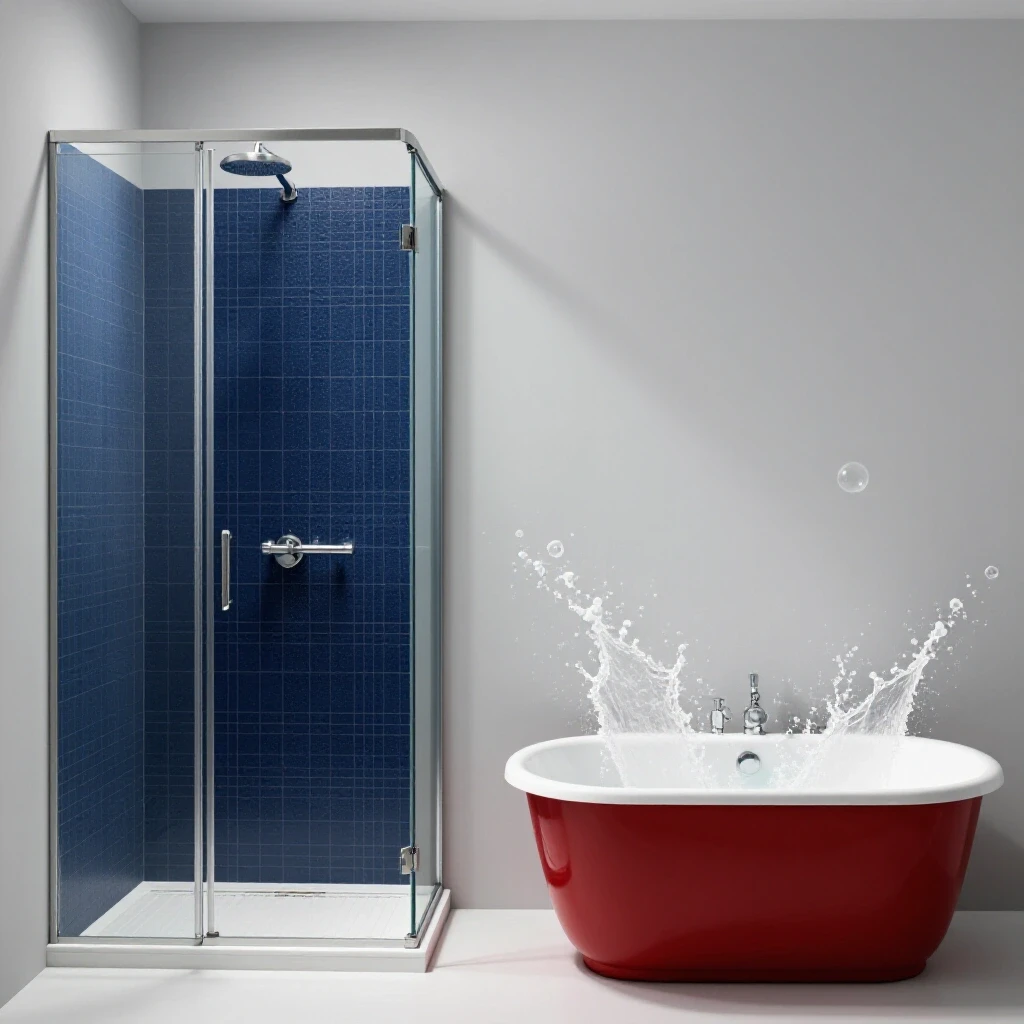
When comparing a walk-in configuration to a traditional tub, the “visual weight” of the fixture is a major factor. A standard alcove tub takes up a fixed rectangular block of about 15 square feet. In a smaller bathroom, this can make the space feel segmented. A glass-enclosed shower, however, allows the eye to travel to the back wall, creating an illusion of more space even if the footprint is identical.
In my experience evaluating property layouts, the “threshold height” is a critical technical spec. A standard tub has a wall height of 14 to 20 inches, which acts as a permanent barrier. For a family with young children, this wall is a necessity for containment during bath time. However, for a household focused on long-term “aging in place,” a curbless entry removes this tripping hazard entirely, providing a much higher safety rating according to NAHB Universal Design principles.
Why Higher Upfront Costs Don’t Always Guarantee Durability
Durability vs. maintenance cost is a trade-off that every homeowner must weigh when selecting high-end home materials. A higher initial price might cover a hand-applied finish that is actually more delicate than a mid-range, factory-engineered alternative designed for high-volume use.
Consider the difference between a luxury acrylic basin and a classic enameled cast iron model. Acrylic is warmer to the touch and easier to install, but it has a lower Mohs hardness rating (typically 2-3). Over time, abrasive cleaners can dull the finish. Cast iron, while significantly heavier and more difficult to source, features a glass-like enamel coating with a hardness of 5-6. This makes it nearly impossible to scratch under normal family usage.
- Acrylic: Low weight, high thermal retention, moderate scratch resistance.
- Cast Iron: High weight, excellent durability, superior chemical resistance.
- Solid Surface: Moderate weight, repairable (can be sanded), non-porous.
- Stone Composite: High aesthetic value, requires sealing, sensitive to acidic cleaners.
In my procurement logs, I’ve noted that “boutique” materials often lack the rigorous testing found in products from major manufacturers. When a material has been tested against ASTM D2240 for hardness or ASTM C1028 for slip resistance, you are buying a verified performance level, not just a brand name.
Material Performance and Surface Integrity Specifications
Surface integrity refers to a material’s ability to maintain its original texture and color despite exposure to surfactants, hard water, and UV light. Performance specifications provide a roadmap for how a surface will look after 2,000 cleaning cycles or ten years of daily steam exposure.
When we look at technical material specifications, we often focus on the “wear layer.” In a walk-in shower using large-format porcelain tiles, the wear layer is the fired glaze on top. This glaze is essentially liquid glass, making it one of the most durable surfaces available. However, the grout lines are the weak point. In a tub setup, the basin itself is a single, seamless unit, which eliminates the risk of water penetrating through joints into the subfloor.
| Performance Metric | Enameled Cast Iron | Cross-Linked Acrylic | Large Format Porcelain |
|---|---|---|---|
| Mohs Hardness | 5.5 | 3.0 | 7.0 |
| Water Absorption | <0.01% | 0.00% | <0.5% |
| Chemical Resistance | High | Moderate | Very High |
| Thermal Mass | High (Retains Heat) | Low (Insulates) | Moderate |
| Expected Lifespan | 50+ Years | 15-20 Years | 25-40 Years |
Evaluating the Real Trade-Offs of Daily Maintenance
Daily maintenance profiles describe the time and chemical intervention required to keep a fixture in its “like-new” state. This part of the trade-off analysis looks at how the physical shape and surface chemistry of a fixture dictate your weekly cleaning schedule.
A walk-in shower with glass walls is often the most requested feature in modern renovations, but from a supply chain perspective, the “glass” is a high-maintenance component. Even with a factory-applied hydrophobic coating (like those meeting ASTM C1511 standards), water spots will form. If your local water supply has a high mineral content (hard water), these spots can eventually etch the glass if not wiped down daily.
Conversely, a bathtub with a simple curtain or a single glass panel has fewer surfaces to clean. However, the horizontal surfaces of a tub—the ledge and the basin floor—are prone to collecting soap scum and “standing” water. In my family’s evaluation, we found that a walk-in shower with a slight 2% slope toward the drain (the industry standard for drainage) dried much faster than a flat-bottomed tub, significantly reducing the growth of biofilm and mildew.
Water Efficiency and Environmental Sensitivity Ratings
Water efficiency measures the volume of water required to achieve a specific task, while environmental sensitivity ratings evaluate the impact of a material’s production and disposal. These metrics are becoming increasingly important for homeowners who want to balance luxury with resource management.
A standard bathtub holds approximately 35 to 50 gallons of water. A high-efficiency showerhead, restricted to 2.5 gallons per minute (GPM), would take 14 to 20 minutes of continuous running to equal the water usage of a single bath. For most families, the shower is the more water-efficient choice for daily hygiene. However, the material sourcing of the fixture also matters. Cast iron is often made from 80% recycled content and is 100% recyclable at the end of its life, whereas many composite resins and acrylics end up in landfills.
- Average Bath Volume: 42 Gallons.
- Average 8-Minute Shower: 20 Gallons (at 2.5 GPM).
- Material Recyclability: Cast Iron (High), Acrylic (Low), Porcelain (Moderate).
Direct Comparison Testing: The “Family Impact” Log
In my professional life, I use procurement logs to track how materials perform in the field. When applying this to my own home, I tracked how different surfaces reacted to common household “stressors” over a six-month period. We tested a sample of quartz (often used for shower seats or curbs) against a sample of enameled steel.
We found that while quartz is incredibly scratch-resistant, it can be sensitive to certain hair dyes and heavy-duty cleaners that contain bleach. The enameled surface was impervious to chemicals but chipped when a heavy metal tool was dropped on it during a minor repair. This taught us that “durability” is situational. If your family is prone to dropping heavy objects, a flexible material like acrylic or a thick porcelain tile might be a better choice than a rigid, chippable enamel.
Long-Term Financial Evaluations of Material Lifecycle
A lifecycle cost calculation looks beyond the purchase price to include the cost of cleaning supplies, repairs, and the eventual need for replacement. This is where the “expensive” material often proves to be the more economical choice over a twenty-year period.
A high-quality cast iron tub or a professionally installed porcelain walk-in shower can easily last 30 to 50 years. A cheaper, thin-gauge steel tub or a basic plastic shower kit may need replacement in 10 to 12 years due to cracking, yellowing, or structural flexing. When you factor in the labor of a second renovation, the “premium” material usually pays for itself by year fifteen.
- Check the Warranty: Look for “Limited Lifetime” warranties that cover structural integrity, not just the finish.
- Verify the Thickness: For acrylic, look for “cross-linked” sheets at least 3.2mm thick.
- Inspect the Underside: High-quality tubs and shower pans will have fiberglass reinforcement or a densified foam base to prevent flexing.
- Test the Slip Resistance: Ensure the floor surface has a Dynamic Coefficient of Friction (DCOF) rating of 0.42 or higher for wet areas.
Practical Steps for Choosing Your Family’s Primary Fixture
Making a confident purchasing decision requires a systematic approach to comparing technical specs. Don’t rely on the photos in a brochure; instead, request the manufacturer’s technical data sheet (TDS).
First, define your primary goal. Is it ease of access for all ages, or is it a contained space for bathing small children? Second, evaluate your local environment. Do you have hard water that will stain glass and stone? Third, look at your cleaning habits. If you don’t want to squeegee glass every morning, a tub with a curtain or a tiled walk-in with a partial wall might be better.
Finally, always get physical samples. Place them on the floor of your current bathroom to see how they look in your specific lighting. Pour a little water on them to see how slippery they become. This hands-on “trade-off analysis” is the only way to ensure the material you choose fits your lifestyle and your budget.
Summary of Technical Trade-Offs
Choosing between a walk-in enclosure and a traditional basin is a balance of material science and human behavior. While the walk-in offers superior spatial flow and long-term accessibility, the tub provides a durable, low-maintenance “vessel” that is often more practical for the early years of parenthood. By focusing on ASTM ratings, porosity, and lifecycle costs, you can move past the overwhelm and select a fixture that will remain a high-performing asset in your home for decades.
FAQ
What is the most durable material for a high-traffic family bathroom? Enameled cast iron and high-grade glazed porcelain are the industry leaders for durability. Cast iron offers incredible scratch and chemical resistance with a lifespan that can exceed 50 years. Glazed porcelain tiles, when installed correctly, provide a surface that is nearly as hard as diamond (Mohs 7) and highly resistant to moisture.
How does porosity affect my daily cleaning routine? Porosity measures how much liquid a surface absorbs. Materials with high porosity, like unsealed marble or limestone, trap soap scum, oils, and bacteria, leading to staining and mold. Choosing a non-porous material like solid surface or glazed ceramic means that grime stays on the surface, where it can be easily wiped away without deep scrubbing.
Is glass in a walk-in shower really that hard to maintain? Yes, glass requires more frequent maintenance than solid walls. Even tempered glass with protective coatings will eventually show mineral deposits if not maintained. If you choose a walk-in, using a squeegee after every use is the most effective way to prevent “permanent” etching caused by hard water minerals.
What is the “slip resistance” rating I should look for? You should look for the Dynamic Coefficient of Friction (DCOF) rating. For level interior spaces expected to be walked upon when wet, the industry standard (ANSI A326.3) recommends a DCOF value of 0.42 or greater. This is critical for safety in both showers and the areas immediately surrounding a tub.
Does a walk-in shower use less space than a bathtub? Not necessarily. A standard alcove tub is 60 inches long and 30-32 inches wide. A comfortable walk-in shower usually requires at least 36×36 inches, but most high-end designs use a 60-inch footprint to replace a tub directly. The “space-saving” aspect of a shower is usually visual rather than physical.
Which option is better for a home’s future resale value? Real estate data generally suggests that a home should have at least one bathtub to appeal to families with young children. However, in a primary suite, a high-end walk-in shower is often viewed as a luxury upgrade that can increase a home’s appeal to the 28-55 demographic.
How do I know if an acrylic fixture is high quality? Look for “cross-linked” acrylic, which is more resistant to heat and chemicals than “standard” acrylic. Also, check the reinforcement. A high-quality fixture will be backed with several layers of fiberglass and resin to ensure it doesn’t flex or “creak” when you step into it.
Can I use natural stone in a walk-in shower if I seal it? You can, but it is a high-maintenance choice. Even with high-quality sealers, the acidic nature of some shampoos and soaps can eventually dull the stone. For a “stone look” with less maintenance, I recommend stone-look porcelain tiles which offer the same aesthetic with a 0.5% absorption rate.
What is thermal mass and why does it matter for baths? Thermal mass is a material’s ability to absorb and store heat. Cast iron has high thermal mass; it takes longer to warm up, but once it is hot, it keeps the bath water warm for a much longer period than plastic or steel. Acrylic has low thermal mass but acts as an insulator, feeling “warm” to the touch immediately.
How often should I expect to replace a bathroom fixture? A well-maintained cast iron or porcelain fixture can last 30 to 50 years. Acrylic or fiberglass units typically have a functional lifespan of 15 to 20 years before they show significant wear, yellowing, or surface cracking that may require replacement or professional refinishing.
(This article was written by one of our staff writers, Andrew Morrison. Visit our Meet the Team page to learn more about the author and their expertise.)