How to Troubleshoot Sudden Water Pressure Drops at Home (Guide)

In my 17 years of maintaining older properties, I have learned that a home speaks to you through its systems. When a faucet that used to roar now only whispers, or a showerhead loses its invigorating spray, the house is providing a diagnostic signal. These shifts in performance are rarely sudden; they are usually the result of gradual changes within the interior delivery network. My background as a facilities technician taught me that addressing these minor inconveniences early is the best way to avoid the stress of a failing system. By approaching these issues with a systematic mindset, you can restore the comfort of your daily routines while ensuring your home’s mechanical health remains intact.
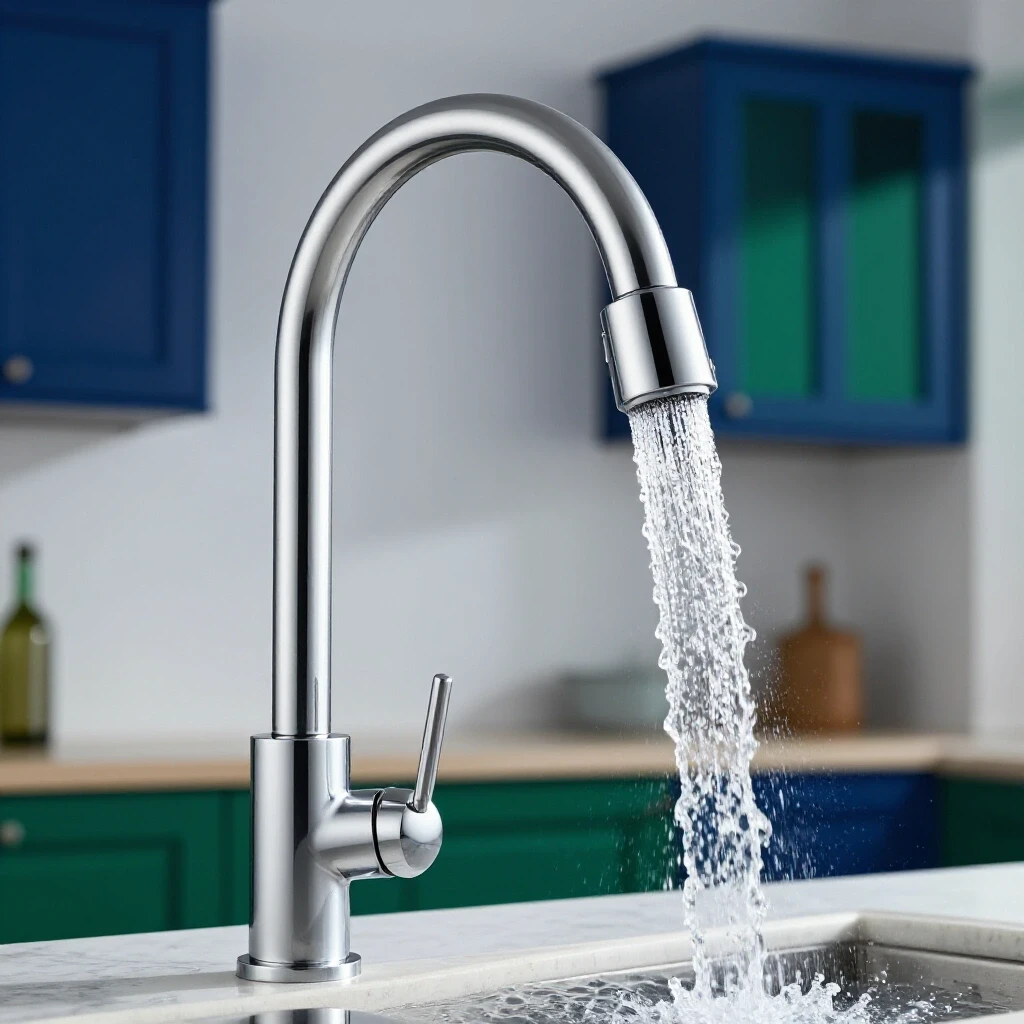
Maintaining a legacy home requires a blend of patience and technical curiosity. I remember a specific 1920s bungalow where the kitchen sink flow had dwindled to a trickle over several months. The owners feared they needed a total system overhaul. However, by following a logical testing sequence, we discovered the issue was localized to a single decorative fixture that had become restricted by internal debris. This experience reinforced my belief that most residential flow issues can be identified and resolved using basic tools and a clear plan of action.
The Building Science of Residential Fluid Dynamics
Residential fluid dynamics is the study of how water moves through your home’s internal piping under pressure. It involves balancing the force provided by the utility with the resistance created by pipes, valves, and fixtures. Understanding this balance helps you identify where energy is being lost and why your fixtures may not be performing at their rated capacity.
Building science teaches us that every turn, valve, and narrowing in a pipe creates friction. This friction acts as a “tax” on the force pushing the water. In older homes, this resistance can increase over time due to internal wear or the installation of modern, low-flow fixtures that are sensitive to small changes in delivery. When I assess a property, I look at the “path of least resistance.” If the flow is strong in the basement but weak on the second floor, we are looking at a struggle against gravity and friction.
To maintain structural protection and prevent moisture detection issues, it is vital to ensure that your internal systems are operating within a standard range. Most residential systems are designed to operate between 40 and 60 PSI (pounds per square inch). If the force drops below this, appliances like dishwashers and washing machines may take longer to fill, putting unnecessary strain on their mechanical components and potentially shortening their lifespan.
Essential Gear for Residential Diagnostics
A systematic approach to home maintenance requires a specific set of tools designed to measure and manipulate interior fixtures safely. Having these items on hand allows you to perform a residential diagnostic check the moment you notice a change in performance, rather than waiting for a complete failure.
To conduct a thorough “hunt” for the source of a flow reduction, I recommend keeping the following tools in a dedicated home maintenance kit:
- Standard Slip-Joint Pliers: Used for gently loosening decorative nuts on faucets.
- Adjustable Wrench: Essential for supply line connections where a firm, flat grip is needed.
- Soft-Jawed Pliers or Electrical Tape: Used to wrap tool teeth to prevent scratching high-end chrome or brass finishes.
- Bucket and Stopwatch: This allows you to perform a “timed pour” test to calculate the actual flow rate in gallons per minute (GPM).
- Small Pick Set or Old Toothbrush: For cleaning out fine mesh screens and aerators.
- Flashlight: A high-lumen LED light is necessary for inspecting dark cabinets and behind-the-wall access panels.
By using these tools, you can avoid the “brute force” mistakes that often lead to broken handles or stripped threads. In my experience, the most expensive repairs usually stem from a homeowner using the wrong tool for a delicate task.
Identifying the Source of Weak Interior Flow
Diagnosing a reduction in water delivery requires a process of elimination that starts at the fixture and moves backward toward the source. This systematic repair guide ensures you are not replacing expensive parts when a simple cleaning would suffice, protecting your budget and your home’s mechanical integrity.
The first step in any residential diagnostic is to determine if the issue is “isolated” or “systemic.” If only one faucet is acting up, the problem is likely within that fixture. If every tap in the house is weak, the issue is further upstream. For most prevention-focused homeowners, the localized hunt is where you will find the most success.
Step 1: The Aerator Assessment
The aerator is the small, screened component at the tip of your faucet. Its job is to mix air with the water to create a non-splashing stream. Over time, this screen can trap tiny particles. * Action: Unscrew the aerator by hand or with padded pliers. * Check: Turn on the faucet with the aerator removed. If the flow is strong, you have found your culprit. * Fix: Soak the aerator in a mild cleaning solution to dissolve any buildup and rinse it thoroughly before reinstalling.
Step 2: Supply Valve Inspection
Underneath your sinks are shut-off valves. Sometimes these are bumped by cleaning supplies, or the internal seals can degrade, partially blocking the path. * Action: Ensure the valve is turned fully to the “on” position (usually counter-clockwise). * Check: Look for any kinks in the flexible supply lines leading from the valve to the faucet. A sharp bend can act like a kinked garden hose, severely limiting the volume of water.
Step 3: Showerhead Maintenance
Showerheads are prone to internal restrictions because they often contain “flow restrictors” required by modern standards. These small plastic discs can become clogged with minute debris. * Action: Remove the showerhead and inspect the entry point. * Check: Use a small pick to clear the mesh screen. * Metric: A standard modern showerhead should deliver approximately 2.5 GPM. If your bucket test shows less than 1.5 GPM, the internal screen likely needs attention.
| Symptom | Potential Root Cause | DIY Difficulty |
|---|---|---|
| Weak flow at one sink | Clogged aerator screen | Low |
| Low pressure in shower only | Clogged showerhead or restrictor | Low |
| Sudden drop after recent repair | Partially closed shut-off valve | Low |
| Gradual decline across one floor | Kinked flexible supply line | Medium |
| Intermittent flow when hot is on | Water heater sediment (Internal) | High |
Balancing Aesthetic Upgrades with Functional Performance
In older homes, maintaining the visual harmony of the interior design is just as important as the mechanical function. When you decide to swap out an old, dated fixture for a new decorative model, you must ensure the new hardware is compatible with your home’s existing delivery capacity.
Many homeowners choose to install “industrial-style” kitchen faucets or “rain-style” showerheads. While these look stunning, they often require a higher volume of water to function as intended. If your home has older, smaller-diameter piping, a high-volume rain head might feel underwhelming. Before purchasing a new fixture, check the manufacturer’s “minimum operating pressure” requirements.
I often suggest installing custom-built access panels during bathroom or kitchen remodels. These panels allow you to inspect valves and connections without tearing through drywall in the future. This is a hallmark of preventative home care; you are designing for future maintenance. A well-placed, aesthetically pleasing panel can save thousands in structural repair costs if a slow drip ever develops behind the scenes.
DIY Scope vs. Professional Transition Points
Knowing when to put the wrench down is a critical skill for any homeowner. While most flow issues are simple fixes, there are specific “red flags” that indicate a problem beyond the scope of a standard home maintenance checklist. Safety and structural protection must always come first.
If you encounter any of the following, it is time to transition to a licensed professional: 1. Dampness or Mold: If you find moisture behind a wall during your hunt, stop immediately to avoid disturbing potential mold growth or structural rot. 2. Discolored Water: If the water appears “rusty” or “cloudy” only when the flow drops, this suggests internal pipe degradation that requires a professional assessment. 3. Rattling Pipes: Known as “water hammer,” loud banging noises when valves are closed can lead to burst connections if not addressed with specialized dampening equipment. 4. Complete Loss of Flow: If the water stops entirely and your neighbors still have service, there may be a failure in the main entry point of the home that is under high tension.
| Task | DIY Scope | Professional Scope |
|---|---|---|
| Aerator Cleaning | Yes | No |
| Showerhead Replacement | Yes | No |
| Flexible Line Swap | Yes | No |
| Valve Replacement | No | Yes |
| Main Line Inspection | No | Yes |
| Wall-Mounted Fixture Repair | No | Yes |
A Multi-Year Prevention Program
Preventative home care is not a one-time event; it is a seasonal rhythm. By creating a schedule, you can catch minor drops in performance before they impact your lifestyle or lead to costly repairs. In my facility logs, I always tracked the “baseline” performance of every floor so I could spot deviations early.
Quarterly Maintenance (Every 3 Months)
- Inspect all Aerators: Remove and rinse the screens on the kitchen and primary bathroom sinks.
- Operate Shut-off Valves: Turn the valves under sinks and toilets off and on once. This prevents “seizing,” where the valve becomes stuck in the open position due to lack of use.
Annual Maintenance (Once a Year)
- The Bucket Test: Pick one fixture and time how long it takes to fill a one-gallon bucket. Record this in your home log. If next year it takes 10 seconds longer, you know a restriction is forming.
- Showerhead Deep Clean: Soak showerheads in a vinegar-based solution for an hour to keep the nozzles clear and the flow consistent.
- Visual Inspection: Use a flashlight to check every exposed pipe in the basement or crawlspace for signs of “weeping” or corrosion.
Case Study: The “Hidden” Restriction in a Legacy Property
I once consulted on a 1950s ranch home where the master bathroom had lost almost 50% of its water volume over two years. The homeowner had already replaced the faucet, thinking the old one was simply worn out. When the new, expensive fixture performed just as poorly, they were at a loss.
Following my systematic hunt, we started at the new faucet and worked back. The aerator was clear. The supply lines were new. However, when we looked at the shut-off valves under the sink, I noticed they were the old “multi-turn” style. I had the homeowner turn off the water, and we disconnected the supply line to test the flow directly from the valve into a bucket.
The flow from the valve was a mere trickle. It turned out that the internal rubber washer inside the valve had disintegrated and wedged itself in the throat of the valve. By replacing a $10 valve—a task we transitioned to a professional for safety—the “pressure” was instantly restored. This case highlights why we must never assume the fixture is the problem without testing the delivery point first.
Practical Next Steps for Homeowners
If you are currently experiencing a frustrating drop in flow, do not panic. Start your hunt today by focusing on the most likely culprits. This methodical approach will either fix the problem or give you the exact information a contractor needs to provide an accurate estimate.
- Map the Issue: Identify exactly which fixtures are affected. Is it just the hot water? Just the upstairs?
- Clear the Path: Clean every aerator and showerhead in the affected area. This solves roughly 70% of residential flow complaints.
- Check the Valves: Ensure all interior shut-offs are fully open.
- Document the Results: If the problem persists, write down your findings. “Kitchen sink fills 1 gallon in 30 seconds; bathroom takes 60 seconds.” This data is invaluable for residential diagnostics.
By taking these steps, you are moving from a reactive state of “fixing things when they break” to a proactive state of “managing a system.” This is the essence of building science applied to the home. It protects your property, your wallet, and your peace of mind.
Frequently Asked Questions
Why does my water flow start strong and then quickly fade away? This is often a sign of a partial restriction in the line or a valve that isn’t fully open. The “strong” start is the small amount of pressurized water sitting in the pipe. Once that is used, the flow drops to the rate allowed by the restriction. Check your supply valves first.
Can a clogged aerator really affect the entire bathroom’s performance? No, a clogged aerator only affects that specific faucet. If the entire bathroom is slow, the issue is further back in the piping that serves that room.
Is it safe to use chemical cleaners to improve pipe flow? I generally advise against using harsh chemicals for flow issues. Chemicals are designed for drains (waste), not for the supply lines that bring water into your home. They can damage older pipes and fixtures. Stick to mechanical cleaning of screens and valves.
What is the “Bucket Test” and how do I do it? Place a one-gallon container under your faucet. Turn it on full and time how long it takes to fill. A healthy kitchen faucet should fill it in about 30-40 seconds (approx. 1.5 to 2.2 GPM).
Does the age of my home guarantee I will have flow issues? Not necessarily. Many older homes have excellent flow because they were built with larger-diameter pipes. Issues usually arise from modern fixtures being sensitive to small amounts of sediment or old valves failing internally.
How do I know if my shut-off valve is failing? If you turn the handle and the water flow doesn’t change, or if it feels “crunchy” or difficult to turn, the internal components are likely degraded.
Should I replace my showerhead if the flow is weak? Try cleaning it first. Soak it in a 50/50 mix of water and white vinegar for an hour. Use a toothbrush to scrub the nozzles. If that doesn’t work, then consider a replacement.
What is a flow restrictor? It is a small plastic disc inside modern faucets and showerheads designed to limit water use to meet environmental standards. In older homes with lower base pressure, these can sometimes make the flow feel too weak.
Can a kinked hose under the sink cause a drop in pressure? Yes, absolutely. Flexible braided lines can easily get twisted or pinched by heavy items stored under the sink. This is one of the easiest “hunts” to win.
When should I call a professional? Call a pro if you see signs of a leak (dampness, mold), if you have discolored water, or if you have checked all aerators and valves but the flow is still poor throughout the house.
(This article was written by one of our staff writers, Daniel Whitaker. Visit our Meet the Team page to learn more about the author and their expertise.)