How Weather Delays Impact Renovation Projects (Expert Guide)

There is a specific kind of warmth that only a finished home provides. It is the glow of the under-cabinet lighting reflecting off a new quartz countertop or the way a freshly stained oak floor feels under your feet on a quiet morning. After 18 years as a construction project coordinator, I have seen that warmth vanish in an instant when a sudden storm or an unexpected seasonal shift halts a residential renovation.
When we talk about the impact of the elements on a project, we often focus on the big things, like roofs or siding. However, the most painful losses often happen inside the home. I have watched custom cabinetry warp because it was delivered before the house was properly sealed against the humidity of a sudden rain cycle. I have seen intricate DIY craft projects, intended to be the centerpiece of a room, ruined by moisture seeping through an unfinished window frame. These setbacks do more than just delay the timeline; they eat into your kitchen remodel budget and strip away the joy of the design process.
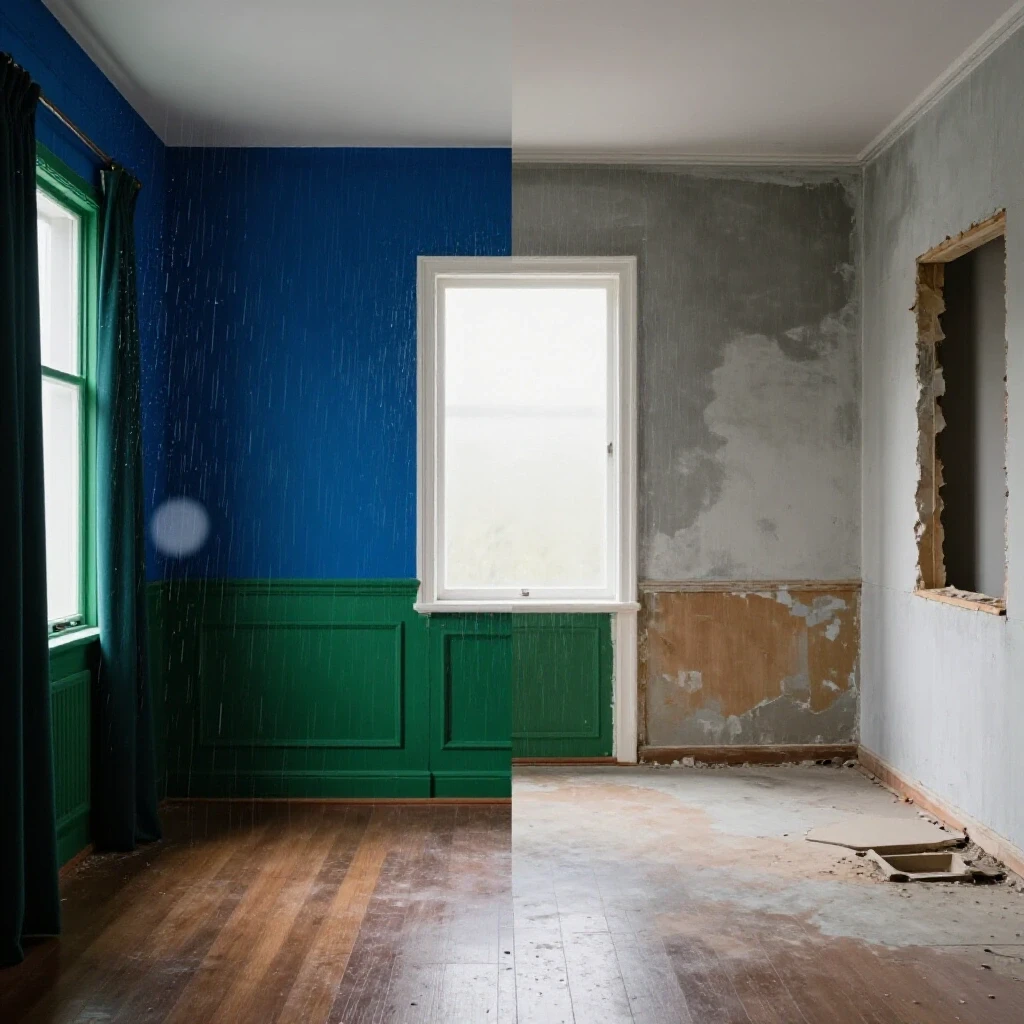
In my two decades of overseeing builds, including two full-home renovations of my own, I have learned that the key to a successful remodel is not just a good contractor. It is a plan that accounts for the unpredictability of the environment. We must look at how we sequence our work to protect the lifestyle design features we care about most. Whether you are in the middle of a high-desert summer or a wet spring, understanding how to pivot when the environment turns against you is the difference between a finished masterpiece and a stressful money pit.
Protecting Your Design Vision from Unexpected Environmental Shifts
Environmental shifts refer to sudden changes in local weather patterns, such as spikes in humidity, extreme temperature drops, or heavy rainfall, that can damage exposed building materials. These shifts often catch homeowners off guard, leading to the loss of expensive interior finishes and custom decor elements that are sensitive to moisture and heat.
During one of my personal renovations, I had scheduled the installation of custom-milled wainscoting for a Tuesday. On Monday night, a localized storm dumped three inches of rain, and because the HVAC system wasn’t fully operational, the humidity inside the house spiked to 85%. By Tuesday morning, the wood had expanded so much that the precision joints no longer fit. We lost three days of labor and a significant portion of the material.
To avoid this, you must prioritize the “thermal envelope.” This is the physical barrier between the conditioned interior of your home and the outside world. Never allow high-end finishes, like hardwood or custom cabinetry, to enter the site until the home is “dried in.” This means all windows, doors, and roofing are secure, and the interior climate can be controlled.
- Acclimation Period: Always allow wood products to sit in the room where they will be installed for at least 48 to 72 hours.
- Moisture Testing: Use a pinless moisture meter to ensure subfloors and studs are below 12% moisture content before closing up walls.
- Temporary Climate Control: If your permanent HVAC isn’t ready, use industrial dehumidifiers and portable heaters to maintain a stable environment.
Why Seasonal Timing Impacts Your Kitchen Remodel Budget
A kitchen remodel budget is the total estimated cost of materials, labor, and contingencies required to renovate a kitchen space. Seasonal timing affects this because the cost of labor and the availability of materials often fluctuate based on the time of year and the regional climate’s impact on construction schedules.
Data from RSMeans construction estimating resources suggests that interior finish work costs can increase by 10-15% if performed during peak “crisis” seasons when environmental damage is common. For example, if a storm ruins a set of custom-painted cabinet doors, you aren’t just paying for the doors again; you are paying for the rush shipping and the contractor’s “wait time” while the new units arrive.
In my professional experience, the most successful homeowners are those who build a “weather buffer” into their financial planning. This isn’t just a general contingency fund; it is a specific allocation for the potential loss of delicate materials. If you are planning a renovation in an area prone to sudden shifts, like the Reno-Tahoe corridor, your budget should look different than a project in a stable climate.
Contingency Buffer Allocations by Property Age
| Property Age | Recommended Buffer | Primary Risk Factor |
|---|---|---|
| New Construction (0-10 years) | 10% | Material lead-time delays |
| Mid-Age Home (10-40 years) | 15-20% | Hidden moisture/outdated wiring |
| Historic Home (40+ years) | 25%+ | Structural rot and environmental exposure |
Building on this, I always suggest that homeowners keep 5% of their total budget in a “liquid” reserve. This allows you to quickly purchase material alternatives if your primary choice is damaged by a leak or humidity. It is better to have the cash ready than to halt the project while you argue with a supplier over a damaged shipment.
Sequencing Your Residential Renovation to Prevent Design Loss
Construction sequencing is the logical order in which different trades and tasks are performed to ensure the project moves forward efficiently. Proper sequencing acts as a shield for your home remodeling tips, ensuring that delicate DIY crafts and expensive finishes are the very last things to enter the construction zone.
Many homeowners make the mistake of wanting to see “progress” quickly. They might push to have the beautiful tile laid in the bathroom before the drywall overhead is sanded. This is a recipe for disaster. One of the most heartbreaking things I’ve seen was a custom-built vanity, handcrafted by the homeowner, ruined because a roof leak occurred before the final shingles were laid.
The “Critical Path” is a project management term that identifies the sequence of crucial steps that must be completed on time for the project to finish. In a remodel, the critical path must prioritize the exterior shell. Interestingly, many disputes between homeowners and contractors arise because the homeowner wants to start the “pretty” work while the contractor is still struggling with the “ugly” but necessary structural protections.
- Phase 1: Stabilization. Fix the roof, windows, and exterior doors.
- Phase 2: Rough-ins. Complete plumbing, electrical, and HVAC while the walls are open.
- Phase 3: Environmental Control. Ensure the house can hold a consistent temperature.
- Phase 4: Finish Work. Bring in the custom decor and lifestyle design features.
Adaptive Planning: Recovering When the Environment Wins
Adaptive planning is the process of modifying your original design and schedule in response to unforeseen obstacles, such as a storm that ruins your initial material choices. It involves finding creative recovery techniques that allow you to maintain the aesthetic of your home without blowing the timeline.
I remember a project where a homeowner had planned for a very specific, hand-tufted wallpaper in their dining room. A sudden plumbing failure, exacerbated by a cold snap that froze a pipe, ruined the wall before the paper could be hung. Instead of waiting six weeks for a new shipment of the expensive paper, we pivoted. We used a moisture-resistant Venetian plaster finish that mimicked the texture of the paper but was far more durable.
This kind of flexibility is essential. If you lose a specific design element to the elements, don’t just try to recreate the past. Look for material alternatives that offer better resilience. For example, if your solid wood trim keeps warping due to local humidity shifts, consider high-quality MDF (Medium Density Fiberboard) for painted sections. It is more stable and less prone to the “movement” that ruins mitered corners.
- Assess the Damage: Don’t rush to clean up. Document everything for your own records and understand exactly why the failure happened.
- Consult the Experts: Ask your finish carpenter or designer if there is a more resilient material that achieves the same look.
- Update the Schedule: Use a scheduling app like TeamGantt or Monday.com to see how the loss shifts your move-in date.
- Re-evaluate the Scope: Sometimes, losing one feature allows you to reallocate those funds to a different area of the home that needs more attention.
Managing Your Contractor Through Scheduling Shifts
Contractor management is the process of overseeing the professionals working on your home to ensure they meet quality standards and stay on schedule. When the environment causes a delay, managing these relationships becomes a delicate balance of firmness and empathy.
A common point of friction is the “delay claim.” A contractor might say they can’t work because it’s raining, even if the work is indoors. Sometimes they are right—high humidity prevents paint from drying or mud from curing. Other times, they are using the weather as an excuse to jump to another job. As a former coordinator, I always looked at the “site conditions” rather than the forecast.
To manage this, include a “Weather Day” clause in your contract. This defines what constitutes an acceptable delay. For example, if the interior humidity is above 60%, the floor installer is justified in waiting. This takes the emotion out of the argument and relies on data.
- Daily Logs: Ask your contractor to keep a simple log of site conditions (temperature and humidity).
- Milestone Payments: Never pay for finish work until it is successfully installed and inspected.
- Weekly Check-ins: Have a standing meeting every Friday to discuss the upcoming forecast and how it might impact the next week’s tasks.
Structural Inspection Checklists: The Post-Storm Recovery
A structural inspection checklist is a tool used to verify the integrity of a home’s frame, foundation, and systems after an environmental event. This is a vital part of residential renovation planning because it catches hidden issues like mold or rot before they are covered up by new drywall.
After any significant environmental event, you must perform a “walk-through.” In my 18 years, I have seen many homeowners ignore a small damp spot on a stud, only to have it turn into a major mold problem two years later. Using a checklist ensures you don’t miss the small signs of a big problem.
- Check the Attic: Look for damp insulation or water tracks on the rafters.
- Inspect the Crawlspace: Ensure no standing water has pooled near the foundation.
- Test the Windows: Open and close every window to ensure the frames haven’t shifted or swollen.
- Look for “Blushing”: On freshly painted or stained surfaces, look for cloudy white spots, which indicate moisture trapped under the finish.
Tools for Tracking Your Renovation Progress
Managing a major remodel requires more than just a notebook. Modern tools can help you track lead times for materials and stay ahead of potential delays.
- Buildertrend or CoConstruct: These are professional-grade apps that many contractors use. If yours does, ask for “client access” so you can see the schedule in real-time.
- Magicplan: Great for DIYers to create floor plans and estimate material needs quickly.
- RSMeans Data Online: Use this to verify if the quotes you are getting for “recovery work” are in line with national averages.
- Canvas: This app allows you to scan a room with your phone and create a 3D model, which is incredibly helpful when discussing design pivots with a contractor.
Final Steps for a Resilient Remodel
As you move toward the end of your project, the focus shifts to the “punch list.” This is a list of small tasks or repairs that need to be completed before the final payment is made. When you have navigated environmental shifts, your punch list will likely be longer than average.
Be meticulous. Check the “lifestyle design” features you were most excited about. Does the custom shelving sit level? Do the cabinet doors swing freely without rubbing? These small details are what you will live with every day. If the environment caused a shift during construction, it will show up here.
The goal of a renovation is to create a space that reflects your life and stands the test of time. By planning for the unpredictable and protecting your materials, you can ensure that the warmth you feel on that first morning in your new home is a feeling that lasts for decades.
Frequently Asked Questions
How does high humidity affect my new hardwood floors? High humidity causes wood to absorb moisture and expand. If installed during a humid period without proper acclimation, the boards can “cup” (edges rise) or “crown” (center rises) once the air dries out. Always ensure your home’s humidity is between 30% and 50% before and during installation.
Can I paint my interior if it is raining outside? Yes, but with caution. High humidity slows the evaporation of water in latex paint, which can lead to “surfactant leaching” (streaks) or a failure to bond. Use a dehumidifier and ensure the surface temperature of the walls is at least 5 degrees above the dew point.
What should I do if my custom cabinets arrive and the house isn’t ready? Do not store them in a garage or an unconditioned basement. If the house isn’t “dried in” with climate control, pay for professional climate-controlled storage. The cost of storage is far less than the cost of replacing warped cabinet boxes.
How do I know if a contractor is using weather as an excuse to skip work? Check the specific requirements for the task at hand. For example, if they are supposed to be tiling, humidity is rarely an issue. However, if they are staining wood or doing delicate plaster work, they may be right. Ask for the “Technical Data Sheet” (TDS) for the product they are using; it will list the acceptable temperature and humidity ranges.
What is the best material for trim in a climate with big seasonal shifts? For painted trim, MDF is much more stable than solid wood. For stained trim, look for “engineered” products that have a real wood veneer over a stable core. These materials move much less than solid timber when the weather changes.
How much extra time should I add to my schedule for potential delays? A good rule of thumb is to add 20% to the contractor’s estimated timeline. If they say it will take 10 weeks, plan for 12. This “float time” reduces stress and prevents you from scheduling move-in dates that you can’t hit.
What are the signs of hidden mold after a leak? Look for a musty odor, even if you can’t see anything. Check for “ghosting” or dark spots on drywall and look for bubbling paint. If you suspect a leak occurred behind a wall, it is worth cutting a small “inspection hole” to check the back of the drywall.
Is it worth it to buy a moisture meter myself? Absolutely. For about $50, a moisture meter allows you to verify your contractor’s claims. You can check the subfloor yourself before the expensive hardwood goes down, giving you peace of mind that your investment is protected.
How do I handle a dispute over “ruined” materials? Refer to your contract. A well-written contract should state who is responsible for material storage and protection. If the contractor left the materials in a vulnerable spot, they are typically responsible. If you insisted on early delivery against their advice, the cost may fall on you.
What is “acclimation” and why is it non-negotiable? Acclimation is the process of letting materials reach a “moisture equilibrium” with their environment. If you bring wood from a cold, dry warehouse into a warm, humid home, it will change shape. Skipping this step is the leading cause of floor and cabinet failure in residential renovations.
(This article was written by one of our staff writers, David Langford. Visit our Meet the Team page to learn more about the author and their expertise.)