Custom Renovation Costs: What’s Worth It and What to Skip (Guide)

Adaptability is the single most important tool in any homeowner’s belt when facing a major residential renovation. Over my 18 years as a construction project coordinator, I have seen that the most successful projects are not the ones that follow a perfect script, but those that pivot effectively when reality deviates from the blueprints. Whether you are opening up a wall in a 1920s bungalow or installing bespoke cabinetry in a modern kitchen, the ability to adjust your expectations and your resources is what prevents a project from stalling.
Determining the Value of Bespoke Craftsmanship in Your Remodel
This involves a careful look at how specialized, made-to-order elements like cabinetry or millwork impact your daily life and your home’s long-term value. It is about weighing the benefits of a tailor-made solution against the reliability and speed of high-quality standard options.
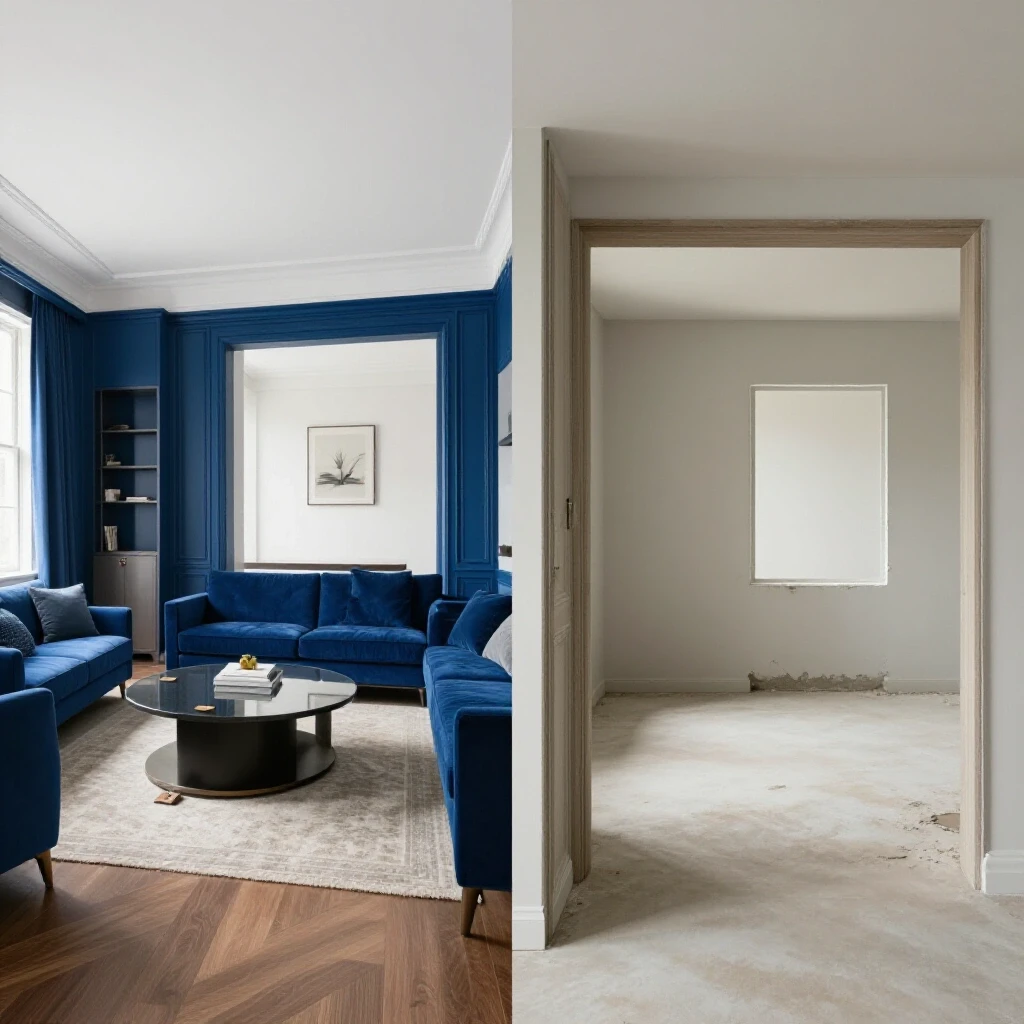
In my own first full-home renovation, I insisted on custom-built library shelving for my home office. While the result was beautiful, the coordination required between the framer, the finish carpenter, and the painter was immense. Looking back, I realized that high-quality modular units could have achieved a similar aesthetic with 30% less coordination effort. When you are planning your residential renovation, you must ask if a feature is truly solving a unique spatial problem or if it is simply a design preference that could be met more simply.
Bespoke work often involves longer lead times. Lead times are the duration between ordering a material and its arrival on-site. For custom millwork, this can range from 8 to 16 weeks depending on the shop’s backlog. If your construction sequencing depends on these items to move forward, a single delay can push back your entire move-in date.
- Evaluate if the custom piece serves a functional purpose that standard sizes cannot.
- Check if the material requires specialized maintenance that you are willing to perform.
- Determine if the craftsmanship aligns with the overall quality level of the rest of the house.
Why Hidden Structural Surprises Blow Budgets—And How to Formulate a Real Contingency Plan
Structural surprises refer to unforeseen issues like wood rot, mold, or outdated “knob and tube” wiring discovered once walls are opened. A contingency plan is a dedicated portion of your budget set aside specifically to cover these unexpected costs without depleting your primary funds.
During a kitchen remodel I managed for a client, we removed the backsplash only to find significant water damage and mold behind the sink. This was not in the original scope of work—the document that defines exactly what tasks the contractor will perform. Because we had established a 20% contingency fund, we were able to remediate the mold and replace the studs without halting the project to find extra financing.
RSMeans data suggests that for homes older than 50 years, structural issues are almost a certainty. I recommend a tiered contingency approach based on the age of your property. This ensures you aren’t caught off guard when the “rough-in” phase—where internal systems like plumbing and electrical are installed—reveals problems.
Table 1: Contingency Buffer Allocations by Property Age
| Property Age | Recommended Contingency % | Common Hidden Issues |
|---|---|---|
| 0–10 Years | 10% | Minor settling, HVAC duct leaks |
| 11–30 Years | 15% | Roof wear, outdated plumbing fixtures |
| 31–60 Years | 20% | Mold, termite damage, electrical capacity |
| 61+ Years | 25%+ | Lead paint, asbestos, structural rot, unlevel floors |
Navigating Contractor Vetting for High-End Tailored Projects
Contractor vetting is the process of researching, interviewing, and verifying the credentials of builders to ensure they are capable of executing your specific design. It moves beyond just checking references to looking at their history with projects of similar complexity.
When you are looking for someone to handle a kitchen remodel budget that includes specialized finishes, you need more than a generalist. I once worked with a homeowner who hired a great general contractor, but that contractor had never worked with the specific type of stone chosen for the countertops. The result was a series of cracks during installation because the team didn’t know the material’s weight limits.
Always ask for a “schedule of values” during the bidding process. This breaks down the total cost into specific categories like demolition, framing, and finishes. It allows you to see if their estimate for specialized work is realistic or if they are low-balling the bid to get the job, only to hit you with change orders later.
- Verify active licenses and workers’ compensation insurance.
- Ask for photos of “work in progress,” not just finished “after” shots.
- Speak to three past clients who had similar custom features installed.
The Critical Path: Scheduling Specialized Installations Without Delays
The critical path is a project management term for the sequence of essential tasks that must be completed on time for the entire project to finish on schedule. If a task on the critical path is delayed by one day, the whole project is delayed by one day.
In residential renovation planning, custom millwork and stone are almost always on the critical path. If your custom bathroom vanity isn’t on-site, the plumber cannot complete the “trim-out”—the final installation of faucets and drains. This, in turn, prevents the final inspection and the closing of the permit.
I use digital scheduling tools to track these dependencies. If you are managing your own remodel, a simple Gantt chart can help you visualize how one delay ripples through the rest of the month. Managing “float time”—the amount of time a task can be delayed without affecting the finish date—is essential when dealing with bespoke items that have unpredictable delivery dates.
Table 2: Renovation Phase Sequencing
| Phase | Description | Critical Dependencies |
|---|---|---|
| 1. Demolition | Removing old materials and exposing the structure. | Permit approval, hazardous material testing. |
| 2. Structural/Rough-in | Framing, plumbing, electrical, and HVAC inside walls. | Structural engineer approval, inspection. |
| 3. Envelope/Insulation | Sealing the home and adding thermal protection. | Passing rough-in inspections. |
| 4. Drywall/Paint | Closing walls and applying initial finishes. | Insulation inspection. |
| 5. Finish Carpentry | Installing custom built-ins, trim, and doors. | Drywall sanding and priming. |
| 6. Trim-out/Fixtures | Final plumbing and electrical connections. | Cabinetry and countertop installation. |
Identifying Over-Engineered Features You Might Choose to Forgo
Over-engineered features are design choices that are excessively complex or costly without providing a proportional increase in function or aesthetic value. These are the items that often lead to budget overruns and contractor disputes.
In my second personal renovation, I considered a complex, multi-layered crown molding design for the entire main floor. After reviewing the labor hours required for the finish carpenter to “cope” every joint—a technique where one piece of molding is cut to fit the profile of the other—I realized the cost-to-impact ratio was off. We opted for a simpler, high-profile single trim that looked just as elegant but saved weeks of labor.
Home remodeling tips often focus on what to add, but knowing what to skip is just as vital. Avoid “scope creep,” which is the gradual expansion of the project’s goals beyond the original plan. If you find yourself adding custom niches inside every closet just because you saw them online, you are likely over-engineering the project.
- Avoid hyper-specific built-ins that cannot be repurposed if your needs change.
- Skip custom-sized windows if standard sizes can be framed to look identical.
- Evaluate if “smart home” wiring is necessary when wireless technology is evolving so fast.
Quality Control Benchmarks for Finish Carpentry and Built-ins
Quality control benchmarks are the specific standards of workmanship you expect the contractor to meet. Defining these early prevents arguments at the end of the project when you are unhappy with the final look.
For tailored woodwork, a common benchmark is the “gap tolerance.” For example, you might specify that no joint in the cabinetry should have a gap wider than 1/32 of an inch. If you don’t set these benchmarks, a contractor might think a larger gap is acceptable, leading to a dispute when it comes time for final payment.
During the execution phase, I perform “walk-throughs” at the end of every week. We look at the progress against the “shop drawings”—detailed diagrams provided by the custom manufacturer. If the “rough-in” for a light fixture is off by two inches, it’s much easier to fix before the drywall is up than after the custom cabinets are installed.
- Level and Plumb: Ensure all vertical surfaces are perfectly upright and horizontal surfaces are flat.
- Symmetry: Check that built-ins are centered according to the architectural plans.
- Operation: Test every drawer and door for smooth movement without rubbing.
- Finish Consistency: Inspect for uniform paint or stain application across all pieces.
Resolving the Punch List and Finalizing the Project
A punch list is a document created at the very end of a project that lists all the small tasks, repairs, and finishing touches that must be completed before the final payment is made. This is often where the most friction occurs between homeowners and contractors.
To minimize friction, I recommend a “rolling punch list.” Instead of waiting until the end, keep a running list of items that need attention as the project progresses. This prevents a massive, overwhelming list at the final hour.
Never release the final “retention” payment—usually the last 10% of the contract—until every item on the punch list is signed off. This ensures the contractor has the incentive to return and finish the small details. A professional contractor will respect this process if it was clearly outlined in the initial contract.
Table 3: Change Order Impact Analysis
| Change Requested | Potential Delay | Cost Impact Factor |
|---|---|---|
| Moving a non-load-bearing wall | 2–4 days | Moderate (Labor/Drywall) |
| Changing custom cabinet finish | 2–4 weeks | High (Refinishing/Shipping) |
| Adding a recessed niche | 1 day | Low (Material/Labor) |
| Relocating a plumbing stack | 5–7 days | Very High (Structural/Plumbing) |
Essential Tools for Managing Your Remodel
Managing a renovation requires organization that goes beyond a simple notebook. These tools help you track the “what,” “why,” and “how” of your project in real-time.
- Construction Management Apps: Tools like Buildertrend or CoConstruct allow you to see the contractor’s schedule and upload photos of progress.
- Digital Blueprints: Apps like Magicplan let you measure rooms and create 2D/3D plans on your phone to check if custom furniture will fit.
- RSMeans Estimating Data: Use this to verify if the labor and material quotes you receive are within the national average for your zip code.
- Laser Level: A simple tool you can use to verify if your contractor’s work meets the “level and plumb” benchmarks.
- Lien Waiver Templates: Documents that ensure subcontractors have been paid by your general contractor, protecting you from legal claims on your property.
Moving Forward with Confidence
Starting a major renovation is a significant financial and emotional commitment. By focusing on the structural integrity of your home first and being selective about where you apply specialized craftsmanship, you can create a space that is both beautiful and resilient. Remember that the goal is not a project without challenges, but a project where you are prepared for the challenges that inevitably arise.
Start by defining your scope of work clearly. Use the contingency percentages based on your home’s age to set a realistic budget. Most importantly, maintain open, data-driven communication with your contractor. When you speak the language of sequencing, benchmarks, and critical paths, you move from being a stressed homeowner to an effective project manager.
FAQ: Navigating Residential Renovation Challenges
What is the difference between a “load-bearing” wall and a partition wall? A load-bearing wall supports the weight of the house above it, such as the roof or a second floor. Removing one requires structural beams and often a structural engineer’s stamp. A partition wall simply divides rooms and can usually be moved with less structural impact, though it may still contain plumbing or electrical lines.
How do I know if a custom feature is worth the extra cost? Evaluate the “Cost vs. Value.” If the feature solves a specific problem—like a custom mudroom bench in a tiny entryway—it adds daily functional value. If it is purely decorative, compare it to high-quality standard alternatives. If the cost is more than double the standard option for a similar look, it may be an area to skip.
What should I do if my contractor finds mold or rot? Stop work in that area immediately. Have the contractor assess the extent of the damage and provide a written change order. A change order is a mini-contract that details the new work, the cost, and the time it will add to the schedule. Use your contingency fund to cover these costs.
Why are custom cabinets so much more expensive than “big box” store options? Custom cabinets are built to the exact fractions of an inch of your space, eliminating the need for “fillers” (blank pieces of wood used to gap spaces). They also typically use higher-grade plywood and solid wood rather than particle board, and they offer limitless finish and hardware options.
What is “rough-in” plumbing and why is it important? Rough-in plumbing occurs when the pipes are installed inside the walls and under the floors before the drywall is closed. It is the most critical time to ensure everything is positioned correctly for your sinks, toilets, and showers. Moving a pipe after the walls are closed is significantly more expensive.
How much of a contingency fund do I really need? While 10% is often cited, 15–20% is more realistic for major remodels, especially in older homes. This fund isn’t for “extra” features you decide to add later; it is for the “must-fix” issues that appear once construction begins.
What is a “lien waiver” and why should I ask for one? A lien waiver is a document from a subcontractor or supplier stating they have received payment for their work. If your general contractor fails to pay a plumber, that plumber can legally place a lien on your house. Collecting waivers ensures everyone has been paid before you issue final funds.
How do I handle a dispute with my contractor over quality? Refer back to your quality control benchmarks and the original contract. If a finish doesn’t meet the agreed-upon standard, point it out immediately. It is much easier for a contractor to fix a mistake while they are still on-site with their tools than months later.
What is “scope creep” and how can I avoid it? Scope creep is when you keep adding “while you’re at it” tasks to the project. “While you’re painting the kitchen, can you do the hallway too?” These small additions add up in both time and money. Stick to your original scope of work to keep the project on track.
How long does a typical kitchen remodel take? A standard kitchen remodel usually takes 8 to 12 weeks of active construction. However, planning and material lead times can add 3 to 6 months to the timeline before a single hammer is swung. Always account for a “float time” of at least two weeks for unexpected delays.
(This article was written by one of our staff writers, David Langford. Visit our Meet the Team page to learn more about the author and their expertise.)