Whole-Home Renovation Cost Breakdown & 12-Month Budget Plan (Guide)

When I first purchased my 1950s ranch, I spent weeks thinking about how to blend the original mid-century charm with a modern, efficient aesthetic. I knew that mixing styles required more than just an eye for design; it required a rigorous financial strategy. My goal was to update every room over the course of a year without draining my savings or taking on high-interest debt. I treated my house like a professional portfolio, tracking every box of nails and every hour of labor in a master spreadsheet that I still use for my clients today.
Successfully managing a comprehensive annual update budget requires a shift in mindset. You are no longer just a homeowner; you are a project manager and a Chief Financial Officer. By looking at the hard data from the U.S. Bureau of Labor Statistics and regional cost reports, we can move away from “guesstimates” and toward a reliable financial framework. This guide breaks down how to plan your spending, track your costs, and ensure your house remains an asset rather than a liability.
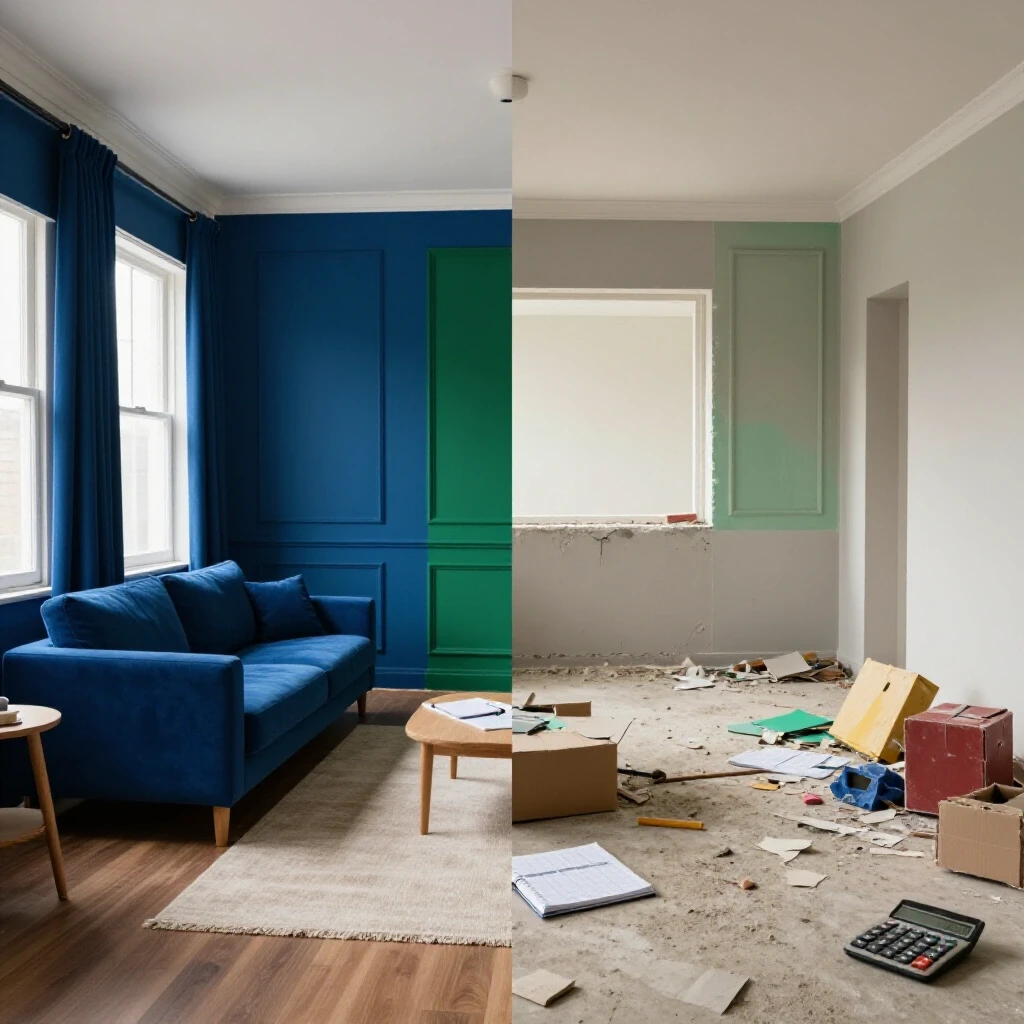
Building a Resilient Home Renovation Budget
A home renovation budget is a living document that maps out every anticipated dollar spent against your actual cash reserves. It accounts for both the expected material prices and the labor needed to install them over a set period.
Before you pick up a hammer, you must establish your financial boundaries. I advocate for the “Cash-Plus-Contingency” model. This means you only initiate projects for which you have 120% of the estimated cost sitting in a liquid account. The extra 20% is not “bonus money”; it is a vital safety buffer. In my first major update, a simple bathroom floor replacement revealed a subfloor rot issue that cost an extra $1,200. Because I had a contingency buffer, the project didn’t stall.
Establishing Your ROI Thresholds
ROI thresholds are the limits you set on spending based on how much value an update adds to your property. It prevents “over-improving” a home beyond what the local neighborhood market can support.
I always advise clients to check Remodeling Magazine’s Cost vs. Value reports for their specific zip code. For example, a minor kitchen update generally recoups about 75% to 80% of its cost in resale value. If you spend $30,000 on a kitchen in a neighborhood where homes only sell for $200,000, you are unlikely to see that money again. I use a “localized comp multiplier”—I look at the top 10% of home prices in my area and ensure my total investment doesn’t push my home’s “all-in” cost above that ceiling.
Defining Your Labor-to-Material Ratios
A labor-to-material ratio is the percentage of your budget spent on physical goods versus the cost of hiring professionals to install them. This ratio helps you decide which tasks to DIY and which to outsource.
In a typical mid-range update, labor often accounts for 35% to 50% of the total price. If you are painting a room yourself, your ratio might be 90% materials and 10% supplies. However, for electrical or plumbing work, the ratio flips. Understanding these ratios allows you to spot “red flag” quotes. If a contractor’s labor quote is 80% of the total project cost for a simple flooring job, you know to keep shopping for better rates.
The Remodeling Expense Tracker: Organizing Your 12-Month Roadmap
An expense tracker is a granular spreadsheet used to compare initial contractor bids against final invoices. It helps identify “scope creep” before it drains your bank account.
To keep a year-long project on track, you need a centralized place to log every receipt. I recommend using a simple spreadsheet with columns for “Budgeted,” “Bid/Estimate,” “Actual Spent,” and “Variance.” This allows you to see exactly where you are overspending in real-time. If your lighting fixtures cost $200 more than planned, you must find $200 to cut from the next phase, such as choosing a less expensive hardware finish.
Phase-Based Allocation of Funds
Phase-based allocation involves dividing your total budget into smaller chunks dedicated to specific months or rooms. This keeps your cash flow steady and prevents you from running out of money by month six.
I structure my annual plans into four quarters. Quarter one focuses on “low-impact, high-value” updates like interior painting and lighting. Quarter two moves to “wet” areas like bathrooms. Quarter three tackles flooring across the entire house. Quarter four is for final trim work and landscaping. This sequence ensures that the messiest, most expensive work is spaced out, giving your bank account time to recover between big checks.
Managing Change-Order Escalation Clauses
A change-order escalation clause is a part of a contract that allows for price increases if the project scope changes. Understanding these protects you from surprise bills after the work has started.
When you hire a pro, they might find something unexpected behind a wall. A change order is the formal document that records the change in work and the change in price. I track these in a separate tab on my spreadsheet. My rule is simple: no work begins on a change order until the price is signed and the funds are moved from the contingency line item to the active budget. This prevents “verbal agreements” that turn into financial nightmares at the end of the month.
Data-Driven Cost Breakdown Guide for Interior Updates
This guide uses regional averages to estimate the price of materials and labor for standard rooms. It provides a baseline so you know if a local quote is fair or inflated.
To build a realistic forecast, you need to know what things actually cost in today’s market. Prices for materials like lumber and copper have fluctuated significantly over the last three years. I pull data from the U.S. Bureau of Labor Statistics (BLS) to monitor the Producer Price Index for building materials. This tells me if I should buy my flooring now or wait three months for a seasonal dip.
Estimated Costs for Mid-Range Material Selections
Mid-range materials are high-quality, durable options that offer the best balance between price and longevity. They avoid the high cost of luxury brands while providing better performance than “builder-grade” basics.
- LVP Flooring: $3.50 – $6.00 per square foot (materials only).
- Interior Paint: $45 – $70 per gallon (covers approx. 350 sq. ft.).
- Kitchen Cabinet Refacing: $4,000 – $9,000 for a standard 10×10 kitchen.
- Quartz Countertops: $75 – $125 per square foot installed.
- Standard Vanity Replacement: $400 – $1,200 including faucet.
| Project Item | Budgeted Amount | Actual Cost (Sample) | Variance |
|---|---|---|---|
| Living Room Flooring (400 sq ft) | $2,400 | $2,650 | +$250 |
| Master Bath Paint & Trim | $350 | $310 | -$40 |
| Kitchen Backsplash (DIY) | $500 | $580 | +$80 |
| Entryway Lighting | $250 | $215 | -$35 |
| Total | $3,500 | $3,755 | +$255 |
Analyzing Regional Labor Cost Coefficients
Regional labor coefficients are multipliers used to adjust national average costs to your specific city. They account for differences in the cost of living and local contractor demand.
Labor in San Francisco or New York City will cost significantly more than in Indianapolis or Memphis. According to construction cost indices, you should adjust your baseline labor estimates by the following factors: – Northeast: 1.15x – 1.30x – Midwest: 0.85x – 0.95x – South: 0.90x – 1.05x – West Coast: 1.20x – 1.40x
If a national blog says a bathroom tile job costs $2,000 in labor, but you live in Seattle, you should budget at least $2,400 to be safe.
Accounting for Hidden Fees and Municipal Costs
Hidden fees are the “invisible” expenses like permit fees, trash hauling, and delivery charges. They often account for 5% to 10% of a total project budget.
Many homeowners forget that getting the old materials out of the house costs money. A 20-yard dumpster rental usually runs between $350 and $600 for a week. Additionally, most cities require permits even for “minor” updates like replacing a water heater or moving an electrical outlet. I always call the local building department before starting a phase to get a schedule of fees.
Municipal Permit and Inspection Fee Estimates
Permit fees are charges paid to your local government to ensure your updates meet safety codes. They usually include one or more inspections by a city official.
- Electrical Permit: $75 – $150
- Plumbing Permit: $50 – $125
- General Cosmetic Permit (if required): $100 – $300
- Waste Disposal Fees: $30 – $100 per ton at local landfills.
Failing to pull a permit can be a massive financial mistake. If you try to sell your home and the buyer’s inspector finds unpermitted work, you may have to tear it out and redo it at your own expense. This can lead to “depreciation” of your investment—where the money you spent actually lowers the home’s value because of the legal risk.
Delivery and Logistics Surcharges
Logistics surcharges are the fees added to your material orders for shipping, handling, and fuel. These can add up quickly if you order from multiple vendors.
When I was updating my guest bedroom, I ordered a new door, trim, and flooring from three different stores. I ended up paying $150 in delivery fees alone. To avoid this, I now consolidate my “Buy List” for each quarter. If I can get all my materials delivered in one truck, I save money that can be reallocated to better-quality finishes.
Sequencing Your Year-Long Financial Framework
Sequencing is the order in which you tackle projects to maximize cash flow and minimize living disruptions. It allows you to pay for updates in stages rather than all at once.
A common mistake is trying to do everything in month one. This leads to “decision fatigue” and financial strain. By spreading the work over 12 months, you can fund the project from your monthly income rather than dipping into retirement accounts or taking out a loan. I recommend a “top-down” approach: start with the ceilings and walls, then move to the floors, and finish with the trim and hardware.
The 12-Month Project Calendar
- Month 1-2: The Planning Phase. Finalize spreadsheets, get three quotes for every outsourced task, and purchase long-lead items (like custom cabinets or special-order tile).
- Month 3-5: The “Wet” and “Heavy” Phase. Focus on bathrooms and kitchens. These are the most expensive and disruptive.
- Month 6-8: The “Surface” Phase. Painting, new interior doors, and lighting fixtures. This is where you see the biggest visual change for the least money.
- Month 9-10: The “Foundation” Phase. Flooring and baseboards. Doing this after painting prevents drips on your new floors.
- Month 11-12: The “Finish” Phase. Cabinet hardware, window treatments, and exterior “curb appeal” updates like painting the front door.
Sweat-Equity Valuation and Time Management
Sweat equity is the value you add to your home through your own physical labor. It is a way to “earn” a higher ROI by reducing the labor-to-material ratio.
However, your time has a financial value. If you spend 40 hours painting a room to save $800, you are “earning” $20 per hour. If your professional hourly rate is $50, it might actually be cheaper to hire a pro and work 16 extra hours at your job. I use a “labor-value calculator” to decide which projects are worth my time. If the “hourly savings” of a DIY task is less than $25, I usually outsource it.
Case Study: A Real-Life Ledger of a Full-Home Update
I tracked a 1,500-square-foot home update for a client who had a strict $25,000 budget. They wanted to touch every room but couldn’t afford a full “gut” renovation. We focused on high-impact cosmetic changes.
We used a “Cost-Benefit Amortization” approach. This means we looked at how long each update would last. We spent more on high-traffic items like LVP flooring, which has a 20-year lifespan, and less on “trendy” items like light fixtures that might be out of style in five years.
- Initial Budget: $25,000
- Actual Spend: $26,450
- The Difference: $1,450 (covered by the 15% contingency fund).
- Biggest Win: Sourcing “remnant” stone for the bathroom vanity, saving $400.
- Biggest Loss: A plumbing leak found behind the guest toilet, costing $900 in unexpected repairs.
By keeping a detailed ledger, the client stayed within 6% of their original goal. Without the spreadsheet, that $900 plumbing bill might have caused them to stop the project entirely.
Practical Tools for Financial Tracking
- Microsoft Excel or Google Sheets: The gold standard for custom trackers. Use “Conditional Formatting” to turn cells red when you go over budget.
- HomeZada: A digital home management app that helps track home improvement projects and maintenance schedules.
- ConstructionVisor: A tool for estimating local labor and material costs based on current market data.
- Stessa: While designed for rentals, it is excellent for tracking capital expenditures and tax-deductible home improvements.
Frequently Asked Questions
How much should I set aside for a contingency fund? I recommend a minimum of 10% for new homes and up to 30% for homes over 50 years old. Older homes often have hidden issues like outdated wiring or lead paint that require expensive remediation.
Is it cheaper to buy materials myself? Not always. Contractors often get a “pro discount” of 10% to 20% at major retailers. Ask your contractor if they will pass their discount to you or if they charge a “markup” on materials. If the markup is more than 10%, you might save by buying yourself.
How do I avoid over-improving for my area? Look at recent sales of “renovated” homes in your immediate two-block radius. If the highest sale is $300,000 and you bought your home for $250,000, you have a hard ceiling of $50,000 for all updates, including labor and fees.
What is the most expensive part of a house update? Labor is usually the largest expense, but in terms of materials, cabinetry and flooring typically take the largest bite out of a budget. Kitchens and bathrooms always have the highest cost-per-square-foot.
How do I track expenses effectively? Keep a dedicated folder (physical or digital) for every receipt. Every Sunday, spend 20 minutes entering those numbers into your master spreadsheet. This prevents a “receipt mountain” from forming.
Should I phase my project or do it all at once? Phasing is better for cash flow and mental health. Doing it all at once is faster but requires a massive upfront cash reserve and often necessitates moving out of the house, which adds “hidden” costs like rent or hotel stays.
How do I know if a contractor’s bid is too high? Always get at least three bids. If two are around $5,000 and one is $8,000, the high one is either “pricing themselves out” or using much higher-quality materials. Ask for a line-item breakdown to compare.
What permits do I need for cosmetic updates? Usually, you don’t need permits for paint, flooring, or minor trim work. You do need them for moving walls, adding new electrical circuits, or changing the footprint of your plumbing.
How does inflation affect my 12-month budget? Inflation can cause material prices to rise mid-project. I recommend buying all your “dry” materials (flooring, tile, fixtures) in month one and storing them in a garage or basement to lock in current prices.
What is a “labor-to-material ratio”? It is the split between what you pay for the “stuff” and what you pay for the “work.” A 50/50 split is common for mid-range projects. If you DIY, you are essentially “paying” yourself the labor portion in the form of savings.
(This article was written by one of our staff writers, Steven Fletcher. Visit our Meet the Team page to learn more about the author and their expertise.)