Attic Conversion Guide: Realistic Tips for Homeowners (How-To)

Many new homeowners look at their houses as a collection of finished rooms, but the best-kept secret lies just above your ceiling. Most people see their top-floor void as a place for old boxes and dust, yet this hidden area often holds the most potential for personal growth and home value. Over my 14 years of owning three different properties, I have learned that the space under your roof is more than just storage; it is an opportunity to redefine how you live.
Transitioning from Renter to Active Homeowner
Stepping into homeownership means moving from a passive resident to an active manager of a complex physical asset. This transition requires a mental shift where you no longer wait for a landlord to fix issues but instead take full responsibility for every pipe, wire, and structural element.
When I bought my first home in 2010, I felt the immediate weight of this change. I remember sitting in my living room, hearing a strange hum from the walls, and realizing that I was the only person tasked with solving it. According to the U.S. Census Bureau’s American Housing Survey, nearly 40% of first-time buyers feel overwhelmed by maintenance within the first year. This anxiety is normal, but it can be managed by viewing your home as a series of systems rather than one giant problem.
Establishing Your First Home Maintenance Guide
A maintenance guide is a living record of every repair, inspection, and upgrade you perform on your property. It serves as a historical log that helps you track the health of your home and provides valuable data for future buyers or your own peace of mind.
I started my first household budgeting diary using a simple spreadsheet to track filter changes and roof inspections. This habit saved me when a water heater failed in my second home; I knew exactly how old it was and who had installed it. Having these records reduces the “emergency” feeling of home repairs. You stop guessing and start planning, which is the key to long-term property preservation.
Rethinking Your Home’s Vertical Potential
The space directly under your roof is often the most underutilized part of a modern house. Repurposing this area into a habitable retreat allows you to expand your living footprint without changing the foundation of the home, focusing on aesthetic and lifestyle improvements.
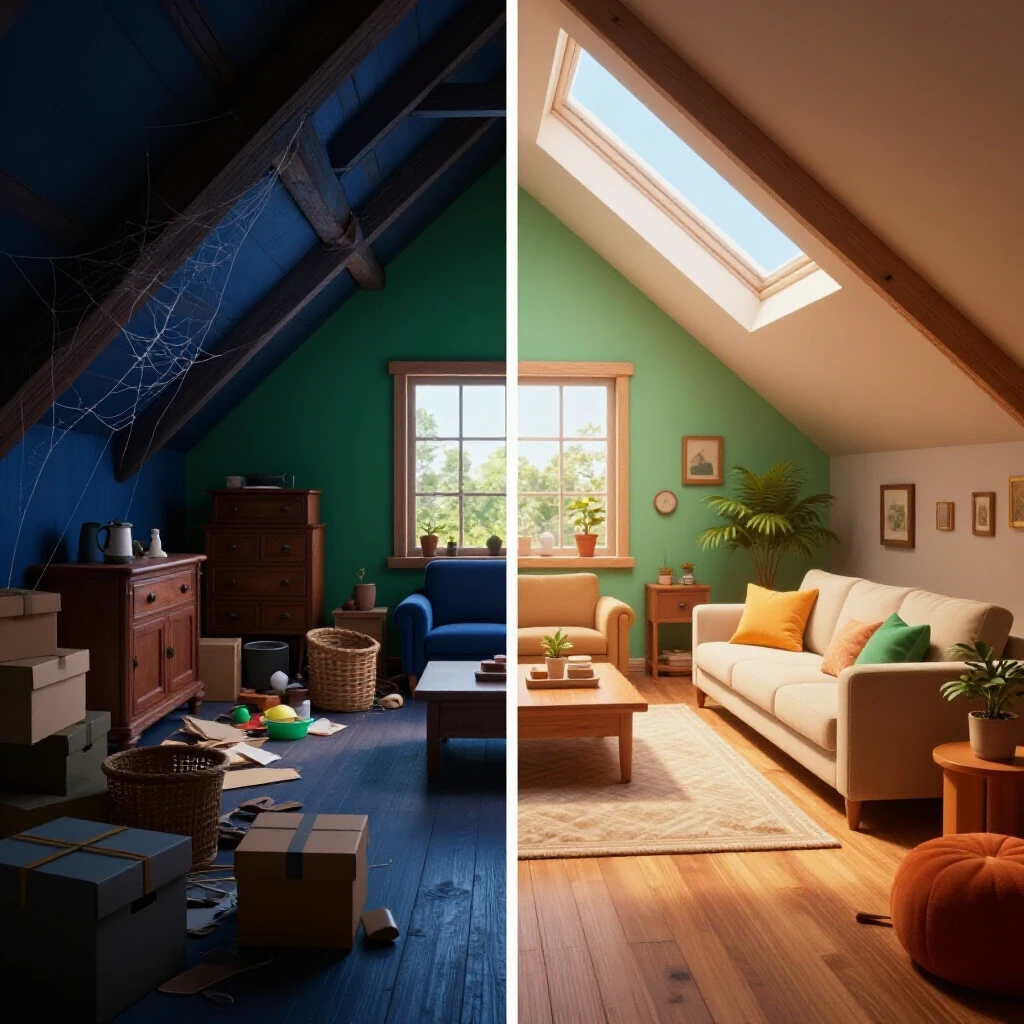
In my second home, I looked at the dark, cramped upper level and saw a chance for a quiet office. This wasn’t about a quick fix; it was about a lifestyle shift. Data from HUD reports suggest that maximizing existing square footage is often more sustainable than building new additions. By focusing on the “vertical potential,” you can create a sanctuary that feels separate from the noise of the main household.
Balancing Design and Functionality in Upper Spaces
Creating a functional room in a formerly empty void requires a balance between how the space looks and how it actually works. This involves choosing materials that handle temperature swings and designing layouts that respect the unique angles of a pitched roof.
I once spent weeks debating the placement of a desk in a sloped-ceiling room. I learned that in these unique spaces, every inch of height matters. You have to think about how light enters through small windows and how furniture fits against low walls. These design choices define whether the room feels like a cozy hideaway or a cramped storage closet.
The Reality of Maintaining Sustainable Home Systems
Every home is a thermal envelope designed to keep conditioned air in and the elements out. Maintaining the systems that regulate this envelope ensures your home remains comfortable and your utility bills stay within a predictable, manageable range throughout the year.
The top of your house acts like a hat; if it isn’t working right, the whole body feels the chill. In my current home, I tracked my utility data for three years and noticed a 15% spike in heating costs. I realized the insulation in my upper retreat had settled. Sustainable home systems require regular check-ins to ensure they are performing as expected.
Passive Airflow and Ventilation Realities
Ventilation is the process of moving air through a space to prevent moisture buildup and maintain air quality. In upper-level rooms, proper airflow is critical because heat rises, and trapped moisture can lead to long-term structural issues if left unmanaged.
- Check soffit vents for blockages once a year.
- Ensure ridge vents are clear of debris after heavy storms.
- Monitor humidity levels using a simple digital hygrometer.
- Look for signs of condensation on the underside of the roof deck.
In my experience, many first-time homeowners ignore the “breathability” of their homes. I once found a small patch of dampness in a corner because I had pushed a storage bin too close to a vent. Air needs to move freely to keep the structure healthy.
Strategic DIY Prioritization for New Owners
Deciding which projects to handle yourself and which to hire out is a core skill for any homeowner. Strategic prioritization involves assessing your own skill level, the time required, and the tools needed to complete a task safely and effectively.
I have a rule: if a mistake could lead to water damage or a fire, I call a professional. However, painting, installing trim, or laying floorboards in an upper-level room are great ways to build your DIY home care skills. The satisfaction of finishing a room with your own hands is a major part of the emotional transition to homeownership.
| Task Type | DIY Effort Level | Professional Value | Tools Needed |
|---|---|---|---|
| Interior Painting | Low to Medium | High Aesthetic Impact | Brushes, Rollers, Tape |
| Floor Installation | Medium | High Durability | Saw, Mallet, Spacers |
| Lighting Upgrades | Medium | High Lifestyle Impact | Screwdriver, Voltage Tester |
| Insulation Updates | High | High Energy Savings | Safety Gear, Blower |
Managing Homeowner Fatigue and Project Burnout
Homeowner fatigue is the mental and physical exhaustion that comes from a never-ending list of chores and projects. It often hits around the eighteen-month mark when the initial excitement of the purchase fades and the reality of upkeep sets in.
I hit this wall during my third year of ownership. I had three half-finished projects and felt like I was failing. To combat this, I started the “one-room rule.” I only work on one space at a time until it is 100% complete. This prevents your house from feeling like a permanent construction zone.
Long-Term Asset Protection and Maintenance
Protecting your home as an asset involves a proactive approach to maintenance that prevents small issues from becoming catastrophic failures. This strategy focuses on the exterior shell, the mechanical systems, and the structural integrity of the entire building.
The U.S. Census Bureau notes that the median age of a home in the U.S. is nearly 40 years. This means most of us are living in houses that need constant attention. My 14-year logs show that being proactive—like cleaning gutters or checking the roof—saves thousands compared to reacting after a leak starts.
The 1% Rule for Maintenance Planning
The 1% rule suggests that you should set aside at least one percent of your home’s purchase price every year for routine maintenance and repairs. This benchmark provides a financial cushion that reduces the anxiety of unexpected system failures.
- Calculate 1% of your home’s value.
- Divide that by 12 months.
- Automate a transfer to a dedicated “Home Health” savings account.
- Use this fund only for necessary repairs, not cosmetic upgrades.
While I don’t focus on specific budgets for design projects, this general fund is essential. It turns a “disaster” like a broken AC into a “scheduled expense.” Having this safety net allowed me to focus on the creative aspects of my home rather than just the stressful ones.
Essential Tools for the Modern Homeowner
Every new homeowner needs a toolkit that goes beyond a simple hammer and screwdriver. Modern home care involves diagnostic tools that help you see what is happening behind the walls and inside your mechanical systems.
- Digital Multimeter: For checking batteries and basic electrical outlets.
- Moisture Meter: To detect hidden leaks in walls or ceilings.
- Infrared Thermometer: To find drafts and insulation gaps.
- Laser Level: Essential for hanging shelves or art accurately.
- Stud Finder: To ensure heavy items are anchored safely.
I didn’t buy all these at once. I added one tool for every new project I tackled. By the time I was working on my upper-level retreat, I had a full kit that made the work faster and more precise.
Establishing Sustainable Home Maintenance Routines
A routine is a set of tasks performed at regular intervals to keep your home running smoothly. These routines break down the overwhelming responsibility of homeownership into small, manageable bites that fit into a busy lifestyle.
In my household, we use a seasonal approach. Spring is for the exterior, summer is for cooling systems, fall is for sealing gaps, and winter is for interior projects. This rhythm keeps the house in shape without taking over every weekend.
Five-Year Equity Planning and Lifestyle Growth
Your home should grow with you. Five-year planning involves looking at how your needs will change and preparing your space to meet those demands. This might mean turning that upper-level void into a nursery or a more permanent home office.
When I look back at my 14 years of logs, the homes that felt the best were the ones where I planned for the future. I didn’t just fix what was broken; I improved how the space functioned. This long-term view helps you move past the “first-year surprises” and into a phase of true home mastery.
Conclusion
Owning a home is a marathon, not a sprint. By focusing on the potential of your entire house—including the often-ignored spaces at the top—you can create a living environment that supports your lifestyle and protects your investment. Start small, keep a detailed log, and remember that every expert homeowner was once a beginner standing in a new living room, wondering where that strange humming sound was coming from.
FAQ
What are the first steps I should take after moving in? Focus on safety and documentation. Change the locks, test all smoke and carbon monoxide detectors, and locate your main water shut-off valve. Start a home maintenance log immediately to track the condition of the home as you found it.
How do I know if my upper-level space is suitable for a retreat? Check the head height and the floor strength. If you can stand comfortably in the center and the floor feels solid rather than bouncy, you have a good candidate for a functional space. Look for existing light sources or places where a window could be added.
How often should I check my roof and upper-level vents? You should perform a visual inspection twice a year, typically in the spring and fall. Look for missing shingles, debris in the gutters, and any signs that birds or squirrels have tried to enter the vents.
Is it better to DIY or hire a pro for upper-level projects? If the project involves structural changes or complex wiring, hire a pro. If it involves surface-level updates like flooring, painting, or light fixtures, it is a great opportunity for DIY. Always assess your “time vs. money” balance before starting.
What is the “thermal envelope” and why does it matter? The thermal envelope is the barrier between the conditioned air inside your home and the unconditioned air outside. It includes your insulation, windows, and outer walls. A strong envelope keeps your home comfortable and lowers your energy usage.
How can I track my home maintenance without feeling overwhelmed? Use a digital app or a simple spreadsheet. Set reminders for recurring tasks like changing furnace filters every three months. Breaking tasks into monthly “to-do” items prevents them from piling up into a massive weekend-long chore list.
Why is ventilation so important in a converted upper space? Heat and moisture naturally rise to the highest point in your home. Without proper ventilation, this can lead to a “stuffy” feeling and potential moisture damage. Good airflow keeps the air fresh and the temperature regulated.
What should I do if I find a leak in my upper-level room? Identify the source immediately. If it’s raining, check the roof. If it’s dry, check for plumbing pipes or HVAC condensation lines. Address the source first, then dry the area completely to prevent mold before repairing any cosmetic damage.
How do I manage the noise between the upper retreat and the floor below? Adding rugs, heavy furniture, or specialized floor underlayment can significantly reduce sound transfer. Soft materials absorb vibrations, making both the upper and lower rooms much quieter and more private.
What are the signs of homeowner burnout? Signs include ignoring necessary repairs, feeling dread when looking at a “to-do” list, or having multiple unfinished projects in different rooms. If this happens, stop all new projects and focus on just one small, satisfying task to regain your momentum.
(This article was written by one of our staff writers, Michael Morrison. Visit our Meet the Team page to learn more about the author and their expertise.)