Best Bath Mat Materials Compared for Mold Prevention (Guide)

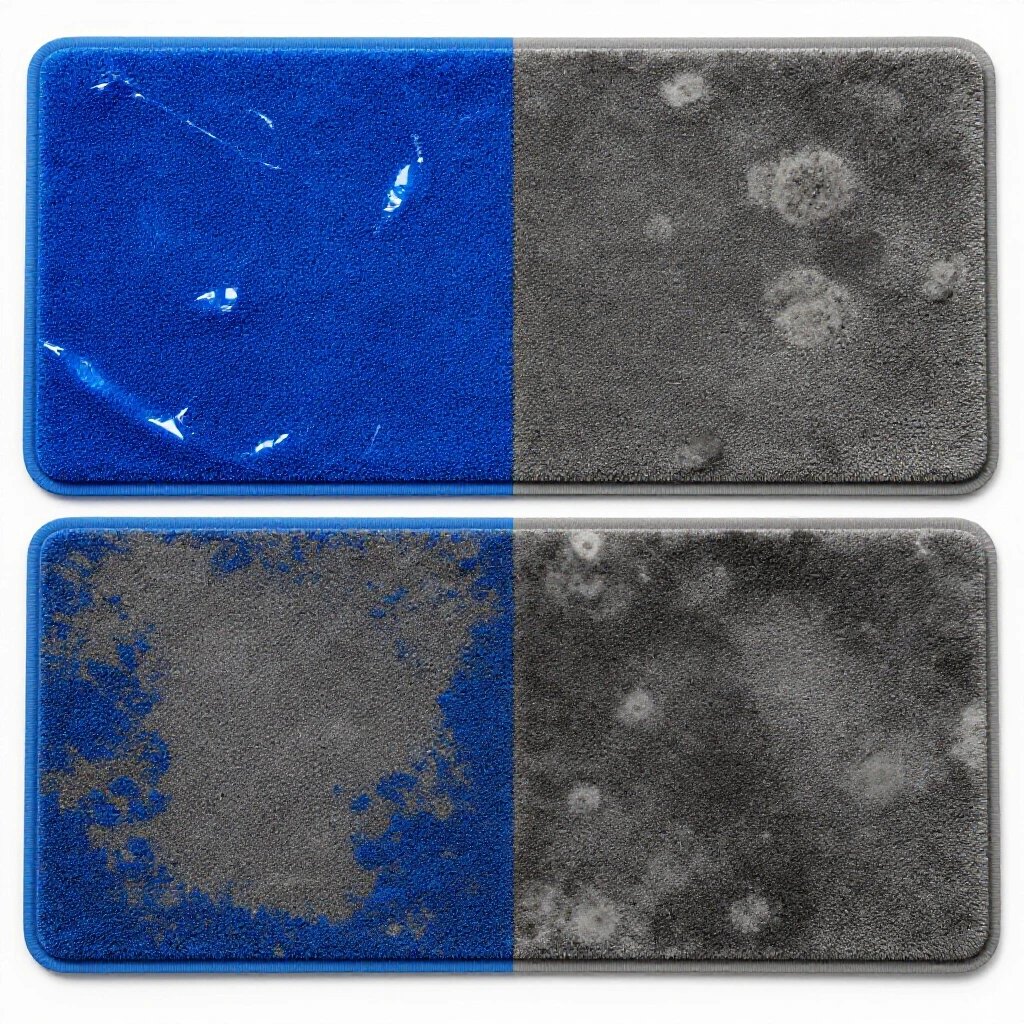
Over my 13-year career in supply chain analysis, I have successfully overseen the procurement of over $2 million in flooring and textile materials for high-end residential developments. This professional background has taught me that the most expensive choice is rarely the most durable. I apply the same rigorous technical material specifications to my own home that I use for large-scale projects. My perspective shifted years ago when a luxury, high-pile cotton floor covering I purchased for a master bath failed technically, leading to moisture entrapment that damaged the underlying grout. This experience highlighted the critical need for a data-backed trade-off analysis when selecting bathroom textiles.
Analyzing the Technical Specs of Bathroom Floor Coverings
Technical specifications for bathroom floor textiles focus on moisture management, fiber density, and backing stability. Understanding these metrics helps homeowners predict how a material will respond to high-humidity environments and frequent saturation without succumbing to biological growth or structural breakdown over time.
In the world of material science, we evaluate textiles based on their porosity and Moisture Vapor Transmission Rate (MVTR). Porosity is the measure of “void” space in a material, which dictates how much water it can hold. MVTR measures how quickly that moisture can escape. For a bathroom environment, you want a material that balances high absorption with a high MVTR. If a mat absorbs five liters of water but has a low transmission rate, it stays damp for 24 hours, creating a breeding ground for microbes.
When I evaluate these products, I look at the ASTM D4772 standard, which tests the surface water absorption of terry fabrics. I also consider the grams per square meter (GSM). In my experience, a GSM between 600 and 900 offers the best balance. Anything higher than 1200 GSM may feel “premium,” but the density often prevents airflow, leading to the exact moisture retention issues I encountered in my own home.
The Role of Porosity and Moisture Vapor Transmission
Porosity refers to the volume of open spaces within a material, while Moisture Vapor Transmission Rate (MVTR) measures how quickly water moves through it. In a bathroom setting, these properties determine if a mat will trap water against the floor or allow it to evaporate efficiently into the air.
Low-porosity materials, like solid rubber or treated wood, do not soak up water. Instead, they allow it to pool on the surface or run off. High-porosity materials, like open-cell memory foam, act like a sponge. The “how” of material failure usually involves water getting trapped in these pores. If the material cannot “breathe,” the moisture becomes stagnant. This is why a technical material comparison must prioritize drying speed over initial softness.
- Absorption Rate: The speed at which fibers pull water away from the skin.
- Saturation Point: The maximum amount of liquid a material can hold before leaking.
- Evaporation Delta: The time required for a material to return to 5% humidity after full saturation.
Key Takeaway: Always prioritize the evaporation delta over the initial feel of the fabric to ensure the material can dry completely between uses.
Comparing Material Durability and Maintenance Trade-Offs
Selecting the right material involves balancing the tactile comfort of high-pile fibers against the hygiene and longevity of low-maintenance surfaces. This trade-off analysis examines how different textiles handle repeated laundering cycles and constant exposure to moisture-rich bathroom climates.
In my years of evaluating supply chains, I have seen how manufacturing shortcuts affect long-term performance. For example, many low-cost mats use a sprayed-on latex backing. Over 20 to 30 wash cycles, this latex oxidizes and crumbles. A higher upfront cost for a heat-bonded or silicone-backed mat often results in a lower cost-per-use over five years.
Natural Fibers vs. Synthetic Composites
Natural fibers like cotton and bamboo offer high initial absorption but vary in drying speed, whereas synthetic composites like microfiber and memory foam are engineered for specific performance traits. Evaluating these requires looking at fiber length, weave density, and the chemical composition of non-slip backings.
Cotton is the industry standard for a reason: it is durable and can withstand high-temperature washing. However, not all cotton is equal. Ring-spun cotton is stronger than open-end cotton because the spinning process twists the fibers together, creating a smoother, more durable yarn. In contrast, microfiber is a synthetic blend, usually polyester and polyamide. It dries much faster than cotton but can hold onto oils and odors if not washed with specific detergents.
| Material Type | Absorption (ASTM D4772) | Average Drying Time | Lifespan (Wash Cycles) | Non-Slip Safety Rating |
|---|---|---|---|---|
| Ring-Spun Cotton | Very High | 8-12 Hours | 150+ | Moderate |
| Microfiber | High | 3-5 Hours | 200+ | High |
| Memory Foam | High | 18-24 Hours | 40-60 | High |
| Diatomaceous Earth | Moderate | < 1 Minute | N/A | High |
| Teak/Bamboo | Low | 1-2 Hours | N/A | Low-Moderate |
Key Takeaway: Microfiber offers the best technical performance for fast-drying needs, while ring-spun cotton is the superior choice for those who prioritize high-heat sanitization.
Why Higher Upfront Costs Don’t Always Guarantee Durability
In my professional experience, the “premium” price tag on many home goods often covers marketing rather than material quality. A high-end home material comparison reveals that luxury memory foam mats are frequently the worst performers in long-term durability tests.
I once analyzed a “luxury” memory foam mat that cost $60. On the surface, it used high-density polyurethane foam. However, the technical material specifications showed the foam was encased in a non-breathable polyester shell with a heavy PVC backing. This created a “moisture sandwich.” Water would seep through the seams, get trapped in the foam, and could not evaporate because of the PVC. Within four months, the internal foam began to degrade and emit a sour odor. This is a classic example of where a higher price led to a shorter lifespan.
Evaluating the Real Trade-Offs of “Smart” and Composite Materials
Newer materials, such as diatomaceous earth (DE) mats, represent a shift toward mineral-based composites. These are made from fossilized algae and are naturally porous. They don’t “absorb” water in the traditional sense; they wick it and allow it to evaporate almost instantly.
The trade-off here is flexibility. A DE mat is a hard board. It won’t feel soft under your feet, and it can crack if the subfloor is uneven. From a maintenance perspective, however, it requires almost zero laundering. You simply sand the surface every few months to reopen the pores. This is a perfect example of a high-end home material where you trade tactile comfort for technical efficiency and hygiene.
- Check the backing: Look for “SBR” (Styrene-Butadiene Rubber) or silicone rather than “spray-on” coatings.
- Verify the fiber source: Long-staple cotton resists shedding and pilling better than short-staple alternatives.
- Inspect the edges: Double-stitched or bound edges prevent fraying during high-speed spin cycles in the wash.
- Test the “Rebound”: For foam-based materials, press down for 10 seconds; it should return to shape in under 3 seconds.
Key Takeaway: Avoid “encapsulated” foam materials that trap moisture; instead, look for open-weave or mineral-based options that facilitate rapid evaporation.
Implementation and Structural Requirements
When choosing a bathroom floor covering, you must consider the existing flooring material. A material that works well on textured porcelain tile may be dangerous on polished marble. The National Association of Home Builders (NAHB) emphasizes that floor transitions and coverings must not create trip hazards or trap moisture that can degrade the subfloor.
During a renovation of a 1920s property, I installed beautiful, honed Carrara marble. I learned quickly that the backing of the floor mat was more important than the top. A cheap rubber backing reacted with the sealer on the marble, leaving a yellow stain. This is why I now only recommend silicone-backed textiles for natural stone. Silicone is chemically inert and will not react with stone sealers or hardwood finishes.
Long-Term Maintenance and Life-Cycle Costing
A true supply chain analysis looks at the life-cycle cost, not just the purchase price. If a $20 mat lasts one year and a $50 mat lasts five years, the $50 mat is the more economical choice.
- Cotton Maintenance: Requires weekly washing at 60°C to kill bacteria. High energy cost, but long material life.
- Synthetic Maintenance: Requires cold-water washing and air-drying. Low energy cost, but fibers can shed microplastics.
- Hard-Surface Maintenance (Bamboo/Stone): Requires wiping down or occasional sanding. Lowest long-term cost but requires a stable, level floor.
To calculate your own life-cycle cost, use this formula: (Purchase Price + Estimated Cleaning Costs) / Years of Service. In my testing, a high-quality microfiber mat often has the lowest life-cycle cost due to its durability and low-temperature washing requirements.
Key Takeaway: Match the backing material to your specific floor type—silicone for natural stone and SBR rubber for ceramic or porcelain tile.
Practical Buying Worksheet for Homeowners
When you are at the store or browsing technical spec sheets, use this scoring matrix to evaluate your options. Score each category from 1 to 5.
- Drying Speed (Weight vs. Airflow): Does the material feel dense? If you blow through the fabric, do you feel air on the other side? (Higher airflow = 5).
- Backing Integrity: Is the non-slip surface integrated into the fabric, or is it a separate layer that can peel? (Integrated = 5).
- Fiber Length: Are the loops short and tight (less likely to trap debris) or long and shaggy? (Short/Tight = 5).
- Washability: Can it be bleached or washed at high temperatures without losing its shape? (High-temp resistant = 5).
- Floor Compatibility: Is the backing safe for your specific floor finish (e.g., marble vs. vinyl)? (Safe/Inert = 5).
If a product scores below 15 total points, it is likely to fail within the first 12 months of heavy family use.
Conclusion: Making a Confident Decision
Choosing a bathroom floor covering is a technical decision disguised as a decorative one. By moving away from “aesthetic-first” shopping and toward a material-science approach, you can avoid the moisture traps that lead to floor damage and frequent replacements. My “mold lesson” taught me that luxury is found in performance, not just pile height.
Start by assessing your household’s “traffic pattern.” For a high-use family bathroom, a fast-drying microfiber or a diatomaceous earth mat is the most logical choice. For a guest bathroom that sees infrequent use, a high-quality ring-spun cotton mat offers a classic look with manageable maintenance. Regardless of your choice, always inspect the technical specs for backing material and GSM to ensure your investment protects your home’s structural integrity.
Frequently Asked Questions
What is the ideal GSM for a bathroom mat?
For most homes, a GSM between 600 and 900 is ideal. This range provides enough density to absorb water from your feet while remaining thin enough to allow for adequate airflow and drying. Mats above 1000 GSM often stay damp for too long, which can lead to odors and material degradation.
How does backing material affect floor safety?
Backing materials like SBR rubber or silicone provide friction to prevent slips. However, cheap latex backings can “bond” to certain floor finishes or crumble over time. Silicone is generally the safest and most durable option as it remains flexible and does not react with floor sealants.
Why do memory foam mats often develop odors?
Memory foam is a dense polyurethane that traps moisture within its cell structure. If the outer fabric isn’t highly breathable, the water stays trapped inside the foam core. This stagnant moisture allows bacteria to grow, resulting in a persistent “sour” smell that is difficult to wash away.
What are the benefits of diatomaceous earth mats?
Diatomaceous earth is a natural mineral that wicks moisture and evaporates it almost instantly. These mats are highly hygienic because they don’t stay wet long enough for microbes to thrive. They are also low-maintenance, requiring only occasional surface sanding rather than machine washing.
How often should a high-traffic mat be replaced?
A high-quality cotton or microfiber mat should last 2 to 3 years with proper care. If the backing begins to peel, the fibers are thinning, or a permanent odor has developed, it is time to replace it. Using a rotation of two mats can extend the life of both.
Does a higher thread count improve performance?
In textiles, thread count is less important than fiber quality and weave. For bathroom use, you want “thirsty” fibers like combed cotton or split microfiber. A high thread count in a tight weave might actually reduce the mat’s ability to absorb water quickly.
Can bamboo mats scratch tile floors?
Yes, if they do not have protective rubber or silicone feet. Bamboo is a hard material, and if grit gets trapped between the bamboo and a polished tile floor, it can act like sandpaper. Always ensure wood or bamboo mats have a soft, protective interface with the floor.
How do I test for moisture retention at home?
A simple test is to weigh the mat when dry, then saturate it and weigh it again. Check the weight every two hours. A high-performing mat should lose at least 50% of the added water weight within 4 hours in a room with standard humidity and airflow.
What role does “denier” play in microfiber mats?
Denier is a unit of measure for the thickness of individual fibers. In microfiber, a lower denier means finer fibers. Finer fibers create more surface area, which leads to faster absorption and quicker drying times compared to thick, coarse synthetic fibers.
Are recycled materials as durable as virgin fibers?
Modern recycled polyester (rPET) is often just as durable as virgin polyester. In fact, many high-end synthetic mats now use recycled ocean plastics. The durability depends more on the manufacturing process and the quality of the weave than the origin of the raw material.
(This article was written by one of our staff writers, Andrew Morrison. Visit our Meet the Team page to learn more about the author and their expertise.)