How to Buy a Secondhand Sofa: Key Factors & Cost Guide (Checklist)

Over the last thirteen years, I have successfully managed the material procurement and supply chain logistics for over a dozen residential properties, ensuring every component meets rigorous ASTM performance standards. My background in supply chain analysis has taught me that the highest price tag does not always equal the best long-term value. This is especially true when navigating the secondary market for high-end upholstered seating. By applying technical material standards to pre-owned items, I have been able to secure professional-grade furniture that outperforms modern, mass-produced alternatives at a fraction of the cost.
Decoding the Technical Specs of Pre-Owned Seating
Technical specifications in furniture refer to the measurable quality of the internal components, including frame material, joinery, and suspension systems that determine how long a piece will support weight without sagging. When you evaluate a used item, you are not just looking at the fabric; you are auditing an engineering assembly. Understanding these metrics allows you to see past a faded cover to the structural integrity underneath.
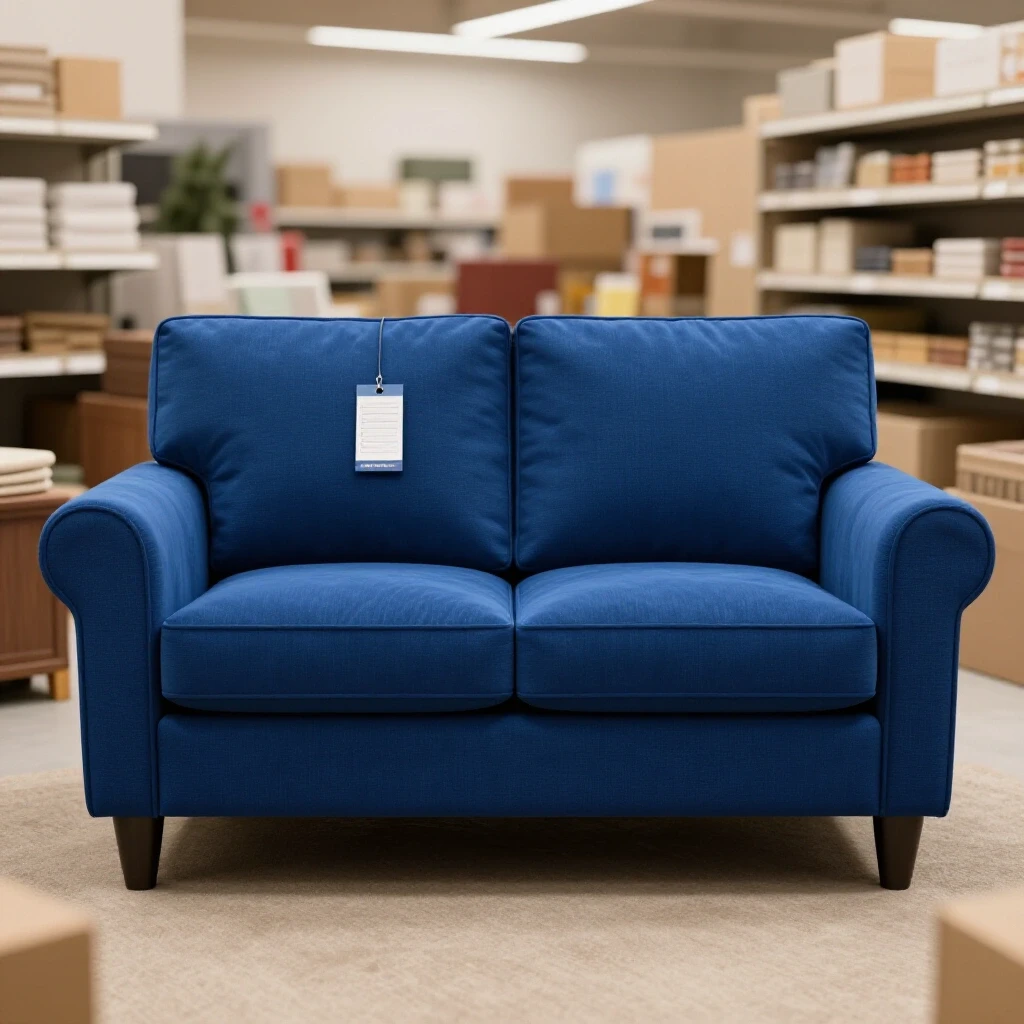
In my professional work, I use the same scrutiny for a sofa as I do for a quartz countertop or a high-end dishwasher. For example, the National Association of Home Builders (NAHB) suggests that a high-quality sofa should last 7 to 15 years, but this depends entirely on the “bones.” If the frame is made of particle board, it may fail in three years. If it is kiln-dried hardwood, it can last for decades.
- Hardwood vs. Softwood: Hardwoods like maple, oak, and ash have higher Janka hardness ratings, meaning they resist screw withdrawal and structural warping better than pine or cedar.
- Joinery Methods: Look for mortise-and-tenon or dovetail joints. These are mechanical connections reinforced with glue, whereas cheaper items rely solely on staples and plastic corner blocks.
- Moisture Content: High-end frames use wood with a moisture content of 6% to 8% to prevent the wood from shrinking or expanding as your home’s humidity changes.
Structural Integrity: Why Kiln-Dried Hardwood Matters
Kiln-drying is a process where wood is placed in a temperature-controlled chamber to reduce moisture content to a specific percentage, preventing future warping, cracking, or joint separation. This is a non-negotiable standard for anyone seeking long-term durability. When wood is not properly dried, it remains “active,” meaning it will move as it loses moisture in a climate-controlled home.
I once evaluated a beautiful mid-century piece for a client that had a slight “creak” when someone sat on the left side. Using a simple moisture meter, I found the internal frame was still holding nearly 15% moisture. Over time, that wood had bowed, pulling the staples out of the frame. This is why I always prioritize “old growth” or kiln-dried frames when sourcing pre-owned items. The wood has already done its moving; if it is straight now, it will likely stay straight for another twenty years.
Side-by-Side Material Performance Specifications
| Component | High-End Standard | Mid-Range Standard | Low-End (Avoid) |
|---|---|---|---|
| Frame Material | Kiln-dried Ash or Oak | Furniture-grade Plywood | Particle Board / MDF |
| Joinery | Double-doweled & Glued | Screws & Glue Blocks | Staples & Plastic Clips |
| Suspension | 8-Way Hand-Tied Springs | Sinuous (Zig-Zag) Springs | Elastic Webbing |
| Foam Density | 2.5 lb/ft³ or higher | 1.8 lb/ft³ | 1.5 lb/ft³ or lower |
Evaluating Cushion Core Density and Resilience
Cushion density refers to the weight of a cubic foot of foam, which directly correlates to the material’s ability to maintain its shape and support over thousands of compression cycles. This is measured in Pounds per Cubic Foot (PCF). Most consumers confuse “firmness” with “density,” but they are technically different metrics. Firmness is the initial feel, while density is the durability.
In my experience, a 1.8 PCF foam is the industry standard for “good” furniture, but it will likely show signs of softening within five years of daily use. For a pre-owned piece to be a viable long-term investment, I look for high-resiliency (HR) foam with a density of 2.5 PCF or higher. This material has a different cell structure that allows it to bounce back more effectively, resisting the permanent “sink” that ruins the ergonomics of a seat.
- Compression Set: This is the percentage of original height a foam loses after being compressed. High-quality HR foam has a very low compression set.
- Indentation Load Deflection (ILD): This measures how many pounds of pressure are needed to compress the foam by 25%. A higher ILD means a firmer seat.
- Wrap Materials: Look for foam cores wrapped in dacron or down-feathers. This adds a layer of “loft” and prevents the fabric from sliding against the foam, reducing friction wear.
Analyzing Textile Durability and Wear Layers
Textile durability is measured by abrasion resistance tests like the Martindale or Wyzenbeek, which determine how many “rubs” a fabric can withstand before showing significant signs of wear or thinning. When evaluating a used piece, the fabric is often the first thing to show age. However, if the underlying structure is sound, the fabric can be cleaned or eventually replaced.
Interestingly, many high-end pre-owned sofas feature natural fibers like wool or top-grain leathers. Leather is particularly interesting from a supply chain perspective because it is one of the few materials that can actually improve with age, provided it is “top-grain” and not “bonded.” Bonded leather is essentially the “particle board” of the textile world—scraps of leather glued together with a plastic top coat that will eventually peel and delaminate.
- The Scratch Test: Lightly run a fingernail over a hidden area of leather. If it leaves a permanent white mark that won’t rub out, it may be a lower-quality “finished” leather rather than a through-dyed aniline.
- The Grain Check: Look closely at the pores. Uniform, repetitive patterns often indicate “corrected grain” where the natural surface was sanded off and embossed with a fake texture.
- The Backing Test: Pull the fabric away from the foam. If the fabric has a heavy synthetic mesh backing, it is likely a lower-cost polyester designed to look like a more expensive weave.
The Hidden Costs of Maintenance and Restoration
Maintenance costs include the specialized cleaning, structural tightening, or full re-upholstery required to bring a pre-owned item up to modern performance and hygiene standards. Before making a purchase, I calculate the “Total Cost of Ownership” (TCO). This includes the acquisition price plus the cost of professional steam cleaning and potential foam replacement.
Building on this, the cost of re-upholstering a high-quality frame is often lower than buying a new, low-quality sofa. A professional re-upholstery job for a standard three-seat sofa can cost between $1,200 and $2,500 depending on the fabric. If you start with a $200 pre-owned frame that originally cost $5,000, your total investment of $2,000 results in a piece of furniture that is technically superior to anything you could buy new at that price point.
- Professional Cleaning: Budget $150–$300 for a deep-extraction steam clean to remove allergens and previous oils.
- Foam Replacement: If the cushions are sagging, replacing the cores with 2.5 PCF foam costs roughly $100 per cushion.
- Spring Tightening: If the suspension is squeaking, a technician can often “re-tie” 8-way hand-tied springs for a few hundred dollars, extending the life by another decade.
A Practical Inspection Protocol for Secondary Market Acquisitions
An inspection protocol is a systematic series of physical tests and visual checks designed to uncover latent defects in used goods that are not immediately apparent to the untrained eye. When I arrive to inspect a piece, I follow a strict checklist to ensure I am not buying someone else’s disposal problem.
Technical Inspection Checklist
- The Lift Test: Pick up one front corner of the sofa. If the other front leg doesn’t lift off the ground almost immediately, the frame is twisting. This indicates weak joinery or a soft-wood frame.
- The Squeeze Test: Feel the arms and the back rail. You should not be able to feel the hard edges of the wood through the padding. If you can, the “wear layer” of foam and batting has collapsed.
- The Odor Audit: Get close to the fabric. Odors from pets or tobacco are often trapped in the foam, not just the fabric. If the foam smells, cleaning the fabric will not fix the issue; you will have to replace the cores.
- The Staple Check: Flip the piece over and look at the dust cover (the black fabric on the bottom). If it is stapled haphazardly or shows signs of being opened and re-stapled, the piece may have had previous structural repairs.
Why Higher Upfront Costs Don’t Always Guarantee Durability
In my 13 years of evaluating home goods, I have seen a disturbing trend: “luxury” branding being applied to mid-grade materials. Many modern retailers sell sofas for $3,000 that use sinuous springs and 1.8 PCF foam. These are the same specs found in $800 budget models. The extra $2,200 goes toward marketing and showroom overhead, not material performance.
By choosing to evaluate pre-owned items, you can ignore the brand name and focus on the technical specs. A heavy, 8-way hand-tied frame from twenty years ago is objectively more durable than a lightweight, “modern-construction” piece sold today. As a result, the trade-off analysis shifts from “Which brand can I trust?” to “Which material assembly meets my performance threshold?”
Upfront Cost vs. 15-Year Maintenance Outlay
| Strategy | Initial Cost | 5-Year Maintenance | 10-Year Maintenance | Total 15-Year Cost |
|---|---|---|---|---|
| New “Mid-Range” | $1,800 | $0 | Replacement ($2,000) | $3,800+ |
| Used “High-End” | $400 | $250 (Cleaning) | $800 (New Foam/Fabric) | $1,450 |
| New “Luxury Brand” | $4,500 | $0 | $300 (Cleaning) | $4,800 |
Lifecycle Costing and Long-Term Value Analysis
Lifecycle costing calculates the total expenditure of an item from the initial purchase through all repairs and cleaning cycles over its expected functional lifespan. For a homeowner, this is the most important metric. If you buy a piece of furniture that lasts five years and then ends up in a landfill, your “cost per year” is significantly higher than buying a piece that lasts twenty years with one mid-life refurbishment.
I always advise looking for “good bones.” If the frame is kiln-dried hardwood and the suspension is hand-tied, the piece is essentially “immortal.” You can change the “wear layer” (fabric and foam) as styles and needs change, but the “structural layer” remains constant. This is the same logic used in commercial building construction: the steel frame stays, while the interior walls and carpets are refreshed every decade.
- Sustainability Impact: Extending the life of an existing piece of furniture prevents roughly 100-150 lbs of material from entering a landfill.
- Customization Opportunity: Buying used allows you to spend your savings on high-performance fabrics, like Crypton or high-rub-count linens, that aren’t typically available on entry-level new furniture.
- Market Resilience: High-quality vintage frames often hold their value. If you decide to sell a well-maintained, high-spec piece later, you may recoup 50-80% of your total investment.
Final Supply-Chain and Cost Recommendations
When you are ready to make a decision, remember that you are the lead inspector. Do not be swayed by a “clean look” or a recognizable brand name. Focus on the weight of the piece, the density of the foam, and the type of wood used in the frame. These are the variables that determine if a purchase is a bargain or a burden.
I recommend starting your search with a “spec-first” mindset. Instead of looking for a specific style, look for keywords like “8-way hand-tied,” “kiln-dried,” or “down-wrapped.” Once you find a piece that meets these engineering standards, you can evaluate the cost of bringing it into your home. This systematic approach removes the emotional overwhelm and replaces it with data-backed confidence.
- Step 1: Define your “Minimum Performance Standard” (e.g., must have a hardwood frame).
- Step 2: Audit the secondary market for pieces meeting that standard.
- Step 3: Factor in a $300 “rehabilitation budget” for professional cleaning and minor repairs.
- Step 4: Compare the final TCO to the cost of a new item with the same technical specs.
Frequently Asked Questions
How can I tell if a frame is truly kiln-dried hardwood without cutting it open?
You can’t see the drying process, but you can look for indicators of quality. Heavy weight is the first sign; hardwood is much denser than pine or particle board. Additionally, look at the legs. If the legs are part of the frame (not screwed on), and you see a tight, fine grain without large knots, it is likely a high-quality hardwood.
What is the most common failure point in used upholstered furniture?
The most common failure is the “suspension-to-frame” connection. Over time, the clips holding sinuous springs can pull out of the wood, or the twine in hand-tied springs can snap. Always sit firmly on every section of the sofa to listen for “pings” or “clunks,” which indicate a broken spring or loose clip.
Are “performance fabrics” worth the extra cost when buying used?
If you plan to re-upholster a used frame, performance fabrics like Crypton or solution-dyed acrylics are excellent for high-traffic homes. They offer superior stain resistance and higher Martindale rub counts (often 50,000+), making them a better long-term value for families or pet owners.
Is it possible to remove deep-seated odors from old foam?
Generally, no. If an odor has penetrated the foam core (like animal urine or heavy smoke), surface cleaning will not solve the problem. In these cases, you must factor in the cost of replacing the foam cores entirely. If the price of the piece is low enough, this is still a viable path to a high-quality sofa.
How do I identify “bonded leather” vs. “top-grain leather”?
Look at the back of the material if possible (check inside a zipper). Bonded leather will have a fabric or “fuzzy” gray backing that looks like felt. Top-grain leather will have a suede-like underside. Also, bonded leather often smells like plastic or chemicals, whereas genuine leather has a distinct, organic scent.
What is the average cost to replace cushion foam?
For a standard seat cushion using high-quality 2.5 PCF foam, expect to pay between $80 and $120 per cushion at a local upholstery shop. This is one of the most effective ways to make a used sofa feel brand new.
Does a “made in” label matter for durability?
While not a guarantee, furniture manufactured in regions with long traditions of craftsmanship (like North Carolina in the US or parts of Italy) often adheres to higher structural standards, such as 8-way hand-tied springs, compared to mass-produced imports designed for flat-pack shipping.
How can I check for pests in a used sofa?
Use a high-powered flashlight to inspect the seams, under the cushions, and around the dust cover on the bottom. Look for small dark spots or discarded husks. I also recommend keeping any pre-owned furniture in a garage or separate area for 24 hours and using a “bed bug heater” or professional inspection if you have concerns.
(This article was written by one of our staff writers, Andrew Morrison. Visit our Meet the Team page to learn more about the author and their expertise.)