How to Fix Bathroom Ceiling Peeling Due to Poor Ventilation (Guide)

Discussing innovation in home maintenance often requires looking backward at how we handled moisture in previous decades. During my 17 years as a facilities technician, I learned that the most advanced sensors cannot replace a solid understanding of how humidity interacts with old plaster and modern drywall. I have spent a significant portion of my career tracking water intrusion and testing HVAC efficiencies in legacy properties, where the balance between heat and airflow is a delicate science.
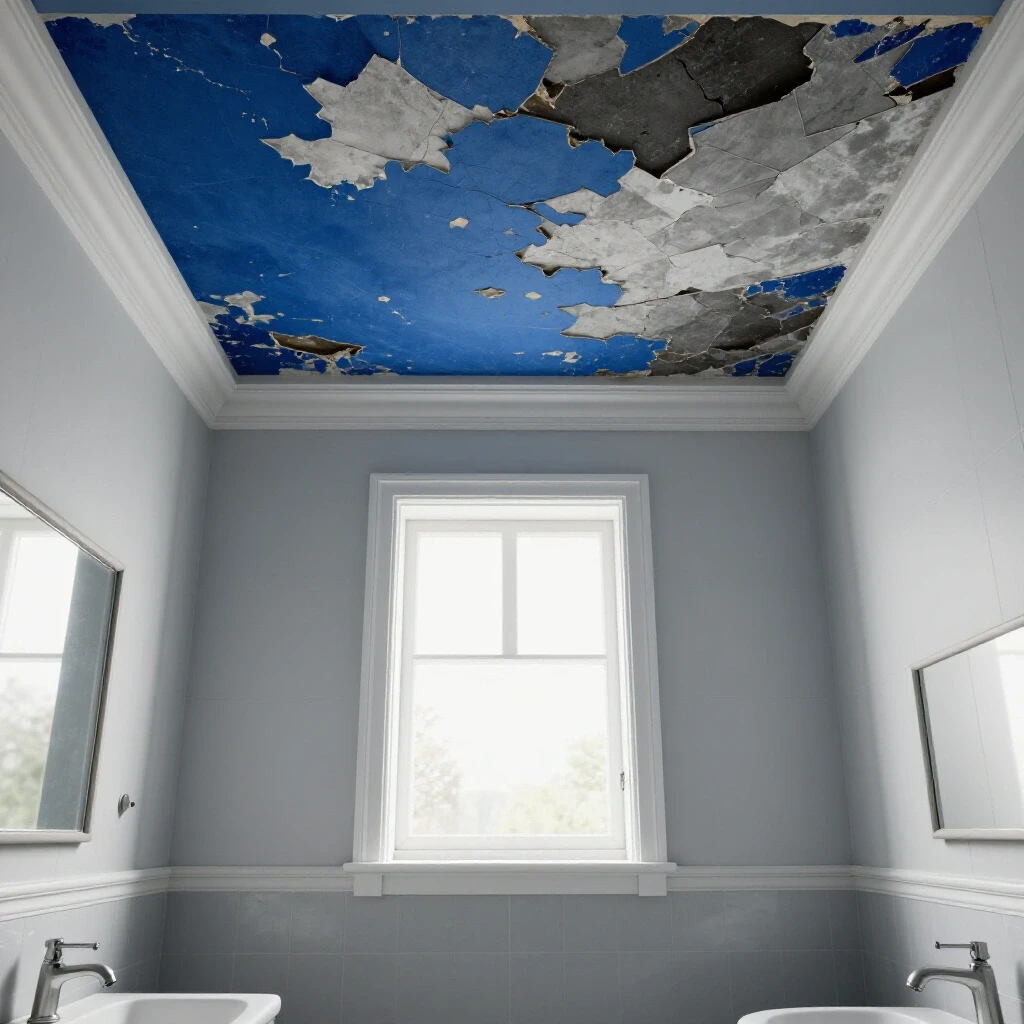
Many homeowners monitor their properties for signs of wear, but few realize that the bubbling or flaking paint above their shower is a mechanical failure rather than a cosmetic one. When I managed a group of older residential units, I frequently saw how a single oversight in ventilation could lead to the degradation of a building’s interior envelope. By applying building science principles, we can move from reactive repairs to a systematic, preventative approach that protects the structural integrity of the home.
Understanding the Building Science of Moisture Accumulation
Building science is the study of how heat, air, and moisture move through a structure. In high-moisture environments, understanding the relationship between air temperature and water vapor is critical to preventing the failure of surface finishes on overhead structures where warm, wet air naturally collects.
When you take a hot shower, you are increasing the vapor pressure inside the room. Vapor pressure is the force exerted by water molecules in the air. These molecules want to move from areas of high concentration (the shower) to areas of low concentration (the rest of the house). If the air cannot escape through a dedicated exhaust system, it seeks out the coolest surfaces in the room to release its energy.
In older homes, the ceiling often acts as a thermal bridge. Thermal bridging occurs when a material allows heat to transfer more quickly than the surrounding insulation. If the space above the bathroom is a cold attic, the ceiling becomes a cold plate. When the warm, moist air hits that cold surface, it reaches its dew point and turns back into liquid water. This liquid then seeps behind the paint film, breaking the bond between the coating and the substrate.
Diagnostic Tools for Residential Moisture Detection
Diagnostic tools allow homeowners to move beyond visual guesswork by quantifying the invisible forces at play. Using specialized equipment like moisture meters and anemometers provides a baseline for evaluating whether current extraction systems are meeting the physical demands of the space.
To accurately assess the health of your overhead surfaces and the efficiency of your ventilation, I recommend the following tools:
- Pinless Moisture Meter: This tool uses electromagnetic signals to detect moisture content up to 0.75 inches deep without damaging the surface. A reading above 12% to 15% in drywall indicates a high risk of finish failure.
- Digital Hygrometer: This measures relative humidity (RH). For a healthy indoor environment, the RH should ideally stay between 30% and 50%. During a shower, it will spike, but it should return to the baseline within 20 minutes of the fan running.
- Vane Anemometer: This device measures the velocity of air moving through the fan grille. By multiplying the velocity by the area of the grille, you can calculate the actual Cubic Feet per Minute (CFM) the fan is moving.
- Thermal Camera: While more expensive, a basic thermal camera identifies cold spots on the ceiling. These “blue zones” are where condensation is most likely to occur due to missing insulation.
Identifying the Root Cause of Surface Separation
Identifying the root cause of surface separation requires a systematic look at the symptoms and the environment. This diagnostic process ensures that you are not simply repainting a problem that will return in six months due to a mechanical deficiency.
The following table serves as a symptom-to-root-cause diagnostic tree based on my facility logs:
| Symptom | Primary Observation | Potential Root Cause |
|---|---|---|
| Localized Bubbling | Paint lifting directly above the shower head. | High localized vapor pressure and thermal bridging. |
| Widespread Flaking | Paint peeling across the entire ceiling. | Inadequate CFM; fan is undersized for the room volume. |
| Rusty Nail Heads | Small brown spots appearing through the paint. | High humidity causing oxidation of non-galvanized fasteners. |
| Damp Surface | Ceiling feels wet to the touch 30 minutes after use. | Blocked exhaust duct or failed fan motor. |
| Peeling Near Walls | Finish separating at the wall-to-ceiling junction. | Poor air circulation in “dead zones” far from the fan. |
Evaluating Airflow Efficiency and Extraction Capacity
Airflow efficiency refers to the volume of air an exhaust fan can move, typically measured in Cubic Feet per Minute (CFM). Proper extraction ensures that humid air is removed faster than it can condense on surfaces, maintaining the integrity of the building envelope’s interior finishes.
In my experience, many older homes have fans that are either underpowered or poorly installed. The standard rule for bathroom ventilation is 1 CFM per square foot of floor space. For example, an 8-foot by 10-foot bathroom requires a fan rated for at least 80 CFM. However, this rating is for “free air.” Once you add a duct and a wall cap, the resistance (static pressure) reduces the actual airflow.
- Static Pressure Check: If you hear the fan motor running but a single sheet of toilet paper does not stay stuck to the intake grille, the fan is not overcoming the static pressure of the ductwork.
- Duct Integrity: I have often found that flexible “slinky” ducts are crushed or have too many bends. Each 90-degree turn in a duct can reduce the fan’s effective CFM by 15% to 20%.
- Make-up Air: A fan cannot pull air out of a room if new air cannot get in. Ensure there is at least a 0.5-inch to 0.75-inch gap under the bathroom door to allow for proper air exchange.
Executing the Repair and Ventilation Upgrade
Restoring a surface where the finish has separated requires removing all loose material and addressing the underlying moisture level before reapplying coatings. This process ensures that the new bond is mechanical and chemical, preventing future delamination under normal environmental stress.
Step 1: Surface Preparation and Moisture Removal
Before you touch a paintbrush, you must ensure the substrate is dry. Use your moisture meter to confirm the drywall or plaster has dropped below 12% moisture content.
- Use a stiff putty knife to scrape away all loose or bubbling paint.
- Sand the edges of the remaining paint with 120-grit sandpaper to “feather” the edges, creating a smooth transition.
- Clean the surface with a solution of Tri-Sodium Phosphate (TSP-PF) to remove soap scum and oils that prevent paint adhesion.
- If the drywall paper is torn (brown paper showing), seal it with a shellac-based primer to prevent the moisture in the joint compound from bubbling the paper.
Step 2: Mechanical Extraction Improvement
If your diagnostics showed poor airflow, you must address the fan. I recommend looking for a fan with a “Sone” rating of 1.0 or lower. A Sone is a unit of perceived loudness; a quieter fan is more likely to be left running long enough to do its job.
- Timer Switches: Replace the standard toggle switch with a countdown timer. Setting the fan to run for 20 to 30 minutes after a shower ensures the latent moisture is fully removed from the room.
- Humidity Sensors: Modern fans often include a built-in sensor that activates the fan automatically when it detects a rise in RH%. This removes the “human error” factor from the maintenance equation.
Why Moisture Control Matters Most—And How to Safely Track Hidden Leaks
Moisture control is the foundation of structural protection because water is the primary driver of building material decay. Beyond the visible failure of paint, excessive humidity can lead to the degradation of the paper facing on drywall and the corrosion of metal corner beads.
In many properties I have maintained, the “peeling” was actually a secondary symptom of a minor leak from a plumbing stack or a roof penetration. To rule this out, use your moisture meter during a dry spell. If the ceiling remains wet even when the shower has not been used for 48 hours, you likely have a “top-down” leak rather than a “bottom-up” humidity issue.
- Capillary Action: Water can travel horizontally along a joist before dripping onto the ceiling. If you see a stain that is distant from any plumbing, it may be traveling along the structure.
- Condensation in Ducts: If an exhaust duct is not insulated as it passes through a cold attic, the moist air inside the duct will condense and run back down into the fan housing, causing localized damage. Ensure all ducts in unconditioned spaces have an R-value of at least R-6.
Creating a Multi-Year Preventative Maintenance Framework
A preventative maintenance framework is a scheduled approach to inspecting and servicing home systems to avoid catastrophic failure. For moisture-prone areas, this involves routine cleaning of mechanical components and checking the integrity of seals and finishes to stop minor wear from becoming a major repair.
Based on my 17 years of facility logs, I suggest the following schedule for maintaining bathroom health:
Quarterly Maintenance
- Remove the fan grille and vacuum the dust from the motor and blades. Dust buildup increases friction and reduces CFM.
- Check the caulking at the tub-to-wall and floor-to-wall junctions. Gaps here allow water to seep into the subfloor.
Annual Maintenance
- Inspect the exterior vent cap. Ensure the flapper moves freely and is not blocked by bird nests or lint.
- Test the RH% in the bathroom using a hygrometer during a typical shower to ensure the fan is still performing to its original specs.
Five-Year Maintenance
- Inspect the attic-side of the bathroom ceiling if accessible. Look for signs of “frosting” on nail tips, which indicates poor insulation and moisture bypass.
- Evaluate the paint finish for “micro-cracking.” Re-coating before the paint actually peels is much easier than a full restoration.
DIY vs. Professional Scope Limits
While many diagnostic and repair steps are within the reach of a homeowner, it is vital to recognize the physical safety boundaries of home care.
- DIY Scope: Replacing an existing fan with one of the same size, scraping and repainting surfaces, installing timer switches, and insulating accessible ductwork.
- Safety Warning: Always turn off the power at the circuit breaker before touching any electrical wiring. Use a non-contact voltage tester to verify the circuit is dead.
- Structural Limits: If the ceiling drywall is sagging more than 0.25 inches over a 4-foot span, the material has lost its structural integrity due to saturation and needs to be replaced rather than repaired.
Average Repair Cost Progression Over Time
Ignoring the early signs of moisture accumulation leads to a predictable increase in repair costs. In my experience, addressing the issue at the “bubbling paint” stage is a fraction of the cost of a full ceiling replacement.
| Phase of Failure | Typical Action Required | Estimated Material Cost (DIY) |
|---|---|---|
| Early (Bubbling) | Surface prep, spot priming, and paint. | $50 – $100 |
| Mid (Peeling/Staining) | Fan replacement, timer switch, full repainting. | $200 – $400 |
| Late (Sagging/Saturation) | Drywall replacement, new ducting, insulation. | $500 – $1,000 |
By staying ahead of the decay curve, you protect your home’s equity and avoid the stress of emergency repairs. The key is to view your bathroom not just as a room, but as a mechanical system that requires balanced airflow and a resilient building envelope.
FAQ: Addressing Common Ventilation and Surface Issues
How can I tell if my fan is actually moving enough air? The simplest test is the tissue test. While the fan is running, hold a single square of toilet paper up to the grille. It should be held firmly against the grate by the suction. For a more technical measurement, use a vane anemometer to check the velocity at the grille and ensure it matches the room’s square footage requirements (1 CFM per sq. ft.).
What type of paint is most resistant to high humidity? In high-moisture environments, a semi-gloss or satin finish is preferable to flat paint. These finishes have a higher resin-to-pigment ratio, creating a denser, less porous film that resists water penetration. Always use a dedicated “kitchen and bath” paint which contains antimicrobials to prevent surface growth.
Why does my ceiling keep peeling even after I repainted it? This usually happens because the underlying moisture was not addressed, or the wrong primer was used. If you used a water-based primer over a surface that had water-soluble stains or deep moisture, the bond will fail. Switching to an oil-based or shellac-based primer provides a better “tie-coat” for the finish.
Should I run my fan during or after the shower? Both. The fan should be turned on before the shower starts to establish an airflow pattern and left on for at least 20 minutes after the shower ends. This ensures that the “latent” moisture—the water that has soaked into towels and rugs—is also removed from the air.
Can I vent my bathroom fan into the attic? No. This is a common but serious mistake in older homes. Venting into the attic dumps gallons of water vapor into your roof structure, leading to rotted rafters and ruined insulation. All exhaust fans must be vented directly to the outdoors using insulated ducting.
What is the “Sone” rating on a fan? A Sone is a measurement of sound. A rating of 4.0 is like a loud television, while 1.0 is nearly silent. For bathrooms, I recommend fans rated at 1.5 Sones or lower. If the fan is quiet, you are more likely to leave it running for the necessary duration to clear the humidity.
How do I fix the “brown spots” appearing on my ceiling? These are often “surfactant leaching” or “tannin staining.” They occur when moisture pulls ingredients out of the paint or the wood behind it. To fix this, clean the spots with a damp cloth, apply a stain-blocking primer (shellac-based), and then repaint with a high-quality topcoat.
Does a window count as adequate ventilation? While many building codes allow a window to substitute for a fan, it is rarely effective in practice—especially in winter. Opening a window creates a massive heat loss and often doesn’t provide the targeted extraction needed to remove steam before it hits the ceiling. A mechanical fan is always superior for moisture control.
What should I do if my ceiling is sagging? If the ceiling shows a visible dip, the drywall fasteners have likely pulled through the wet gypsum core. This is a structural failure. The affected section must be cut out and replaced with “green board” (moisture-resistant drywall) or cement board, as the integrity of the original material cannot be restored.
How much of a gap should be under my bathroom door? To allow the fan to pull in “make-up air,” there should be a gap of at least 0.5 inches to 0.75 inches between the bottom of the door and the flooring. If the door is too tight, the fan will struggle against a vacuum, significantly reducing its CFM and efficiency.
(This article was written by one of our staff writers, Daniel Whitaker. Visit our Meet the Team page to learn more about the author and their expertise.)