How to Upgrade a Bathroom Fan Timer for Better Moisture Control (Guide)

Standing in the hallway of a 1920s bungalow, I can often smell moisture before I see it. It is a heavy, slightly sweet scent of damp wood and old plaster that tells a story of years of inadequate ventilation. Over my 17 years as a facilities technician, I have learned that the bathroom is the front line in the war against structural decay. When a family takes a hot shower, they release several pints of water into the air as vapor. In older homes, this vapor does not just disappear; it migrates into the wall cavities, saturates the ceiling joists, and condenses on cold window glass. I have spent a large portion of my career tracking these moisture plumes and repairing the damage they leave behind.
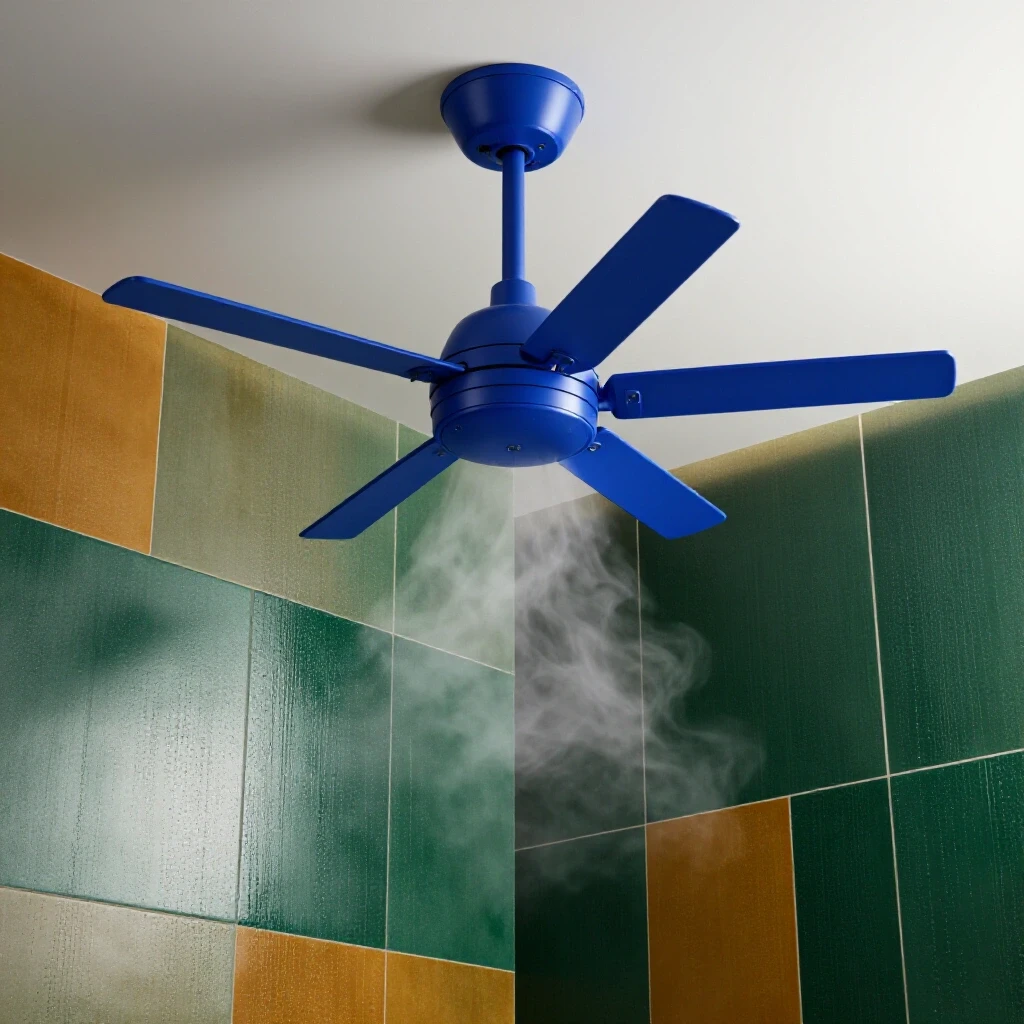
One of the most effective ways I have found to protect a building’s envelope is to move beyond the simple on-off switch. In my own experience maintaining legacy properties, the human element is the weakest link in moisture control. We either forget to turn the exhaust system on, or more commonly, we turn it off the moment we leave the room. This leaves the most dangerous moisture—the latent humidity clinging to the walls and ceiling—trapped inside. By transitioning to a timed control mechanism, I was able to automate the recovery period of the room, ensuring the mechanical system finishes its job long after the shower has ended.
Understanding Bathroom Moisture Dynamics
Moisture dynamics refers to the movement and accumulation of water vapor in a confined space. In older homes, high humidity levels can lead to structural decay, mold growth, and paint failure if not managed through consistent airflow and mechanical ventilation timing. Proper management requires understanding how vapor behaves under different temperatures.
Building science teaches us about the dew point, which is the temperature at which air becomes saturated and water vapor turns back into liquid. In a bathroom, the walls and mirrors are often cooler than the steam from the shower. When that steam hits those surfaces, it condenses. If this liquid water stays on the surface for more than 24 to 48 hours, mold spores can begin to colonize. My goal in any property I manage is to ensure the relative humidity (RH) drops below 50% within twenty minutes of a moisture event.
A standard exhaust motor is designed to move a specific volume of air, measured in cubic feet per minute (CFM). However, the motor can only do its job if it runs long enough to cycle the entire volume of air in the room several times. Most people only run their fans for the duration of their shower, which is rarely enough time to address the “reservoir effect”—the moisture that has soaked into towels, bath mats, and drywall.
Diagnostic Tools for Measuring Airflow and Dampness
Professional diagnostics involve using specific tools to quantify environmental conditions. For a bathroom, this means measuring relative humidity percentages and verifying that the exhaust system is pulling enough air to clear the room effectively after a shower. Without data, we are simply guessing at the health of the home.
To accurately assess the state of a bathroom, I rely on a specific set of tools that provide objective measurements. These tools help identify if a ventilation system is underperforming or if the current usage patterns are insufficient for the room’s size.
- Digital Hygrometer: This device measures the relative humidity and temperature. I use it to establish a baseline and then track how long it takes for the room to return to that baseline after a shower.
- Pinless Moisture Meter: This tool allows me to check the moisture content of drywall and wood trim without poking holes. I look for readings below 12% in wood and “green” zones on drywall scales.
- Anemometer: This measures the speed of the air moving through the fan grille. By multiplying air speed by the size of the vent, I can calculate the actual CFM.
- Thermal Imaging Camera: This helps identify “cold spots” in the ceiling or walls where insulation might be missing. These spots are where condensation is most likely to occur.
- Tissue Test: A simple but effective way to check for basic suction. A single square of toilet tissue should be held firmly against the grille by the vacuum created by the motor.
Symptom-to-Root-Cause Diagnostic Tree
| Symptom | Potential Root Cause | Diagnostic Step |
|---|---|---|
| Fogged mirror stays cloudy 30+ mins | Insufficient runtime or low CFM | Check fan timing and clear dust from grille |
| Peeling paint near the ceiling | Recurring condensation at dew point | Measure surface temperature with IR thermometer |
| Musty odor in vanity cabinets | Hidden moisture migration | Use moisture meter on cabinet floor and back wall |
| Damp towels that never fully dry | High baseline relative humidity | Monitor RH levels over a 24-hour period |
| Black spotting on window seals | Thermal bridging and vapor saturation | Check window R-value and local humidity |
Implementing a Countdown Control System
A countdown control system replaces a standard manual switch with a timed interface. This allows the exhaust motor to run for a predetermined period, ensuring all latent moisture is removed from the building envelope without requiring manual intervention. It bridges the gap between human habit and mechanical necessity.
When I decided to upgrade the control interface in my own property, I focused on the “load” and “neutral” requirements of modern digital timers. Older homes often have “switch loops” where a neutral wire is not present in the wall box. I had to verify the presence of a white neutral wire before proceeding. Digital timers require a small amount of continuous power to run their internal clocks, which is why that neutral wire is so critical.
The physical installation involves identifying four main wires: the ground (bare or green), the line (hot power coming in), the load (power going to the fan motor), and the neutral (completing the circuit). Once the power is safely disconnected at the breaker, I use a non-contact voltage tester to ensure the box is dead. I then secure the wires to the timer terminals according to the manufacturer’s diagram, ensuring no copper is exposed outside the screw terminals.
Technical Metrics for Effective Ventilation
- Target Relative Humidity: 30% to 50% (ideal for preventing mold).
- Air Exchange Rate: 8 air changes per hour (ACH) for bathrooms.
- Post-Shower Runtime: 20 to 30 minutes (minimum recommended for latent moisture).
- Fan Capacity: At least 1 CFM per square foot of room area.
- Moisture Content in Lumber: Should remain below 16% to prevent fungal growth.
Observed Improvements in Room Recovery Time
Room recovery time is the duration it takes for a bathroom to return to its baseline humidity level after a high-moisture event. Tracking this data helps determine if the ventilation system is functioning at peak efficiency and if the new timing controls are achieving the desired protective effect.
After installing the timed control, I conducted a series of tests to measure the results. Before the upgrade, the fan was typically turned off immediately after a shower. The humidity would often peak at 85% and remain above 70% for over an hour. This sustained high humidity is what causes the structural “softness” often found in the subfloors of older homes.
With the timer set to a 30-minute post-shower run, the data changed significantly. The humidity still peaked during the shower, but the “decay curve”—the rate at which moisture left the room—was much steeper. Within 15 minutes, the RH dropped to 55%. By the end of the 30-minute cycle, the room was back to its 45% baseline. This rapid removal prevents the moisture from having enough “dwell time” to soak into the porous surfaces of the room.
DIY vs. Professional Scope Limits
| Task | DIY Scope | Professional Scope |
|---|---|---|
| Testing Airflow | Using tissue or anemometer | Duct pressure testing |
| Surface Testing | Pinless moisture meter checks | Invasive wall cavity inspections |
| Control Upgrade | Replacing existing wall switch | Running new circuits or wiring |
| Cleaning | Vacuuming dust from fan motor | Deep cleaning of vertical duct runs |
| Assessment | Monitoring RH with hygrometer | Full building envelope moisture audit |
The Mechanics of Air Pressure and Resistance
Air pressure and resistance play a vital role in how well an exhaust system functions. In the world of building science, we look at “static pressure,” which is the resistance the fan motor must overcome to push air through a duct. If a duct is too long, has too many bends, or is clogged with lint, the fan cannot move its rated CFM.
In many older homes, the ductwork is made of flexible ribbed plastic. This material creates a high amount of friction, slowing down the air. When I evaluate a system, I check the exit point on the exterior of the house. If the louvers on the outside vent are not opening fully when the fan is on, it indicates that the static pressure is too high or the motor is failing.
By adding a timer, we are essentially compensating for these mechanical inefficiencies. If a fan is only moving 40 CFM instead of its rated 80 CFM, it needs to run twice as long to achieve the same result. The timer ensures that even a struggling system has the time it needs to eventually clear the air, protecting the home from the cumulative effects of poor airflow.
Step-by-Step Systematic Upgrade Sequence
- Baseline Audit: Use a hygrometer to record the peak humidity and recovery time of the room using the old manual switch.
- Safety Verification: Identify the correct circuit breaker and use a voltage tester to confirm the power is off at the switch box.
- Box Inspection: Check for a neutral wire (usually white) and ensure the electrical box is deep enough to house the larger body of a digital timer.
- Wiring Execution: Connect the ground first, followed by the neutral, then the line (hot), and finally the load (fan) wire.
- Mechanical Testing: Restore power and test each button on the timer (e.g., 10, 20, 30, 60 minutes) to ensure the motor responds correctly.
- Performance Verification: Run a “steam test” by taking a shower and setting the timer for 20 minutes. Check the mirror and walls at the end of the cycle to ensure they are dry.
Strategic Prevention and Multi-Year Planning
A multi-year prevention program involves integrating mechanical upgrades with regular structural inspections. For owners of legacy properties, this means looking beyond the immediate fix and considering how small changes impact the longevity of the building’s materials over decades.
I recommend a seasonal approach to bathroom moisture management. In the winter, the air is drier, but the walls are colder, which increases the risk of surface condensation. In the summer, the outdoor humidity is higher, which can make it harder for the fan to “dry” the room. Adjusting your timer settings based on the season can provide optimal protection. For example, I often increase the runtime to 60 minutes during the humid summer months.
The goal is to prevent the “slow-motion disaster” of wood rot. By the time you see a soft spot in the floor or a stain on the ceiling, the damage has been occurring for years. A timed ventilation system is a low-cost, high-impact way to stop that process before it starts. It is about moving from a reactive mindset—fixing what is broken—to a proactive mindset—preserving what is healthy.
Frequently Asked Questions
Why does my bathroom still feel damp even after running the fan? This is often due to “short-cycling” the ventilation. If you turn the fan off as soon as you leave the room, you are only removing the visible steam. The latent moisture trapped in towels and drywall needs an additional 20 to 30 minutes of airflow to evaporate. A timed switch solves this by ensuring the fan runs long enough to address this hidden moisture.
Can I install a timer if my house is very old and doesn’t have a neutral wire? Many digital timers require a neutral wire to power their internal electronics. If your switch box only has two wires (plus a ground), you may need to look for a specific type of “no-neutral required” timer. These are often mechanical twist-timers or specialized electronic versions that draw a tiny amount of power through the ground or load.
How do I know if my fan is actually pulling air? The simplest check is the tissue test. Turn on the fan and hold a single square of toilet paper up to the intake grille. If the fan is working correctly, the suction should hold the paper in place. If the paper falls, your fan may have a clogged duct, a broken flapper, or a failing motor.
What is the ideal runtime for a bathroom after a shower? Building science research and many manufacturer guidelines suggest a minimum of 20 minutes. However, in bathrooms with poor natural light or limited square footage, 30 to 45 minutes is often necessary to fully return the relative humidity to safe levels (below 50%).
Will a timer help with mold on the ceiling? Yes. Mold on the ceiling is almost always a result of condensation. When warm, moist air hits a cooler ceiling, it turns into liquid water. By using a timer to keep the air moving, you lower the humidity levels quickly, which prevents that condensation from forming and staying long enough for mold to grow.
Does the size of the bathroom matter when choosing a timer setting? Absolutely. A larger bathroom has a higher volume of air that needs to be exchanged. If you have a large master bath, you will likely need a longer runtime (45-60 minutes) compared to a small powder room. The goal is to achieve about eight full air exchanges after the moisture event.
What should I do if the timer works but the mirror still stays fogged for an hour? This indicates that the fan’s CFM (cubic feet per minute) is too low for the room size, or the ductwork is restricted. You should inspect the exterior vent for blockages like bird nests or lint buildup. If the duct is clear, you may need a more powerful motor, but the timer will still help by maximizing whatever airflow you do have.
Are mechanical twist-timers better than digital ones? Mechanical timers are robust and don’t require a neutral wire, making them great for older homes. However, they can be noisy (ticking) and are less precise. Digital timers offer more options and silent operation but usually require that specific neutral wire for installation.
How often should I check the performance of my ventilation system? I recommend a “system check” twice a year. Use a hygrometer to verify that the room returns to baseline humidity within 30 minutes. Also, vacuum the dust out of the fan grille and motor housing, as dust buildup can reduce airflow by up to 30% and increase the risk of the motor overheating.
Can a timer prevent damage to my bathroom door and trim? Yes. High humidity causes wood to swell and contract, which eventually leads to cracking paint and “binding” doors that won’t close properly. By controlling the duration of moisture exposure through a timed fan, you significantly reduce the stress on the wooden components of the room.
(This article was written by one of our staff writers, Daniel Whitaker. Visit our Meet the Team page to learn more about the author and their expertise.)