Blackout Curtains vs Shades: Which Improves Sleep Better? (Guide)

Why did the homeowner go to therapy? Because they couldn’t stop staring at the light gaps in their bedroom and felt like their window treatments were gaslighting them. While that might be a bit of a stretch, the frustration of spending thousands on home materials only to have them fail at their primary job is a reality many of us face.
In my 13 years as a supply chain analyst, I have evaluated everything from the tensile strength of steel cables to the porosity of high-end marble. When it came time to renovate my own bedrooms across three different properties, I applied that same rigor to light-blocking solutions. Choosing between heavy fabric drapes and structured window cells isn’t just an aesthetic choice; it is a technical material comparison that impacts your daily recovery and long-term home maintenance budget.
Understanding Light Transmission and Opacity Standards
Light transmission refers to the percentage of visible light that passes through a material, while opacity measures the degree to which a material prevents light from passing through. In the textile industry, these are often measured using specialized spectrophotometers to ensure a product meets specific “blackout” criteria.
When you are looking at high-end home materials, you will often see terms like “room darkening” or “blackout.” As a supply chain professional, I look for the technical data behind these labels. A true light-blocking material should ideally have a 0% light transmission rating under standard testing conditions. However, the material itself is only half the battle; the “system” of the window treatment determines the final performance.
During my evaluation of various textiles, I focused on the Grams per Square Meter (GSM) of fabrics and the mil thickness of synthetic coatings. A higher GSM generally indicates a denser weave, which is a primary factor in natural light suppression. For structured options, the composition of the backing—often a layer of acrylic or silicone—is what provides the technical barrier against photons.
The Science of Fabric Density and Coating Technologies
Fabric density is the measure of how many threads are packed into a given area, while coating technology involves applying a chemical layer to a substrate to change its physical properties. These specifications determine how well a material resists light penetration and thermal transfer.
In the world of textiles, there are two main ways to achieve a total light block. The first is “triple-weave” technology. This involves weaving a layer of black yarn between two outer layers of decorative fabric. In my experience, this provides a softer hand-feel but often falls short of 100% light exclusion.
The second method is “foam backing,” where multiple layers of acrylic foam are sprayed onto the back of the fabric. This creates a non-porous barrier. While this is technically superior for light blocking, the maintenance cost can be higher. Over a 10-year cycle, these coatings can sometimes crack or peel if exposed to extreme UV radiation or improper cleaning methods.
Side-by-Side Material Performance Specifications
This table compares the technical attributes of high-density polyester fabrics versus synthetic cellular structures used in window light-blocking systems.
| Performance Metric | Triple-Weave Polyester | PVC-Coated Fiberglass |
|---|---|---|
| Light Blockage (%) | 90% – 98% | 99% – 100% |
| Material Weight (GSM) | 260 – 320 | N/A (Rigid Structure) |
| Thermal Resistance (R-Value) | 0.5 – 1.2 | 1.5 – 4.5 |
| ASTM Fire Rating | Class A (often treated) | NFPA 701 Compliant |
| Moisture Absorption Rate | 0.4% (Low) | 0.0% (Non-porous) |
| Typical Lifespan | 8 – 12 Years | 10 – 15 Years |
Comparing Flexible Textiles and Rigid Light Barriers
Flexible textiles are soft materials like cotton or polyester blends that drape naturally, whereas rigid light barriers are engineered structures like cellular cells or rollers. Choosing between them requires a trade-off analysis between light-blocking precision and aesthetic flexibility.
When I analyzed these materials for my second home renovation, I found that rigid shades offered a much tighter “fit” within the window frame. This is a critical technical specification because even the most opaque material will fail if light leaks around the edges. This phenomenon, known as “light haloing,” can ruin the effectiveness of an expensive installation.
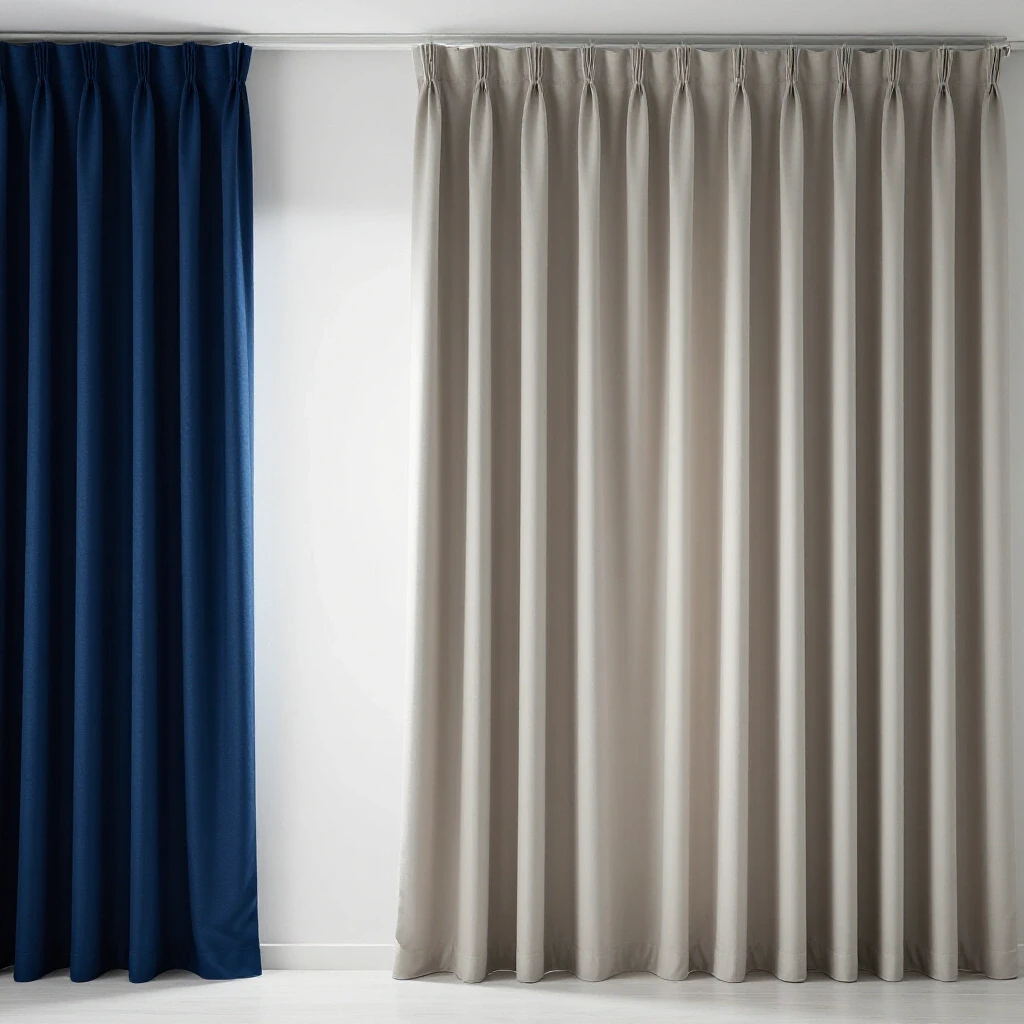
Textiles, on the other hand, offer the benefit of “overlap.” By extending a heavy drape 15 to 20 centimeters beyond the window frame, you can physically block the light gaps that rigid shades struggle with. This is a classic example of how a lower-tech material (fabric) can sometimes outperform a high-tech material (engineered shades) through better mechanical application.
Why Higher Upfront Costs Don’t Always Guarantee Durability
Durability is the ability of a material to remain functional and aesthetically pleasing over its intended lifespan without excessive repair. In home material comparison, we often assume that a higher price tag equals a longer life, but environmental factors often dictate the actual outcome.
In my years of tracking supply chain data, I have seen expensive silk-lined drapes fail within five years due to UV degradation. UV light breaks down the molecular bonds in natural fibers, leading to “sun-rot.” If your bedroom faces the afternoon sun, a high-end natural material is actually a poor investment compared to a mid-priced synthetic polyester with a high-density weave.
Synthetic materials like polyester are engineered for high-end home materials specifically because of their resistance to environmental stressors. They have a higher “colorfastness” rating, meaning they won’t fade as quickly. When evaluating trade-offs, I always look at the cost-per-year of utility rather than just the initial invoice.
Installation Complexity and Structural Requirements
Installation complexity refers to the technical skill and structural support required to mount a material or appliance. Structural requirements involve the load-bearing capacity of the walls or frames where the item will be placed.
Heavy light-blocking drapes can weigh significantly more than standard window coverings. For a 2.5-meter window, you might be looking at 10 to 15 kilograms of fabric. This requires heavy-duty anchors and potentially reinforcing the mounting points. If you are installing these into drywall without hitting a stud, the risk of failure over time is high.
Rigid shades are lighter but require precision measurements. A 2-millimeter error in measurement can lead to a light gap that renders the “blackout” feature useless. When I managed the installation for my current property, I used a laser measuring tool to ensure the tolerances were within 1 millimeter. This level of precision is something most homeowners overlook when comparing materials.
Long-Term Maintenance and Cleaning Regimens
Maintenance refers to the routine actions required to keep a material in good working order, while cleaning regimens are the specific processes used to remove contaminants without damaging the material. These costs are often hidden at the time of purchase.
- Fabric Drapes: These act as massive air filters. Over time, they accumulate dust, dander, and pollen. Professional dry cleaning for high-end drapes can cost between $50 and $150 per panel. Doing this every two years adds a significant “tax” to the ownership of the material.
- Engineered Shades: These are generally easier to maintain. A simple vacuuming with a brush attachment or a damp cloth is often enough. However, if the internal lifting mechanism fails, the entire unit usually needs to be replaced, as these are often sealed components.
Upfront Cost vs. 15-Year Maintenance Outlay
This comparison looks at the total cost of ownership for a standard master bedroom window over a 15-year period.
| Cost Factor | High-End Fabric Drapes | Premium Engineered Shades |
|---|---|---|
| Initial Material Cost | $600 – $1,200 | $400 – $800 |
| Professional Installation | $150 – $300 | $100 – $200 |
| Cleaning Costs (15 Years) | $450 – $900 | $0 (DIY) |
| Repair/Replacement Risk | Low (Hardware only) | Moderate (Internal cords) |
| Total 15-Year Investment | $1,200 – $2,400 | $500 – $1,000 |
Environmental Sensitivity and Material Degradation
Environmental sensitivity is the rate at which a material reacts to external factors like humidity, temperature changes, and UV exposure. Material degradation is the physical breakdown of the item over time.
In my analysis of window materials, humidity is a silent killer. In a bedroom with an en-suite bathroom, moisture levels can fluctuate. Natural fibers like cotton or linen can shrink or grow depending on the humidity. I once saw a set of high-end linen drapes “crawl” up the wall by 3 centimeters during a particularly dry winter.
Synthetic shades made from PVC or fiberglass are dimensionally stable. They do not react to moisture, making them the superior choice for homes in coastal areas or humid climates. This technical material specification is vital for maintaining the “seal” required for effective light blocking.
My Personal Evaluation: Results from a Decade of Testing
Over the last 13 years, I have lived with both systems. In my first home, I chose high-end shades with side channels—metal tracks that the shade slides in to prevent light leakage. The light blocking was nearly 100%, but the maintenance was frustrating. The tracks collected dust that was difficult to clean, and the mechanical tensioner eventually snapped.
In my current home, I moved to a “hybrid” approach. I use a mid-priced blackout shade for the primary light barrier and layered a heavy, high-GSM polyester drape over the top. This combination solved the “light gap” issue and allowed for easier maintenance. I can wash the drapes myself, and the shades are protected from direct UV exposure, extending their lifespan.
This evidence-based approach taught me that the “best” material is often a system of materials working together. By diversifying the materials used, I reduced the single point of failure and achieved a better sleep environment than any single high-priced product could provide.
Technical Spec Tracker for Purchasing Decisions
When you are ready to make a purchase, use this numbered list to evaluate samples and spec sheets from manufacturers.
- Request the GSM Rating: For fabrics, ensure it is at least 250 GSM. Anything lower will likely require an additional liner.
- Check the Coating Type: Ask if it is a “2-pass” or “3-pass” foam coating. 3-pass is the industry standard for total light exclusion.
- Verify Dimensional Stability: Ask how the material reacts to 50% humidity changes. You want a material that stays within a 0.5% variance.
- Examine the Light Gap Tolerance: For shades, measure the distance between the fabric edge and the bracket. If it’s more than 10 millimeters, you will need side channels.
- Review the Warranty Limits: Does the warranty cover UV fading or mechanical failure? Many “lifetime” warranties have strict exclusions for sun damage.
Practical Tips for Homeowners Matching Materials to Lifestyle
If you have a busy lifestyle, the technical material specifications should favor low maintenance. For example, if you have pets, avoid heavy drapes that sit on the floor (“puddling”), as they will become hair magnets. Instead, choose a rigid shade that stays within the window frame.
If you are sensitive to noise as well as light, the trade-off analysis shifts toward fabric. The porous nature of high-density polyester drapes allows them to absorb sound waves, reducing echo and outside noise. This is a secondary benefit that rigid synthetic shades cannot provide due to their hard, reflective surfaces.
Finally, always get a sample and perform a “flashlight test.” Hold a high-lumen flashlight directly against the back of the material in a dark room. If you see even a pinprick of light, it is not a true blackout material. This simple field test is often more reliable than the marketing labels on the packaging.
Conclusion: Making a Confident Purchase
Choosing the right light-blocking solution is a matter of balancing technical performance with long-term maintenance costs. While rigid shades offer precision and lower cleaning costs, high-density textiles provide better coverage for light gaps and superior sound dampening.
For the best return on investment, I recommend looking for synthetic materials that mimic the look of natural fibers but offer the durability of engineered polymers. By focusing on GSM, UV resistance, and installation tolerances, you can create a sleep environment that remains effective for a decade or more.
The next step is to measure your windows and decide if your structural mounting points can handle the weight of heavy drapes or if the precision of a shade is more suited to your frame’s dimensions.
FAQ: Common Questions on Light-Blocking Materials
What is the difference between room darkening and blackout? Room darkening materials typically block 90% to 95% of light, whereas blackout materials are engineered to block 100%. In technical terms, “blackout” involves an opaque coating or an ultra-dense weave that allows zero light transmission through the material itself.
Does fabric color affect light-blocking performance? If the material has a proper foam backing or a dedicated black middle-weave layer, the front-facing color does not matter. A white blackout drape can perform just as well as a black one if the internal technical specifications are identical.
Are side channels worth the extra cost for shades? Yes, if your goal is 100% light exclusion. Most light leakage occurs at the edges of a shade. Side channels are U-shaped tracks that seal these gaps. Without them, even the best material will have a “halo” of light around the perimeter.
How do I clean foam-backed drapes without ruining them? Never machine wash or dry clean foam-backed drapes unless the label explicitly says so. The heat and agitation can cause the acrylic foam to peel. Spot cleaning with a damp cloth or using a professional “on-site” drapery cleaner is usually the safest technical approach.
What is the Janka rating for window treatments? The Janka rating is used for wood hardness, not textiles. For window treatments, you should look for the Wyzenbeek or Martindale rub counts if you are worried about wear, though these are more common in upholstery than in window coverings.
Why do my blackout shades have a chemical smell? This is known as “off-gassing.” It occurs when Volatile Organic Compounds (VOCs) are released from the PVC or acrylic coatings. Look for materials with a “Greenguard Gold” certification to ensure they meet low-emission standards for indoor air quality.
Can I use blackout materials in a high-humidity environment? Yes, but you must choose synthetic materials like PVC-coated fiberglass or 100% polyester. Natural fibers like cotton or silk will absorb moisture, leading to mildew and dimensional instability (stretching or shrinking).
How much should I expect to pay for professional installation? For a standard home, professional installation usually ranges from $75 to $150 per window, depending on the complexity. If structural reinforcement is needed for heavy drapes, costs can increase.
Do blackout drapes help with energy bills? Yes. From a material science perspective, the extra layers and coatings increase the R-value of your window. This provides a thermal barrier that can reduce heat gain in the summer and heat loss in the winter by up to 25%.
What is the lifespan of a motorized light-blocking shade? The material may last 15 years, but the motor and battery system typically have a lifespan of 5 to 7 years. When evaluating the trade-off, factor in the cost of motor replacement or battery servicing.
Is there a technical standard for light blocking? While there isn’t a single universal “grade,” many manufacturers use ASTM D1777 for thickness and ASTM D3776 for mass per unit area. Always look for “0% light transmission” in the technical spec sheet.
How do I prevent “pinholes” in my light-blocking curtains? Pinholes usually occur in low-quality foam coatings or from needle holes during sewing. High-end manufacturers use “silicone-sealed” seams or specialized needles to prevent light from peeking through the stitch lines.
(This article was written by one of our staff writers, Andrew Morrison. Visit our Meet the Team page to learn more about the author and their expertise.)