How to Remove Wallpaper Easily: Tips, Costs & Material Guide (DIY)

When I am not analyzing supply chain logistics, I spend my time restoring vintage mechanical watches. There is a precise logic to how gears mesh together, and I appreciate the predictable nature of metal on metal. However, home renovation rarely offers that same predictability, a lesson I learned during a grueling 48-hour period spent stripping three decades of layered paper from my hallway walls.
That experience changed how I view home material comparison. As a supply chain analyst, I usually look at data sheets and ASTM standards from a distance. But standing on a ladder at 2:00 AM, faced with a sticky, shredded mess of cellulose and dried paste, I realized that the true cost of a material includes its eventual removal. This guide breaks down the technical trade-offs of wall coverings to help you avoid the same frustration.
The Technical Science of Adhesive Bonds and Substrates
Adhesive science in home materials focuses on the molecular bond between a decorative layer and the structural surface, often gypsum or plaster. Understanding the shear strength and porosity of these bonds determines how much effort is required to separate them years later without causing structural damage to the underlying wall.
When we talk about technical material specifications for wall coverings, we are really talking about the “peelability” rating. The National Association of Home Builders (NAHB) notes that the life expectancy of most wall finishes is about 10 to 15 years. However, the chemical bond of the adhesive often outlasts the aesthetic appeal of the pattern.
In my own home, the previous owners had used a high-tack adhesive on unprimed drywall. This created a mechanical bond where the glue actually penetrated the paper facing of the gypsum board. When I attempted to strip it, the adhesive was stronger than the wall itself, leading to significant gouging. This is why understanding the “porosity rate” of your surface is the first step in any material evaluation.
- Porosity: The measure of void spaces in a material, which dictates how much liquid it will absorb.
- Tensile Strength: The resistance of the covering material to breaking under tension while being pulled.
- Shear Strength: The force required to slide the adhesive bond apart.
Comparing Surface Material Durability and Removal Complexity
Evaluating the long-term value of a wall covering requires a trade-off analysis between its daily durability and the difficulty of its eventual replacement. High-end home materials often prioritize a permanent bond for longevity, but this can lead to extreme maintenance costs when it is time for a change.
I once compared two different types of coverings for a high-traffic mudroom: a heavy-duty vinyl and a traditional breathable paper. While the vinyl offered superior scratch resistance (measured by ASTM D2486 standards), its non-porous nature made it a nightmare to remove. Steam and chemical solvents could not penetrate the surface to reach the glue.
Interestingly, the “cheaper” breathable paper was much easier to saturate. This meant that while it was less durable against scuffs, the labor cost (or personal time cost) of removing it was 70% lower. When you are choosing materials, you must weigh the upfront durability against the “end-of-life” labor requirements.
Table 1: Side-by-Side Material Performance Specifications
| Material Type | Porosity Rating | Durability (1-10) | Removal Difficulty | Average Life Cycle |
|---|---|---|---|---|
| Non-Woven Paper | High | 5 | Low | 7-10 Years |
| Vinyl-Coated | Low | 8 | Medium | 10-15 Years |
| Solid Sheet Vinyl | Zero | 10 | High | 15-20 Years |
| Grasscloth | Medium | 4 | High | 5-8 Years |
Why Higher Upfront Costs Don’t Always Guarantee Durability
In the world of supply chain analysis, we often see that a higher price point reflects the complexity of the manufacturing process rather than the resilience of the product. For wall materials, a premium price often buys you a unique texture or a handmade aesthetic, but it may actually decrease the material’s technical performance.
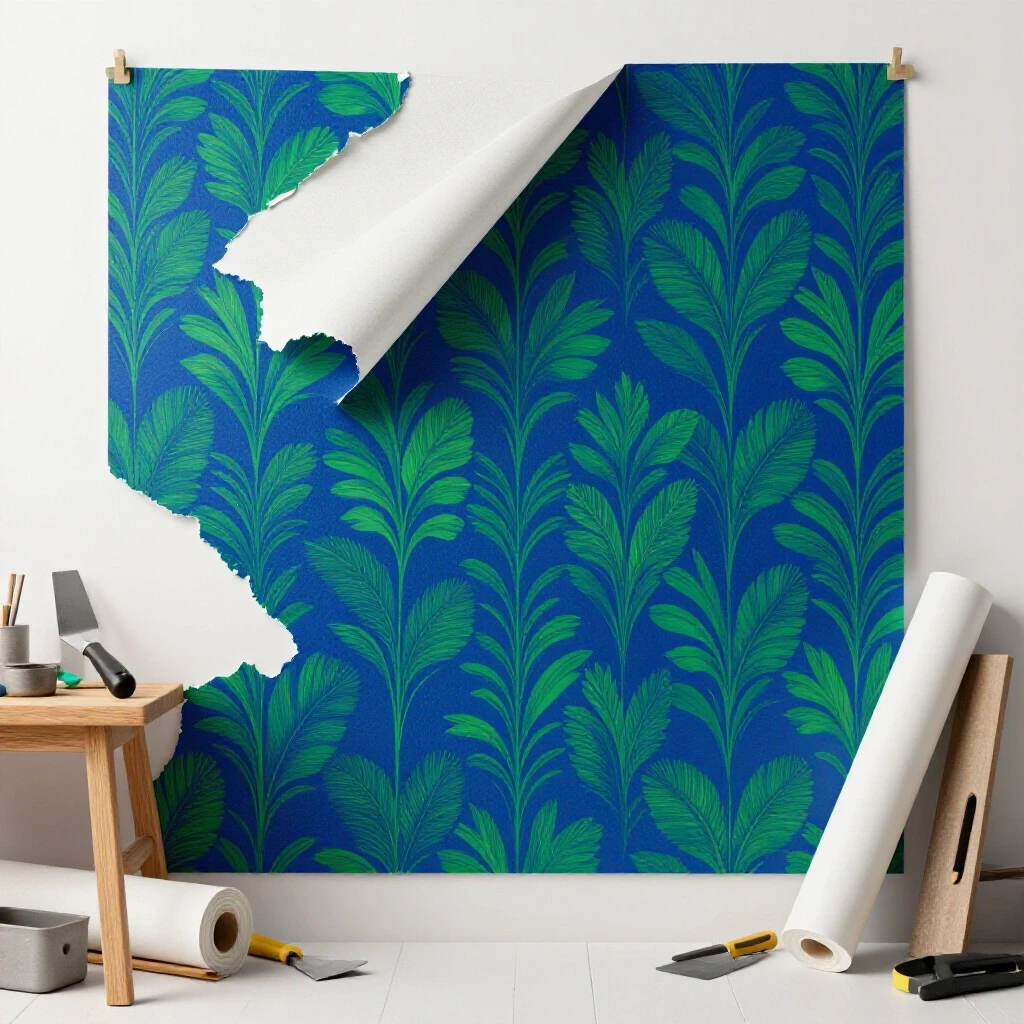
During my “worst weekend” of DIY labor, I dealt with a high-end textile covering that had been applied over a standard paper backing. The material was expensive and beautiful, but the technical material specifications revealed a major flaw: the layers were prone to “delamination.” As I tried to strip the wall, the top fabric layer pulled away, leaving a thin, stubborn film of paper and glue behind.
This doubled the work. I had to treat the wall twice—once for the textile and once for the residual backing. This experience taught me to look for “strippable” ratings. A truly high-performance material should come off in full sheets, leaving the substrate intact. If a product doesn’t list its removal method in the technical specs, the long-term maintenance cost will likely be higher than expected.
The Impact of Moisture and Heat on Material Separation
The physics of stripping aged coverings relies on two primary factors: heat and moisture. By introducing steam, you are essentially trying to re-liquefy the dried adhesive without oversaturating the gypsum board underneath, which can lead to mold or structural softening.
I used a professional-grade steamer, which is a significant appliance for this task. The technical specs for these machines usually involve “steam pressure” and “warm-up time.” However, the real metric that matters is the “evaporation rate.” If the steam is too hot, it can damage the plaster; if it is too cool, it won’t penetrate the adhesive.
- Ideal Steam Temperature: 212°F (100°C) at the nozzle.
- Saturation Time: 15-30 seconds per square foot.
- Moisture Content Limit: Drywall should not exceed 12% moisture to avoid core damage.
As I moved through the room, I realized that my “worst weekend” was largely a result of poor moisture management. I was soaking the walls too much, which caused the drywall to swell. This made the scraping process much more destructive. A controlled, data-backed approach to moisture is essential for preserving your home’s value during a renovation.
Evaluating the Real Trade-Offs of DIY vs. Material Quality
When we perform a trade-off analysis for home goods, we often forget to include the value of our own time. In my professional life, I calculate labor hours as a fixed cost. In my personal life, I often mistakenly view my weekend time as “free.”
The failed stripping project taught me that choosing a “permanent” material without a primer layer is a massive financial liability. If I had spent $50 more on a high-quality primer ten years ago, I would have saved 20 hours of labor during the removal process. This is the “upfront cost vs. 15-year maintenance outlay” that every homeowner should calculate.
- Initial Material Cost: The price per roll or square foot.
- Installation Prep: The cost of primers and sealants.
- Maintenance: Cleaning and repair over a decade.
- Removal Labor: The estimated hours to return the wall to its original state.
Strategic Recommendations for Choosing New Wall Materials
Based on my analysis of material science and my own logistical failures, I recommend a systematic approach to selecting your next wall finish. Do not just look at the pattern; look at the spec sheet provided by the manufacturer.
First, check the ASTM F793 classification. This standard categorizes wall coverings based on their use—from “Category I” (decorative only) to “Category VI” (heavy-duty commercial). For a residential home with an active lifestyle, Category III or IV provides the best balance of durability and ease of removal.
Second, always verify the “backing material.” Scrim-backed or non-woven backings are significantly easier to strip than paper-backed materials. In my experience, the non-woven options act like a cohesive sheet, which prevents the “shredding” effect that ruined my weekend.
- Check for “Washability” ratings (ASTM D1308).
- Ensure the material is “Breathable” to prevent moisture trap.
- Verify “Peelability” to ensure one-step removal.
Actionable Buying Worksheet for Wall Coverings
To help you make a confident purchasing decision, use this scoring matrix. Rate each potential material on a scale of 1 to 5 (5 being the best).
- Surface Prep Requirement: Does it require a specialized (expensive) primer?
- Impact Resistance: How well does it handle bumps and scratches?
- Stain Resistance: Can it be cleaned with standard household solutions?
- Removal Rating: Is it labeled as “strippable” or “peelable”?
- Environmental Sensitivity: Does it expand or contract with humidity?
If a material scores below a 15 total, the long-term maintenance costs will likely outweigh the aesthetic benefits. My “worst weekend” happened because I was working with a material that would have scored a 10 on this scale.
Lessons from the Supply Chain: Sourcing and Consistency
In supply chain analysis, we look at “batch consistency.” When buying materials for a large project, always ensure you are sourcing from the same “run” or “lot number.” This is especially critical for wall coverings where slight variations in adhesive thickness can change how the material reacts to removal tools years later.
I found that the sections of my wall that were easiest to strip were all from the same manufacturing lot. The sections that crumbled and stuck were from a different batch used to finish a small corner. This lack of consistency in the material’s chemical makeup turned a simple task into a technical nightmare. Always buy 10% more than you need from a single lot to ensure uniformity.
Final Financial Evaluation of Material Choices
The true cost of a home material is the purchase price plus the cost of living with it. For my hallway, the “cheap” paper covering ended up costing me hundreds of dollars in repair materials and lost time. A more expensive, technically superior material with a “strippable” guarantee would have been the cheaper option over a 10-year period.
When you are at the store, don’t just ask how it looks. Ask how it comes off. If the salesperson cannot explain the removal process or the technical specs of the adhesive, you are taking a risk with your most valuable asset—your home.
Frequently Asked Questions
Why is some paper so much harder to strip than others?
The difficulty is usually determined by the porosity of the material and the type of adhesive used. If the wall wasn’t primed, the glue soaks into the drywall, creating a permanent bond. Non-porous materials like vinyl also block steam, making it hard to soften the glue.
Does a higher price mean the material will last longer?
Not necessarily. High prices often reflect the design, brand, or texture. In some cases, expensive natural fibers are more delicate and harder to maintain than mid-range synthetic composites. Always check the ASTM durability ratings rather than the price tag.
What is the difference between “strippable” and “peelable”?
Strippable means the entire material, including the backing, can be removed in one piece without water or chemicals. Peelable means the top decorative layer will come off easily, but the paper backing will remain on the wall and require soaking to remove.
Can I strip wall coverings without damaging the drywall?
Yes, but it requires patience and the right tools. You must use a “scoring tool” to create small holes in the surface, allowing steam to reach the glue. Avoid using metal scrapers at a sharp angle, as they will gouge the softened gypsum.
How do I know if my walls were primed before the covering was applied?
You can often tell during the first few minutes of stripping. If the material comes off and leaves a smooth, slightly shiny surface, it was primed. If the paper facing of the drywall starts to tear away with the adhesive, it was likely applied to raw wallboard.
Is a professional steamer better than chemical solvents?
Steam is generally more effective for older, multi-layered projects because the heat helps break down the molecular bond of the glue. Chemical solvents work well for single layers of modern, water-based adhesives but can be messy and leave a residue.
How much does it cost to repair walls after a bad stripping job?
If the drywall is gouged, you will need to apply a “skim coat” of joint compound. Depending on the size of the room, this can add $200 to $500 in material costs and several days of labor for drying and sanding.
What technical spec should I look for to ensure easy cleaning?
Look for the “scrubbability” rating. This measures how many cycles of abrasive cleaning the material can withstand before the surface degrades. For high-traffic areas, look for a rating of at least 300 cycles.
Can humidity in my home affect the longevity of the bond?
Yes. High humidity can cause cellulose-based materials to expand and contract, which eventually weakens the adhesive bond at the seams. In bathrooms or kitchens, always use a material with a low moisture absorption rate.
Should I worry about the age of the material I am stripping?
Absolutely. Materials installed before the mid-1980s may use different adhesive formulas that are more resistant to modern water-based removal methods. Older materials also tend to become brittle, making them more likely to shred into small pieces during removal.
(This article was written by one of our staff writers, Andrew Morrison. Visit our Meet the Team page to learn more about the author and their expertise.)