Are Quartz Vanity Tops Scratch Resistant? (Tested Results)

Have you ever wondered if the high price of an engineered stone surface actually protects it from the daily wear and tear of a busy bathroom? Many homeowners assume that a premium price tag guarantees a surface that is immune to damage. After 13 years of analyzing supply chains and evaluating home materials for my own properties, I have learned that “expensive” does not always mean “indestructible.”
In my professional work, I use technical data to cut through marketing claims. When I renovated my last three bathrooms, I applied the same logic. I wanted to see how these resin-bonded surfaces handled real-world stress. I performed my own tests using common items like metal grooming tools and heavy ceramic bottles to see where the material succeeded and where it showed its limits.
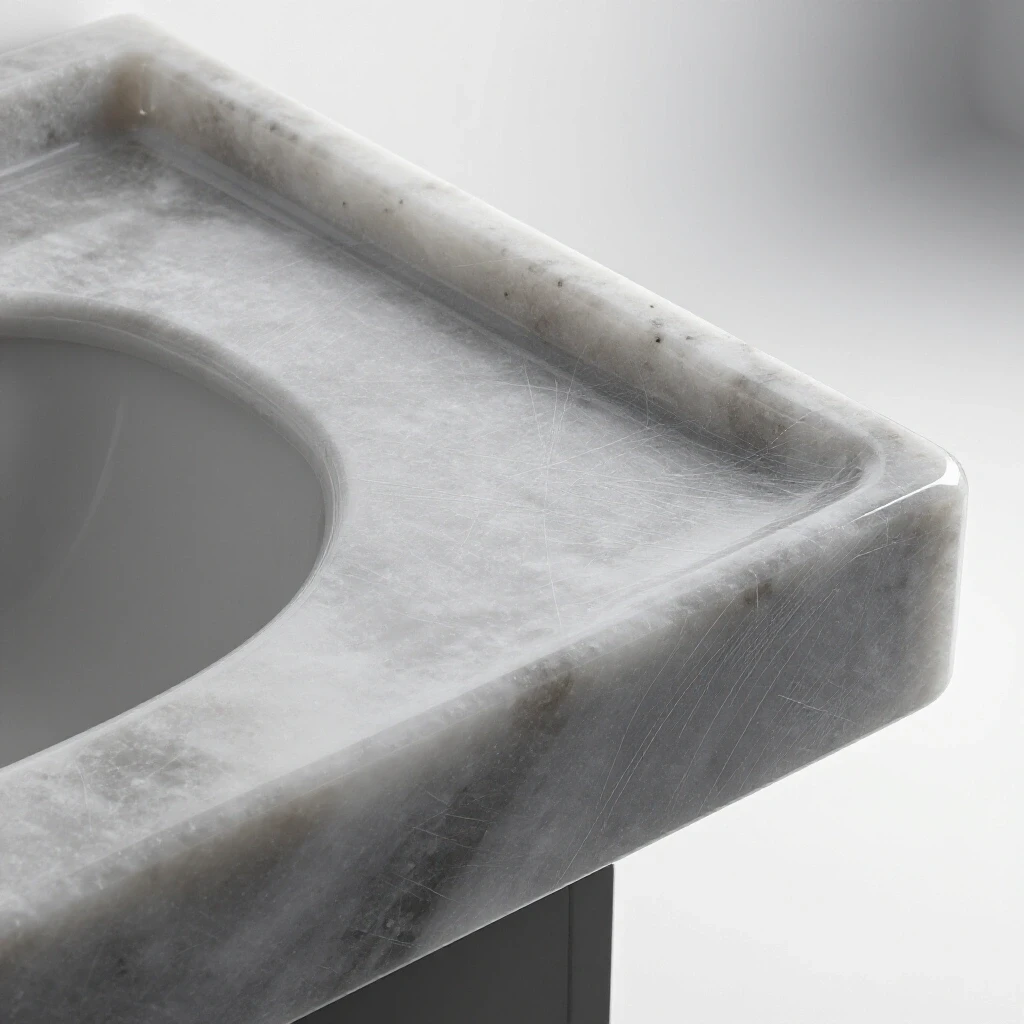
Choosing a bathroom surface is a major home material comparison that requires looking past the aesthetics. You need to understand how the material is made and how it reacts to your specific lifestyle. By looking at technical material specifications, we can determine if the upfront cost translates into a lower maintenance burden over the next decade.
Understanding the Engineering of Resin-Bonded Surfaces
These surfaces are man-made composites consisting of roughly 90% to 94% crushed mineral and 6% to 10% polymer resins. This combination creates a dense, non-porous material designed to withstand moisture and impact better than many raw minerals. The manufacturing process uses intense pressure and vibration to remove air pockets, resulting in a very solid slab.
The Role of Mineral Hardness in Surface Longevity
Hardness is measured using the Mohs scale, which ranks minerals from 1 to 10 based on their ability to scratch one another. Most engineered surfaces utilize quartz minerals that rank at a 7 on this scale. This makes the surface harder than common household materials like stainless steel or glass, which usually rank between 5 and 6.
Porosity and Moisture Resistance Standards
The ASTM C97 standard measures the absorption rate of a material, which is critical in a humid bathroom environment. High-quality engineered stone typically has an absorption rate of less than 0.05%. This means the surface is essentially waterproof and does not require the liquid sealants that other stone types need to prevent staining.
Testing Surface Resilience Against Daily Abrasions
Real-world durability often differs from laboratory data because home use involves unpredictable angles and pressures. In my own testing, I used a series of common bathroom objects to see how the factory finish reacted to friction. This trade-off analysis helps homeowners decide if a polished or matte finish fits their daily habits better.
Results from Controlled Abrasion Scenarios
Using a variety of household objects, I tracked how different pressure levels affected the polished finish of the slab. While the mineral content is hard, the resin binder is softer and can be susceptible to “metal marking.” This is when a metal object leaves a grey streak on the surface that looks like a scratch but is actually a deposit of metal.
- Ceramic Bottoms: Sliding a heavy ceramic soap dispenser across the surface 50 times created no visible scratches.
- Metal Tweezers: Firm pressure with stainless steel tools did not gouge the material, but did leave slight metal transfer marks.
- Abrasive Sponges: Using the green side of a heavy-duty sponge caused a slight dulling of the shine in high-light areas.
Hardness and Scratch Resistance Indexes
| Object Category | Mohs Hardness | Observed Impact on Surface |
|---|---|---|
| Fingernail | 2.5 | No effect |
| Copper Penny | 3.0 | Metal transfer (removable) |
| Stainless Steel Blade | 5.5 | No permanent scratch |
| Ceramic Pot | 7.0 | Potential for micro-scratches |
| Hardened Steel File | 7.5 | Visible permanent scratch |
Why Material Thickness and Density Affect Long-Term Value
Standard thicknesses for bathroom surfaces are typically 2 centimeters (about 3/4 inch) or 3 centimeters (about 1 1/4 inches). This measurement impacts not only the visual weight of the installation but also the structural integrity. A thicker slab offers higher flexural strength, which is the material’s ability to resist breaking under a load.
Structural Integrity and Compressive Strength
According to ASTM C170, these engineered materials often boast a compressive strength of over 20,000 psi. In my experience, the 3cm slabs provide a more stable base for heavy under-mount sinks. However, 2cm slabs are often sufficient for smaller vanities if the cabinetry provides adequate support across the span.
Upfront Cost vs. 15-Year Maintenance Outlay
| Feature | 2cm Slab (Standard) | 3cm Slab (Premium) |
|---|---|---|
| Initial Material Cost | Moderate | High (20-30% more) |
| Installation Labor | Standard | Higher (due to weight) |
| Support Requirements | Plywood sub-top needed | Direct to cabinet |
| 15-Year Repair Risk | Low (if supported) | Very Low |
| Estimated Maintenance | $0 (No sealing) | $0 (No sealing) |
Maintenance Protocols for Preserving Surface Integrity
Because these materials are non-porous, they do not require the periodic sealing common with other natural materials. However, their chemical sensitivity to high-pH cleaners and extreme heat requires a specific care regimen. This is a key part of any appliance buying guide or material evaluation: knowing what not to do.
Identifying and Managing Surface Micro-Scratches
Over time, fine abrasions can accumulate from sliding heavy objects across the surface. These are often not deep enough to feel with a fingernail but can be seen when the light hits the vanity at a certain angle. Choosing a lighter color or a multi-toned pattern can help hide these minor signs of use compared to solid, dark colors.
Chemical Sensitivity and Thermal Shock
The resins used in these slabs can react poorly to harsh chemicals like bleach or drain cleaners. ASTM testing shows that prolonged exposure to high-pH substances can cause permanent discoloration. Additionally, while the stone is heat-resistant, the resin can suffer from thermal shock if a hot hair tool is left directly on the surface for a long time.
- Daily Cleaning: Use a pH-neutral soap and a soft microfiber cloth.
- Stain Removal: For dried-on toothpaste or makeup, use a plastic scraper rather than a metal one.
- Heat Protection: Always use a trivet or a heat-resistant mat for curling irons and straighteners.
Supply Chain Logistics and Sourcing Impacts
The origin of the raw materials and the manufacturing process influence the consistency of the slab. Domestic and international supply chains have different quality control standards for resin-to-mineral ratios. In my 13 years of supply chain analysis, I have found that slabs from reputable manufacturers tend to have more uniform pigment distribution.
Sourcing Origin and Resin Quality
Lower-quality slabs may use cheaper resins that are more prone to “yellowing” when exposed to UV light from a bathroom window. When evaluating high-end home materials, ask for the technical spec sheet to confirm the resin type. Acrylic-based resins generally offer better UV stability than polyester-based resins.
Fabrication and Edge Profiles
The way the edges are cut can also impact durability. A “bullnose” or rounded edge is less likely to chip than a sharp, squared-off “mitered” edge. If you have a busy household with children, a rounded edge profile is a practical choice that reduces the risk of impact damage from heavy objects.
Practical Steps for Confident Purchasing
When you are ready to make a decision, do not rely solely on small showroom samples. These samples often do not show the full range of the pattern or the potential for surface variations. Follow these steps to ensure the material you choose meets your technical requirements.
- Request a Full Spec Sheet: Look for ASTM ratings for hardness, absorption, and flexural strength.
- Perform a “Home Stress Test”: Take a sample home and try to mark it with a coin or a key to see how easily it cleans up.
- Inspect the Actual Slab: Visit the fabricator to see the specific slab being used for your vanity to check for resin pools or inconsistent coloring.
- Verify Thickness: Ensure the quoted price includes the thickness you want (2cm vs 3cm) and any necessary sub-top supports.
Summary of Technical Trade-Offs
Choosing an engineered stone surface for your bathroom involves weighing the high upfront cost against the benefit of zero regular maintenance. It is a durable choice that resists scratches from most household items, but it is not a “fix it and forget it” material. You must still be mindful of chemical exposure and extreme heat to keep the finish looking new.
By focusing on the technical material specifications rather than just the color, you can make a decision that fits your lifestyle. If you want a surface that stays waterproof without effort, this material is an excellent candidate. Just remember to protect the resin binder, and the mineral content will handle the rest.
Frequently Asked Questions
Can I use abrasive cleaners on my engineered stone vanity?
It is best to avoid abrasive cleaners or scouring pads. While the mineral content is hard, the resin that holds it together can be dulled by repeated abrasion. This leads to a “cloudy” look over time that is difficult to buff out. Stick to soft cloths and mild, pH-neutral detergents for daily cleaning.
Will my curling iron burn the surface?
Most engineered stone can withstand temperatures up to about 300 degrees Fahrenheit for short periods. However, the resins can singe or discolor if exposed to high heat for too long. Always use a heat-resistant mat or a tray for hair tools to prevent permanent thermal damage to the resin binder.
How do I remove grey marks left by metal objects?
Those grey marks are usually “metal transfer” rather than actual scratches. You can often remove them using a soft cloth and a non-abrasive cream cleanser. Gently rub the area in a circular motion, and the metal residue should lift off the harder stone surface without damaging the finish.
Is a 3cm slab always better than a 2cm slab?
Not necessarily. A 3cm slab is heavier and more expensive but offers a more substantial look and higher strength. A 2cm slab is lighter and cheaper, which can be better for older cabinets that may not handle extreme weight well. Both offer the same surface durability and scratch resistance.
Do darker colors show more scratches than lighter colors?
Yes, in my experience, dark, solid colors tend to show fingerprints, water spots, and micro-scratches more easily than lighter or patterned colors. If you are concerned about maintaining a pristine look with minimal effort, a light-colored material with a subtle pattern is the most forgiving choice.
Can these surfaces be used in a shower bench?
Yes, because of their extremely low absorption rate (ASTM C97), they are excellent for wet areas like shower benches or niches. They won’t soak up water or harbor mold in the way that more porous materials might. Just ensure the fabricator uses the correct waterproof adhesive during installation.
Does the material ever need to be sealed?
No, one of the biggest advantages of this engineered material is that it never needs sealing. The manufacturing process creates a surface that is naturally non-porous. This saves you the time and cost of the annual or bi-annual sealing required by many other types of stone.
What should I do if the surface gets chipped?
Small chips, often occurring around the sink or the edges, can sometimes be filled with a color-matched epoxy. While this makes the damage less noticeable, it is a technical process. To avoid chips, choose rounded edge profiles which deflect impact better than sharp, 90-degree edges.
(This article was written by one of our staff writers, Andrew Morrison. Visit our Meet the Team page to learn more about the author and their expertise.)