Chair Reupholstery Budget Guide: Avoid Costly Fabric Mistakes (Tips)

Talking about allergies often leads to a discussion about dust mites and old foam, but for a homeowner, the real irritant is a budget that spirals out of control. When I decided to refresh a single wooden-frame chair in my study, I treated it like any other home renovation budget. I opened my master spreadsheet, categorized my line items, and set a hard cap of $150 to ensure I wasn’t over-improving a piece of furniture beyond its market utility.
However, even with a decade of experience tracking remodeling expense tracker data, I fell into a common trap. I underestimated the technical requirements of my chosen material. This minor oversight in textile selection turned a simple weekend task into a case study on why localized cost factors and material waste calculations are vital for every home improvement project.
Establishing a Financial Foundation for Small-Scale Furniture Projects
A furniture financial framework is the process of allocating specific dollar amounts to materials and tools while accounting for the asset’s long-term value. It prevents emotional spending on decorative items that do not provide a proportional return on investment (ROI). This structure ensures that every dollar spent increases the utility or aesthetic value of the home without creating debt.
Before I ever touched a staple remover, I looked at my cost vs value home improvement data. For a single chair, the financial goal is usually “lifestyle value” rather than resale profit. I used a simple depreciation schedule to determine that spending more than $200 on a DIY chair update would be mathematically unwise.
I allocated my funds using a 70/30 split: 70% for primary materials and 30% for a contingency buffer. This buffer is critical because, in my experience with larger renovations, hidden costs like specialized hardware or extra adhesive always emerge. For this project, a 20% buffer was my safety net against price shifts at the local supplier.
- Set a hard ceiling based on the item’s replacement cost.
- Allocate at least 15% for “consumable” waste like staples and glue.
- Track every cent in a dedicated remodeling expense tracker to see real-time variance.
Why Standard Estimates Fail and How to Formulate a Realistic Expense Forecast
A realistic expense forecast is a detailed prediction of total project costs that includes secondary materials and potential errors. Standard estimates often fail because they ignore the “yield” of a material—how much of a product is actually usable versus how much is wasted. In furniture work, this often involves calculating the “pattern repeat” of a textile.
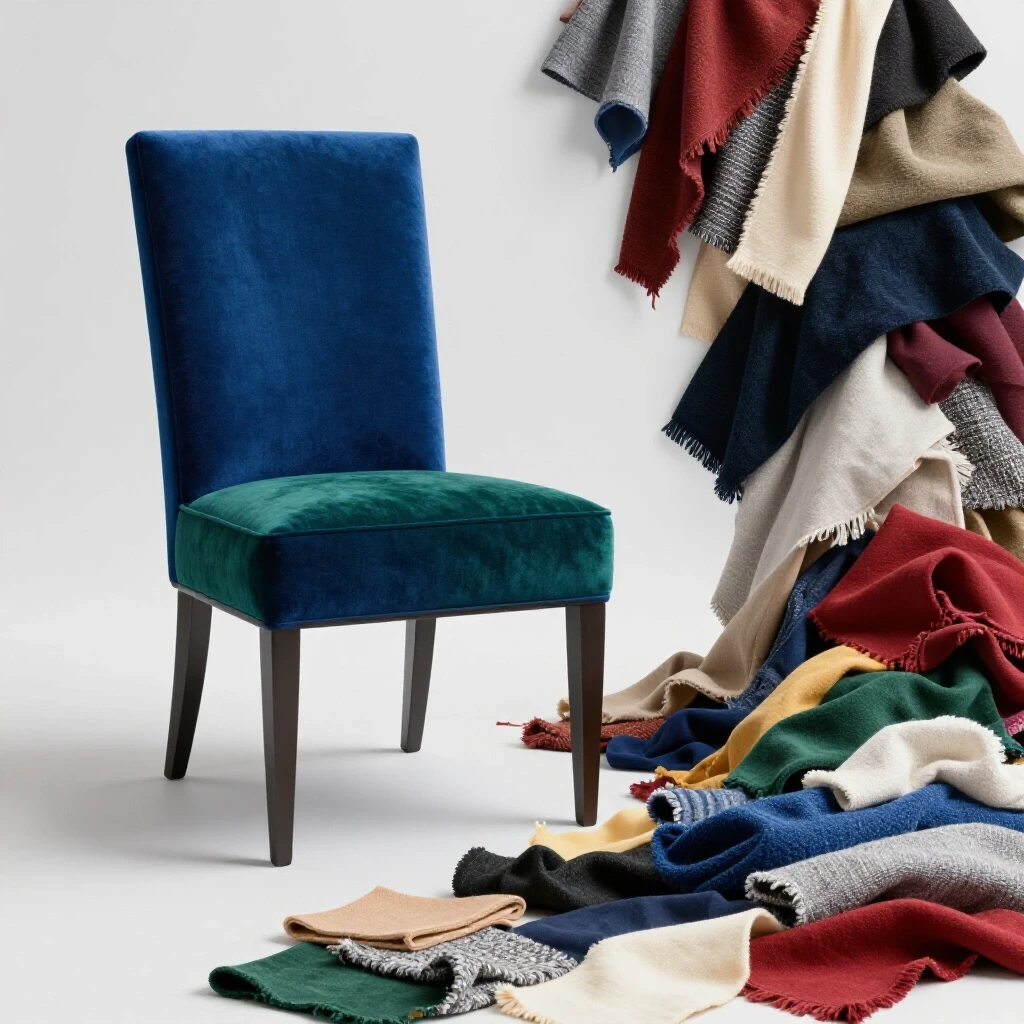
In my project, I found a beautiful heavy-duty cotton. I estimated I needed two yards. However, I failed to account for the large geometric pattern. To make the patterns align across the seat and backrest, I had to discard nearly 40% of the fabric. This is what I call a “yield error,” and it happens in flooring and tiling just as often as it does in furniture.
| Item Category | Projected Cost | Actual Cost | Variance (%) |
|---|---|---|---|
| Primary Textile | $60.00 | $110.00 | +83% |
| High-Density Foam | $35.00 | $35.00 | 0% |
| Support Webbing | $15.00 | $12.00 | -20% |
| Fasteners/Adhesives | $10.00 | $18.00 | +80% |
| Total Project Spend | $120.00 | $175.00 | +45% |
Building on this, the variance in my textile cost was a direct result of ignoring the “repeat” measurement. Interestingly, my fasteners cost also jumped because the old frame required a specific type of heavy-duty staple my standard gun couldn’t handle. These small shifts are why a cost breakdown guide must include a “tooling audit” before the project begins.
The Anatomy of a Material Selection Error and Its Financial Impact
A material selection error occurs when a homeowner chooses a product based on aesthetics without verifying its technical compatibility or the required quantity for a specific application. These errors lead to “re-procurement costs,” where additional funds must be spent to fix the initial mistake. This often results in project delays and budget overruns.
My mistake was purely mathematical. I chose a fabric with a 24-inch vertical repeat. This meant that every time I cut a piece for the chair back, I lost a significant portion of the fabric to ensure the design was centered. In the world of construction accounting, this is known as an unfavorable material variance.
As a result, I had to return to the store. Not only did I spend more on the fabric itself, but I also incurred “soft costs” like fuel and two hours of lost time. For a cost-conscious home planner, time is a form of sweat equity. When you waste time correcting a mistake, you are effectively lowering your hourly “earnings” on the DIY project.
- Always check the “pattern repeat” on the fabric bolt before calculating yardage.
- Add a 20% “cutting margin” for solid colors and a 40% margin for large patterns.
- Verify the “double rub count” to ensure the material will last long enough to justify the cost.
Analyzing Localized Valuation and the Risk of Over-Improving Small Assets
Localized valuation is the process of determining the market value of a home or its contents based on comparable items in the immediate geographic area. Over-improving occurs when the cost of upgrades exceeds the amount a buyer would be willing to pay for that specific asset. This principle applies to both kitchen remodels and furniture restoration.
I live in a neighborhood where mid-century modern furniture is popular. A fully restored chair of my type might sell for $250. Because my actual costs hit $175, I was dangerously close to the market ceiling. If I had spent $50 more on a luxury designer fabric, I would have reached a point of diminishing returns.
Building a cost vs value home improvement mindset means knowing when to stop. I chose to reuse the existing decorative tacks instead of buying new brass ones. This saved me $22, keeping my total spend under the $200 threshold. It is these small, disciplined decisions that keep a home renovation budget from leaking money.
- Research the “sold” prices of similar items on local marketplaces.
- Subtract your planned material costs from the market value to find your “equity ceiling.”
- If your materials cost more than 60% of the item’s value, reconsider the project scope.
Essential Tools for Tracking DIY Furniture Expenses and Material Yields
Expense tracking tools are digital or physical systems used to log every transaction related to a project in real-time. These tools allow homeowners to compare their initial estimates against actual spending, highlighting areas where costs are escalating. Using a systematic approach helps identify patterns in spending behavior that can be corrected in future projects.
To keep my study chair project on track, I used a simple spreadsheet on my phone. I logged every receipt immediately upon purchase. This prevented the “memory gap” where small cash purchases—like a $5 box of staples—are forgotten, leading to a false sense of being under budget.
- Spreadsheet Software: Create columns for “Category,” “Estimated Cost,” “Actual Cost,” and “Notes.”
- Mobile Receipt Scanners: Use these to digitize paper slips for tax or warranty purposes.
- Yardage Calculators: Use specialized apps to determine exactly how much fabric is needed for specific shapes.
- Local Price Indexes: Keep a running list of what local hardware stores charge for common supplies.
Navigating Hidden Preparation Costs and Secondary Material Requirements
Hidden preparation costs are the expenses associated with the work that happens before the visible “improvement” begins. In furniture work, this includes stripping old materials, repairing the frame, or replacing degraded support structures. These costs are often overlooked because they are not part of the final aesthetic result.
When I stripped the old fabric, I discovered the internal webbing had lost its tension. This was a “latent defect”—a problem that wasn’t visible until the project started. I had to pivot my financial planning for homeowners strategy to include $12 for new jute webbing and $6 for a webbing stretcher tool.
Interestingly, the foam was also crumbling. While I had budgeted for foam, I hadn’t accounted for the spray adhesive needed to bond the new foam to the wooden frame. These “secondary materials” are the silent killers of a remodeling expense tracker. They seem cheap individually, but collectively, they can represent 10-15% of the total spend.
- Inspect the “bones” of the project before buying the “skin” (fabric).
- Budget for adhesives, fasteners, and cleaning agents as separate line items.
- Assume that any foam older than 15 years will need full replacement.
Calculating the Long-Term Financial Impact of DIY Maintenance
Long-term financial impact refers to how a current expenditure affects the future value and maintenance requirements of an asset. For a homeowner, this means choosing materials that are durable enough to avoid frequent replacement costs. A higher initial investment in quality materials can sometimes lead to a lower “cost per year” over the life of the item.
By choosing a high-durability fabric with a high rub count, I extended the life of my chair by an estimated 10 years. If I had chosen a cheaper, thinner material to save $30 today, I might have had to repeat the entire process in three years. This is the essence of cost-benefit amortization.
I calculate the “annual cost of ownership” by dividing the total project cost by the expected years of use. At $175 for 10 years, my chair costs $17.50 per year. This is significantly cheaper than buying a new, lower-quality chair every few years. This data-driven approach helps me justify spending a bit more on quality while remaining strictly within my overall home renovation budget.
Actionable Steps for Your Next Small-Scale Restoration Project
Managing a small project requires the same financial discipline as a major kitchen overhaul. The key is to treat every dollar as a unit of investment. By following a strict protocol, you can enjoy a refreshed home without the stress of “budget creep.”
- Conduct a “Pre-Mortem”: Imagine the project has failed or gone 50% over budget. Identify why that happened (e.g., fabric mistake, broken tool) and plan for it now.
- Measure Twice, Buy Once: For textiles, create paper templates of every chair section. Lay them out on the floor to see exactly how they fit on a standard 54-inch wide fabric roll.
- Use a Tiered Budget: Have a “Minimum Viable Project” cost and a “Wish List” cost. Only move to the wish list items if your primary materials come in under budget.
- Document the Process: Take photos of the internal structure. This serves as a “blue-print” if you ever need to perform repairs or sell the item later.
Keeping your project on track is about more than just finding the lowest prices. It is about understanding the relationship between the materials you choose and the labor required to install them. When you master this balance, you become a truly cost-conscious home planner.
Frequently Asked Questions
How do I calculate the exact amount of fabric needed to avoid overspending? To calculate fabric needs accurately, measure the height and width of the seat, back, and any side panels. Add at least 3 inches to every side for “pulling room.” If the fabric has a pattern, find the “repeat” (the distance before the pattern starts again) and add that length to every major piece you cut. This ensures you have enough material to center the design.
What is a reasonable contingency buffer for a small furniture project? A 20% contingency buffer is standard. This covers the “small stuff” like a broken needle, extra staples, or a small bottle of wood glue. For beginners, a 30% buffer is safer because the likelihood of a “cutting mistake” or a “fabric mistake” is higher during the learning phase.
Is it always cheaper to do the work myself rather than buying new? Not always. If the materials (foam, high-end fabric, and tools) exceed 70% of the cost of a new, comparable chair, you are in the “danger zone.” However, DIY is usually cheaper if the furniture frame is of high quality (solid wood vs. particle board), as you are essentially gaining a high-end piece for the price of mid-range materials.
How does pattern repeat affect my project’s bottom line? A large pattern repeat (anything over 12 inches) can increase your fabric requirements by 20% to 50%. This is because you cannot use the fabric efficiently; you must skip sections to ensure the patterns line up. Always look for “railroaded” fabrics or small, non-directional prints if you are working with a very tight budget.
What are the most common hidden costs in these types of projects? The most common hidden costs are replacement foam and specialized tools. Old foam often looks fine until you remove the fabric and it turns to dust. Additionally, you might find you need a “webbing stretcher” or a specific “tack hammer” that you didn’t initially account for in your remodeling expense tracker.
How do I know if I am over-improving a piece of furniture? Check local online listings for the “resale value” of the chair brand or style. If your material costs are higher than the average resale price, you are over-improving. This is acceptable for a “forever piece” you love, but it is a poor financial move for furniture you might sell in a few years.
What is the “double rub count” and why does it matter for my budget? The double rub count measures a fabric’s durability. For home furniture, look for at least 15,000 to 30,000 rubs. Choosing a fabric with a low count (like 5,000) for a high-use chair means you will be spending money to redo the project much sooner, which ruins your long-term cost-benefit amortization.
Can I save money by reusing old padding or foam? It is rarely a good idea to reuse old foam if it is more than a decade old. Foam loses its structural integrity and can harbor allergens. Reusing old batting (the thin layer over the foam) is sometimes possible if it is clean, but new batting is one of the cheapest components of the project and usually worth the small investment.
How should I track my “sweat equity” in my home renovation budget? Assign yourself a modest hourly rate (e.g., $20/hour). Track your hours spent on the project. If the total cost of materials plus your “labor value” exceeds the cost of a professional service or a new item, you should evaluate if the project is a hobby or a strategic financial move.
What is the best way to handle a major budget overrun mid-project? If you hit a major overrun, stop and re-evaluate. Can you simplify the design? For example, instead of expensive decorative trim, could you use a simple “double welt” cord made from scrap fabric? Always look for ways to use “leftover” materials to bridge the gap before dipping into your emergency funds.
(This article was written by one of our staff writers, Steven Fletcher. Visit our Meet the Team page to learn more about the author and their expertise.)