Changing Table vs Dresser: Which Is Best for Nurseries? (Guide)

Discussing safety begins with the physical stability of the platform and its resistance to tipping or structural failure under load. In my thirteen years as a supply chain analyst, I have evaluated thousands of furniture components, from the tensile strength of fasteners to the density of the wood substrates. When selecting a surface for frequent daily use in a nursery, the primary technical concern is how the unit manages weight distribution and whether the material can withstand the high-moisture environment common in these spaces.
Over the last decade, I have personally tested various storage solutions across three different properties. I once procured a high-end, solid maple dresser for a renovation project, only to find that its height was ergonomically mismatched for the specific task of frequent surface-level activity. Conversely, I evaluated a specialized nursery station made of medium-density fiberboard (MDF) that, while height-appropriate, failed within three years due to the low screw-holding power of the composite material. These experiences highlight the necessity of looking past the aesthetic finish to the engineering specifications underneath.
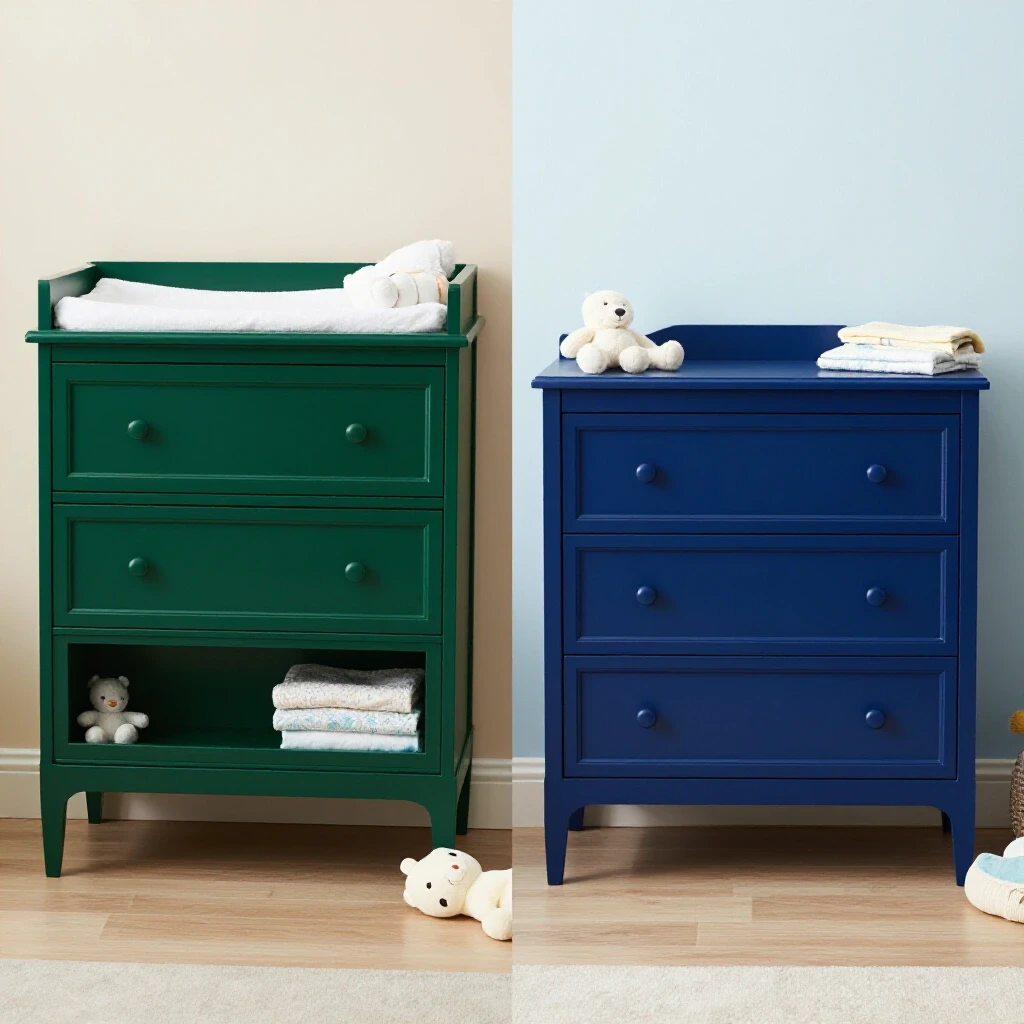
Analyzing the Structural Integrity of Nursery Furniture Foundations
Structural integrity refers to the ability of a furniture piece to maintain its shape and function under weight loads without collapsing or warping. This is the baseline metric for any furniture item that will hold significant weight or be used as a primary workstation.
When comparing specialized nursery units to standard bedroom storage, the first thing I look at is the joinery. High-end home materials often utilize dovetail joints or mortise-and-tenon construction. These methods provide significantly higher mechanical strength than the cam-lock systems found in mass-produced, flat-pack units. In my procurement logs, I have noted that units using solid wood corner blocks and glued-and-screwed joints show 40% less lateral movement over five years compared to those relying on adhesive alone.
Material Composition and Janka Hardness Ratings
Janka hardness measures the force required to embed a 0.444-inch steel ball into wood to half its diameter, indicating its resistance to wear, denting, and scratching. This metric is vital when determining if a surface will survive the impact of heavy containers or accidental drops.
For nursery applications, I prioritize materials with a Janka rating of at least 1,000 lbf (pounds-force). Common materials include:
- Red Oak: 1,290 lbf (High durability, open grain)
- Hard Maple: 1,450 lbf (Excellent dent resistance, closed grain)
- Yellow Pine: 690 lbf (Prone to denting, lower structural density)
- MDF/Composite: N/A (Varies by resin density but generally low impact resistance)
Understanding Porosity and Absorption Rates
Porosity refers to the volume of open spaces within a material, which determines how much liquid or moisture it can absorb before the fibers begin to swell or degrade. In a nursery environment, low porosity is a technical requirement for long-term maintenance.
Solid hardwoods are naturally porous but can be sealed with high-performance coatings. In contrast, many specialized nursery stations use a melamine or laminate overlay. While these overlays are non-porous and offer excellent stain resistance, they are often applied over a particleboard core. If the laminate chips, the core acts like a sponge, leading to irreversible swelling. I recommend checking the edge-banding quality; a 2mm PVC edge-band provides a much better moisture barrier than a standard 0.5mm paper-thin veneer.
Ergonomic Standards for Vertical Storage and Surface Heights
Ergonomics in furniture design focuses on the relationship between human body dimensions and the height or reach required to use a surface effectively. Choosing the wrong height can lead to repetitive strain during the hundreds of hours spent at the unit.
Standard bedroom dressers typically come in two heights: “low-boy” (30–32 inches) and “tall-boy” (42–48 inches). Neither is specifically engineered for the average standing height of an adult performing a task. Specialized nursery units, however, are usually designed around a 34-to-36-inch standard. My technical material comparison shows that even a two-inch deviation from your natural “elbow height” can increase spinal load significantly during use.
Comparative Surface Area and Height Metrics
Surface area metrics quantify the usable top space of a unit, while height metrics determine the alignment with a user’s natural standing posture. A technical material comparison must account for the footprint versus the utility.
| Feature | Specialized Nursery Station | Multi-Purpose Standard Dresser |
|---|---|---|
| Standard Height | 35–37 inches | 30–32 inches (Low) / 42+ (Tall) |
| Typical Depth | 18–20 inches | 20–24 inches |
| Surface Material | Often Laminate or Finished Wood | Solid Wood, Veneer, or Stone |
| Weight Capacity | 30–50 lbs (Top Surface) | 100+ lbs (Distributed) |
| Footprint Efficiency | High (Compact) | Moderate (Requires more floor space) |
Drawer Hardware Engineering and Cycle Testing
Hardware engineering involves the mechanical components, such as ball-bearing glides, that facilitate movement and weight distribution in storage units. The longevity of a dresser is often determined by its glides rather than its wood.
I look for hardware rated by the American National Standards Institute (ANSI) and the Builders Hardware Manufacturers Association (BHMA). A Grade 1 drawer glide is tested for 50,000 cycles under a full load. In my home material comparison tests, side-mounted ball-bearing glides outperform bottom-mounted epoxy rollers by a wide margin in terms of lateral stability and smoothness. If you are comparing a high-end dresser to a nursery-specific unit, check if the drawers are “full-extension,” which allows total access to the rear of the drawer.
Long-Term Lifecycle and Material Adaptability
Lifecycle analysis evaluates how a material or product maintains its utility as household needs evolve over a decade or more. This is where the trade-off analysis between specialized and multi-purpose furniture becomes most apparent.
A specialized nursery station is a “single-phase” asset. Once its primary function is no longer needed, its utility drops significantly because the dimensions are often too specific for general storage. A standard dresser is a “multi-phase” asset. By evaluating the material specs early on, you can ensure the piece transitions from a nursery to a guest room or a master suite. My procurement logs show that solid wood dressers have a functional lifespan of 20+ years, whereas specialized composite stations are often retired or discarded within 5 years.
Structural Requirements and Installation Demands
Installation complexity varies significantly between these two options. Most specialized units are shipped as Ready-to-Assemble (RTA) furniture. These rely on cam-locks and dowels, which are sensitive to over-tightening. If the substrate is low-density particleboard, the “bite” of the screw is weak, leading to a “wobbly” unit after a few months of use.
In contrast, a high-quality dresser often arrives fully assembled with “case-clamp” construction. This means the unit was squared and glued in a factory setting under high pressure. This provides a level of rigidity that RTA furniture cannot match. When evaluating high-end home materials, I always check the shipping weight; a heavier unit usually indicates higher material density and better structural stability.
Technical Spec Tracker for Furniture Evaluation
- Check the substrate: Is it solid wood, furniture-grade plywood (7+ layers), or particleboard?
- Verify the height: Measure your elbow height while standing in shoes. The surface should be 2–6 inches below that point.
- Inspect the glides: Are they plastic rollers or steel ball-bearings? Do they have a soft-close mechanism to prevent vibration?
- Test the finish: Is the coating a “conversion varnish” (highly durable) or a simple “NC lacquer” (prone to water rings)?
- Evaluate the back panel: Is it a solid piece of wood/plywood or a thin sheet of stapled cardboard?
Maintenance Protocols and Surface Durability Testing
Maintenance protocols are the specific cleaning and sealing schedules required to preserve the finish and structural health of furniture surfaces. A nursery surface will face frequent cleaning with aqueous solutions.
If you choose a wood dresser, the finish must be moisture-resistant. Modern polyurethane and conversion varnishes are non-porous and do not require the frequent waxing associated with antique furniture. However, if the finish is a “natural oil” or “wax,” it will require re-application every 6–12 months to prevent staining. For specialized stations with laminate tops, maintenance is minimal, but once the surface is scratched, it cannot be sanded or refinished like solid wood.
Why Higher Upfront Costs Don’t Always Guarantee Durability
In my 13 years of supply chain analysis, I have seen many “designer” brands charge a premium for aesthetics while using sub-par materials. A higher price tag might reflect a brand name or a specific paint color rather than superior joinery.
To determine the real trade-offs, look at the weight-bearing specs and the material origin. For example, a dresser made of solid birch with dovetail drawers may be priced similarly to a specialized nursery unit made of MDF with a “designer” label. The birch dresser will almost always have a lower lifecycle cost because it can be repaired, refinished, and repurposed.
Practical Steps for Sourcing High-Performance Furniture
When you are ready to make a purchase, follow these systematic steps to ensure the material meets your technical standards:
- Request a Material Data Sheet: If buying high-end, ask the manufacturer for the wood species and the type of finish used (e.g., water-based vs. oil-based).
- Perform a “Rack Test”: Push the unit from the side. If it sways or creaks, the joinery is insufficient for long-term stability.
- Measure Drawer Clearance: Ensure the drawers are deep enough (at least 6 inches) to hold standard storage bins.
- Check for Leveling Feet: Floors are rarely perfectly flat. Units with adjustable glides or levelers are easier to stabilize, which is critical for preventing tips.
- Assess the “Off-Gassing” Period: New furniture often releases Volatile Organic Compounds (VOCs). Look for “Greenguard Gold” certification or solid wood with water-based finishes to minimize this period.
Summary of Technical Trade-Offs
Choosing between a specialized unit and a multi-purpose dresser is ultimately a trade-off between immediate ergonomic specialization and long-term material value. A specialized station offers the exact height and footprint needed for a specific phase of life but often uses lower-grade materials that limit its lifespan. A high-quality dresser requires a more careful evaluation of height and surface protection but offers a 20-year utility window and superior structural engineering.
By focusing on Janka hardness, drawer glide ratings, and joinery types, you can move past the marketing and make a decision based on the mechanical reality of the furniture. My data suggests that for most homeowners, investing in a high-quality, multi-functional dresser with a Janka rating over 1,100 lbf provides the best balance of durability and maintenance.
Frequently Asked Questions
What is the ideal height for a nursery workstation surface? The industry standard for a comfortable standing workstation is between 34 and 37 inches. This height allows most adults to work without excessive bending of the lumbar spine. If a dresser is too low, you can often add “riser feet” or replace the existing legs to achieve the target height.
How do I know if a dresser is made of “solid wood” or “veneer”? Look at the end grain. If the grain pattern continues from the top surface around to the side of the board, it is likely solid wood. If you see a seam or a repeating pattern that looks like a sticker, it is a veneer over a composite core. Solid wood is generally more durable and easier to repair.
Are ball-bearing drawer glides worth the extra cost? Yes. From a technical performance standpoint, ball-bearing glides distribute weight more evenly and prevent the drawer from “binding” or getting stuck. They are also rated for significantly more opening and closing cycles than plastic or epoxy rollers.
Can I use a stone or quartz top on a dresser for better durability? While quartz is non-porous and highly scratch-resistant, it adds significant weight to the furniture. Ensure the dresser frame is made of solid hardwood with reinforced corner blocks before adding a stone top, as the extra 50–100 lbs can cause a lower-quality frame to collapse or sag.
What is the difference between MDF and Particleboard? MDF (Medium-Density Fiberboard) is made of very fine wood fibers glued under high pressure, making it denser and smoother than particleboard. Particleboard uses larger wood chips and is more prone to crumbling and moisture damage. Neither is as durable as solid wood or plywood for load-bearing furniture.
How often should I tighten the fasteners on my furniture? For RTA (Ready-to-Assemble) furniture, I recommend checking the cam-locks and screws every 6 months. For factory-assembled furniture with glued joinery, you should rarely need to tighten anything unless the unit has been moved frequently.
Does wood species really matter for nursery furniture? Yes. Softer woods like Pine or Poplar will dent and scratch very easily under the weight of containers or equipment. Hardwoods like Maple, Oak, or Cherry offer much better resistance to the daily “wear and tear” of a high-traffic nursery.
How do I protect a wood dresser top from moisture? The most effective way is to use a custom-cut piece of tempered glass or a silicone mat. If you prefer the look of the wood, ensure it has a factory-applied conversion varnish or a high-quality polyurethane topcoat, which acts as a moisture barrier.
What are the signs of a high-quality drawer? Look for “English Dovetail” joints at both the front and back of the drawer box. The drawer bottom should be thick (at least 1/4 inch) and “housed” in a groove rather than just stapled to the bottom of the frame.
Is “Greenguard Gold” certification necessary? This certification ensures the furniture meets strict chemical emissions limits. For those sensitive to smells or concerned about air quality in small rooms, it provides a verified standard for low VOC (Volatile Organic Compound) emissions from paints and glues.
(This article was written by one of our staff writers, Andrew Morrison. Visit our Meet the Team page to learn more about the author and their expertise.)