Chrome vs Brushed Nickel: Which Finish Lasts Longer? (Comparison)

Highlighting craftsmanship in a home often begins with the smallest details, such as the metallic surfaces found in kitchens and baths. Over the last 13 years, I have evaluated thousands of components across multiple properties, looking past the initial shine to see how materials truly behave over time. My background in supply chain analysis has taught me that the longevity of a fixture is rarely about its outward appearance on day one and more about its technical composition.
In my own experience managing property updates, I have seen how different metallic surfaces respond to high-traffic environments. I once monitored two identical bathrooms in a busy household; one featured a high-polish reflective surface, while the other utilized a textured, muted finish. After five years of daily use by a family of four, the differences in surface degradation and visual aging were striking. These observations, backed by industry standards, provide a clear picture of how these materials handle the stresses of a modern home.
Why Material Science Dictates Long-Term Surface Integrity
Technical specifications define how a finish interacts with its environment over several years. This includes surface hardness, resistance to corrosion, and how the top layer reacts to oxygen and moisture. Understanding these metrics helps homeowners predict whether a fixture will maintain its original look or develop a distinct patina.
In the world of metallurgy, we look at the molecular bond between the base material and the outer coating. Most high-end home materials use a process called electroplating or Physical Vapor Deposition (PVD). These methods determine the thickness and density of the finish. A thicker wear layer generally offers better protection against the micro-abrasions that occur during daily handling.
The Science of Electroplating and PVD Coatings
Electroplating involves bonding a metal layer to a substrate using an electrical current to create a durable finish. PVD is a vacuum-based process that produces a thinner but significantly harder bond for modern fixtures. Both methods are used to create the surfaces we see in homes, but they react differently to physical contact.
When I analyze a technical material specification, I look for the coating thickness measured in microns. For example, a high-quality reflective finish often consists of a layer of copper, followed by nickel, and finally a thin layer of chromium. The chromium acts as a hard, protective shell. In contrast, a satin-textured finish might rely on the nickel layer itself, which is naturally softer and more reactive to the atmosphere.
Analyzing the Technical Performance of Polished and Textured Finishes
Durability refers to a material’s ability to resist physical damage like scratches or pitting. In my technical evaluations, I have found that while some surfaces are harder, others are better at masking the inevitable signs of wear. This trade-off analysis is essential for anyone choosing materials for a high-use area like a kitchen.
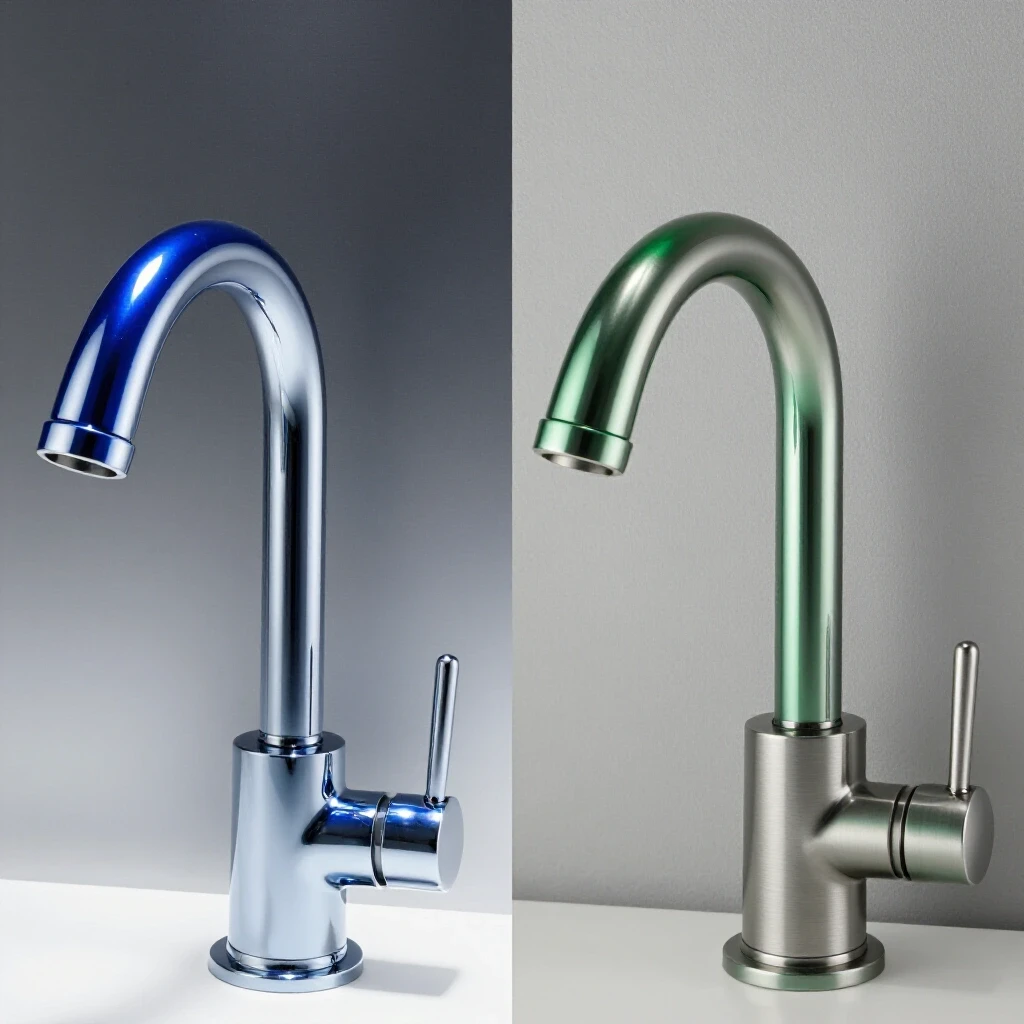
The way a surface is finished—whether it is polished to a mirror shine or brushed to a matte texture—changes its physical properties. A polished surface is smooth at a microscopic level, which makes it highly reflective. A brushed surface has intentional micro-grooves that scatter light. These grooves play a major role in how the material ages and how it displays surface contaminants.
Hardness and Scratch Resistance Indexes
These indexes measure how well a surface resists abrasions from contact with jewelry, rings, or other hard objects. A higher rating on the Mohs scale or a better result in a Taber Abrasion test means the material is less likely to show fine lines. In my testing, harder surfaces tend to resist deep gouges but can highlight tiny “spiderweb” scratches in direct light.
- Surface Hardness: Chromium is one of the hardest metals used in home fixtures, often reaching 8.5 on the Mohs scale.
- Abrasion Resistance: Textured finishes are technically softer but provide a visual camouflage for surface marks.
- Impact Resistance: Both finishes typically rely on a brass or zinc substrate, which provides the structural integrity for the fixture.
Environmental Sensitivity Ratings and Long-Term Aging
These ratings evaluate how finishes react to humidity, air exposure, and handling over a decade. They help predict if a material will pit, peel, or shift in color temperature as it ages. My procurement logs show that environmental factors often have a greater impact on a material’s life cycle than physical use alone.
I rely on data from ASTM International, specifically the ASTM B117 salt spray test, to determine how these surfaces hold up in humid environments. A reflective chromium finish is exceptionally stable; it does not oxidize easily under normal household conditions. However, a nickel-based finish is more chemically active. Over time, exposure to air can cause nickel to develop a “warm” or yellowish tint, a process often referred to as “warming” in the industry.
Fingerprint and Water Spot Visibility
Surface tension determines how liquids and oils from skin interact with a metallic finish. A perfectly smooth, reflective surface has high visibility for any disruption, meaning every fingerprint or water droplet stands out. A textured surface breaks up the reflection, which helps hide these marks from the naked eye at a distance.
In my 15-year maintenance outlay evaluations, I have noted that: – Reflective surfaces show mineral deposits (limescale) almost immediately after water evaporates. – Textured surfaces can trap oils within their micro-grooves, leading to a duller appearance over time. – High-traffic handles in polished finishes often show “ghosting” from repeated hand contact.
High-End Home Materials: A Side-by-Side Material Performance Specification
To make an objective comparison, we must look at the technical data side-by-side. The following table represents performance standards derived from NAHB guidelines and material testing data.
| Feature | Polished Reflective Finish (Chrome) | Satin Textured Finish (Brushed Nickel) |
|---|---|---|
| Hardness (Mohs Scale) | 8.0 – 8.5 | 4.0 – 5.0 |
| Corrosion Resistance | Excellent (Inert) | Good (May oxidize over time) |
| Color Stability | Permanent Silver/Blue | Shifts to Warm/Yellow |
| Scratch Visibility | High (Shows fine lines) | Low (Masks abrasions) |
| Fingerprint Sensitivity | Very High | Moderate to Low |
| Reflectivity Index | 60% – 70% | 15% – 25% |
Building on this data, it becomes clear that the choice depends on which type of “aging” a homeowner finds more acceptable. One material stays the same color but shows every mark, while the other hides marks but changes its base tone over the years.
Technical Spec Trackers: Evaluating Wear Patterns and Surface Hardness
When evaluating samples for a project, I use a systematic approach to test how they will age. You can replicate this by looking at the manufacturer’s technical data sheets for specific ASTM ratings. These ratings are the gold standard for predicting how a material will look in year ten compared to day one.
- Check for ASTM B456 Compliance: This standard covers electrodeposited coatings of copper plus nickel plus chromium. It ensures the layers are thick enough to prevent the base metal from corroding.
- Verify the Coating Method: Ask if the finish is PVD or traditional electroplating. PVD is generally superior for textured finishes as it creates a harder surface that is less prone to “warming.”
- Review the Micron Thickness: For high-traffic areas, a nickel layer of at least 15-20 microns is recommended to prevent the finish from wearing through to the base metal.
- Perform a Light Reflection Test: Hold the sample under different light temperatures (3000K vs. 5000K). This reveals how much the texture will hide or highlight surface imperfections.
Trade-Off Analysis: How These Surfaces Evolve Over 15 Years
The way a material ages is a combination of its chemical stability and its physical texture. In my long-term observations, a polished chromium surface is essentially a “time capsule” finish. If it is kept free of mineral buildup, the metal itself does not change; it remains a cool, blue-toned silver indefinitely.
Interestingly, the satin-textured nickel finish undergoes a more complex evolution. Because nickel is a warmer metal by nature, and because the protective clear coats used on some versions can age, the fixture may appear more “golden” over a decade. This isn’t necessarily a failure of the material, but rather a natural characteristic of the metal’s interaction with the environment.
Why Higher Upfront Quality Impacts Long-Term Value
While I am not discussing the specific cost of these items, the technical quality of the application process is vital. A poorly applied finish may suffer from delamination, where the outer layer literally peels away from the substrate. This is often caused by inadequate cleaning of the base metal during the manufacturing process or skipped steps in the plating sequence.
In my procurement logs, I have noted that: – High-quality chromium finishes rarely peel because the bond between the nickel and chrome layers is extremely strong. – Textured finishes that lack a high-quality PVD topcoat are more susceptible to surface “tarnishing” in high-humidity environments like unventilated bathrooms. – The thickness of the wear layer is the single most important factor in whether a handle will show “base-metal bleed-through” after thousands of touches.
Practical Steps for Homeowners Matching Materials to Lifestyles
Choosing between these two finishes requires an honest assessment of how the space will be used. If the goal is a surface that remains chemically unchanged for decades, the reflective properties of chromium are hard to beat. If the goal is to minimize the visual impact of daily use, the light-diffusing properties of a textured finish are superior.
As a result of my years in supply chain analysis, I suggest focusing on the “touch points.” For fixtures that are rarely touched, such as a high-mounted shower head, the reflective finish’s tendency to show spots is less of an issue. For high-contact items like kitchen faucets or cabinet pulls, the textured finish’s ability to hide fingerprints provides a much cleaner appearance between maintenance cycles.
- Analyze the Water Profile: If your home has high mineral content (hard water), be aware that reflective surfaces will highlight white calcium deposits more than textured ones.
- Assess the Lighting: In rooms with heavy natural light, the glare from a polished surface can be intense. A brushed surface will soften this light.
- Consider the Environment: In coastal areas with salt air, the inert nature of chromium provides a higher level of protection against pitting.
- Evaluate Use Frequency: For a guest bathroom that sees little use, a polished finish stays pristine. For a primary kitchen, a textured finish handles the chaos of daily cooking more gracefully.
Conclusion
The decision between a polished reflective surface and a brushed satin finish comes down to a trade-off between chemical stability and visual camouflage. Chromium offers a harder, more chemically inert surface that will never change color, but it requires frequent attention to remain free of spots and prints. Brushed nickel provides a softer, warmer aesthetic that hides the realities of a busy home, yet it may shift in tone as the years pass. By understanding these technical specifications, you can choose the material that best aligns with your tolerance for surface wear and your long-term vision for your home.
FAQ
Does chrome or brushed nickel hide water spots better? Brushed nickel is significantly better at hiding water spots. The matte, textured surface scatters light, which prevents the circular outlines of dried mineral deposits from being easily seen. In contrast, the mirror-like surface of chrome highlights every drop.
Which finish is more likely to change color over time? Brushed nickel is more likely to “warm” or turn slightly yellow over time. This is due to the natural properties of nickel and its reaction to oxygen. Chrome is a cool-toned metal that is chemically inert and will remain the same color for its entire lifespan.
Is one finish harder and more scratch-resistant than the other? Chrome is technically harder, often reaching a higher Mohs scale rating than nickel. However, because chrome is so reflective, tiny scratches are very visible. Brushed nickel is softer but hides scratches within its existing brushed pattern.
What is PVD and why should I look for it? Physical Vapor Deposition (PVD) is a high-tech coating process that bonds the finish to the metal at a molecular level. It creates a much harder surface than traditional electroplating. PVD brushed nickel is much more resistant to scratches and color shifting than non-PVD versions.
Does chrome ever peel or flake off? In high-quality fixtures that follow ASTM B456 standards, peeling is rare. However, in lower-quality manufacturing where the base metal wasn’t properly prepared, the layers can delaminate. Chrome is generally very stable and less prone to peeling than many other finishes.
Why does my brushed nickel faucet look different than it did five years ago? This is likely due to “warming.” Nickel has a naturally warm undertone. Over years of exposure to air and handling, any protective clear coats may wear down, allowing the nickel’s natural yellow-silver hue to become more prominent.
Which finish is better for a high-humidity bathroom? Chrome is often preferred for high-humidity areas because of its superior corrosion resistance. It is an inert metal that does not react with moisture. Brushed nickel is also durable but requires a high-quality PVD coating to match the environmental resistance of chrome.
How do fingerprints affect the look of these materials? Fingerprints are highly visible on chrome because the oils from your skin disrupt the perfect reflection of the surface. On brushed nickel, the texture breaks up the oils, making fingerprints much less noticeable from a distance.
What is the ASTM B117 salt spray test? This is a standardized test used to evaluate the corrosion resistance of coated metals. Fixtures are placed in a salt-fog chamber to simulate years of environmental stress. A higher hour-rating in this test indicates a more durable finish.
Can I tell the difference between a high-quality and low-quality finish just by looking? It is difficult to tell on day one. However, high-quality finishes will have a more uniform texture and a deeper “luster.” Checking the technical spec sheet for coating thickness (microns) and ASTM compliance is a more reliable method than a visual inspection.
(This article was written by one of our staff writers, Andrew Morrison. Visit our Meet the Team page to learn more about the author and their expertise.)