How to Organize Closets With Shelf Baskets (Step-by-Step Guide)

I have a degree in operations and logistics and eleven years of experience managing complex supply chains, yet for a long time, I was consistently defeated by a three-year-old’s sock collection. It is a humbling experience to optimize a warehouse for a living only to come home and trip over a pile of sweaters that migrated from a shelf to the floor. My wife and I realized that our home organization systems were failing because they were designed for a catalog, not for a family that actually lives in their house. We discovered that the secret to a functional closet isn’t just having shelves; it is about how you manage the “flow” of items across those shelves using the right containers.
Why Traditional Closet Shelving Fails the Busy Family
Traditional closet shelves often become “dead zones” where items are stacked high, only to fall over or get buried at the back. This lack of containment leads to a high rate of clutter reversion because there is no physical boundary to keep different categories of items from bleeding into one another.
In my professional work, we talk about “spatial capacity limits.” When a shelf is just a flat surface, its capacity is limited by how high you can stack items before gravity takes over. In our home, we found that stacking sweaters more than four high was a recipe for a “clothing avalanche.” This creates mental fatigue because every time you want the bottom shirt, you have to rebuild the entire stack.
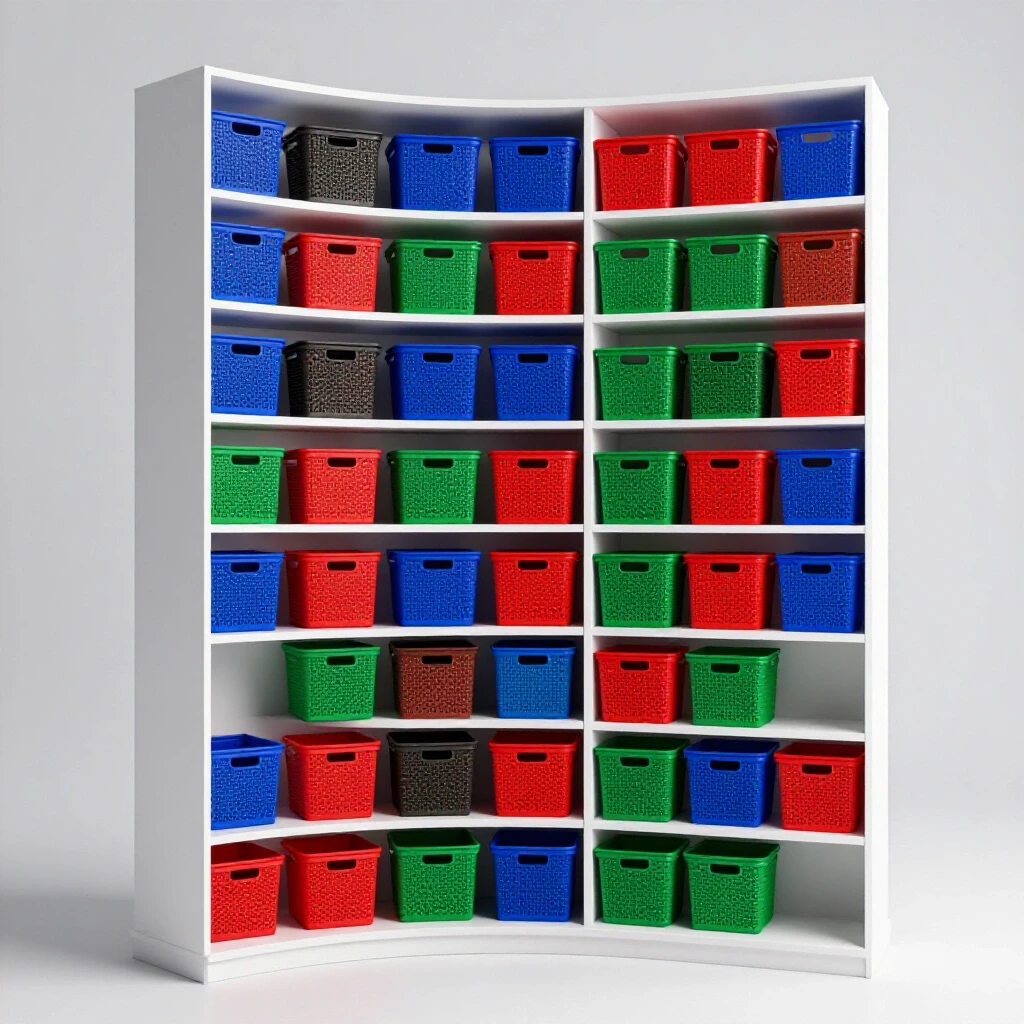
Environmental psychology suggests that visual clutter—like a messy stack of clothes—competes for our attention. This competition increases our cognitive load, making it harder to relax in our own homes. By moving away from open stacks and toward contained units on our shelves, we effectively reduced the number of “visual objects” our brains had to process from fifty individual shirts to five uniform containers.
Reducing Retrieval Friction with Open-Top Containers
Retrieval friction is the measured effort required to take an item out or put it back into its designated spot. In a high-speed logistics environment, we aim for the lowest friction possible; in a family closet, this means ensuring that putting a clean shirt away takes no more than two seconds.
We learned the hard way that containers with lids are the enemy of a sustainable home organization system. If a child has to take a basket off a shelf, remove a lid, place the item inside, and replace the lid, they simply won’t do it. The item will end up on the floor. By using open-top units, we reduced the “put-away” process to a single motion.
Interestingly, we found that the “one-handed rule” is the gold standard for family storage. If you can’t retrieve or stow an item with one hand while holding a crying toddler or a work phone with the other, the system will eventually fail. Open containers on shelves allow for this “toss and go” functionality while still maintaining a tidy appearance from a distance.
Comparison of Storage Friction by Container Type
| Container Type | Steps to Store | Steps to Retrieve | Sustainability Score |
|---|---|---|---|
| Open-Top Basket | 1 (Drop in) | 1 (Reach in) | High |
| Lidded Plastic Bin | 3 (Remove, Drop, Replace) | 3 (Remove, Reach, Replace) | Low |
| Stacked Clothing | 2 (Lift, Slide in) | 2 (Lift, Pull out) | Medium |
| Hanging Storage | 2 (Hook, Slide) | 1 (Pull) | Medium |
Measuring Spatial Capacity and Airflow for Longevity
Spatial capacity is the total volume available for storage, but it must be balanced with airflow to prevent items from becoming musty. When we first started organizing our bedroom closets, we shoved as many large bins as possible onto the shelves, only to find that the lack of air circulation was a problem for our seasonal woolens.
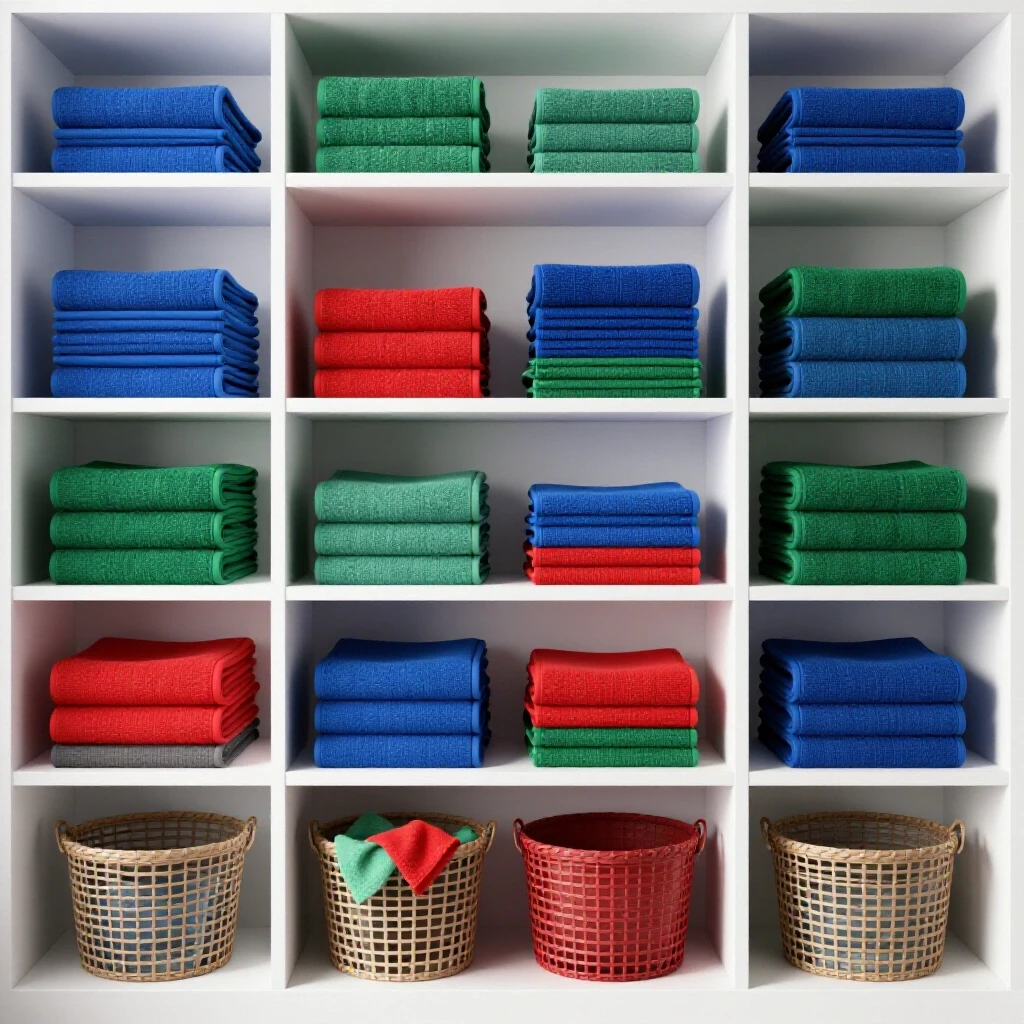
We learned that a “breathable” container, such as one made of woven materials or wire, is far superior for long-term clothing storage on shelves. These materials allow air to move through the fabric, which is a key principle in textile preservation. We also found that leaving about 10% of the shelf volume empty—what I call “buffer space”—allows for easier bin movement and prevents the shelves from feeling cramped.
When selecting sizes, we measured our shelf depth carefully. A common mistake is using containers that are too short, leaving “dead space” at the back of the shelf. By choosing units that matched our shelf depth (usually 12 to 14 inches for standard closets), we maximized our square footage without increasing the footprint of the closet itself.
The Psychology of Visual Overload and Decision Fatigue
Visual overload occurs when our brains are forced to track too many independent items at once, leading to a sense of being overwhelmed. In a closet, this often manifests as “decision fatigue,” where the sheer volume of visible choices makes it harder to get dressed in the morning.
By grouping similar items—like all gym shorts or all scarves—into opaque or semi-opaque containers on the shelf, we created a “modular” visual field. Instead of seeing twenty different colors and patterns, we see three or four neat containers. This simple change significantly reduced my morning stress.
Research in organizational behavior shows that humans operate best when they can categorize information quickly. In our home, we applied this by “zoning” our shelves. High-frequency items (daily wear) live at eye level, while low-frequency items (seasonal gear) are moved to the highest shelves. This logical flow ensures that our most common daily tasks require the least amount of mental and physical energy.
Implementing the “Toss-and-Sort” Framework
The toss-and-sort framework is a logistics-based approach to home organization that prioritizes speed over perfection. Instead of meticulously folding every item, we categorize items into bins based on their “resilience”—items like socks, gym clothes, and pajamas don’t need to be folded to maintain their function.
- Identify Resilient Items: These are clothes that don’t wrinkle easily or where wrinkles don’t matter.
- Assign One Bin Per Category: Avoid “miscellaneous” bins; they are the black holes of organization.
- Measure Sorting Time: We found that “tossing” a load of laundry into specific shelf containers took 4 minutes, compared to 15 minutes for traditional folding and stacking.
- Apply the 80% Rule: Never fill a container more than 80% full. This prevents “overflow creep” and makes it easier to see what is inside.
By adopting this method, we reduced the time spent on laundry maintenance by over 60%. This is a sustainable decluttering strategy because it acknowledges the reality of a busy schedule. We no longer feel guilty if the socks aren’t paired; they are in their bin, and that is a win.
Establishing Sustainable Habit Loops for Daily Upkeep
A habit loop is a psychological pattern that consists of a cue (seeing the laundry), an action (putting it in the bin), and a reward (a clear floor and less stress). For a home organization system to last, the action must be easier than the alternative of leaving a mess.
We discovered that our previous systems failed because the “action” part was too difficult. We had beautiful, deep bins that required us to dig to find anything. We redesigned the system to use shallower containers on the shelves, which made the “action” of finding a specific item much faster.
To maintain the system, we implemented a “one-in, one-out” rule for our shelf containers. If a bin for t-shirts becomes too full to easily close or see into, it is a data signal that we have exceeded our spatial capacity. This triggers a quick five-minute cull rather than a massive, weekend-long decluttering journey.
Daily Maintenance Timeline (Family of Four)
| Task | Frequency | Duration | Goal |
|---|---|---|---|
| Shelf Reset | Daily | 2 Minutes | Return stray items to bins |
| Laundry Inflow | 3x Weekly | 5 Minutes | Sort clean clothes into shelf units |
| Capacity Check | Monthly | 5 Minutes | Identify overfilled containers |
| Seasonal Swap | 2x Yearly | 20 Minutes | Move bins between high and low zones |
Selecting Low-Maintenance Storage Gear for Closets
When we transitioned to a more functional home storage model, we focused on durability and ease of cleaning. In a busy household, storage units will be dropped, spilled on, and shoved around. We learned that “pretty” is less important than “rugged.”
- Material Durability: We moved away from thin fabric bins that lost their shape over time. Instead, we chose reinforced materials or flexible plastics that could handle the weight of heavy jeans.
- Visual Consistency: Using the same style of container across a single shelf reduces visual noise. Even if the items inside are messy, the uniform exterior provides a sense of order.
- Labeling for Literacy: For our children’s closets, we used picture-based labels. For the adults, we used simple text. Labels act as a “logistics map,” telling everyone exactly where an item belongs.
- Size Standardization: We tried to use only two sizes of containers. This allows us to swap bins between different shelves or closets without having to remeasure everything.
We also started using digital inventory methods for our top-shelf storage. For bins that contain seasonal items we don’t see every day, we taped a small QR code to the front. Scanning it shows a photo of the contents, so we never have to climb a ladder just to see what is inside.
Why High-Friction Systems Lead to Rapid Clutter Reversion
The biggest lesson from our eleven-year journey is that “perfect” is the enemy of “done.” Many professional organizers suggest systems that look amazing on social media but require thirty minutes of maintenance a day. For a busy professional, that is an impossible standard.
When a system is too complex—requiring specific folding techniques or multi-step storage—the “system friction” becomes higher than the “laziness threshold.” As a result, the family stops using the system, and the home reverts to a cluttered state within days. Our move to simple, open-top containers on closet shelves was a direct response to this.
We focused on reducing the “step count” for every daily task. If we could save five steps a day in the closet, that adds up to over 1,800 steps a year. More importantly, it saves the mental energy required to force ourselves to be tidy. When the system works with your natural habits instead of against them, maintenance becomes automatic.
Final Steps for Your Closet Organization Journey
Building a sustainable home doesn’t happen in a single weekend. It is a process of observing how your family uses space and adjusting the logistics to match. If you find a pile of clothes consistently forming on a specific shelf, don’t blame the family—blame the system.
Start by auditing your most frustrating closet. Measure the shelf depth and height, then look for containers that maximize that space while allowing for one-handed access. Remember to prioritize airflow and visibility to keep your clothes in good condition and your mind at ease.
- Step 1: Clear one shelf completely and measure its dimensions.
- Step 2: Categorize the items that were on that shelf into “daily use” and “occasional use.”
- Step 3: Select open-top containers that fit the shelf depth.
- Step 4: Label each container clearly.
- Step 5: Monitor the shelf for one week; if clutter returns, identify where the friction is and simplify further.
Frequently Asked Questions
How do I stop my closet shelf containers from becoming “junk drawers”?
The key is strict categorization. Each container should have a specific “job,” such as “summer hats” or “running socks.” If you find yourself putting unrelated items into a bin, it means your categories are too broad. Use smaller bins to create more specific zones if necessary.
What is the best material for closet shelf storage?
For clothing, breathable materials like woven natural fibers or coated wire are excellent because they allow airflow. For heavy items like shoes or bags, a sturdy, wipeable plastic or reinforced canvas is better. Avoid flimsy cardboard or thin fabric that will sag under weight.
How do I keep my kids from dumping out the bins?
Involve them in the process. We found that when our children helped pick the labels or pictures for their bins, they felt more ownership. Also, ensure the bins are lightweight enough for them to handle safely. If a bin is too heavy or hard to reach, a child is more likely to pull the whole thing down.
Should I fold everything before putting it in a shelf bin?
Not necessarily. In our house, we use the “resilience rule.” If an item doesn’t wrinkle easily (like athletic wear or undergarments), we just toss it in. This significantly reduces sorting time and makes the system much easier for busy parents to maintain.
How do I manage deep shelves where things get lost in the back?
Use long, narrow containers that act like “drawers.” This allows you to pull the entire unit forward to see what is at the back. Never store loose items behind a container; that space should be considered “dead” unless it is occupied by the container itself.
How many bins are too many for one shelf?
A good rule of thumb is to leave at least two inches of “finger room” between containers. This allows you to grab a bin without knocking over the one next to it. If the containers are jammed together, the friction increases, and you’ll be less likely to put things away.
What if my closet shelves are at an awkward height?
Use the “Zoning Principle.” Items you use every day should be between your waist and eye level. Anything higher should be for long-term storage, and anything lower should be for items that are easy to grab while bending, like shoes or heavier bins.
How do I deal with “overflow” when a bin gets too full?
This is a “capacity signal.” When a bin is full, it is time to audit the contents. We usually find that about 20% of the items in an overflowing bin are no longer used or needed. A quick five-minute purge is much easier than reorganizing the whole closet.
Do I really need labels if I can see into the bins?
Yes. Labels aren’t just for you; they are for everyone else in the house. They provide a clear set of instructions that reduces the “mental load” of having to remember where everything goes. It also prevents the common excuse of “I didn’t know where to put it.”
Is it better to have many small bins or a few large ones?
Smaller bins are generally better for maintaining organization because they prevent items from getting buried. However, make sure the bin is large enough to hold the entire category. If you have to split “socks” into three different bins, the system becomes too complex.
(This article was written by one of our staff writers, Christopher Bennett. Visit our Meet the Team page to learn more about the author and their expertise.)