How to Use the One-In-One-Out Rule for Home Organization (Guide)

Why do parents always know exactly where the smallest Lego piece is located? It is usually because our bare feet have a built-in GPS for every sharp plastic edge in the hallway at 2:00 AM. While we can laugh about the occasional stray toy, the reality of managing a modern household often feels less like a comedy and more like a failing logistics operation.
As someone who has spent over a decade in operations and logistics, I view the home through the lens of supply chain management. My wife and I have spent 11 years refining how our household functions, moving away from “tidying up” toward a model of spatial equilibrium. We realized that our home was not messy because we were lazy; it was cluttered because our “inventory” exceeded our “warehouse capacity.”
In a professional warehouse, you cannot simply keep adding pallets without removing old ones. If you do, the aisles become blocked, retrieval times skyrocket, and the system breaks down. Our homes function the same way. By adopting a strict habit of replacing items on a one-for-one basis, we transformed our living space from a site of constant frustration into a functional environment that supports our busy lives.
The Logistics of Maintaining a Balanced Home Inventory
Maintaining a stable household requires treating your home like a warehouse with a fixed capacity. When new items enter, old items must exit to prevent spatial overflow and maintain operational efficiency for daily tasks. This approach ensures that your home remains functional rather than becoming a storage unit for things you no longer use.
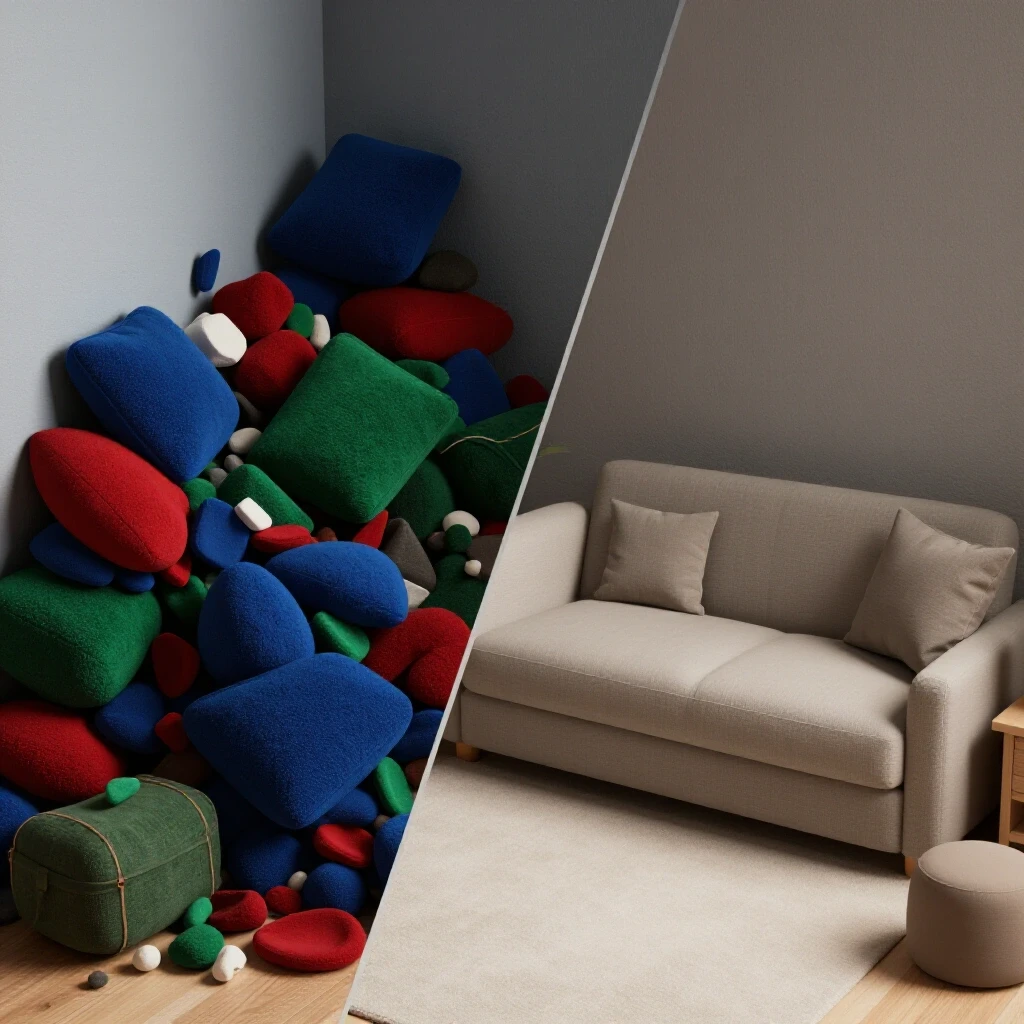
In logistics, we talk about “flow rates.” This is the speed at which items move into and out of a system. Most families have a high inflow rate—think Amazon deliveries, grocery trips, and birthday gifts—but a very low outflow rate. This imbalance is the primary cause of clutter reversion. You might spend a whole Saturday organizing the pantry, but if the inflow continues without a corresponding exit strategy, that pantry will be overwhelmed again in less than a week.
Environmental psychology research suggests that our brains are wired to process visual information in a way that prioritizes clear paths and predictable environments. When every surface is covered with “inventory,” our cognitive load increases. We aren’t just looking at a pile of mail; our brains are subconsciously calculating the effort required to deal with it. By keeping a steady item-for-item turnover, we keep that cognitive load manageable.
Why Your Home Reverts to Chaos After Organizing
Clutter returns because the rate of incoming items exceeds the rate of outgoing items. This creates a backlog that overwhelms storage systems, regardless of how neatly items were originally tucked away. Without a mechanism to trigger the removal of older items, the volume of possessions will always expand to fill—and then overflow—the available space.
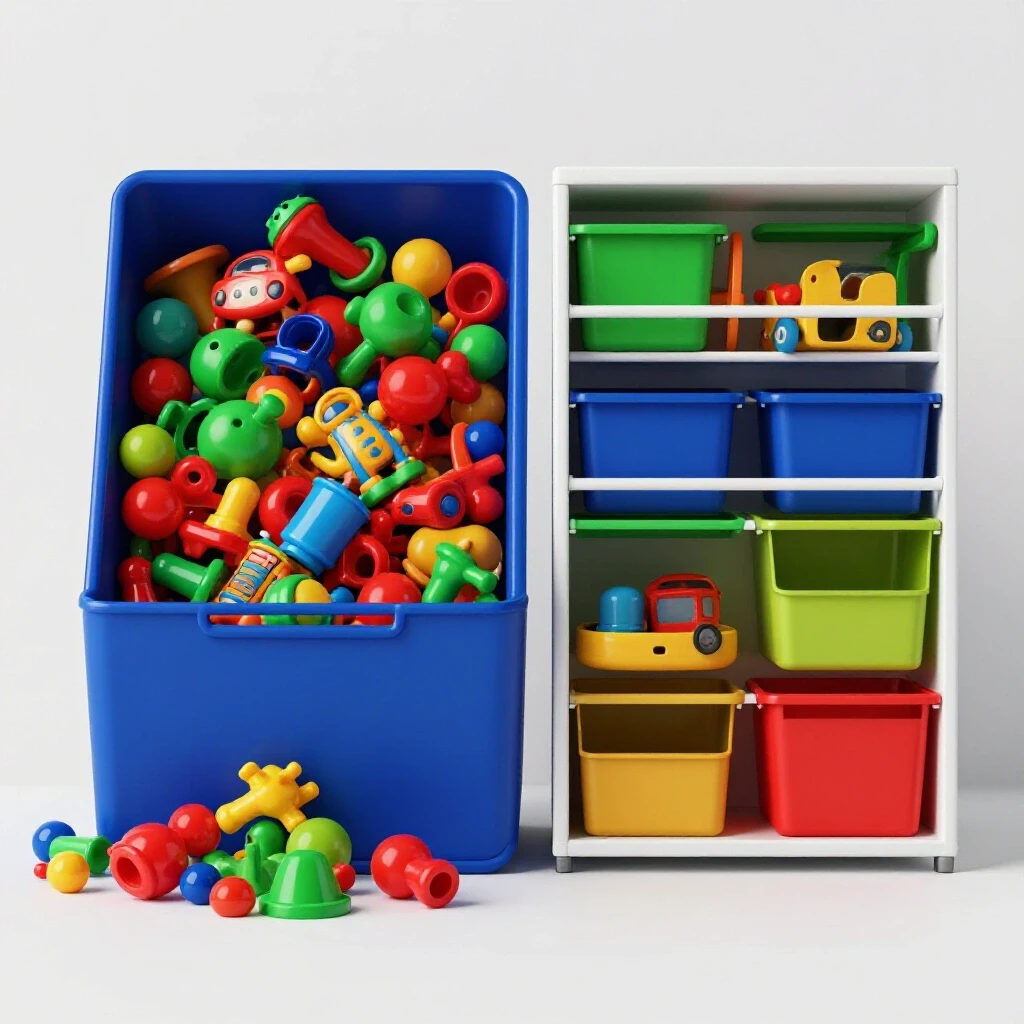
I remember a specific “system redesign” we attempted in our kids’ playroom five years ago. We bought beautiful, color-coded bins and spent eight hours sorting every block and doll. It looked like a magazine cover for exactly three days. By day four, the bins were overflowing. Why? Because we hadn’t accounted for the new birthday presents that arrived that same weekend. We had organized the clutter, but we hadn’t managed the volume.
Logistical failure in the home often stems from “retrieval friction.” This is the amount of effort it takes to find and put away an item. When your shelves are at 100% capacity, you have to move three things to get to the one thing you need. This increases the “step count” of a simple task, making it more likely that you will just leave the item on the counter instead of putting it back.
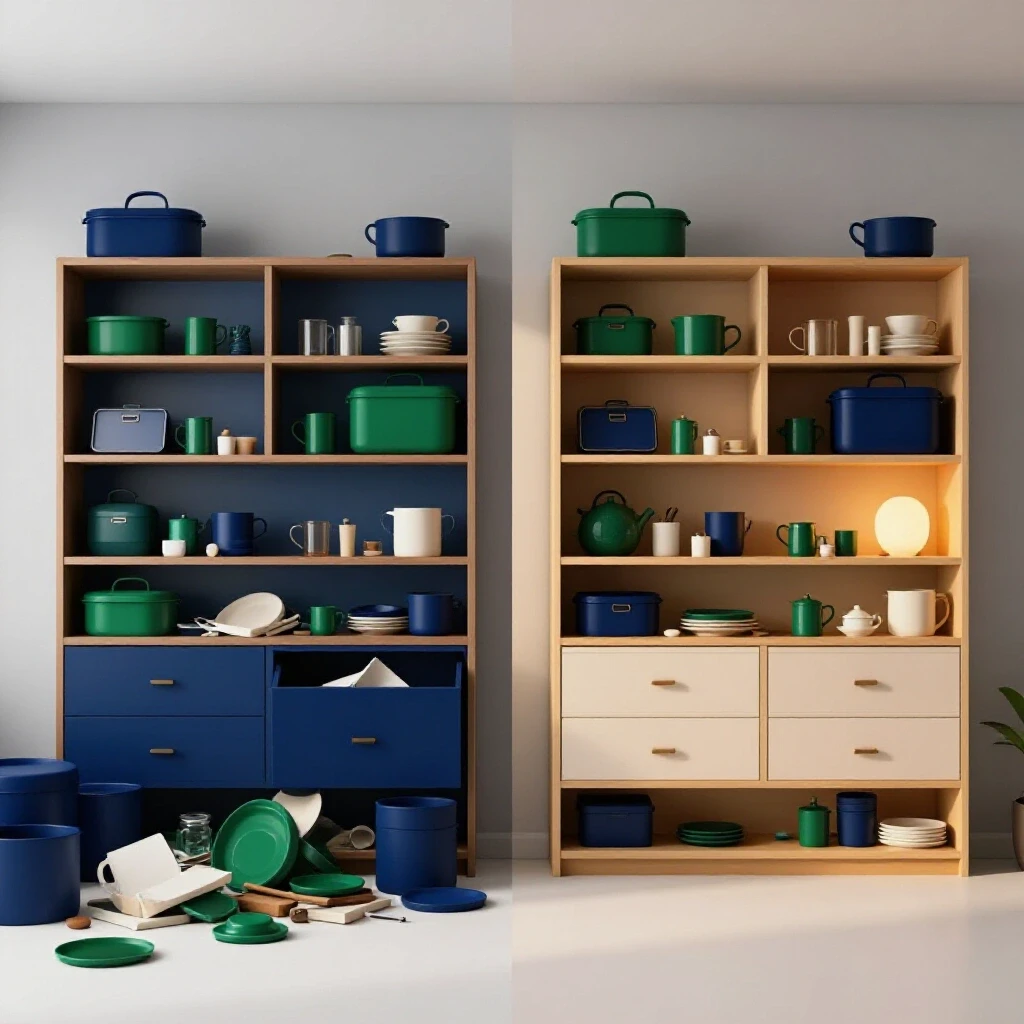
| Feature | Visual Focus (Aesthetic) | Functional Focus (Logistics) |
|---|---|---|
| Primary Goal | How the room looks | How the room works |
| Container Choice | Matching, often lidded | Open-top, easy access |
| Capacity Target | 100% (packed tight) | 70-80% (room for movement) |
| Maintenance Level | High (constant rearranging) | Low (easy in/out flow) |
| Reversion Risk | High (days) | Low (months) |
Implementing the Equal-Exchange Habit Across Your Home
An equal-exchange habit is a simple operational rule where every new arrival necessitates the departure of an existing item within the same category. This creates a self-regulating system that prevents inventory creep and ensures that your storage solutions never reach a breaking point of total saturation.
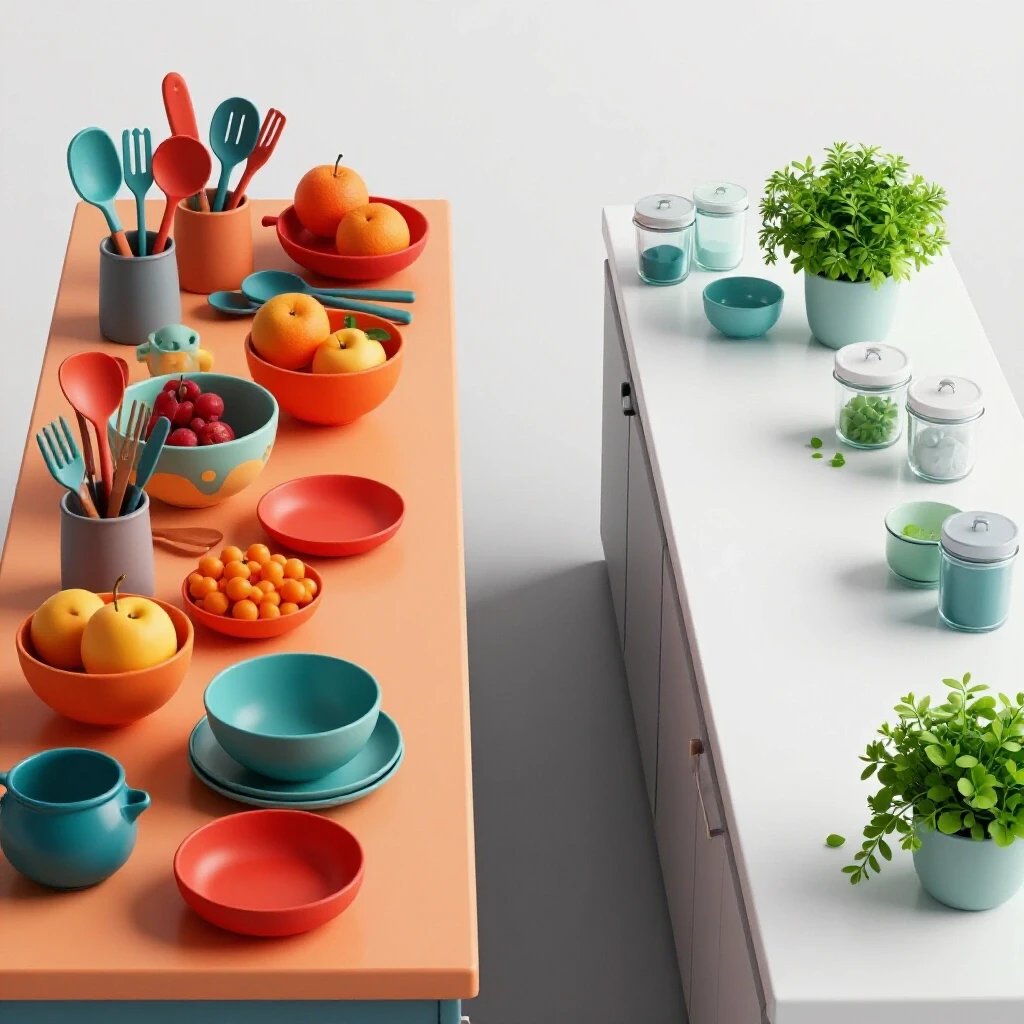
To make this work, you have to define your “zoning maps.” In our house, we have specific zones for specific activities: the “Culinary Zone” (kitchen), the “Recreation Zone” (playroom), and the “Utility Zone” (garage). Each zone has a fixed capacity. If I buy a new power drill for the Utility Zone, an old tool or a duplicate must be removed. This isn’t about being a minimalist; it’s about respecting the physical boundaries of your home.
This system works because it forces a decision at the point of entry. Instead of waiting for a massive “spring cleaning” event that leaves everyone exhausted, you make small, 30-second decisions every day. This drastically reduces “decision fatigue,” which is the mental exhaustion caused by having to make too many choices. When the rule is “one in, one out,” the choice is already made for you.
Establishing Spatial Capacity Limits for Every Room
Spatial capacity is the maximum amount of inventory a specific area can hold while remaining functional. To determine these limits, identify the “sweet spot” where items can be retrieved and returned in two steps or fewer without moving other objects.
In my experience, a shelf is “at capacity” when it reaches 80% fullness. That remaining 20% of “buffer space” is what allows for easy retrieval. If you have to tilt a book to get it out, or if you have to stack pans three-high to fit them in a cabinet, you have exceeded your spatial capacity. You are now operating with high friction, which is the enemy of a tidy home.
- Kitchen Cabinets: 75% capacity for daily use items.
- Bedroom Closets: One hanger per garment; no double-hanging.
- Toy Bins: Items should fit loosely enough that a child can see the bottom of the bin.
- Bookshelves: Enough space to fit a hand between the last book and the side of the shelf.
The Replacement Protocol: A Room-by-Room Guide
The replacement protocol is the practical application of the equal-exchange habit. It involves identifying the “outflow” item immediately upon the “inflow” of a new one, ensuring that the total count of items in a specific category remains constant over time.
When I brought home a new coffee mug last month, I didn’t just shove it into the cabinet. I stood in front of the mug shelf, identified the one with the chipped handle that nobody ever uses, and placed it in the donation box. This took 15 seconds. If I hadn’t done that, the cabinet would have become slightly more crowded, making it harder to reach my favorite morning cup.
- Identify the Inflow: Acknowledge the new item entering the space.
- Scan the Zone: Look at the existing items in that same category.
- Select the Outflow: Choose an item that is broken, duplicate, or no longer serves its purpose.
- Execute the Exit: Place the old item in a designated “Outflow Bin” immediately.
Reducing System Friction with Better Storage Gear
Storage friction is the physical and mental resistance encountered when trying to maintain an organization system. High-friction systems, such as those requiring multiple steps or complex labeling, are the most common reason family organization projects fail within the first week.
In logistics, we use the “Storage Friction Index” to evaluate how long it takes to process an item. For a busy family, you want the lowest friction possible. This means opting for open-top bins over lidded boxes and using clear labels that even a tired parent or a five-year-old can understand. If it takes more than five seconds to put something away, the system is too complex for a lived-in home.
Interestingly, research in organizational behavior shows that people are more likely to follow a system if it requires less “motor planning.” This means the physical path to the storage spot should be direct. If you have to open a closet, move a box, and then lift a lid, you won’t do it. You’ll leave the item on the floor.
| Storage Type | Retrieval Steps | Friction Level | Maintenance Success Rate |
|---|---|---|---|
| Open Wall Hook | 1 | Very Low | 95% |
| Open-Top Bin | 1-2 | Low | 88% |
| Lidded Tote | 3-4 | Medium | 42% |
| Stacked Lidded Totes | 6+ | High | 12% |
Choosing Low-Maintenance Containers for Families
The best storage gear for a busy household prioritizes accessibility over aesthetics. Look for durable, easy-to-clean materials and designs that allow for “drop-and-go” sorting rather than meticulous arrangement.
We stopped using those deep, dark bins for our kids’ toys. Instead, we switched to shallow, clear trays. In the kitchen, we removed the lids from the snack bins. The result? My kids actually put their snacks away because the “sorting speed” increased. They didn’t have to fight with a lid; they just dropped the granola bar into the designated tray.
- Material: Use heavy-duty plastic or metal for high-traffic areas.
- Visibility: Clear containers reduce the “search time” for items.
- Accessibility: Choose bins that fit comfortably on shelves with at least three inches of overhead clearance.
- Portability: Bins with handles are easier for children to move to the “action zone” and back.
Building Sustainable Habit Loops for the Whole Family
A habit loop consists of a cue, an action, and a reward. In a household setting, the “cue” is the arrival of a new item, the “action” is the removal of an old one, and the “reward” is a functional, stress-free living space that doesn’t require a weekend-long cleanup.
To get the whole family on board, you have to make the “outflow” process visible and easy. We keep a “Permanent Outflow Bin” in the laundry room. It’s a sturdy, open-topped basket. Whenever someone gets a new shirt or a new toy, they know they have to put something old into that basket. Once the basket is full, I take it to the local donation center. This turns the “one in, one out” concept into a tangible, shared family goal.
Logistical efficiency isn’t about perfection; it’s about consistency. We don’t aim for a “perfectly clean” house. We aim for a “low-latency” house—one where we can go from “lived-in mess” to “functional order” in 15 minutes or less. By managing the volume of our possessions through constant replacement, we ensure that the mess never becomes a mountain.
Daily Maintenance Timelines by Family Size
The amount of time required to maintain household order is directly proportional to the number of residents and the volume of daily item inflow. Establishing a “Daily Reset” window helps prevent small imbalances from turning into logistical bottlenecks.
| Family Size | Daily Inflow (Est. Items) | Recommended Reset Time | Frequency of Outflow Bin Emptying |
|---|---|---|---|
| 2 Adults | 2-4 | 10 Minutes | Monthly |
| 2 Adults + 1 Child | 5-8 | 15 Minutes | Every 2 Weeks |
| 2 Adults + 3 Children | 10-15 | 25 Minutes | Weekly |
In our house of four, we spend exactly 20 minutes every evening before the kids go to bed doing a “Spatial Audit.” We walk through the main living areas and ensure everything is in its designated zone. If we notice a new item has appeared without an old one leaving, we handle it right then. This small investment of time saves us hours of frustration on the weekend.
Common Mistakes in Managing Household Flow
One of the biggest mistakes families make is “batching” their decluttering. They wait until the house is unbearable and then spend 48 hours cleaning. This is the equivalent of a warehouse letting trash pile up in the aisles for six months and then hiring a crew to clear it. It is inefficient and exhausting.
Another mistake is buying more storage to solve a clutter problem. Storage is a tool for organization, not a solution for excess. If your bins are full, buying more bins just takes up more of your floor’s “square footage,” reducing your home’s operational space. The solution is always to manage the inflow and outflow, not to increase the storage capacity beyond what the room can comfortably hold.
- Mistake 1: Organizing before reducing. (You’re just moving clutter into prettier boxes.)
- Mistake 2: Ignoring “Invisible Inflow.” (Mail, school papers, and freebies count as items.)
- Mistake 3: Complex labeling. (If a child can’t read it or understand the icon, they won’t use it.)
- Mistake 4: Keeping “Just in Case” duplicates. (These are inventory anchors that slow down your system.)
Practical Next Steps for a Balanced Home
To begin your journey toward a balanced home, start small. Don’t try to overhaul the entire house in one day. Pick one high-traffic zone—like the entryway or the kitchen counter—and implement the equal-exchange habit there first.
- Conduct a Spatial Audit: Identify one area that feels overwhelmed and determine its 80% capacity limit.
- Set Up an Outflow Station: Place a permanent bin in a central location for items that are leaving the house.
- Communicate the Rule: Explain the “one item in, one item out” concept to your family as a way to make everyone’s life easier, not as a punishment.
- Track Your Sorting Speed: Notice how much faster it is to clean up when the volume of items is matched to the storage space.
By focusing on the logistics of your home rather than just the aesthetics, you can create a sustainable system that actually works for a busy family. It isn’t about having a “perfect” home; it is about having a home that serves you, rather than you serving your possessions.
Frequently Asked Questions
What if I buy a set of items, like a 6-pack of new socks? Logistically, you should treat the category as a whole. If you bring in six new pairs of socks, you should remove the six oldest, most worn-out pairs. This maintains the “inventory level” of your sock drawer, ensuring it doesn’t become overstuffed and difficult to navigate.
How do I handle gifts for my children? Gifts are a significant source of “inflow.” We handle this by having a “Birthday/Holiday Audit.” Before the new toys are put away, the kids help select an equal number of older toys to be moved to the Outflow Bin. This teaches them about spatial limits and keeps their playroom functional.
Does this apply to consumable items like groceries? No, the equal-exchange habit is designed for “durable goods”—items that take up permanent space. Consumables have a natural exit strategy (you eat them or use them up). However, the containers for those consumables (like spice jars or cereal boxes) should follow the rule to prevent pantry overflow.
What if I truly need more of something? There are times when your life changes and you need to increase your “baseline inventory.” For example, if you start a new hobby like baking, you will need more supplies. In this case, you must consciously “re-zone” an area, which usually means reducing the capacity of another category to make physical room for the new one.
How do I handle items with sentimental value? From a logistical standpoint, sentimental items are still inventory. If you want to keep a new heirloom, you must find another item in that zone to remove. If the zone is full, you might consider digitizing the item (like a photo or a letter) to reduce its physical footprint while keeping the memory.
Is it okay to have an “Empty” shelf? Yes! In fact, in logistics, empty space is called “flex capacity.” It allows you to handle temporary surges in inventory (like holiday decorations or guest luggage) without the system breaking down. An empty shelf is a sign of a very healthy, high-functioning home.
What is the best way to label bins for a family? Use a “Dual-Coding” system: a clear, printed word for adults and a simple icon or picture for children. This ensures that everyone in the house, regardless of age or reading level, knows exactly where an item belongs, which reduces the “sorting friction” for the whole family.
How do I deal with “Invisible Clutter” like digital files? While this guide focuses on physical space, the same logic applies. If you download a new app, delete one you haven’t used in six months. If you take 50 new photos, spend five minutes deleting 50 old, blurry ones. It keeps your digital “warehouse” from becoming unmanageable.
What if my spouse isn’t on board? Start by managing your own zones first (your closet, your desk, your side of the bed). When they see how much easier your life is and how much less time you spend looking for things, they are often naturally inclined to adopt the same logistical habits.
How often should I empty the Outflow Bin? Ideally, once it is full or at least once a month. Leaving a full Outflow Bin in the house for too long creates “stagnant inventory,” which can eventually creep back into your living spaces. Make the “Donation Run” a regular part of your household logistics schedule.
(This article was written by one of our staff writers, Christopher Bennett. Visit our Meet the Team page to learn more about the author and their expertise.)