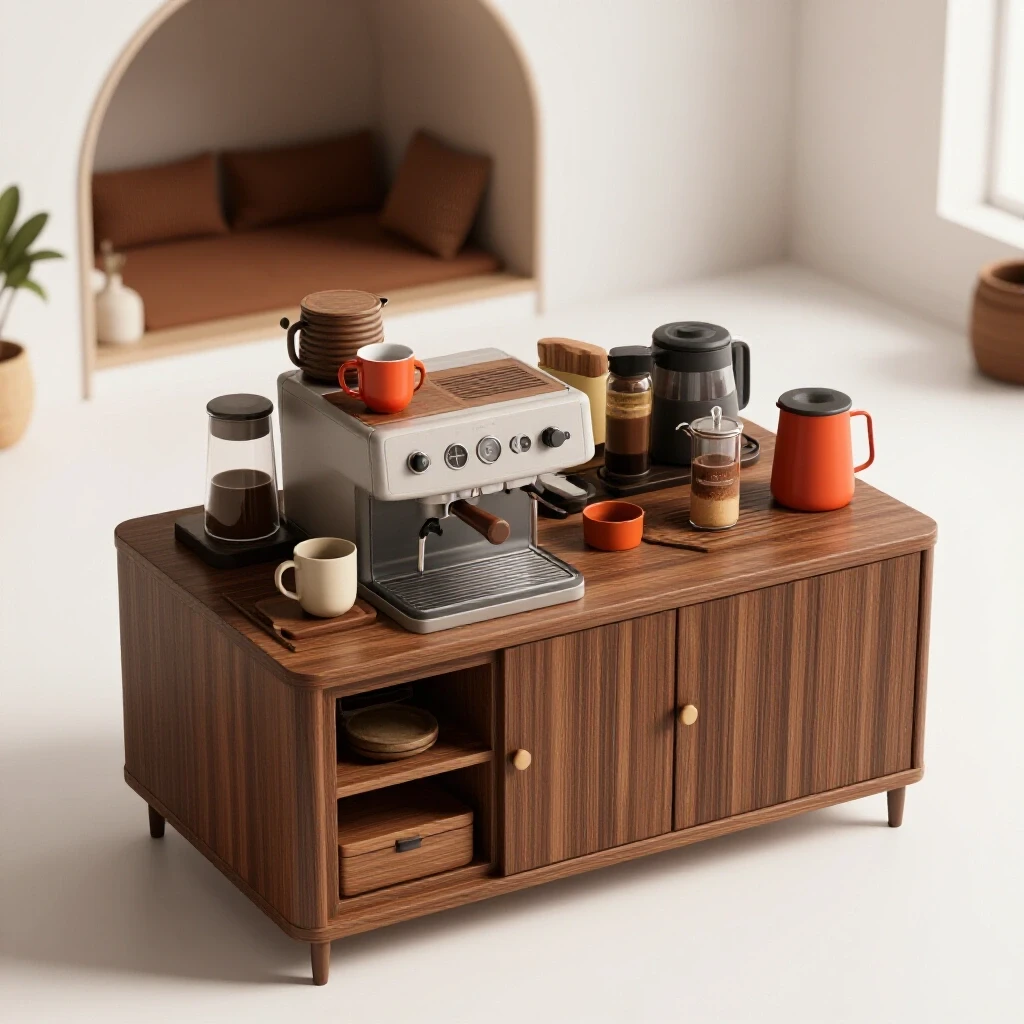
How to Set Up a Functional Coffee Station at Home (Step-by-Step)

Focusing on bold designs often feels like a luxury when you are staring at a stack of boxes and a mortgage statement that suddenly feels very real. In my 14 years of owning three different homes, I have learned that the transition from renter to owner is less about the big renovations and more about the small, daily workflows you establish. When I moved into my first bungalow in 2010, I spent three weeks looking for a spoon every morning because I had no system for my daily routine. Establishing a dedicated, organized zone for your morning beverage preparation is more than a decor choice; it is a way to claim territory in your new environment. It allows you to practice home organization and DIY skills on a manageable scale before you tackle a full basement remodel or a roof replacement.
Transitioning from Renter to Owner through Functional Zones
Establishing a functional zone for daily rituals means designating a specific area of your home to house all tools and supplies needed for a single recurring task. This approach reduces morning friction and helps new homeowners feel a sense of control over their new, often overwhelming, environment.
When you first move in, the sheer volume of space can lead to “countertop creep,” where items migrate across every flat surface. In my second home, a 1970s split-level, I tracked my morning movements for a week. I realized I was walking 40 feet just to assemble a single cup of coffee because the mugs were in one cabinet, the machine was in another, and the spoons were across the room. By consolidating these into a compact preparation zone, I saved time and reduced the physical clutter that leads to homeowner burnout. According to U.S. Census Bureau housing surveys, kitchen functionality remains a top priority for buyers aged 25–40, yet many struggle to optimize the space they actually have.
- Group items by task rather than by category to save steps.
- Use vertical space to keep countertops clear for actual food preparation.
- Keep high-use items within “the reach zone,” between hip and shoulder height.
- Designate a specific drawer or shelf near the water source for all related accessories.
Budgeting for Your Daily Ritual Zone
A sustainable household budget diary should include a small “quality of life” fund that sits separate from your emergency repair savings. This fund allows you to enhance your daily environment without dipping into the 1% to 3% of home value you should be setting aside for annual maintenance.
In my experience, first-time homeowners often overspend on aesthetic items during the first six months, only to be hit by a $500 plumbing bill in month seven. I recommend a “wait and see” period of 90 days before buying any permanent organizers. During this time, use what you have and track your frustrations. If you find yourself constantly reaching for a specific tool that is buried in a box, that is a signal for a targeted, low-cost DIY storage solution. Data from HUD reports suggests that small-scale organizational improvements offer a high psychological return on investment, even if they don’t significantly move the needle on home equity.
DIY vs. Professional Organization Costs
| Project Component | DIY Estimated Cost | Professional Hire Cost | Time Investment |
|---|---|---|---|
| Floating Shelf Installation | $40 – $80 | $150 – $300 | 2 Hours |
| Custom Cabinet Inserts | $20 – $50 | $200 – $400 | 3 Hours |
| Under-Cabinet Lighting | $30 – $60 | $250 – $500 | 1 Hour |
| Drawer Dividers | $10 – $25 | N/A | 30 Minutes |
Designing an Efficient Workflow for Morning Routines
Workflow efficiency is the practice of arranging your physical environment to support the natural sequence of a task. In a morning drink station, this means placing the water source, the heating element, and the consumables in a logical, circular or linear path.
When I evaluated a series of modern townhomes last year, I noticed a recurring flaw: power outlets were rarely placed where people actually wanted to use their appliances. As a new homeowner, you must map your electrical load before setting up a heavy-use zone. Most kitchen circuits are 15 or 20 amps. If you run a high-wattage kettle and a toaster on the same circuit simultaneously, you might trip a breaker. Understanding your home’s electrical map is a vital piece of homeownership reality that prevents unnecessary service calls.
- Identify the nearest GFCI (Ground Fault Circuit Interrupter) outlet to ensure safety near water.
- Place the heaviest appliance closest to the outlet to minimize cord clutter.
- Ensure there is at least 12 inches of “landing space” next to your machine for hot mugs.
- Store daily-use items on the left if you are right-handed to create a natural flow.
DIY Storage Solutions for Compact Spaces
Creating custom storage involves using basic carpentry or organizational tools to modify your existing space to fit your specific needs. This is an excellent way to practice DIY home care without the risk of damaging major structural components of your house.
In my third home, I used scrap plywood and a simple drill to create a tiered riser inside a deep cabinet. This allowed me to see every jar and container without digging. For a morning beverage nook, consider adding a simple pegboard or a row of hooks under a cabinet. This utilizes the “dead space” between the upper cabinets and the countertop. These small wins build the confidence needed for larger tasks, like repairing a deck or replacing a faucet.
- Measure the height of your tallest mug or canister before buying or building shelves.
- Use adhesive-backed hooks for a non-permanent way to test your layout.
- Repurpose wooden crates or trays to define the boundaries of your station.
- Install a small magnetic strip for metal spoons or stirrers to keep them off the counter.
Electrical and Water Considerations for Small Zones
Managing the intersection of water and electricity is a fundamental skill in preventative mechanical care. A morning drink station typically involves both, making it a prime spot to learn about home safety standards and potential failure points.
One of my early maintenance failures involved a slow leak from a water reservoir that I didn’t notice for months. By the time I found it, the laminate countertop had begun to swell and delaminate. Now, I always place a small silicone mat under any water-bearing appliance. This simple, low-cost preventative measure protects your expensive countertops and prevents mold growth. Additionally, be mindful of steam. If your machine releases steam upward, ensure it isn’t directly hitting the underside of your wooden cabinets, which can cause the finish to peel over time.
- Check for “warm” outlets, which can indicate an overloaded circuit or loose wiring.
- Inspect the seals on your appliances every six months to prevent slow leaks.
- Keep all cords away from the sink area to avoid splash hazards.
- Use a dedicated tray to catch drips and protect your countertop material.
Long-Term Maintenance of Countertop Surfaces
Countertop care varies significantly by material, and maintaining the surface of your daily prep area is essential for protecting your home’s long-term value. Whether you have quartz, granite, or butcher block, each requires a specific cleaning and sealing routine.
In my current home logs, I have a recurring entry for “surface sealing.” Many first-time owners assume granite is indestructible, but it is actually porous. If you spill coffee or tea on unsealed stone, it can leave a permanent stain. According to home inspection standards, maintaining these surfaces is a key part of “cosmetic preservation.” Using the wrong cleaner—like vinegar on marble—can etch the surface and lead to costly professional restoration.
Surface Maintenance Benchmarks
- Natural Stone: Seal every 6–12 months; use pH-neutral cleaners.
- Laminate: Avoid excessive heat; wipe spills immediately to prevent seam swelling.
- Butcher Block: Oil monthly with food-grade mineral oil to prevent cracking.
- Quartz: Generally low maintenance, but sensitive to high heat (use trivets).
Managing Homeowner Fatigue through Small Wins
Homeowner fatigue is the emotional and physical exhaustion that comes from the endless list of chores and repairs required to keep a property running. Combatting this requires finding joy in small, completed projects that improve your daily life.
Setting up a perfect morning corner is a “small win.” It provides a sense of completion in a world of ongoing maintenance. When the HVAC system eventually needs a $400 blower motor or the gutters need cleaning, having a functional, peaceful place to start your day can mitigate the stress of those larger responsibilities. I have found that homeowners who focus on these small, high-impact zones are more likely to stay on track with their household budgeting diary and long-term property preservation.
- Limit yourself to one DIY project per weekend to avoid burnout.
- Celebrate the completion of a small zone before moving to the next room.
- Document your progress in a digital home log to see how far you have come.
- Prioritize projects that save you time in your daily morning rush.
Planning for Long-Term Improvements
As you move beyond the first year of homeownership, your needs for your daily ritual zone may change. Perhaps you want to add a dedicated water line or install custom cabinetry. These are “Level 2” projects that require more planning and a larger budget.
When planning long-term improvements, always consider the “ROI of Joy” versus the “ROI of Resale.” A built-in beverage center might not add $10,000 to your home’s value, but if it saves you 10 minutes every morning for five years, the personal value is immense. Use your first 12 months to gather data on how you actually use the space. This prevents you from spending money on a renovation that looks good in photos but fails to meet your practical needs.
- Track your usage patterns for a full year before committing to permanent plumbing changes.
- Save photos of layouts that work for your specific kitchen footprint.
- Consult with an electrician if you plan to add multiple high-draw appliances to one area.
- Evaluate if a small rolling cart provides more flexibility than a fixed cabinet.
Sustainable Home Systems and Energy Efficiency
Even a small appliance zone contributes to your home’s overall energy profile. Modern home-efficiency tools allow you to track the phantom power draw of your devices, which can add up over a year.
I use a simple smart plug to monitor the energy usage of my morning machines. Interestingly, some older models use a significant amount of electricity just to keep a clock running or a small internal tank warm. By setting a schedule for these devices to turn off at night, you can save a small but measurable amount on your monthly utility bills. This data-driven approach to homeownership helps you understand the true cost of every system in your house.
- Use smart plugs to automate “off” times for non-essential appliances.
- Clean the heating elements of your machines to maintain peak efficiency.
- Opt for reusable filters to reduce waste and long-term recurring costs.
- Position appliances away from the refrigerator to prevent heat transfer.
Practical Next Steps for New Homeowners
Establishing your morning zone is a gateway to better home management. Start by clearing off a single section of your countertop and gathering all your daily essentials in that one spot. Don’t worry about buying new furniture or expensive organizers yet.
Once you have a basic layout, live with it for two weeks. Note where you feel friction—is the trash can too far away? Is the light too dim? Use these observations to fuel your first small DIY project. By focusing on the “daily use” reality of your home, you move from being a person who just lives in a house to a person who actively manages a home. This shift in mindset is the most important tool you can own.
- Clear a 2-foot section of counter space today.
- Group your most-used items there tonight.
- Observe your workflow tomorrow morning.
- Identify one small storage problem you can solve with a $20 budget.
FAQ: Managing Your Daily Beverage Zone and Home Maintenance
How much should I spend on organizing my morning drink area?
For a first-time homeowner, keep the initial investment under $100. Focus on functional items like a silicone mat to protect counters and a simple riser for mugs. Save your larger funds for the 1% annual maintenance reserve.
Is it safe to plug multiple appliances into one kitchen outlet?
Most kitchen outlets are on a 20-amp circuit, but you should avoid running two heat-producing appliances (like a kettle and a toaster) at the same time on the same circuit. This prevents tripping the breaker and reduces wear on your electrical system.
How do I prevent coffee stains on my new countertops?
Always use a tray or a silicone mat under your preparation area. If you have natural stone like granite or marble, ensure it is sealed properly. Test the seal by dropping a bit of water on the surface; if it beads up, the seal is good.
Can steam from a kettle damage my upper cabinets?
Yes, consistent steam can cause wood to warp and paint or laminate to peel. Always pull your steam-producing appliances out from under the cabinets during use, or install a heat-resistant shield on the underside of the cabinet.
What is the best way to track my home maintenance tasks?
I recommend using a digital home log or a simple spreadsheet. Track when you last cleaned your appliances, when you sealed your counters, and any minor repairs you made. This creates a valuable “house history” for when you eventually sell.
How can I make my morning station more energy-efficient?
Use a smart plug with a timer so your appliances aren’t drawing “vampire power” all night. Additionally, descale your machines regularly; mineral buildup makes the heating elements work harder and use more electricity.
Should I hire a pro to install a dedicated water line for my coffee machine?
Only if you are certain of the location. A professional plumber will charge between $150 and $300 for this. It is better to wait six months to ensure the layout is perfect before making permanent plumbing changes.
What are the signs of homeowner burnout?
If you find yourself ignoring small leaks, letting clutter pile up on every surface, or feeling anxious about entering your kitchen, you may have burnout. Combat this by completing one very small, 15-minute organizational task to regain a sense of control.
How often should I deep clean my beverage zone?
Wipe down surfaces daily. Perform a deep clean, including descaling your machine and cleaning under the appliances, once a month. This prevents the buildup of oils and minerals that can attract pests or cause mechanical failure.
Do small DIY projects really help with home value?
While a coffee tray doesn’t add equity, the habits you build do. Learning to manage moisture, electricity, and organization on a small scale prevents the “deferred maintenance” that significantly devalues homes during a professional inspection.
(This article was written by one of our staff writers, Michael Morrison. Visit our Meet the Team page to learn more about the author and their expertise.)